Why Learning Cricket Etiquette Can Make Kids Better Players and Better Teammates

Introduction: Cricket Is About More Than Winning
When children start playing cricket, most of their attention naturally goes toward learning the basics.
They want to learn how to bat.
They want to bowl faster.
They want to take catches.
They want to score runs and take wickets.
But cricket teaches something equally important that cannot be measured on a scoreboard: how to behave while playing with others.
This is where cricket etiquette becomes important.
Knowing how to respect teammates, opponents, coaches, umpires, equipment, and the spirit of the game can shape a child's experience as a player.
A technically talented cricketer may win matches.
A technically talented cricketer who also respects others can become someone teammates genuinely want to play alongside.
For children, learning cricket etiquette is therefore not simply about following rules.
It is about developing respect, responsibility, communication, patience, humility, and sportsmanship.
What Is Cricket Etiquette?
Cricket etiquette refers to the expected behaviors that help the game remain respectful, enjoyable, and fair.
It includes simple habits such as:
- Respecting opponents.
- Listening to officials.
- Supporting teammates.
- Accepting decisions.
- Playing fairly.
- Looking after equipment.
- Congratulating good performances.
- Avoiding unnecessary arguments.
These behaviors help create a positive playing environment.
Why Etiquette Matters for Young Players
Children learn from their sporting experiences.
If they learn that winning is the only thing that matters, they may become frustrated when results do not go their way.
If they learn that effort, respect, and teamwork also matter, they can develop a healthier relationship with competition.
Respect Is the Foundation
One of the first lessons young cricketers can learn is simple:
Respect the people around you.
That means respecting:
- Teammates.
- Opponents.
- Coaches.
- Umpires.
- Ground staff.
- Parents.
- Volunteers.
Everyone contributes to making a match possible.
Respecting the Opposing Team
An opponent is not an enemy.
They are another group of players who are there to compete.
Young cricketers can learn to:
- Shake hands.
- Congratulate good shots.
- Acknowledge good bowling.
- Appreciate excellent catches.
- Accept competition positively.
This creates a healthier sporting environment.
Why Winning With Respect Matters
Winning is exciting.
Children should be allowed to celebrate.
But celebration should not become an opportunity to embarrass the opposition.
A confident player can enjoy success without making someone else feel small.
Learning to Lose Gracefully
Losing can be difficult for children.
They may feel disappointed, angry, or embarrassed.
Those emotions are normal.
Cricket etiquette teaches them how to respond appropriately.
They can learn to:
- Congratulate the winners.
- Thank teammates.
- Accept the result.
- Think about what they can improve.
- Leave the field respectfully.
A Loss Can Still Be Valuable
A match does not have to end in victory to provide a useful experience.
A child may learn:
- How to respond to pressure.
- How to communicate.
- How to support teammates.
- Where their skills need improvement.
This mindset can make setbacks easier to handle.
Respecting Umpire Decisions
Young players will not always agree with an umpire.
That is part of sport.
However, players should learn that disagreement does not justify disrespect.
A player can feel disappointed while still accepting the decision.
Why Arguing Rarely Helps
Once an umpire has made a decision, arguing usually does not change the outcome.
Instead, it can:
- Distract the player.
- Create tension.
- Affect teammates.
- Reduce concentration.
Learning to move on quickly can help young players stay focused.
Cricket Teaches Self-Control
A player may feel that a decision was unfair.
They may be frustrated after getting out.
They may become angry after conceding a boundary.
Etiquette teaches children that emotions are natural, but behavior still matters.
Supporting Teammates
Cricket is a team sport.
Even when one player is batting or bowling, teammates should remain involved.
Young players can support each other by:
- Encouraging teammates.
- Celebrating good moments.
- Helping after mistakes.
- Staying positive.
- Communicating constructively.
What Should a Child Say After a Teammate Makes a Mistake?
Instead of:
"How did you drop that?"
a better response is:
"Don't worry. Next one."
Simple encouragement can make a big difference.
Good Communication Builds Better Teams
Cricket requires constant communication.
Players communicate about:
- Runs.
- Catches.
- Field positions.
- Bowling plans.
- Match situations.
Good etiquette means communicating without blaming or insulting others.
The Difference Between Advice and Criticism
Young players often want to help teammates.
But there is a difference between useful advice and negative criticism.
For example:
Helpful:
"Next time, try getting your hands closer together."
Unhelpful:
"You always drop catches."
The first encourages improvement.
The second can damage confidence.
Respecting Coaches
Coaches spend significant time helping young players develop.
Children may not always agree with every instruction.
That is normal.
But listening respectfully is an important part of learning.
Asking Questions Is Encouraged
Respect does not mean children must remain silent.
They should be able to ask:
- Why are we practicing this?
- How can I improve?
- Why did you change my position?
- What should I do differently?
Good coaching environments encourage questions.
Arriving Prepared Is Part of Etiquette
Being respectful also means respecting other people's time.
Players should try to arrive prepared with:
- Cricket kit.
- Water bottle.
- Appropriate clothing.
- Required protective equipment.
Being organized is a simple professional habit.
Looking After Cricket Equipment
Equipment belongs to the player, team, club, or academy.
Children should learn to treat it carefully.
This includes:
- Cricket bats.
- Balls.
- Gloves.
- Pads.
- Helmets.
- Nets.
- Stumps.
- Cones.
Looking after equipment teaches responsibility.
Cricket Bats Need Proper Care
A cricket bat should not be treated like a toy.
Young players should learn basic care such as:
- Keeping it dry.
- Storing it properly.
- Avoiding unnecessary damage.
- Using it appropriately during practice.
This can also help children understand the value of their equipment.
Sharing Equipment Builds Responsibility
At schools and academies, children may share equipment.
They should return items after use and ensure everything is placed where it belongs.
This small habit teaches accountability.
Respecting the Playing Surface
Children should avoid unnecessary damage to the pitch or ground.
The playing area is part of the sport and needs to be maintained for everyone.
Don't Distract the Batter
Fielders need to remain focused.
Unnecessary shouting or deliberate distractions can create an unpleasant environment.
Young players should learn the difference between positive energy and poor sportsmanship.
Competitive Energy Can Still Be Respectful
Cricket does not need to be quiet.
Players can celebrate wickets.
Teammates can encourage bowlers.
Crowds can cheer.
The important part is keeping competitive energy within respectful boundaries.
Celebrating a Wicket
Taking a wicket is a major achievement.
Young players should be able to celebrate with teammates.
But celebrations should avoid:
- Insulting the batter.
- Mocking mistakes.
- Personal comments.
- Deliberate intimidation.
Celebrate your team's achievement rather than another player's failure.
Congratulating an Opponent
Sometimes the opposition produces an outstanding performance.
A young player can learn to appreciate it.
For example:
"That was a great catch."
"That was a good shot."
"Well bowled."
These simple words demonstrate confidence and maturity.
Cricket Teaches Humility
Success can sometimes make players overconfident.
Etiquette reminds children that every match is another opportunity to learn.
A player who scores a century today may struggle tomorrow.
A bowler who takes five wickets may concede many runs in the next match.
Humility keeps improvement alive.
The Importance of Saying "Thank You"
Children can learn to thank:
- Coaches.
- Teammates.
- Opponents.
- Umpires.
- Parents.
- Volunteers.
Gratitude is a simple but powerful habit.
Respecting Ground Staff
Cricket grounds require significant preparation.
Ground staff may prepare:
- Pitches.
- Outfields.
- Boundaries.
- Practice areas.
Young players should understand that maintaining these spaces requires work.
Etiquette During Training
Good behavior should not only exist during matches.
Training sessions are equally important.
Children should:
- Listen when coaches speak.
- Wait for their turn.
- Avoid interrupting drills.
- Encourage teammates.
- Return equipment.
- Follow safety instructions.
Waiting Your Turn Teaches Patience
At a busy academy, several children may want to bat or bowl.
Waiting for their turn can teach patience.
Instead of becoming frustrated, players can use the waiting time to observe others and learn.
Watching Others Is Also Practice
A child who is waiting can watch:
- Batting technique.
- Bowling actions.
- Footwork.
- Fielding mistakes.
- Coach feedback.
This turns waiting time into learning time.
Helping Younger Players
Older children can sometimes support younger teammates.
They might:
- Explain a drill.
- Help organize equipment.
- Encourage a nervous player.
- Demonstrate a basic skill.
This develops leadership.
Leadership Begins With Behavior
A captain is not the only leader on a cricket team.
Leadership can appear through simple actions.
A child who:
- Encourages teammates.
- Arrives prepared.
- Works hard.
- Accepts responsibility.
- Treats everyone respectfully
can become a positive influence.
Taking Responsibility for Mistakes
Etiquette includes accepting responsibility.
If a child makes a fielding error, they should not immediately blame someone else.
They can say:
"My mistake. I'll focus next time."
This demonstrates maturity.
Blaming Teammates Can Damage Team Spirit
Constantly blaming others creates tension.
A team becomes stronger when players focus on solutions rather than accusations.
Instead of:
"You should have caught it."
try:
"Let's get the next one."
Handling Disagreements
Young players will sometimes disagree.
Maybe two batters disagree about a run.
Maybe a fielder thinks another player should have taken a catch.
Maybe teammates disagree about a strategy.
They can learn to discuss disagreements calmly.
Cricket Teaches Children to Compromise
Team sports rarely allow everyone to get exactly what they want.
A player may want to bat higher.
Another player may want to bowl.
A captain must make decisions.
Learning to accept team decisions can build flexibility.
Respecting Different Playing Styles
Every child develops differently.
One player may be aggressive.
Another may prefer defensive batting.
One may enjoy fast bowling.
Another may prefer spin.
Good etiquette means appreciating different approaches.
Don't Make Fun of Beginners
Young cricket environments often contain players with different experience levels.
Experienced children should not mock beginners.
Instead, they can encourage them.
A supportive environment helps new players feel comfortable.
Mistakes Are Part of Learning
Children will make mistakes.
They will:
- Miss catches.
- Bowl wides.
- Get run out.
- Misjudge shots.
- Forget field positions.
That is part of learning cricket.
Etiquette means responding to mistakes with encouragement rather than humiliation.
Parents Also Influence Cricket Etiquette
Children often copy adult behavior.
Parents can demonstrate good sportsmanship by:
- Respecting officials.
- Avoiding aggressive arguments.
- Congratulating opponents.
- Supporting coaches.
- Staying positive after losses.
Children notice these behaviors.
What Parents Should Avoid
Parents should avoid putting unnecessary pressure on children to:
- Win every match.
- Argue with officials.
- Criticize teammates.
- Respond aggressively to opponents.
The goal should be development and enjoyment.
Coaches Set the Standard
Coaches have a major influence on team culture.
A coach who consistently demonstrates respect can help children understand what good sportsmanship looks like.
Create Simple Team Rules
Youth teams can establish basic rules such as:
- Respect everyone.
- Listen when someone is speaking.
- Encourage teammates.
- Accept decisions.
- Look after equipment.
- Play fairly.
- Learn from mistakes.
Simple rules are easier for children to remember.
Cricket Etiquette and Confidence
Respectful players often become more comfortable in team environments.
They know how to:
- Communicate.
- Ask questions.
- Accept feedback.
- Handle mistakes.
This can support confidence.
Good Etiquette Can Make Cricket More Enjoyable
When players feel respected, they are more likely to enjoy training and competition.
A positive environment encourages children to:
- Keep practicing.
- Try new skills.
- Make friends.
- Stay involved.
Etiquette Can Help Children Build Friendships
Cricket brings children together.
Playing regularly with teammates can create strong friendships.
Respect and cooperation make those relationships stronger.
Lessons That Continue Beyond Cricket
Cricket etiquette can teach children habits that are useful elsewhere.
At School
Respect teachers and classmates.
At Home
Take responsibility for actions.
In Group Activities
Listen and cooperate.
In Future Work
Communicate professionally.
In Everyday Life
Treat people fairly.
Nepal, Germany, USA, Canada, Netherlands, and UK
Youth cricket continues to develop across Nepal, Germany, the United States, Canada, and the Netherlands, while the United Kingdom has a long-established cricket culture.
Regardless of where a child learns the sport, respect and sportsmanship remain universal parts of playing cricket well.
Different countries may have different cricket traditions, but the basic values of fair competition and respect remain relevant everywhere.
How Equipment Can Support a Positive Cricket Experience
The right equipment can also contribute to a child's comfort and confidence.
Young players should use equipment that matches their age, size, and ability.
This can include:
- Junior cricket bats.
- Appropriate batting gloves.
- Properly fitted pads.
- Suitable helmets.
- Cricket shoes.
- Practice balls.
- Cricket kit bags.
Comfortable equipment allows children to focus more on learning and less on distractions.
Kashmir Willow for Developing Players
For many young cricketers, Kashmir Willow bats can provide a practical option for regular training.
They can offer durability and value while players develop their technique.
As always, the bat should be appropriately sized and manageable for the child.
How Heega Sports Supports Young Cricketers
At Heega Sports, we believe cricket development includes more than improving technical skills.
Young players also need equipment that helps them train comfortably and confidently.
Our cricket range includes:
- Junior cricket bats.
- Kashmir Willow bats.
- Leather cricket balls.
- Practice balls.
- Batting gloves.
- Batting pads.
- Cricket helmets.
- Wicketkeeping gloves.
- Cricket shoes.
- Cricket kit bags.
- Practice nets.
- Training accessories.
We aim to support young players as they develop their skills and learn the values that make cricket such a rewarding sport.
A Simple Etiquette Checklist for Kids
Before every match, young players can remember:
Respect your teammates.
Respect your opponents.
Respect the officials.
Look after the equipment.
Accept mistakes.
Encourage others.
Play fairly.
Enjoy the game.
These simple habits can make a big difference.
Final Thoughts
Cricket can teach children how to bat, bowl, field, and compete.
But some of its most valuable lessons happen away from the technical side of the game.
Learning cricket etiquette teaches young players how to respect others, communicate properly, accept decisions, handle disappointment, celebrate appropriately, and take responsibility for their actions.
These qualities can make children better teammates.
More importantly, they can help them become more respectful and responsible people beyond cricket.
A young cricketer who learns to say "well played," "my mistake," "thank you," and "good luck" is learning lessons that can remain valuable long after the match is over.
Because the best players are not remembered only for how many runs they scored or wickets they took.
They are also remembered for how they played the game and how they treated the people around them.
🏏 Build Better Cricket Habits With Heega Sports
Explore junior cricket bats, Kashmir Willow bats, leather balls, practice balls, batting gloves, pads, helmets, wicketkeeping gloves, cricket shoes, kit bags, practice nets, and training accessories designed to support young cricketers.
Shop Now
Heega Sports – Supporting Young Players On the Field and the Values They Carry Beyond It.
Related posts
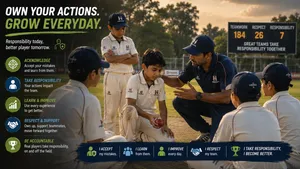 How Cricket Helps Kids Understand the Importance of Taking Responsibility for Their ActionsDiscover how cricket helps kids learn responsibility through teamwork, mistakes, preparation, decision-making, equipment care, discipline, and accountability on and off the field.
 Why Playing Cricket Outdoors Can Help Kids Build Better Athletic HabitsDiscover how playing cricket outdoors can help kids develop better athletic habits through running, movement, coordination, fitness, teamwork, and regular physical activity.
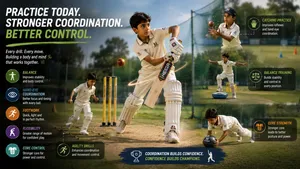 How Cricket Practice Can Help Kids Develop Stronger Coordination and Body Control.Discover how cricket practice helps kids develop coordination and body control through batting, bowling, catching, throwing, running, balance drills, and movement exercises.