Why Learning to Run Between the Wickets Can Transform a Young Cricketer’s Game

Introduction: Cricket Is About More Than Hitting Boundaries
When children first start playing cricket, their attention naturally goes toward batting.
They want to hit the ball.
They want to score boundaries.
They want to see their name on the scoreboard.
But there is another way to score runs that can completely change a young player's understanding of cricket:
Running between the wickets.
A well-timed single can be just as valuable as a beautiful boundary.
A quick second run can turn one run into two.
A smart decision to refuse a risky run can prevent a wicket.
These moments may not always look spectacular, but they can have a major influence on the outcome of a match.
For young cricketers, learning to run between the wickets is therefore about much more than speed.
It teaches communication, awareness, teamwork, decision-making, fitness, timing, and responsibility.
Why Running Between Wickets Matters
A cricket innings is built from runs.
While boundaries can produce runs quickly, singles and twos allow batters to keep the scoreboard moving.
Good running can help a team:
- Rotate the strike.
- Put pressure on fielders.
- Maintain scoring momentum.
- Find gaps in the field.
- Turn good shots into additional runs.
For young players, this creates a more complete understanding of batting.
Running Is a Skill, Not Just a Physical Ability
Some children assume that fast running automatically makes someone good between the wickets.
Speed certainly helps.
But smart running depends on much more.
Players need to understand:
- Where the ball has gone.
- How quickly the fielder can reach it.
- Where the other batter is.
- Which end they need to reach.
- Whether another run is possible.
This means running between wickets is partly a decision-making skill.
The First Lesson: Watch the Ball
Young batters need to develop the habit of watching where the ball goes after they hit it.
A player who immediately looks toward their partner or runs without checking the ball may make a poor decision.
The better habit is:
Hit → Watch → Decide → Run.
With practice, this process becomes quicker.
Why Ball Awareness Matters
Imagine a batter plays the ball toward deep square leg.
The fielder is slow to reach it.
That could create an opportunity for two runs.
Now imagine the ball goes directly to a nearby fielder.
Trying for a second run could be dangerous.
The difference comes from observing the ball.
Communication Between Batters
Good communication is essential.
Batters need clear calls such as:
- Yes
- No
- Wait
- Two
The exact wording may vary between teams, but the principle remains the same.
Both players must understand what is happening.
Why Young Players Should Practice Calling
A child may be physically capable of completing a run but still struggle because communication is unclear.
Practice can help children become comfortable with making loud, decisive calls.
Running Between Wickets Builds Teamwork
Batting is not always an individual activity.
When two batters are at the crease, every running decision affects both players.
One player may see an opportunity.
The other may see danger.
They must communicate and make a decision together.
This teaches children how to cooperate under pressure.
Learning to Trust a Partner
Young players gradually learn that successful running requires trust.
They need to know:
"If my partner calls yes, I should respond quickly."
At the same time, they must also learn to communicate clearly enough that their partner can react safely.
The Importance of the First Run
The first run can create additional opportunities.
After completing a single, batters may be able to rotate the strike.
This keeps both players involved.
Young cricketers should understand that a single is not an insignificant achievement.
It can be the beginning of a productive partnership.
Turning One Into Two
The second run is where decision-making becomes especially important.
A batter needs to judge:
- Ball speed.
- Fielder position.
- Throwing distance.
- Running speed.
- Partner's position.
This requires quick thinking.
When Not to Run Is Just as Important
One of the biggest lessons in running between wickets is learning to say:
"No."
A young player may want another run because they are excited.
But if the ball is already with the fielder, the extra run may not be worth the risk.
Good runners understand that smart cricket is not about running every time.
It is about choosing the right moments.
Risk Versus Reward
Suppose a team needs 20 runs with plenty of wickets available.
A risky second run may not be necessary.
Now imagine the team needs 10 runs from the final over.
The situation is different.
Young players can gradually learn that running decisions depend on the match context.
Match Situation Changes the Decision
The same ball can produce different decisions depending on the score.
A single may be excellent at one moment.
A second run may be essential at another.
A risky run may be unacceptable in a different situation.
This is how running develops cricket intelligence.
Running Teaches Children to Think Ahead
Before the ball is even delivered, batters can consider:
- Where are the fielders?
- Which areas are easier to score into?
- Who has the stronger arm?
- Where is the boundary?
- How quickly can we turn?
Thinking ahead improves awareness.
Understanding Field Positions
Young batters should learn to notice where fielders are standing.
For example:
If a fielder is positioned deep at midwicket, a well-placed shot in that area may allow a comfortable single.
If the fielder is inside the circle, the same shot may offer a different opportunity.
Field awareness helps players make better decisions.
Running Can Put Pressure on Fielders
Fast and intelligent running can create pressure.
A fielder who knows the batters are quick may feel forced to throw quickly.
That can lead to:
- Missed throws.
- Misfields.
- Overthrows.
- Poor decisions.
Young players can learn that pressure does not always come from boundaries.
Sometimes it comes from running hard.
The Value of a Quick Single
A quick single can change the rhythm of an innings.
It can:
- Rotate the strike.
- Bring a new bowler into play.
- Move fielders.
- Build momentum.
This teaches children that small actions can have large effects.
Running Between Wickets Improves Fitness
Repeated short runs require bursts of acceleration.
Players need to:
- Sprint.
- Stop.
- Turn.
- Accelerate again.
This can develop cricket-specific fitness.
Turning Quickly Matters
Running between wickets is not simply about sprinting in a straight line.
Players must turn around the crease efficiently.
A poor turn can waste valuable time.
Young players can practice:
- Low body position.
- Efficient foot placement.
- Strong push-off.
- Controlled turning.
Batting Partners Need Different Running Styles
Two batters may have different speeds.
One may be naturally faster.
Another may take longer to reach the opposite crease.
This makes communication even more important.
Players need to understand each other's strengths.
Speed Is Useful, But Awareness Comes First
The fastest child on the team is not automatically the best runner.
A slower player who makes excellent decisions may contribute more effectively.
This is another important lesson:
Smart running can be more valuable than reckless speed.
Running Between Wickets Builds Decision-Making
A player has only a short amount of time to decide.
Should we run?
Should we stop?
Can we take two?
Should we turn back?
These repeated decisions help develop quick judgment.
It Improves Reaction Speed
Young players gradually learn to respond quickly to changing situations.
A ball that initially looks like a single may suddenly become a potential two.
A fielder's movement may change the decision.
Players need to react.
Running Also Develops Spatial Awareness
Players must understand where different objects are around them:
- Ball.
- Partner.
- Fielder.
- Stumps.
- Crease.
This improves their awareness of space.
The Importance of the Crease
Young players need to understand exactly what counts as making their ground.
Reaching the crease safely is more important than simply running quickly.
Practice helps children become comfortable with:
- Grounding the bat.
- Crossing the line.
- Turning.
- Returning safely.
Running With the Bat
Young players should learn how to carry the bat comfortably while sprinting.
They need to maintain control without allowing the bat to interfere with their movement.
Calling Before Running
One of the most important habits is communication.
A player should not assume their partner is running.
A clear call can prevent confusion.
The Danger of Silent Running
If both batters run without communicating, they may:
- Run toward each other.
- Stop at the same end.
- Miss an opportunity.
- Get run out.
Teaching communication early can prevent these problems.
Coaches Can Turn Running Into a Game
Children often learn quickly when drills feel like games.
For example:
Challenge: Score as many runs as possible in six deliveries without attempting a boundary.
This encourages players to search for singles and twos.
The Six-Ball Running Challenge
A coach can create a simple exercise.
One batter faces six deliveries.
The goal is to score through running rather than boundaries.
This teaches children to:
- Find gaps.
- Watch the ball.
- Communicate.
- Turn quickly.
The "Should We Run?" Challenge
A coach can deliberately create different fielding situations.
After each shot, the batter must decide:
Run or no run?
The objective is not simply speed.
It is decision quality.
Use Soft Balls for Beginners
Young children do not need hard leather balls for every running drill.
Soft practice balls can make early training more comfortable.
The focus should remain on movement and decision-making.
Running Drills for Young Cricketers
Some simple drills include:
Drill 1: Straight Sprint
Practice running between two marked points.
Drill 2: Quick Turn
Sprint to the crease, turn efficiently, and return.
Drill 3: Call and Run
Practice clear communication with a partner.
Drill 4: Ball Awareness
Watch where a coach rolls or throws the ball before deciding whether to run.
Drill 5: Match Simulation
Combine batting, fielding, and running in realistic situations.
Parents Can Practice Running at Home
Parents do not need a cricket ground.
A safe outdoor space can be enough.
Use two clearly marked points and practice:
- Sprinting.
- Turning.
- Calling.
- Batting movement.
- Decision-making.
Keep sessions short and enjoyable.
Safety Should Always Come First
Running drills should be performed in a safe area.
Children should have:
- Appropriate footwear.
- Enough space.
- Clear running paths.
- Proper supervision.
Avoid practicing sprinting where there are obstacles or slippery surfaces.
Good Shoes Can Support Movement
Cricket involves repeated short movements.
Suitable cricket shoes can provide players with better comfort and traction for their playing environment.
Children should use footwear that fits correctly and is appropriate for the surface.
Equipment Should Match the Child
Young players should also use appropriately sized cricket equipment.
A bat that is too heavy can affect movement.
Protective equipment that does not fit correctly can become uncomfortable.
Comfort allows children to focus on learning.
Junior Cricket Bats and Running
The right bat can make a difference during running.
A child should be able to control the bat while moving quickly between the wickets.
This is another reason parents should avoid oversized or excessively heavy junior bats.
Kashmir Willow Can Be a Practical Option
For many developing players, Kashmir Willow bats can provide a useful combination of durability and value.
For junior players, however, the correct size and manageable weight should remain the priority.
Running Can Make a Young Player More Valuable
A child who contributes through running can help the team even when they are not hitting boundaries.
They can:
- Rotate strike.
- Build partnerships.
- Pressure fielders.
- Convert singles into twos.
- Take advantage of mistakes.
These are valuable skills.
Running Can Help Build Partnerships
Good partnerships are often based on communication and running.
Two batters who understand each other can keep the scoreboard moving.
This can frustrate bowlers and force fielding changes.
Running Between Wickets and Mental Toughness
Running requires effort even when a player is tired.
Late in an innings, players may need to continue sprinting.
This can develop determination and discipline.
Learning to Reset After a Poor Run
A player may attempt a second run and discover that it was too risky.
Instead of becoming afraid of running again, they can learn from the decision.
The next opportunity should be judged independently.
Cricket Teaches Children That Speed Needs Control
Running as fast as possible is not always the objective.
Players need to control their:
- Acceleration.
- Turning.
- Stopping.
- Bat placement.
- Decision-making.
This combination creates effective running.
Running Encourages Responsibility
A poor running decision can get a partner out.
That means children learn that their decisions affect other people.
This can encourage greater responsibility.
Communication Skills Develop Naturally
Young players repeatedly communicate:
"Yes!"
"No!"
"Two!"
These simple calls teach them to communicate clearly under pressure.
The same principle can eventually help them become better communicators away from cricket.
Teamwork Becomes Practical
Instead of simply hearing about teamwork, children experience it.
They learn:
"My decision affects my partner."
That is a powerful lesson.
Running Helps Children Understand the Whole Game
A child who learns only to hit the ball may focus on individual performance.
A child who learns to run, communicate, watch fielders, and understand match situations begins to see cricket as a complete game.
Nepal, Germany, USA, Canada, Netherlands, and UK
Youth cricket continues to develop across Nepal, Germany, the United States, Canada, and the Netherlands, while the United Kingdom has a long-established culture of junior and club cricket.
Young players in different countries may train in different environments.
But the fundamental skills of running between wickets remain the same.
Good running requires:
- Awareness.
- Communication.
- Timing.
- Speed.
- Decision-making.
These skills can benefit young players regardless of where they learn cricket.
When Should Kids Start Learning Running Between Wickets?
Children can begin learning basic running concepts as soon as they start playing organized cricket.
However, the training should remain age-appropriate.
For younger children, keep it simple:
- Run.
- Stop.
- Turn.
- Listen.
- Communicate.
Older children can gradually learn more tactical aspects.
Don't Overcomplicate It for Beginners
Young players do not need detailed tactical lectures.
A few simple rules are enough:
Watch the ball.
Listen to your partner.
Run hard when you decide to run.
Don't run if the situation is unsafe.
These foundations can be developed over time.
A Simple Training Session for Kids
A coach can structure a short session like this:
10 Minutes — Sprinting
Practice acceleration and turning.
10 Minutes — Calling
Practice communication between partners.
10 Minutes — Ball Awareness
Watch the ball and decide whether to run.
15 Minutes — Batting and Running
Score through singles and twos.
15 Minutes — Match Simulation
Create realistic situations.
This approach keeps the session active and educational.
What Parents Should Encourage
Parents can help children by asking:
- Did you communicate with your partner?
- Did you watch where the ball went?
- Did you make smart running decisions?
- Did you turn quickly?
- Did you learn something today?
These questions focus on development rather than only the score.
Common Running Mistakes Young Players Make
Children often make mistakes such as:
- Running without calling.
- Watching the ball too late.
- Turning too slowly.
- Running when the fielder is close.
- Stopping halfway.
- Forgetting to ground the bat.
- Focusing only on speed.
These mistakes are normal.
Practice helps correct them.
How Heega Sports Supports Young Cricketers
At Heega Sports, we understand that young players need equipment that supports their complete development.
Our cricket range includes:
- Junior cricket bats.
- Kashmir Willow bats.
- Leather cricket balls.
- Practice balls.
- Batting gloves.
- Batting pads.
- Cricket helmets.
- Cricket shoes.
- Cricket kit bags.
- Practice nets.
- Training accessories.
Appropriately sized equipment can help young players move comfortably and focus on developing their skills.
Final Thoughts
Running between the wickets may not receive the same attention as a six or a spectacular wicket.
But it can have a major impact on a young cricketer's development.
It teaches children to watch the ball, communicate clearly, understand field positions, make quick decisions, work with teammates, and control their movement.
It also teaches an important lesson about cricket:
Every run matters.
A single can change the scoreboard.
A quick second run can change the pressure of an innings.
A smart decision not to run can save a wicket.
These small moments can eventually separate players who simply hit the ball from players who truly understand how to play the game.
For young cricketers, learning to run between the wickets is therefore not just about becoming faster.
It is about becoming smarter, more aware, more confident, and more complete as a player.
And when children learn these skills early, they carry them into every match that follows.
🏏 Help Your Young Cricketer Develop Every Part of Their Game
Explore junior cricket bats, Kashmir Willow bats, leather balls, practice balls, batting gloves, pads, helmets, cricket shoes, kit bags, practice nets, and training accessories at Heega Sports.
Shop Now
Heega Sports – Helping Young Cricketers Train Smarter, Run Better, and Enjoy Every Part of the Game.
Related posts
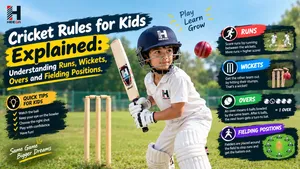 Cricket Rules for Kids Explained: Understanding Runs, Wickets, Overs and Fielding Positions.Learn cricket rules for kids, including runs, wickets, overs, fielding positions, batting, bowling, and basic match rules in a simple beginner's guide.
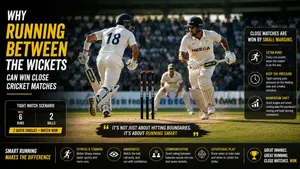 Why Running Between the Wickets Can Win Close Cricket Matches.Learn why running between the wickets matters in cricket and how speed, communication, awareness, and smart running can help win close matches.
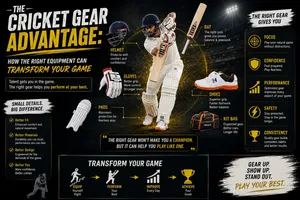 The Cricket Gear Advantage: How the Right Equipment Can Transform Your GameDiscover how the right cricket gear—from bats and batting gloves to helmets, pads, and cricket shoes—can improve comfort, mobility, control, confidence, and consistency on the field.