Why Your Cricket Potential Is Bigger Than You Think—and How to Unlock It

The Mindset, Training Habits, and Practical Strategies That Can Help You Reach the Next Level
How good could you actually become?
For many cricketers, the biggest limitation isn't talent, fitness, or technique. It's the belief that they've already reached their ceiling.
You may have had a difficult season, struggled with consistency, or watched another player progress faster than you. It's easy to conclude that you're simply not capable of reaching a higher level.
But your current performance isn't necessarily your maximum potential.
Cricket is a skill-based game that rewards practice, experience, fitness, decision-making, and mental development. With the right approach, there may be far more room for improvement than you realize.
At Heega Sports, we believe every ambitious cricketer can continue developing by combining smart training, consistent habits, strong preparation, and reliable equipment.
Here's how to start unlocking more of your cricket potential.
1. Stop Confusing Current Ability With Potential
Your current skill level is simply where you are today.
It doesn't tell you exactly where you can be next year.
A player who currently struggles against swing bowling can improve through focused practice.
A bowler who lacks pace can develop strength, technique, and control.
A nervous player can become more confident through repeated exposure to pressure.
Your current weaknesses are not necessarily permanent.
2. Identify What Is Actually Holding You Back
Before trying to improve everything, find the biggest obstacle.
Ask yourself:
- Do I lack technical consistency?
- Is my fitness limiting me?
- Do I struggle under pressure?
- Is my decision-making holding me back?
- Am I practicing without a clear goal?
- Do I lose confidence after mistakes?
The answer will help you decide where to focus.
3. Set Goals That Stretch You
Your goals should challenge you without becoming unrealistic.
Instead of saying:
"I want to become a great cricketer."
Set targets such as:
- Improve batting consistency
- Increase bowling accuracy
- Improve sprint speed
- Reduce repeated mistakes
- Become more confident against spin
- Improve catching reliability
Specific goals turn potential into a practical development plan.
4. Train Your Biggest Weakness
Your strongest skill may win you praise.
Your weakest skill may determine how far you can go.
Spend time developing areas that currently limit your performance.
For example:
Batter
Practice the shots and situations you struggle with most.
Bowler
Focus on the deliveries you find difficult to execute.
Fielder
Repeat the type of catches or throws that cause problems.
Improvement often begins where comfort ends.
5. Practice With Purpose
Don't measure training only by the number of hours spent in the nets.
Ask:
What did I improve today?
A productive session could focus entirely on:
- Footwork
- Shot selection
- Bowling accuracy
- Playing spin
- Playing pace
- Catching
- Running between wickets
Focused practice creates better learning opportunities.
6. Make Practice More Like a Match
Some players perform well in practice but struggle during competition.
The solution is to introduce pressure during training.
Try:
- Chasing a target with limited balls
- Defending a small total
- Bowling a final over
- Batting after losing early wickets
- Taking catches under fatigue
The more familiar pressure becomes, the easier it can be to manage.
7. Build Fitness Around Your Role
Not every cricketer needs exactly the same fitness program.
Your training should reflect your role.
A fast bowler may prioritize:
- Strength
- Explosiveness
- Mobility
- Recovery
A batter may benefit from:
- Core strength
- Speed
- Endurance
- Mobility
A fielder may focus heavily on:
- Acceleration
- Agility
- Reaction speed
- Coordination
Train for the demands of your game.
8. Develop Mental Strength
Your mindset can either unlock your ability or hold it back.
Work on:
- Concentration
- Confidence
- Patience
- Resilience
- Decision-making
- Pressure management
Learn to reset after mistakes rather than carrying them into the next delivery.
9. Stop Letting One Bad Match Define You
A poor performance is feedback—not a verdict.
You might score a duck today and play a match-winning innings next week.
You might concede runs today and produce your best spell next month.
After a poor performance, ask:
What can I learn?
Then return to training.
10. Use Video and Data to Understand Your Game
Sometimes you can't see your own technical problems.
Video can reveal:
- Head movement
- Footwork
- Bat swing
- Bowling alignment
- Release position
- Fielding technique
If available, basic performance statistics can also show trends that memory may miss.
Use information to guide improvement rather than relying entirely on intuition.
11. Learn From Better Players
Spend time around cricketers who challenge you.
Watch how they:
- Prepare
- Practice
- Recover
- Handle mistakes
- Communicate
- Approach pressure
Don't simply copy their technique.
Study their habits.
12. Build Confidence Through Evidence
Confidence becomes stronger when you have proof.
Instead of simply telling yourself:
"I'm good enough."
Create evidence through preparation.
Every successful training session becomes evidence.
Every difficult situation you handle becomes evidence.
Every weakness you improve becomes evidence.
Over time, that evidence creates genuine confidence.
13. Don't Constantly Change Your Technique
When improvement feels slow, players sometimes make unnecessary changes.
New grip.
New stance.
New bowling action.
New equipment.
New training routine.
Constant change can prevent you from mastering anything.
Make adjustments carefully and give them enough time to work.
14. Choose Equipment That Supports Your Game
Your equipment should help you concentrate, not create distractions.
Make sure your:
- Bat suits your playing style
- Helmet fits securely
- Gloves feel comfortable
- Pads provide appropriate protection
- Shoes offer suitable grip and support
- Cricket bag keeps everything organized
At Heega Sports, players can find cricket bats, helmets, gloves, pads, shoes, bags, accessories, and sportswear designed for serious training and competition.
The objective isn't to spend unnecessarily. Choose reliable equipment that fits correctly and matches your playing needs.
15. Take Recovery Seriously
You can't unlock your potential by training endlessly without rest.
Recovery supports:
- Muscle repair
- Energy
- Concentration
- Training quality
- Long-term consistency
Prioritize sleep, hydration, nutrition, mobility, and appropriate rest.
Smart players understand that recovery is part of development.
The Potential Unlocking Formula
Think of your development as:
Potential → Practice → Feedback → Adjustment → Consistency → Performance
Potential alone isn't enough.
It needs a system.
The more effectively you repeat this cycle, the more likely you are to discover what you're capable of.
A Simple 4-Week Potential Plan
Week 1: Discover
Identify weaknesses and establish goals.
Week 2: Develop
Focus heavily on your most important skill areas.
Week 3: Challenge
Introduce pressure and match simulations.
Week 4: Evaluate
Review progress and create your next training targets.
Then repeat the cycle.
Signs You're Unlocking Your Potential
Progress isn't always visible in your statistics immediately.
Look for:
- Better decision-making
- Greater confidence
- Fewer repeated mistakes
- Improved fitness
- Better technique
- Stronger concentration
- Greater consistency under pressure
These changes often appear before major improvements in match statistics.
What Can Keep Your Potential Hidden?
Avoid these common traps:
- Believing talent is fixed
- Comparing yourself constantly
- Practicing without goals
- Avoiding weaknesses
- Giving up after setbacks
- Ignoring fitness
- Neglecting recovery
- Changing techniques too frequently
- Expecting instant results
Your potential needs patience as much as effort.
Your Cricket Potential Checklist
Start today:
✅ Identify your biggest weakness.
✅ Set one measurable goal.
✅ Create purposeful training sessions.
✅ Add pressure situations.
✅ Track your progress.
✅ Improve fitness.
✅ Train your mindset.
✅ Review performances.
✅ Maintain your equipment.
✅ Stay patient.
You don't need to unlock everything at once.
Start with one area.
Final Thoughts
Your cricket potential is not defined by your current statistics, your last match, or the level you're playing at today.
It is shaped by what you're willing to learn, practice, change, and repeat over time.
The player who seems average today could become a completely different cricketer after a year of focused development.
The key is to stop asking whether you have enough talent and start asking how much you can improve with the right process.
Identify your weaknesses.
Train with purpose.
Challenge yourself under pressure.
Build your fitness.
Strengthen your mindset.
Learn from every performance.
And give yourself enough time to develop.
You may be capable of far more than your current performance suggests.
At Heega Sports, we're proud to support ambitious players throughout that journey with cricket bats, helmets, gloves, pads, shoes, bags, accessories, and sportswear designed to help you train confidently and compete comfortably.
Your potential isn't a destination. It's a level you keep discovering.
Shop Now
Heega Sports – Helping Young Cricketers Pack Smart, Prepare Better, and Play With Confidence.
Related posts
 From Potential to Performance: How to Unlock Your Best CricketLearn how to turn cricket potential into consistent performance through purposeful training, pressure practice, mental preparation, fitness, recovery, match awareness, feedback, and smart equipment choices.
 Why Lightweight Cricket Pads Matter More Than You ThinkDiscover why lightweight cricket pads matter for batting mobility, running between wickets, balance, comfort, footwork, confidence, and long-innings endurance while maintaining appropriate protection.
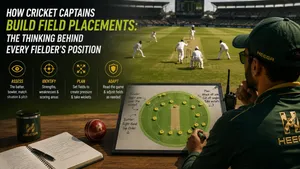 How Cricket Captains Build Field Placements: The Thinking Behind Every Fielder's PositionLearn how cricket captains build field placements, why every fielder has a purpose, and how bowling plans, batter tendencies, pitch conditions, and match situations influence field strategy.