Why Lightweight Cricket Pads Matter More Than You Think

When choosing cricket batting pads, protection is usually the first priority.
And it should be.
But there's another factor that deserves far more attention:
Weight.
A pair of batting pads may not seem heavy when you first put them on. But after hours at the crease, running between wickets, training drills, and repeated movement, even small differences can become noticeable.
This is why lightweight cricket pads have become an increasingly attractive option for players who want a balance of protection, mobility, comfort, and endurance.
At Heega Sports, we believe cricket equipment should work with the player—not create unnecessary distractions. The right batting pads should provide appropriate protection while allowing you to move naturally.
Here's why pad weight matters.
1. Lightweight Doesn't Mean Less Protection
One of the biggest misconceptions is:
Lighter pads must provide less protection.
That's not necessarily true.
Modern cricket pads can use different materials and construction techniques to provide appropriate protection without making the overall design unnecessarily bulky.
When choosing pads, don't focus only on weight.
Consider the complete combination of:
- Protection
- Fit
- Construction
- Comfort
- Mobility
- Weight
- Intended level of play
The objective is efficient protection, not simply maximum bulk.
2. Every Extra Gram Is Part of Your Movement
Cricket involves thousands of small movements.
You walk.
You take your stance.
You move forward.
You move back.
You run between wickets.
You rotate your legs.
You change direction.
Heavy equipment can make these movements feel more demanding over time.
Lightweight pads can help reduce the feeling of carrying unnecessary weight around your legs.
3. Running Between Wickets Can Feel Easier
Batting isn't finished after you hit the ball.
You need to run.
A quick single can become two.
Two runs can become three.
Those repeated accelerations require your legs to move freely.
Bulky or heavy pads can feel restrictive during repeated running.
Lighter pads can make the overall experience feel more natural, particularly during long innings.
4. Lightweight Pads Can Support Better Mobility
Good batting involves movement.
You may need to:
- Step forward
- Move across the crease
- Transfer weight
- Get into position for a pull
- Move back against short bowling
- Rotate during shots
If your pads feel excessively bulky, you may become more conscious of them.
The ideal equipment should allow you to think about the delivery—not your legs.
5. Comfort Becomes More Important During Long Innings
Imagine batting for several hours.
Small discomforts can become major distractions.
Heavy pads may contribute to a feeling of fatigue or discomfort, especially if the fit isn't right.
Lightweight designs can make long periods at the crease feel more manageable.
But remember:
Fit still matters more than the number on the scale.
A poorly fitting lightweight pad can be more uncomfortable than a well-fitting heavier one.
6. Balance Matters
Batting requires balance.
Your legs provide the foundation for your stroke.
When you move forward, your body weight needs to transfer smoothly.
When you move back, you need to remain stable.
When you rotate, your lower body has to work with your upper body.
Equipment that feels excessively heavy can make these movements feel less natural.
7. Fast Bowlers Make Movement More Important
Facing pace requires quick reactions.
You may need to:
- Move forward
- Move back
- Get out of the way
- Adjust your feet
- Change your shot at the last moment
Lightweight, well-fitting pads can help keep your lower-body movement feeling unrestricted.
They don't make you faster automatically.
But they can remove unnecessary equipment-related resistance.
8. Spin Requires Footwork Too
Lightweight pads aren't only useful against fast bowling.
Playing spin often involves precise footwork.
You may:
- Charge down the pitch
- Move back
- Use your crease
- Shuffle
- Change your position
Comfortable equipment can help you move without constantly thinking about it.
9. Wicketkeepers Aren't the Only Players Who Need Mobility
Although batting pads are primarily designed for batters, mobility matters throughout cricket.
Players regularly move between batting, fielding, and training activities.
Efficient equipment can make transitions easier and reduce unnecessary fatigue.
10. Lightweight Pads Can Help During Training
Training sessions can involve hundreds of repetitions.
You may practice:
- Forward defense
- Drives
- Pull shots
- Footwork
- Running
- Match simulations
Heavy equipment can become increasingly noticeable during repeated drills.
Lightweight pads can make high-volume training more comfortable.
11. Reduced Bulk Can Improve Freedom of Movement
Weight isn't the only consideration.
Bulk matters too.
A pad can be relatively light but still feel large around the legs.
Look for designs that provide suitable protection without unnecessarily restricting movement.
The goal is a natural range of motion.
12. Fit Is Still King
A lightweight pad won't help much if it doesn't fit correctly.
Your pads should feel:
- Secure
- Comfortable
- Stable
- Appropriately positioned
They shouldn't constantly slide down or require repeated adjustment.
If you're thinking about your pads every few minutes, something isn't right.
13. Straps Matter More Than You Think
Pad straps help maintain positioning.
They should hold the pad securely without creating uncomfortable pressure.
Poor adjustment can cause:
- Movement
- Chafing
- Discomfort
- Unwanted shifting
When trying pads, move naturally and check whether they remain in position.
14. Knee Protection Is Critical
The knee is an important area to protect.
A lightweight design should still provide appropriate coverage and protection around the knee area.
Check that the knee section aligns correctly with your knee when you're standing and moving naturally.
Don't choose weight reduction at the expense of appropriate protection.
15. Protection Should Match Your Level
Different players have different requirements.
Junior Players
Prioritize correct fit, protection, comfort, and appropriate sizing.
Club Players
Consider durability, mobility, comfort, and protection for regular matches and training.
Competitive Players
Pay close attention to construction, fit, protection, weight, mobility, and long-innings comfort.
Your level of cricket should influence your equipment choices.
16. Lightweight Pads Can Help Reduce Equipment Fatigue
Equipment fatigue is easy to overlook.
A player may start an innings feeling fresh.
Several hours later, everything feels heavier.
Your pads aren't necessarily becoming heavier.
You're becoming more aware of their weight.
Reducing unnecessary equipment weight can help make the overall kit feel more manageable.
17. Don't Choose Pads Based Only on Weight
This is equally important.
The lightest pad isn't automatically the best pad.
A good pair should balance:
Protection + Weight + Fit + Mobility + Comfort + Durability
If you sacrifice too much in one category, the overall product may not suit your needs.
18. Compare Pads Before Buying
If possible, try different models.
Put them on.
Stand in your batting stance.
Bend your knees.
Move forward.
Move backward.
Walk.
Jog.
Simulate your normal batting movements.
You'll quickly notice differences between designs.
19. Think About Your Playing Conditions
Where you play can influence what you need.
Consider:
- Climate
- Match duration
- Surface
- Competition level
- Training frequency
Players who regularly play long matches in hot conditions may place even greater value on comfort and weight.
20. Lightweight Pads Can Improve Confidence
This is one of the less obvious benefits.
When equipment feels comfortable and secure, you may feel more confident moving naturally.
You're less likely to think:
"My pads are getting in the way."
Instead, you can focus on:
The bowler.
The field.
The shot.
The next run.
That's what good cricket equipment should do.
What Makes a Good Lightweight Cricket Pad?
Look for:
☑ Appropriate protection
☑ Lightweight construction
☑ Comfortable fit
☑ Good knee alignment
☑ Secure straps
☑ Freedom of movement
☑ Adequate coverage
☑ Breathable materials where appropriate
☑ Durable construction
☑ Suitable sizing
☑ Appropriate for your level of cricket
Common Batting Pad Mistakes
Avoid:
❌ Choosing the lightest pair without checking protection.
❌ Buying the wrong size.
❌ Ignoring knee alignment.
❌ Wearing loose pads that move excessively.
❌ Tightening straps excessively.
❌ Ignoring discomfort during practice.
❌ Keeping damaged pads in use.
❌ Choosing equipment based purely on appearance.
The right choice is about balance.
Lightweight vs Heavyweight Pads
FeatureLightweight PadsHeavier Pads
Mobility
Often easier to move in
May feel more substantial
Long innings
Can feel less tiring
May feel heavier over time
Protection
Depends on construction
Depends on construction
Comfort
Highly design-dependent
Highly design-dependent
Running
Can feel more natural
May feel more noticeable
Best choice
Depends on player
Depends on player
There is no universal winner.
Your needs determine the better option.
A Quick Test Before a Match
Before stepping onto the field:
Step 1 — Put the Pads On
Make sure they're positioned correctly.
Step 2 — Secure the Straps
Keep them secure but comfortable.
Step 3 — Check Your Knees
Make sure the knee sections align correctly.
Step 4 — Move Naturally
Walk, bend, and take your batting stance.
Step 5 — Test Your Footwork
Move forward and backward as you normally would.
Step 6 — Check for Movement
The pads shouldn't constantly shift.
If everything feels secure and natural, you're ready to focus on batting.
How to Maintain Your Cricket Pads
Even quality pads need care.
After use:
- Allow them to dry naturally
- Avoid leaving them damp inside your kit bag
- Clean them according to manufacturer instructions
- Check straps regularly
- Inspect protective sections
- Store them properly
Regular inspection can help you identify wear before it becomes a bigger problem.
When Should You Replace Your Pads?
Consider replacement if you notice:
- Significant damage
- Broken straps
- Cracked protective components
- Poor fit
- Excessive wear
- Reduced structural integrity
Don't wait until a pad completely falls apart.
Protective equipment should remain in appropriate condition.
The Lightweight Pad Formula
Think of the ideal batting pad as:
Protection + Comfort + Mobility + Secure Fit + Manageable Weight
That's the real goal.
Not simply:
"As light as possible."
Final Thoughts
Lightweight cricket pads may seem like a small equipment choice.
But cricket is a game of movement.
Every step, every shot, every run, and every adjustment depends on your ability to move comfortably.
The right lightweight pads can help reduce unnecessary bulk and make movement feel more natural while still providing appropriate protection.
At Heega Sports, we support cricketers with cricket pads alongside bats, helmets, batting gloves, cricket shoes, bags, accessories, and sportswear for serious training and competitive cricket.
Before buying your next pair of pads, don't ask only:
"How light are they?"
Ask:
"Do they give me the protection I need while allowing me to move naturally?"
That's the better question.
Because the best cricket pads aren't the ones you notice—they're the ones that protect you without getting in the way of your game.
Shop Now
Heega Sports – Helping Players Stay Ready From Daylight to Floodlights.
Related posts
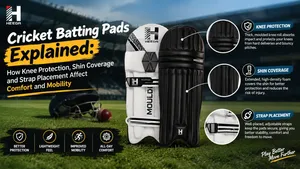 Cricket Batting Pads Explained: How Knee Protection, Shin Coverage and Strap Placement Affect Comfort and MobilityLearn how cricket batting pads, knee protection, shin coverage and strap placement affect comfort, mobility, impact protection and batting performance.
 Lightweight vs Heavy Cricket Bat: Which Option Is Better for Your Playing Style?Compare lightweight and heavy cricket bats to understand how weight affects bat speed, power, control, balance, timing, and playing style.
 How Cricket Captains Build Field Placements: The Thinking Behind Every Fielder's PositionLearn how cricket captains build field placements, why every fielder has a purpose, and how bowling plans, batter tendencies, pitch conditions, and match situations influence field strategy.