Batting Gloves vs Wicketkeeping Gloves: Understanding the Key Differences in Cricket
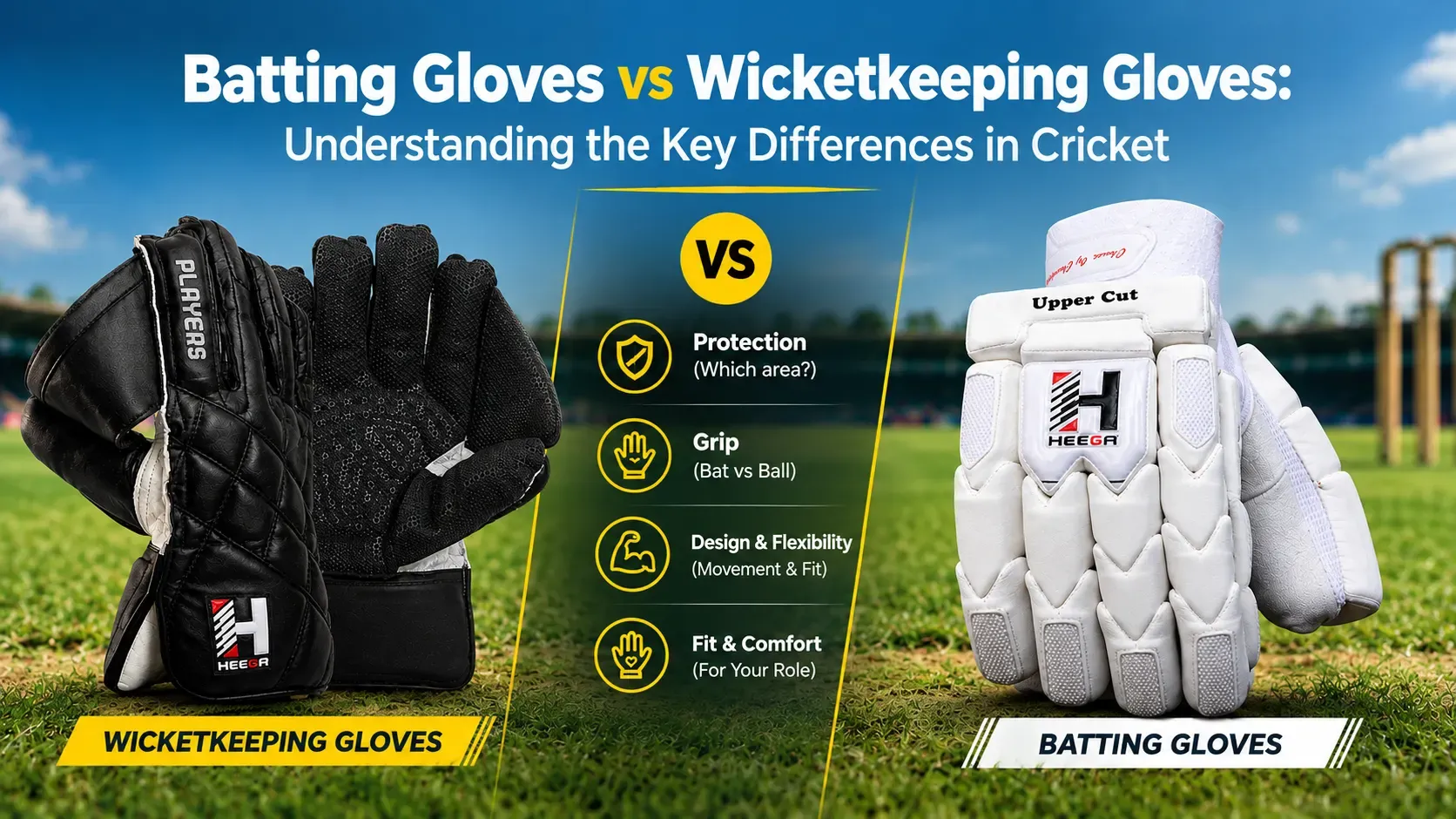
Introduction: Why Batting Gloves and Wicketkeeping Gloves Are Not the Same
Cricket involves many specialized skills, and different positions require different equipment.
Two pieces of equipment that are often confused by beginners are batting gloves and wicketkeeping gloves.
At first glance, both appear to be protective gloves worn on the hands.
But their purpose is completely different.
Batting gloves are designed to protect a batter's hands while helping them maintain control of the cricket bat.
Wicketkeeping gloves, on the other hand, are designed to help the wicketkeeper catch, stop, and control cricket balls behind the stumps.
This difference in purpose affects almost every part of their construction.
The padding is different.
The palm design is different.
The finger construction is different.
The grip requirements are different.
Even the way the gloves fit and move with the hands is different.
Understanding these differences is important for players, parents, coaches, and beginners because using the wrong type of glove can affect comfort, movement, and performance.
Whether you are buying your first pair of cricket gloves or upgrading your equipment for competitive cricket, knowing what makes each glove different can help you make a much better decision.
What Are Batting Gloves?
Batting gloves are protective gloves worn by batters while facing cricket deliveries.
Their primary purpose is to protect the hands from impact while allowing the batter to maintain a secure and comfortable grip on the bat.
A batter may face deliveries from:
- Fast bowlers
- Medium-fast bowlers
- Spin bowlers
- Swing bowlers
- Seam bowlers
The ball can travel at high speed, and accidental contact with the hands can be painful or dangerous.
Batting gloves therefore combine protection with flexibility and bat control.
What Are Wicketkeeping Gloves?
Wicketkeeping gloves are specialized gloves designed for the player positioned behind the stumps.
The wicketkeeper has a completely different job from the batter.
Instead of holding a bat, the wicketkeeper needs to:
- Catch deliveries.
- Stop balls.
- Collect edges.
- Take catches.
- Receive throws.
- React to deflections.
- Gather the ball quickly.
- Support stumpings and run-outs.
Because the wicketkeeper interacts directly with the ball on almost every delivery, their gloves are designed around catching and ball control.
The Biggest Difference: Their Purpose
The easiest way to understand the difference is to look at what each player needs to do.
Batting Gloves
The batter needs to:
Hold + Control + Swing the Bat
Therefore, batting gloves prioritize:
- Hand protection
- Grip
- Flexibility
- Bat control
- Comfort
Wicketkeeping Gloves
The wicketkeeper needs to:
Catch + Stop + Control the Ball
Therefore, wicketkeeping gloves prioritize:
- Catching surface
- Ball absorption
- Grip
- Flexibility
- Finger movement
- Protection
This fundamental difference explains why the two glove types have very different designs.
Batting Gloves Have Padding Designed for Impact
One of the most noticeable characteristics of batting gloves is their protective padding.
The back of the hand and fingers can contain protective sections designed to reduce the effect of accidental ball contact.
Depending on the design, batting gloves may use protective materials around:
- Fingers
- Knuckles
- Thumb
- Back of the hand
The exact arrangement varies between models.
The goal is to provide protection without making the glove unnecessarily bulky.
Wicketkeeping Gloves Have a Large Catching Surface
Wicketkeeping gloves are instantly recognizable because of their large catching palms.
The palms are designed to create a surface that helps the wicketkeeper receive and control the ball.
The glove's construction allows the keeper to absorb the ball rather than simply letting it bounce away.
This is particularly important when the ball arrives at speed.
Why Wicketkeeping Gloves Have Webbing
Many wicketkeeping gloves feature webbing between the thumb and index-finger area.
This creates a larger catching surface.
The web can help the wicketkeeper:
- Receive fast deliveries.
- Catch edges.
- Control difficult balls.
- Reduce the chance of the ball passing through the glove.
The webbing is one of the clearest visual differences between wicketkeeping gloves and batting gloves.
Batting Gloves Are Designed Around a Bat Handle
The palm of a batting glove needs to interact with the cricket bat handle.
The player must be able to maintain a consistent grip while still allowing the hands to move naturally.
The palm therefore needs to provide:
- Friction
- Comfort
- Durability
- Flexibility
A batter cannot afford to have the bat slipping unnecessarily during a shot.
Grip Is Important for Both—but in Different Ways
Both gloves need good grip, but the purpose is different.
A batter needs grip to control the bat.
A wicketkeeper needs grip to control the ball.
This changes the way the palm and materials are designed.
For Batters
Grip helps with:
- Bat control
- Shot direction
- Bat speed
- Follow-through
- Handle stability
For Wicketkeepers
Grip helps with:
- Catching
- Ball retention
- Gathering
- Throwing
- Control after impact
The same type of grip is therefore not necessarily suitable for both positions.
Flexibility Matters for Batting Gloves
A batter needs to move their hands around the bat handle.
During a shot, the hands can change pressure and position.
The gloves must therefore allow sufficient finger and wrist movement.
Good flexibility can help the batter:
- Adjust the bat.
- Control the bat face.
- Change shot direction.
- Play defensive strokes.
- Generate power.
A glove that is too stiff may feel uncomfortable during batting.
Wicketkeepers Need Finger Flexibility Too
Wicketkeeping also requires highly responsive hands.
A keeper may need to react to:
- Outside edges
- Deflections
- Spinners
- Bounces
- Quick singles
- Stumpings
- Throws from fielders
The fingers need to move naturally inside the glove.
However, wicketkeeping gloves combine this flexibility with a much larger catching structure.
Finger Protection Is Different
The fingers are important for both players, but the risks are different.
Batter
The fingers may be struck by the cricket ball while holding the bat.
Therefore, batting gloves generally include protective padding around vulnerable areas.
Wicketkeeper
The fingers repeatedly interact with the ball while catching.
The gloves need to support the fingers while allowing the keeper to close the catching surface around the ball.
Some wicketkeeping gloves also incorporate finger protection features, depending on their design and playing level.
The Shape of the Palm Is Different
Look at the palm of both gloves and the difference becomes obvious.
A batting glove usually has a relatively conventional glove palm designed to wrap around a bat handle.
A wicketkeeping glove has a much larger catching palm.
The wicketkeeping glove essentially creates a catching pocket.
That pocket is an important part of the glove's performance.
Wicketkeeping Gloves Are Larger
Wicketkeeping gloves generally appear much larger than batting gloves.
This is intentional.
The larger surface provides the wicketkeeper with a greater area for receiving the ball.
The additional size also accommodates the glove's catching structure and padding.
Batting gloves, meanwhile, need to remain relatively compact because they must fit around the player's hands while holding and swinging a bat.
Batting Gloves Need a Secure Wrist Fit
A batting glove should fit securely around the wrist.
A good wrist closure helps prevent the glove from moving unnecessarily during the swing.
A secure fit can also improve comfort during long innings.
Players may use adjustable wrist straps to create a personalized fit.
Wicketkeeping Gloves Need a Different Feel
Wicketkeeping gloves also need to remain secure, but the keeper's hand movement is different.
The gloves must allow the wicketkeeper to:
- Open the catching surface.
- Close the gloves around the ball.
- Move quickly.
- React to deflections.
- Throw when necessary.
The fit therefore needs to balance security with movement.
Batting Gloves and Shock Absorption
When the ball hits the bat, vibration can travel through the handle.
Although bat technology and grip also influence vibration, batting gloves provide another layer of cushioning.
This can make repeated batting more comfortable.
The gloves can help reduce the harsh feel of certain impacts and provide additional protection around the hands.
Wicketkeeping Gloves and Ball Impact
Wicketkeepers face repeated ball impact directly on the gloves.
Every delivery can involve:
- A catch
- A take
- A deflection
- A stop
- A bounce
The glove therefore needs to help absorb and control the ball.
The catching pocket and palm construction play an important role.
Batting Gloves Prioritize Bat Control
A batter needs to maintain control throughout the complete stroke.
The glove should not move excessively on the hand.
The palm should provide a secure connection with the handle.
The fingers should remain comfortable.
The wrist should feel supported.
Together, these characteristics allow the player to focus on batting rather than constantly adjusting their gloves.
Wicketkeeping Gloves Prioritize Ball Control
For a wicketkeeper, the objective is completely different.
The glove must help them secure the ball.
A clean catch can change a match.
A small mistake behind the stumps can result in:
- Extra runs
- Missed catches
- Missed stumpings
- Missed run-outs
That makes glove quality and fit particularly important for wicketkeepers.
Can You Use Batting Gloves for Wicketkeeping?
Technically, a player could wear batting gloves behind the stumps.
But that does not make them suitable wicketkeeping equipment.
Batting gloves do not provide the large catching surface required by wicketkeepers.
They are designed around holding a bat, not receiving cricket balls.
Therefore, dedicated wicketkeeping gloves are the appropriate choice for regular wicketkeeping.
Can You Use Wicketkeeping Gloves for Batting?
Wicketkeeping gloves are also not suitable substitutes for batting gloves.
Their large catching surface makes them unsuitable for holding a cricket bat in the normal batting position.
They can restrict the natural grip and hand movement required for batting.
The two types of gloves are designed for completely different tasks.
Why Beginners Often Confuse the Two
New cricket players may see both gloves and assume they are interchangeable.
This is understandable.
Both provide hand protection.
Both cover the fingers.
Both have padded sections.
But their designs are built around different cricket actions.
Understanding the purpose of the equipment is the first step toward choosing correctly.
Batting Gloves vs Wicketkeeping Gloves: A Simple Comparison
Batting Gloves
Designed for:
Batting
Main purpose:
Protect the hands and improve bat control
Key characteristics:
- Protective padding
- Bat-handle grip
- Finger flexibility
- Wrist support
- Compact design
Wicketkeeping Gloves
Designed for:
Wicketkeeping
Main purpose:
Catch, stop, and control the cricket ball
Key characteristics:
- Large catching palm
- Webbing
- Ball-absorbing materials
- Flexible fingers
- Larger overall construction
Choosing Batting Gloves for Beginners
Beginners should focus on basic requirements.
A good pair should:
- Fit comfortably.
- Provide appropriate protection.
- Allow finger movement.
- Offer a secure grip.
- Feel manageable during batting.
There is usually no need to buy the most advanced glove immediately.
The priority should be correct fit and appropriate protection.
Choosing Wicketkeeping Gloves for Beginners
New wicketkeepers should pay attention to:
- Glove size
- Catching surface
- Palm construction
- Flexibility
- Finger protection
- Comfort
- Ability to close the glove naturally
A beginner should be able to receive a ball without constantly fighting against the glove's shape.
Why Size Matters for Both Gloves
Correct sizing is essential for both batting and wicketkeeping gloves.
A glove that is too large may move around.
A glove that is too small may restrict movement.
The correct fit should feel:
- Secure
- Comfortable
- Flexible
- Supportive
Players should always check the manufacturer's size guide because sizing can differ between brands.
Gloves for Junior Cricketers
Young players should use equipment designed for their hand size.
Oversized adult gloves can make it difficult for children to control the bat or wicketkeeping gloves.
For junior players, appropriately sized equipment can help them develop better habits.
As players grow, their glove size should be reassessed.
The Role of Comfort During Long Sessions
Cricket can involve long training sessions and matches.
A batter may spend a considerable amount of time wearing batting gloves.
A wicketkeeper may wear gloves for almost every delivery of an innings.
This makes comfort important.
Poorly fitting gloves can become distracting over time.
Sweat and Ventilation
Both batters and wicketkeepers can experience sweaty hands, particularly during warm conditions.
Ventilation can help improve comfort.
Players should also:
- Air out gloves after use.
- Avoid storing wet gloves inside closed bags.
- Keep equipment clean and dry.
- Follow manufacturer care instructions.
Proper maintenance can help extend the useful life of gloves.
How Batting Gloves Wear Out
Regular batting can gradually cause wear.
Common signs include:
- Worn palm material
- Damaged stitching
- Compressed padding
- Loose wrist straps
- Reduced grip
If protective areas are significantly damaged, replacing the gloves is generally safer than continuing to use them.
How Wicketkeeping Gloves Wear Out
Wicketkeeping gloves also experience substantial wear.
The palm and catching pocket receive repeated impacts.
Signs of wear can include:
- Damaged catching surface
- Worn palm material
- Loose stitching
- Reduced shape
- Damaged webbing
- Loss of cushioning
Regular inspection is important.
Maintaining Batting Gloves
To keep batting gloves in good condition:
- Air them after use.
- Avoid storing them while wet.
- Keep them away from unnecessary moisture.
- Check the palm regularly.
- Inspect protective padding.
- Store them properly inside the kit bag.
- Replace heavily damaged gloves.
Maintaining Wicketkeeping Gloves
Wicketkeeping gloves also require care.
Players should:
- Let them dry naturally.
- Avoid excessive heat.
- Check the webbing.
- Inspect the palm.
- Check stitching.
- Keep them clean according to manufacturer instructions.
- Store them properly between sessions.
Proper care can help preserve the glove's shape and performance.
Why Equipment Should Match Your Cricket Role
One of the biggest lessons for beginners is that cricket equipment is specialized.
A batter needs batting equipment.
A wicketkeeper needs wicketkeeping equipment.
A bowler may have different training requirements.
A fielder may use fielding gloves during practice.
Using role-specific equipment helps players perform their skills more comfortably.
Batting Gloves and Wicketkeeping Gloves in Different Cricket Environments
Cricket is played across different countries and playing conditions.
Players in Nepal, Germany, the United States, Canada, and the Netherlands are increasingly participating in clubs, academies, schools, and organized competitions.
The United Kingdom has a long-established cricket structure with junior, club, academy, and professional pathways.
Although these environments differ, the basic equipment principles remain the same.
Players need equipment that matches:
- Their role
- Their skill level
- Their hand size
- Their playing conditions
- Their comfort requirements
How Heega Sports Supports Cricket Players
At Heega Sports, we understand that different cricket roles require different equipment.
Our cricket range includes:
- Batting gloves
- Wicketkeeping gloves
- Junior cricket gloves
- Kashmir Willow cricket bats
- English Willow cricket bats
- Leather cricket balls
- Practice balls
- Batting pads
- Cricket helmets
- Cricket shoes
- Cricket kit bags
- Practice nets
- Training accessories
Whether you are learning batting, developing wicketkeeping skills, or preparing for competitive cricket, choosing the right equipment can make training more comfortable and effective.
A Simple Buying Checklist
Before purchasing batting gloves, ask:
- Do they fit correctly?
- Is the protection appropriate?
- Does the palm provide a secure grip?
- Can the fingers move naturally?
- Are they comfortable?
Before purchasing wicketkeeping gloves, ask:
- Is the size correct?
- Is the catching surface comfortable?
- Can I close the gloves naturally?
- Does the palm provide good control?
- Is the webbing in good condition?
- Does the glove provide appropriate finger support?
These simple questions can prevent many common buying mistakes.
Final Thoughts
Batting gloves and wicketkeeping gloves may both be called cricket gloves, but they are designed for completely different jobs.
Batting gloves are designed around the bat.
Wicketkeeping gloves are designed around the ball.
A batter needs protection, grip, flexibility, and control while holding the cricket bat.
A wicketkeeper needs a large catching surface, ball absorption, flexibility, and control while receiving deliveries behind the stumps.
This difference affects the padding, palm, shape, size, webbing, and overall construction of each glove.
For beginners, understanding this distinction is particularly important.
Buying the correct equipment for your role can make cricket more comfortable and help you focus on learning the skills that matter.
From developing cricket communities in Nepal, Germany, the United States, Canada, and the Netherlands to the established cricket system of the United Kingdom, players at every level benefit from equipment designed for their specific role.
The best equipment is not simply the most expensive equipment.
It is equipment that fits correctly, performs its intended job, and allows the player to focus on cricket.
Whether you are holding a bat at the crease or standing behind the stumps, the right gloves can make a meaningful difference to your confidence, comfort, and control.
🏏 Choose the Right Cricket Gloves With Heega Sports
Explore batting gloves, wicketkeeping gloves, junior cricket gloves, Kashmir Willow cricket bats, English Willow cricket bats, leather cricket balls, practice balls, batting pads, helmets, cricket shoes, kit bags, practice nets, and training accessories designed for players at every stage.
Shop Now
Heega Sports – Supporting Better Protection, Better Control, and Better Cricket.
Related posts
 Batting Gloves for Cricket: How Finger Design, Palm Materials and Grip Texture Affect Bat ControlDiscover how cricket batting gloves, finger design, palm materials and grip texture influence bat control, comfort, protection and batting performance.
 Batting Gloves Explained: How Padding Placement and Finger Protection Help Manage Ball ImpactLearn how batting glove padding placement, finger protection, and fit help manage ball impact. Find practical tips for choosing cricket batting gloves.
 Why Batting Gloves Matter: Understanding Protection, Grip, Flexibility & Hand ComfortLearn why batting gloves matter for protection, grip, flexibility and comfort, plus how to choose the right cricket batting gloves for your playing level.