Beyond Padding: The Ergonomics Behind Modern Batting Gloves

Every time a batsman takes guard, their hands become the bridge between human instinct and engineered power. While the cricket bat often steals the spotlight, it’s the batting gloves that silently make every shot possible. From cushioning thunderous deliveries to ensuring the perfect grip for those delicate late cuts, batting gloves are more than just padding—they’re a perfect blend of science, comfort, and ergonomics.
Modern gloves have evolved from simple leather mitts to intricate, high-performance gear designed to match the biomechanics of a batsman’s hand. Let’s dive deep into how ergonomics— the study of designing equipment that fits the human body—has completely transformed the way gloves are made, worn, and felt.
1. The Evolution of Batting Gloves: From Basic Protection to Precision Engineering
In cricket’s early days, gloves were purely functional—thick leather pieces stitched together to protect the fingers from being bruised. But as the game evolved and bowlers grew faster, batsmen demanded gloves that could protect without restricting.
Today’s gloves are a result of extensive research into hand movement, muscle tension, and sweat dynamics. They are engineered not just to shield, but also to enhance reflexes, control, and comfort. The modern glove is now a performance enhancer, not just a protector.
2. The Science of Ergonomic Design
Ergonomics in batting gloves starts with understanding how cricketers hold the bat and how their fingers flex during different types of shots. Engineers and designers study these motions to craft gloves that move naturally with the hand instead of resisting it.
Key ergonomic design goals include:
- Flexibility: Materials are strategically layered to allow free finger movement.
- Pressure Distribution: Foam and padding are designed to spread the impact across larger areas.
- Ventilation: Breathable fabrics prevent sweat buildup that causes discomfort and slipping.
- Fit Customization: Modern gloves use multiple sizes and adjustable straps to offer a near-custom fit.
The result? Gloves that feel like an extension of your hand—comfortable, responsive, and protective.
3. Anatomy of a Modern Batting Glove
To appreciate how far design has come, let’s break down the components of an ergonomic batting glove:
a. Finger Sections
- Multi-Segment Design: Divided into 3-4 segments per finger, each with articulated joints for flexibility.
- Pre-Curved Structure: Mimics the natural curl of your fingers around the bat handle.
- Extra Padding on Key Fingers: The bottom hand’s index and middle fingers usually receive double-layered foam or inserts since they absorb the most shock.
b. Palm Construction
- Premium Leather (Pittards or Sheepskin): Ensures soft texture, sweat absorption, and durability.
- Textured Grip Patterns: Improve friction with the bat handle, reducing slippage during big shots.
- Perforation Zones: Small air holes allow breathability and reduce hand temperature during long innings.
c. Back of Hand Protection
- High-Density Foam (HDF): Lightweight yet impact-resistant.
- Carbon Fiber or TPU Inserts: Added for professional-grade shock absorption against high-speed balls.
- Split-Section Design: Enhances mobility while maintaining armor-like protection.
d. Wrist Support
- Elasticated Cuff Bands: Provide a snug fit without restricting blood flow.
- Velcro Straps: Allow adjustability for personalized tightness.
- Soft Inner Lining: Prevents chafing and discomfort even during prolonged play.
Each element is the product of ergonomic research to ensure the glove performs seamlessly with your body’s natural movement.
4. Grip Dynamics: The Hidden Power of Ergonomics
One of the most critical aspects of a batting glove’s design is grip control. The ergonomic design ensures your hand exerts just the right pressure on the bat handle—firm enough for stability, yet loose enough to allow smooth wrist motion.
Modern gloves achieve this balance using:
- Embossed Palm Patterns that match the bat’s handle texture.
- Finger curvature design that encourages natural positioning.
- Moisture-resistant materials that maintain grip under sweat and humidity.
When the grip feels natural, the bat becomes an extension of your body—enhancing shot precision, timing, and comfort.
5. The Role of Materials: Lightweight, Strong, and Breathable
The modern cricketer demands gear that performs without compromise, which is why material science plays a massive role in glove ergonomics.
a. Outer Shell
- Made from premium PU or leather for flexibility and durability.
- Designed to withstand abrasions and external wear.
b. Padding
- High-Density Foam: Absorbs shock without bulkiness.
- Gel or EVA Layers: Add comfort for long batting sessions.
- Thermoformed Shields: Provide enhanced finger joint protection against high-speed impacts.
c. Inner Lining
- Moisture-Wicking Fabrics: Keep the hands dry.
- Antimicrobial Coatings: Prevent odor and bacterial buildup.
These materials together create a glove that feels light, fits snugly, and lasts longer.
6. Heat, Sweat, and Comfort: The Ergonomic Battle Against Fatigue
Sweaty hands can be a nightmare for any batsman. Ergonomic glove design addresses this challenge with:
- Mesh ventilation panels that allow continuous airflow.
- Moisture-absorbing linings to keep hands dry.
- Quick-drying materials that prevent slippage during long innings.
This ensures that even under intense heat, your focus remains on the bowler—not your hands.
7. Technology and Innovation in Modern Gloves
Cricket equipment brands now employ data-driven design using motion capture and 3D modeling to analyze how cricketers’ hands behave during various shots. This leads to:
- Custom-fit ergonomics for different playing styles.
- Reinforced zones based on impact data.
- Smart materials that adapt to body temperature and moisture.
Some gloves even feature digital grip technology and advanced knuckle flex systems, merging sports science with real-world performance.
8. Professional Preferences: What Pros Look for
Professional cricketers choose gloves not just for comfort but for strategic advantage. Their preferences highlight how crucial ergonomics are:
- Virat Kohli prefers lightweight gloves with superior wrist movement for aggressive stroke play.
- Steve Smith opts for snug-fit gloves that ensure total control during precision shots.
- Ben Stokes favors gloves with high-density protection and superior airflow for endurance.
These choices reflect how glove ergonomics are tailored to personal technique and match conditions.
9. Common Mistakes When Choosing Gloves
Even the best-designed gloves can underperform if chosen incorrectly. Here are common mistakes to avoid:
- Choosing the wrong size: Too tight causes fatigue; too loose reduces control.
- Ignoring ventilation: Poor airflow leads to sweat and discomfort.
- Over-prioritizing padding: Heavy padding can restrict movement.
- Neglecting wrist comfort: Improper fit can cause blisters and strain.
Always test gloves with your bat to ensure the natural hand position aligns with the glove’s curvature.
10. The Future of Batting Gloves: Smart Gear Ahead
The future promises even more innovation:
- Sensor-embedded gloves to track grip pressure and shot accuracy.
- AI-designed ergonomic fits based on hand scans.
- Temperature-regulating materials that adapt to weather conditions.
Soon, your gloves may not just protect—they’ll communicate performance feedback in real-time.
Conclusion: More Than Protection—A Partner in Performance
Batting gloves have come a long way from simple safety gear to precision-engineered performance tools. The true value of modern gloves lies not just in how well they protect, but how naturally they move, breathe, and respond with your hands.
Ergonomic design ensures that when you step up to bat, your gloves work with you, not against you—helping you focus solely on timing, placement, and power.
So, the next time you slip on your gloves, remember: you’re not just wearing padding—you’re wearing engineering that performs at the speed of instinct.
Related posts
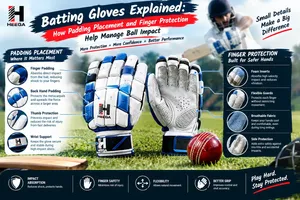 Batting Gloves Explained: How Padding Placement and Finger Protection Help Manage Ball ImpactLearn how batting glove padding placement, finger protection, and fit help manage ball impact. Find practical tips for choosing cricket batting gloves.
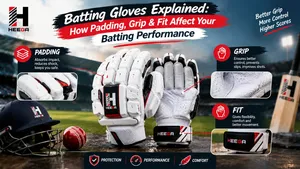 Batting Gloves Explained: How Padding, Grip & Fit Affect Your Batting PerformanceLearn how cricket batting gloves affect grip, protection, comfort and control. Understand padding, fit, materials and how to choose the right batting gloves.
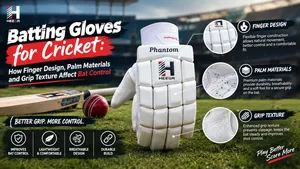 Batting Gloves for Cricket: How Finger Design, Palm Materials and Grip Texture Affect Bat ControlDiscover how cricket batting gloves, finger design, palm materials and grip texture influence bat control, comfort, protection and batting performance.