Beyond Talent: The Real Blueprint for Becoming a Better Cricketer

Why Talent Is Only the Starting Point—and How Training, Mindset, Discipline, and Consistency Create Better Players
Talent can get a cricketer noticed.
But talent alone rarely determines how far a player can go.
Some naturally gifted players stop improving because they don't develop the habits needed to support their ability. Meanwhile, players who may not have been the most talented at the beginning can steadily improve through better preparation, smarter training, discipline, and persistence.
The difference is often the process.
Becoming a better cricketer isn't about searching for one secret technique. It's about building a system that improves your skills, fitness, decision-making, confidence, and consistency over time.
At Heega Sports, we believe ambitious players can unlock more of their game by combining purposeful training, mental preparation, physical conditioning, recovery, match awareness, and dependable cricket equipment.
Here's the real blueprint for becoming a better cricketer.
1. Stop Measuring Your Potential by Talent Alone
Natural ability matters.
But it is only one part of the equation.
A player with excellent hand-eye coordination still needs:
- Technique
- Match experience
- Fitness
- Decision-making
- Mental strength
- Consistency
Think of talent as a starting advantage—not a guarantee of success.
Your habits determine what you do with that advantage.
2. Know Exactly What You Want to Improve
"Become a better cricketer" is a good ambition but a poor training goal.
Make it specific.
For example:
"I want to improve my performance against spin."
"I want to bowl six accurate deliveries more consistently."
"I want to improve my catching under pressure."
Specific goals make improvement measurable.
Before every training session, ask:
What is the one thing I want to improve today?
3. Build Your Game Around Strong Fundamentals
Great cricket often starts with simple things done exceptionally well.
Batters should continually develop:
- Balance
- Grip
- Footwork
- Head position
- Shot selection
- Timing
Bowlers should focus on:
- Run-up
- Rhythm
- Alignment
- Release
- Accuracy
- Follow-through
Fielders should develop:
- Footwork
- Reactions
- Catching
- Throwing
- Positioning
Don't become so focused on advanced skills that you forget the foundation.
4. Train Your Weaknesses
It's easy to spend hours practicing what you already enjoy.
That's not always where the biggest improvement comes from.
If you struggle against short bowling, train against it.
If you struggle to rotate the strike, work on scoring options.
If you lose bowling accuracy under pressure, recreate that situation.
If you struggle with catches while moving, practice movement-based fielding.
Your weaknesses tell you where your next improvement may be hiding.
5. Make Every Practice Session More Intentional
More practice isn't automatically better practice.
A focused 60-minute session can be more productive than several hours of unfocused repetition.
Structure your sessions around:
Goal → Drill → Feedback → Correction → Repetition
Don't simply count how many balls you faced.
Ask what you learned from them.
6. Practice Under Real Match Conditions
Training should prepare you for competition.
Create realistic scenarios.
Batters
Set a target and limit the number of deliveries.
Bowlers
Try defending a specific score.
Fielders
Practice catches after sprinting or under time pressure.
All-Rounders
Combine skills when tired.
Pressure practice helps turn technical ability into match-ready ability.
7. Develop Better Decision-Making
Cricket isn't only about executing skills.
It's about knowing when to use them.
A batter must decide whether to attack, defend, rotate the strike, or leave.
A bowler must decide where to bowl, when to change the field, and when to use variations.
A fielder must decide whether to attack the ball, hold position, or throw.
Ask yourself:
"Why am I making this decision?"
That question can dramatically improve your cricket awareness.
8. Build a Strong Mental Game
A technically strong player can still struggle if pressure affects their thinking.
Develop simple mental habits.
Before a delivery:
Breathe → Focus → Assess → Commit → Execute
After a mistake:
Accept → Reset → Refocus → Next ball
The goal isn't to eliminate nerves.
It's to learn how to perform despite them.
9. Improve Your Match Awareness
Better players understand the situation around them.
Know:
- The score
- Required run rate
- Wickets remaining
- Number of deliveries
- Field placements
- Pitch conditions
- Opponent strengths
- Your team's requirements
Don't simply play your own game.
Play the game the situation demands.
10. Train Your Body to Support Your Skills
Fitness can determine how well your technique survives throughout a match.
When fatigue increases, you may experience:
- Slower footwork
- Reduced concentration
- Poorer decision-making
- Slower reactions
- Less precise execution
Build fitness around your role.
Batters
Develop speed, endurance, mobility, and core strength.
Fast Bowlers
Focus on strength, explosiveness, conditioning, mobility, and recovery.
Fielders
Prioritize acceleration, agility, reactions, and coordination.
Fitness should make your cricket more effective—not simply make your workouts harder.
11. Take Recovery as Seriously as Training
Improvement doesn't happen only while you're practicing.
Recovery matters too.
Prioritize:
- Quality sleep
- Hydration
- Nutrition
- Mobility
- Rest
If you train hard every day without recovering, your performance may eventually suffer.
A sustainable training routine is more valuable than short bursts of extreme effort.
12. Learn From Every Match
Don't allow a match to end when you leave the field.
Review it.
Ask:
What worked?
Identify one strength.
What didn't?
Identify one weakness.
What will I change?
Choose one action for your next training session.
This turns matches into learning opportunities.
13. Use Video and Feedback
What you feel while batting or bowling isn't always what actually happens.
Video can reveal:
- Head movement
- Footwork
- Bat path
- Bowling alignment
- Release position
- Fielding technique
Combine video with feedback from coaches or experienced teammates.
The objective isn't to criticize yourself.
It's to identify something specific that can improve.
14. Stop Changing Your Technique Too Quickly
Improvement takes time.
A player shouldn't abandon a technical adjustment simply because it feels uncomfortable after two sessions.
Give changes enough time to become natural.
At the same time, don't become stubborn about mistakes.
The right approach is:
Test → Evaluate → Adjust → Repeat
15. Prepare Your Equipment Properly
Equipment won't replace skill.
But the right equipment can help you train comfortably and stay focused.
Before matches and training, check:
- Bat grip and condition
- Helmet fit
- Gloves
- Pads
- Shoes
- Cricket bag
- Accessories
At Heega Sports, players can find cricket bats, helmets, gloves, pads, cricket shoes, bags, accessories, and sportswear for different training and playing needs.
You don't necessarily need premium-priced equipment.
Choose gear that:
- Fits properly
- Suits your playing style
- Provides appropriate protection
- Feels comfortable
- Is suitable for regular use
Good preparation means fewer distractions when you're trying to perform.
16. Study Better Players
Watching cricket can become another form of training.
Study how experienced players:
- Build innings
- Set up batters
- Change bowling plans
- Position themselves
- Handle pressure
- Respond to mistakes
Don't just watch the highlights.
Watch the decisions between the highlights.
Ask:
"What would I have done in that situation?"
Then compare your thinking with theirs.
17. Build Consistency Instead of Chasing Perfection
You don't need your best performance every match.
You need to become useful more often.
A batter doesn't need a century every game.
A bowler doesn't need five wickets every spell.
A fielder doesn't need a spectacular catch every match.
Reliable contributions matter.
Consistency comes from preparation, discipline, and repeatable habits.
The Real Cricket Improvement Blueprint
A simple development system looks like this:
Set a Goal → Practice → Get Feedback → Correct → Pressure Test → Perform → Review → Recover → Repeat
This process may seem simple.
But repeated over an entire season, it can transform a player.
A 30-Day Better Cricketer Plan
Week 1 — Identify
Find your three biggest weaknesses.
Week 2 — Focus
Choose one major weakness and dedicate focused practice to it.
Week 3 — Pressure Test
Recreate match situations and introduce realistic pressure.
Week 4 — Review
Measure your progress and decide what to work on next.
Then begin another cycle.
What Progress Really Looks Like
Don't judge development only through runs and wickets.
Look for:
- Better technique
- Smarter decisions
- Fewer repeated mistakes
- Greater confidence
- Improved fitness
- Better concentration
- Stronger match awareness
- Faster recovery after mistakes
These improvements often appear before major changes in statistics.
7 Things Better Cricketers Do Differently
1. They train with a purpose.
2. They work on weaknesses.
3. They practice pressure situations.
4. They learn from mistakes.
5. They protect their recovery.
6. They prepare their equipment.
7. They remain consistent.
None of these habits require extraordinary talent.
They require commitment.
The Biggest Mistake: Waiting for Motivation
Some players train only when they feel inspired.
That creates inconsistent progress.
Better players build routines that work even when motivation disappears.
You don't need to train at maximum intensity every day.
You simply need to maintain the habits that keep you moving forward.
Discipline creates consistency. Consistency creates improvement.
Final Thoughts
Talent can open the door.
But what happens after you walk through it depends on what you do consistently.
Become curious about your weaknesses.
Train with purpose.
Practice under pressure.
Improve your fitness.
Strengthen your mental game.
Study the sport.
Review your performances.
Recover properly.
Prepare your equipment.
And keep going when progress feels slow.
You don't have to become a completely different cricketer overnight.
You only need to become slightly better, smarter, and more prepared than you were yesterday.
Those small improvements compound.
Eventually, the player who once wondered whether they had enough talent may discover something much more important:
They built enough skill, discipline, confidence, and experience to create their own advantage.
At Heega Sports, we're proud to support cricketers on that journey with cricket bats, helmets, gloves, pads, shoes, bags, accessories, and sportswear designed for players who take their development seriously.
Talent may give you potential. Your habits determine how much of that potential you unlock.
Shop Now
Heega Sports – Helping Young Cricketers Pack Smart, Prepare Better, and Play With Confidence.
Related posts
 How Young Cricketers Can Turn Regular Practice Into Real Match Performance.Learn how young cricketers can turn regular practice into match performance through realistic drills, match simulations, decision-making, pressure training, and consistency.
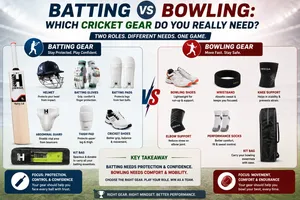 Batting vs Bowling: Which Cricket Gear Do You Really Need?Learn the essential cricket gear needed for batting and bowling. Compare bats, gloves, pads, helmets, shoes, protective equipment, and training gear.
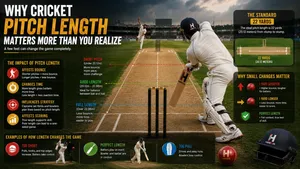 Why Cricket Pitch Length Matters More Than You Realize. Discover why cricket pitch length matters and how the distance between the creases influences batting reactions, bowling, bounce, timing, footwork, and overall match strategy.