Why Cricket Pitch Length Matters More Than You Realize.

Introduction: The Pitch Is More Than Just a Strip of Ground
When people talk about cricket pitches, they usually focus on the surface.
Is it fast?
Is it slow?
Does it offer swing?
Does the ball turn?
Does it produce bounce?
These questions are important, but there is another fundamental feature that often receives less attention: pitch length.
The distance between the two sets of wickets determines how much time players have to react to a delivery and how the ball behaves as it travels from the bowler to the batter.
A cricket pitch is traditionally 22 yards long, or 20.12 metres, between the wickets.
That distance creates the basic framework for the contest between bat and ball.
But the way that distance is used can dramatically influence the game.
The bowler chooses a length.
The batter decides whether to move forward or backward.
The ball bounces somewhere between the creases.
The batter has only a limited amount of time to read what happens next.
This makes pitch length one of the fundamental building blocks of cricket strategy.
What Is the Length of a Cricket Pitch?
A standard cricket pitch measures 22 yards, which is equivalent to approximately 20.12 metres, from wicket to wicket.
The bowling crease, popping crease, and return creases define important areas around each set of stumps.
The physical distance between the wickets remains standard in senior cricket.
However, the way players use that distance changes constantly.
Why the 22-Yard Distance Matters
The pitch creates a fixed space in which the bowler can challenge the batter.
Within that space, the bowler can change:
- Line
- Length
- Pace
- Swing
- Seam
- Spin
- Bounce
Even though the pitch itself remains the same length, the point where the ball lands can completely change the batter's response.
What Does Bowling Length Mean?
Bowling length describes where the ball pitches relative to the batter.
Common categories include:
- Full length
- Good length
- Short length
- Yorker length
- Bouncer length
These are not exact measurements that remain identical in every situation.
They are tactical descriptions.
Why Length Is So Important
A delivery's length determines when the batter can comfortably make contact.
A full delivery may encourage a front-foot response.
A shorter delivery may give the batter an opportunity to move backward.
A good-length delivery can force the batter to make a difficult decision.
The Bowler Is Controlling Time
One way to understand bowling length is to think about reaction time.
The ball travels from the bowler toward the batter at high speed.
The batter must identify:
- Line
- Length
- Pace
- Movement
- Bounce
before deciding how to respond.
Faster Bowling Reduces Reaction Time
A faster delivery reaches the batter sooner.
This gives the batter less time to adjust.
Bowling Length Changes the Batter's Decision
Even at the same speed, different lengths can create different challenges.
A full ball may invite a drive.
A shorter ball may invite a pull or cut.
A good-length delivery may create uncertainty about which shot to play.
Why Good Length Is So Effective
A good-length ball often lands in an area that makes the batter decide between front-foot and back-foot movement.
That uncertainty can create pressure.
The Batter's Position Matters
Pitch length cannot be considered without considering where the batter stands.
A batter may:
- Stand deep in the crease
- Move across the crease
- Step forward
- Charge the bowler
- Move toward the off side
These movements effectively change the distance between the batter and the bounce point.
Why Batters Sometimes Move Down the Pitch
A batter may advance toward the bowler to reduce the effect of swing or spin.
Moving forward can also turn a good-length delivery into a fuller ball from the batter's perspective.
Why Batters Move Back
Moving backward can give a batter additional time against certain deliveries.
It can also create room for shots such as:
- Pulls
- Cuts
- Back-foot drives
Pitch Length and Footwork Are Connected
Batting is not simply about swinging the bat.
The feet help position the body for contact.
The batter needs to decide:
Should I go forward or back?
That decision is heavily influenced by the ball's length.
Full Balls Encourage Front-Foot Play
When a delivery is full enough, the batter can often move forward and strike it closer to the front foot.
Common front-foot shots include:
- Straight drive
- Cover drive
- On drive
- Front-foot defense
Shorter Balls Encourage Back-Foot Play
A shorter delivery can allow the batter to transfer weight backward.
This can create opportunities for:
- Pull shots
- Cut shots
- Back-foot defense
- Square drives
The Challenge of the Good-Length Ball
A good-length delivery can sit between these two options.
The batter may not immediately know whether to commit forward or backward.
This is one reason bowlers value consistency around the right length.
Pitch Length and Bounce
Pitch length does not determine bounce by itself.
The surface, moisture, soil composition, grass, hardness, and preparation all influence bounce.
However, the location where the ball lands determines how the batter experiences that bounce.
Why the Same Pitch Can Produce Different Responses
A ball landing near the batter may reach them differently from a ball landing farther away.
The batter's reaction depends on:
- Bounce height
- Pace
- Delivery length
- Batting position
- Surface characteristics
Seam Bowling and Pitch Length
Seam bowlers often use length to create uncertainty.
A ball that lands in a useful area can deviate after pitching.
Why Seam Position Matters
A bowler may try to maintain an upright seam so the ball can interact with the pitch.
If the ball moves after bouncing, the batter has less control over the final point of contact.
Swing Bowling and Length
Swing bowlers also use length strategically.
A swinging ball can become especially difficult when the batter is unsure where it will finish.
Why Full Swinging Deliveries Are Dangerous
A full delivery that moves late can challenge the batter's judgment.
It can bring:
- Bowled dismissals
- Edges
- LBW opportunities
into play.
Spin Bowling and Pitch Length
Spinners also rely heavily on where the ball lands.
A spinner may vary:
- Flight
- Pace
- Length
- Line
- Turn
Why Spinners Change Their Length
A spinner can use different lengths to influence the batter's footwork.
A fuller ball may encourage the batter to come forward.
A shorter ball can give the batter an opportunity to play from the back foot.
Flight Changes the Effective Length
A slower, higher delivery can spend more time in the air.
This can encourage the batter to move forward.
The actual distance of the pitch remains unchanged, but the ball's flight changes how the batter perceives the delivery.
Why Pace and Length Work Together
Length cannot be separated from speed.
A fast short ball behaves differently from a slow short ball.
A fast full ball creates a different challenge from a slower full delivery.
Bowling Strategy Is About Combinations
Good bowlers do not simply choose one length and repeat it endlessly.
They combine:
- Pace
- Length
- Line
- Movement
- Variation
to create uncertainty.
The Role of Yorkers
A yorker is a delivery aimed very close to the batter's feet or the base of the stumps.
It is one of the most precise lengths in cricket.
Why Yorkers Are Difficult
The batter has very little time to adjust the bat.
A small error in timing can result in:
- Bowled
- LBW
- A defensive block
Yorkers in Limited-Overs Cricket
Yorkers are especially valuable toward the end of an innings.
They can restrict scoring opportunities and make clean hitting more difficult.
The Role of Short Balls
Short deliveries attack a different area.
They rise toward the batter after pitching.
Why Short Balls Create Different Problems
The batter must judge:
- Bounce
- Height
- Pace
- Position
before deciding whether to play the ball.
Short Balls and Pull Shots
A well-controlled short delivery can create an opportunity for a pull shot.
But poor judgment can lead to mistimed contact or a catch.
Bouncers Add a Vertical Challenge
A bouncer forces the batter to respond to a ball rising toward the upper body or head area.
Protective equipment becomes especially important when facing high-speed short-pitched bowling.
Why Batters Need to Read Length Quickly
At high levels, players have very little time to consciously think through every delivery.
They develop the ability to recognize cues from:
- Bowling action
- Release point
- Wrist position
- Ball trajectory
The Release Point Provides Information
The batter begins reading the delivery before the ball reaches the pitch.
A skilled batter watches the bowler's release closely.
Why Practice Improves Length Recognition
Repeated exposure helps players recognize patterns.
Training can include deliveries of different lengths so batters learn how to respond instinctively.
Pitch Length and Batting Timing
Timing depends partly on making contact at the right moment.
The ball's length affects where and when the batter can comfortably meet it.
Why Early Contact Can Be Dangerous
If a batter commits too early, the ball may move after the shot is played.
Why Late Contact Can Also Cause Problems
A batter who reacts too late may lose control of the shot.
Finding the Right Contact Point
The batter needs to position the body and bat according to the delivery.
This is where footwork and pitch-length recognition become closely connected.
Pitch Length and Field Placements
Bowling length also influences field placement.
A captain may position fielders according to the type of delivery being attempted.
Full Bowling and Fielding Plans
When bowlers attack the stumps or fuller areas, fielders may be positioned to protect:
- Drives
- Edges
- Straight boundaries
Short Bowling and Fielding Plans
Shorter bowling can bring square-leg, fine-leg, deep square, or other positions into play depending on the strategy.
Why Length Creates Scoring Opportunities
Every bowling length gives the batter potential scoring areas.
The batter's objective is to recognize the opportunity and exploit it.
Cricket Is a Game of Space
The pitch creates the space between bowler and batter.
The batter tries to control that space.
The bowler tries to take control away.
This makes pitch length a tactical battle.
Why Batters Sometimes Use the Crease Creatively
Moving around the crease can change the bowler's intended line and length.
A batter may move across to:
- Access a different scoring area
- Disrupt the bowler's line
- Create a different angle
Why Bowlers Respond to Crease Movement
A bowler may adjust the delivery line or length when the batter changes position.
This creates another layer of tactical competition.
Pitch Length in Test Cricket
Long-format cricket provides bowlers with time to build pressure.
They can repeatedly attack a particular length.
Why Consistency Matters in Test Cricket
A bowler may deliver several balls in a similar area before introducing a variation.
The objective is to make the batter uncomfortable and eventually create an error.
Pitch Length in One-Day Cricket
One-day cricket introduces different strategic priorities.
Bowlers need to balance:
- Wickets
- Run prevention
- Field restrictions
- Batting aggression
Pitch Length in T20 Cricket
T20 cricket often places greater emphasis on variations.
Bowlers may use:
- Yorkers
- Slower balls
- Short balls
- Wide deliveries
- Pace changes
Why T20 Batters Attack Lengths
Batters often try to identify scoring opportunities quickly.
A delivery that might be defended in longer cricket can be attacked in a short-format match.
The Importance of Pitch Length in Powerplays
Field restrictions can change the value of different bowling lengths.
Batters may target fuller deliveries because they can access boundaries through the infield.
Death Overs and Pitch Length
At the end of an innings, bowlers often try to make clean contact difficult.
Yorkers and slower variations can become important tools.
Why Length Changes With the Batter
A bowler may not use the same length against every batter.
The batter's:
- Technique
- Height
- Reach
- Preferred shots
- Position in the crease
can influence bowling plans.
Why Tall Batters Can Experience Length Differently
A taller player may perceive certain deliveries differently from a shorter player because of their reach and contact position.
Why Shorter Batters Can Experience Bounce Differently
The same delivery can create a different challenge depending on the batter's height and stance.
Pitch Length and Bowling Angles
The bowler's angle toward the crease can influence how a delivery reaches the batter.
Around-the-wicket and over-the-wicket approaches can create different angles.
Why Angles Change the Batter's Options
A delivery coming from a different angle can alter:
- Batting line
- Contact point
- Footwork
- Scoring areas
Pitch Length and Left-Handed vs Right-Handed Batters
The same bowling plan can produce different tactical possibilities depending on the batter's handedness.
Bowlers may change:
- Line
- Angle
- Length
- Field placement
accordingly.
How Technology Helps Bowlers Understand Length
Modern cricket uses technology and data to analyze bowling performance.
Players can review:
- Pitch maps
- Delivery locations
- Scoring zones
- Wicket patterns
- Batting responses
What Is a Pitch Map?
A pitch map shows where deliveries land on the pitch.
It allows coaches and players to identify patterns.
Why Pitch Maps Are Useful
A bowler can discover whether their deliveries are consistently landing in the intended area.
A batter can identify which lengths they score from most effectively.
Technology Makes Length More Measurable
Video analysis and tracking systems allow players to move beyond simply saying:
“That ball was too short.”
They can study exactly where the ball landed and what happened afterward.
Training Drills for Pitch-Length Awareness
Players can practice against different lengths.
For batters, coaches can use:
- Full-ball drills
- Good-length drills
- Short-ball drills
- Random-length sessions
- Match simulations
Why Random Length Training Is Valuable
In a real match, batters do not know where every ball will land.
Randomized practice helps improve decision-making.
Bowlers Can Practice Target Areas
Bowlers can use markers or target zones during training.
The goal is to improve consistency.
Why Repetition Builds Accuracy
Repeatedly hitting a target helps bowlers develop control over their release and landing point.
Pitch Length and Weather
Weather can influence how a pitch behaves.
Rain, humidity, temperature, and drying conditions can alter surface characteristics.
Why Moisture Can Change the Pitch
A damp surface may behave differently from a dry one.
This can influence pace, bounce, or grip.
Why Drying Conditions Matter
As a pitch dries, its behavior can change.
Players and captains may need to adapt their strategies accordingly.
Pitch Length and Ground Preparation
Ground staff play an important role in preparing cricket pitches.
Pitch preparation can influence:
- Pace
- Bounce
- Seam movement
- Spin
Why Pitch Preparation Matters
The 22-yard dimensions may remain fixed, but the characteristics of the playing surface can change dramatically.
Training Pitches vs Match Pitches
Practice wickets can differ from match wickets.
Players should learn to adapt rather than assume every pitch will behave identically.
Why Adaptability Matters
The best players do not rely on one pitch or one type of bounce.
They observe conditions and adjust their technique.
Common Mistakes Players Make With Pitch Length
Playing the Wrong Foot
A batter may commit forward when the ball requires back-foot movement.
Guessing Instead of Watching
Trying to predict every delivery can lead to poor decisions.
Ignoring Bounce
Players should account for how the pitch is behaving.
Bowlers Becoming Predictable
Repeating the same length without variation can allow batters to adjust.
Practicing Only One Length
Batters and bowlers should experience a range of deliveries during training.
How Players Can Improve Their Length Awareness
Watch the Release
Focus on the bowler's hand and release point.
Track the Ball
Follow the ball from release to bounce.
Identify the Pitching Area
Notice where the ball lands.
Observe Bounce
Learn how the surface affects the delivery.
Adjust Footwork
Move forward or backward according to the delivery.
Review Video
Use recordings to identify recurring mistakes.
How Heega Sports Supports Better Cricket Training
At Heega Sports, we understand that improving cricket performance requires consistent and purposeful practice.
Our cricket range includes:
- Kashmir Willow cricket bats
- English Willow cricket bats
- Cricket balls
- Leather cricket balls
- Practice balls
- Batting gloves
- Batting pads
- Cricket helmets
- Cricket shoes
- Cricket socks
- Cricket kit bags
- Practice nets
- Cricket stumps
- Training accessories
Reliable training equipment allows players to repeat important skills and prepare for different match situations.
Pitch Length Across Different Cricket Environments
Cricket is played across Nepal, Germany, the United States, Canada, the Netherlands, the United Kingdom, and many other countries.
Although the standard senior pitch dimensions remain consistent, the surfaces and conditions can vary significantly.
Nepal
Players can encounter different natural and prepared playing surfaces.
Learning to recognize bounce and adjust to pitch behavior is important.
Germany
Players may move between outdoor and indoor cricket environments.
Training across different facilities can improve adaptability.
United States
The growing cricket environment includes a variety of playing surfaces.
Players benefit from learning how pace, bounce, and pitch conditions affect bowling length.
Canada
Seasonal conditions can create different outdoor and indoor training environments.
Players can use training sessions to develop length recognition and adaptability.
Netherlands
Cool and changing weather conditions can influence playing surfaces.
Players should learn to observe conditions before settling into a strategy.
United Kingdom
A wide variety of natural pitches can produce different levels of seam, bounce, and pace.
Players often need to adapt their bowling and batting plans to the surface.
The Future of Pitch Analysis
Cricket technology will continue making pitch behavior easier to understand.
Future systems may provide even more detailed information about:
- Bounce
- Ball tracking
- Pitch impact
- Bowling accuracy
- Batter response
- Scoring zones
This information can help players make more informed decisions.
Final Thoughts
The length of a cricket pitch may appear to be a simple measurement.
In reality, the 22-yard distance creates the foundation for one of cricket's most important battles: the contest between a bowler trying to control the delivery and a batter trying to predict and respond to it.
Pitch length influences how players think about:
- Footwork
- Timing
- Bounce
- Reaction
- Bowling strategy
- Shot selection
- Field placement
The physical pitch remains the same, but the tactical possibilities within those 22 yards are almost endless.
A full delivery, good-length ball, short ball, and yorker can all travel across the same pitch while creating completely different challenges.
That is what makes cricket so fascinating.
The best players learn not only to watch the ball but also to understand where it is going to land, what the surface is likely to do, and how their body should respond.
For bowlers, mastering length can turn consistency into pressure.
For batters, recognizing length can turn pressure into scoring opportunities.
The pitch may always be 22 yards long, but the decisions made within those 22 yards can change the entire game.
🏏 Build Your Cricket Training Setup With Heega Sports
Explore Kashmir Willow and English Willow cricket bats, leather and practice balls, batting gloves, pads, helmets, cricket shoes, socks, kit bags, practice nets, stumps, and training accessories designed to help players train with confidence.
Shop Now
Heega Sports – Quality Cricket Equipment for Better Training, Better Movement, and Better Performance.
Related posts
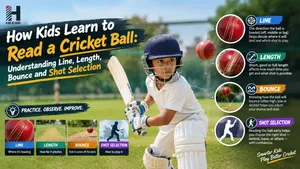 How Kids Learn to Read a Cricket Ball: Understanding Line, Length, Bounce and Shot SelectionLearn how kids can read a cricket ball by understanding line, length, bounce and shot selection to develop better batting skills and confidence.
 Cricket Shoes Explained: How Stud Patterns, Grip and Sole Design Affect Performance on Different PitchesLearn how cricket shoes, stud patterns, grip and sole design affect traction, stability, comfort and performance on grass, turf and artificial pitches.
 How Does the Pitch Affect a Cricket Match?Damp pitches grip the ball and help bowlers; dry ones skid through and suit batting until they wear and spin takes over. Bounce, pace, grass and dew explained.