Cricket bat cover: padded or full-length, and why the toe matters
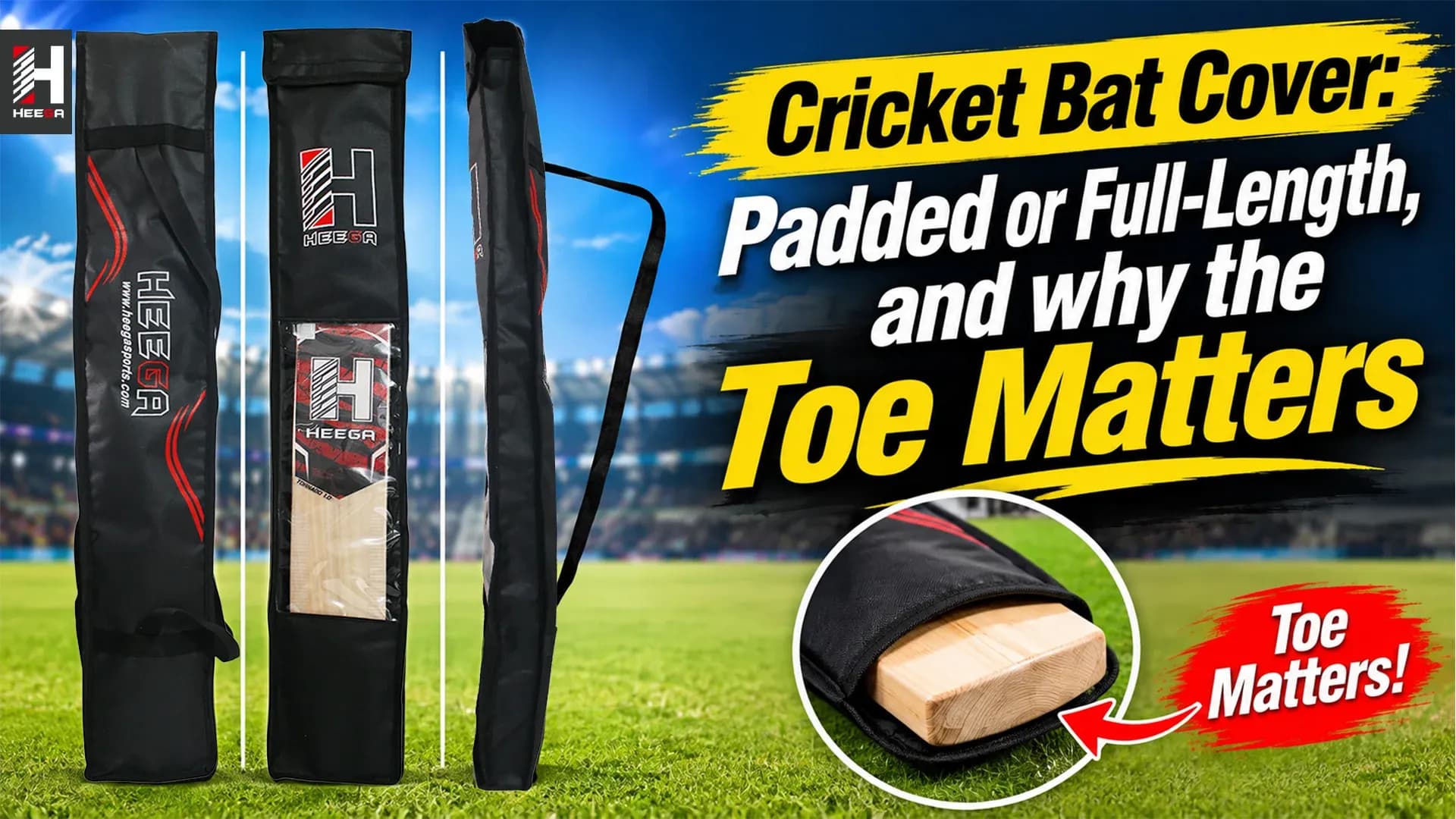
What a cricket bat cover is for
A cricket bat cover is the first thing a new bat lives in. When a bat leaves our workshop in Meerut, it goes into a cover before it goes into the carton. That is not for looks. A finished bat has a freshly pressed face, open grain at the toe and a clean grip. All three mark easily. The cover keeps them the way we left them until the bat reaches the player.
After that, the cover does the same job in a kit bag. Shoe spikes, a helmet grille, the bag's own zip, a loose stump: any of them can dent a face that has not been knocked in yet. A dent on day one becomes a weak spot by day thirty.
Why the toe matters most
The toe is the bottom 5 to 6 cm of the blade, and it is end grain. Water goes into end grain the way it goes up a straw. A bat that stands on a wet outfield, or in a damp corner of a dressing room, draws moisture up through the toe. The wood swells and goes soft. In time the toe splits, or a crack opens along the edge just above it.
A sealed toe and a toe guard both help. A cover helps in a different way. It keeps the bat from standing bare on wet grass between innings, and it keeps the toe off a cold concrete floor in a store room.
Look at the bottom of any cover before you buy it. A good one has doubled cloth or a sewn-in panel where the toe sits, because that is where a cover wears through first. Once there is a hole at the base, the toe is back on the ground.
Padded against full-length
There are two kinds of cover, and they do different jobs.
A full-length cover runs from the toe to the top of the handle. It covers the grip as well as the blade and closes with a long zip down one side. It is light and folds flat. It keeps dust, rain and sun off the whole bat. What it does not do is soften a knock, because the cloth is thin.
A padded cover has a foam layer a few millimetres thick, at least on the face side. It takes the sting out of a helmet or a pair of spikes landing on the bat inside a bag. It is bulkier, and in some kit bags it decides whether the bat fits the bat sleeve at all.
Our rule in the workshop is simple. A bat in its first season, still being knocked in, goes in a padded cover. An older bat that travels in a wheelie bag with its own bat slot is fine in a full-length cover. A junior who carries a bat to nets on a bicycle gets a padded cover every time. Those bats get dropped more than any other.
Fit: measure the bat, not the label
A full-size short-handle bat is close to 85 cm from the toe to the top of the handle. The blade is about 10.5 to 10.8 cm across at its widest. Long-handle bats run a few centimetres longer, and junior bats are shorter again. Our bat size chart gives the length for each size, so you can match a cover to a number instead of a guess.
A cover should leave 2 to 3 cm of room past the toe. The zip should close without pulling against the edges. Too tight, and the zip teeth drag across the edge each time the bat comes out. Too loose, and the bat slides about, so the toe knocks the base of the cover with every step.
Thick-edged bats need their own check. A bat with 38 to 40 mm edges and a full spine is deep at the back. A cover cut for a slimmer bat will close, but only just. That is the cover that splits at the zip by the middle of the season.
The same goes the other way. A size 3 bat in a full-size cover rattles around inside. Pick the cover for the bat you have, not the bat you will grow into.
Four things we check on a cover
The zip comes first. It should run the full length, with the pull at the handle end, so the bat comes out handle first. A zip that stops halfway forces you to slide the blade past the teeth.
The base comes second. Doubled cloth or a sewn panel under the toe, as above. Press it with your thumb. You should feel two layers, not one.
The strap is third. Most adult bats weigh between 1.1 and 1.3 kg, and a bat swings as you walk. A shoulder strap or carry handle should be stitched into the seam, not glued to the outside. A strap held by a single line of stitching will let go.
The lining is fourth. It should be smooth on the inside. A rough lining rubs the face, lifts the edges of the stickers and wears the grip. Run your hand inside before you put a new bat in it.
When the cover should come off
A cover is for travel and short storage. There are three times when we take the bat out of it.
After oiling. Linseed oil needs time to soak in and dry. We leave a freshly oiled bat face up and uncovered for at least 24 hours before it goes back in. Zip it in early and the oil sits on the face, picks up lint and turns tacky.
After a wet match. Wipe the bat dry, take it out of the cover and lay it flat overnight in a room where the air moves. A damp cover pressed against the toe for a week does the same damage as standing the bat in a puddle.
In heat. A bat left in a car boot in May bakes, cover or no cover. The cloth does nothing against heat. It only traps it. Bring the bat indoors.
Between seasons, a full-length cover on a bat lying flat in a cool, dry room is right. Take it out once a month and look at the toe and the edges. Five minutes then saves a repair later.
What comes with a new bat
One of our English willow bats travels from Meerut in a cover inside the carton. Keep that cover, because it was chosen for that bat's length and depth. If you want padding for the first season, add a padded cover for bag days and keep the original for storage at home.
Our padded and zipper covers are on the bat covers page, where you can order one to fit your bat's size.
Related posts
 How Kids Learn to Read a Cricket Ball: Understanding Line, Length, Bounce and Shot SelectionLearn how kids can read a cricket ball by understanding line, length, bounce and shot selection to develop better batting skills and confidence.
 Cricket Batting Pads Explained: How Knee Protection, Shin Coverage and Strap Placement Affect Comfort and MobilityLearn how cricket batting pads, knee protection, shin coverage and strap placement affect comfort, mobility, impact protection and batting performance.
 Why Cricket Pitch Length Matters More Than You Realize. Discover why cricket pitch length matters and how the distance between the creases influences batting reactions, bowling, bounce, timing, footwork, and overall match strategy.