Cricket Shoes Explained: How Stud Patterns, Grip and Sole Design Affect Performance on Different Pitches
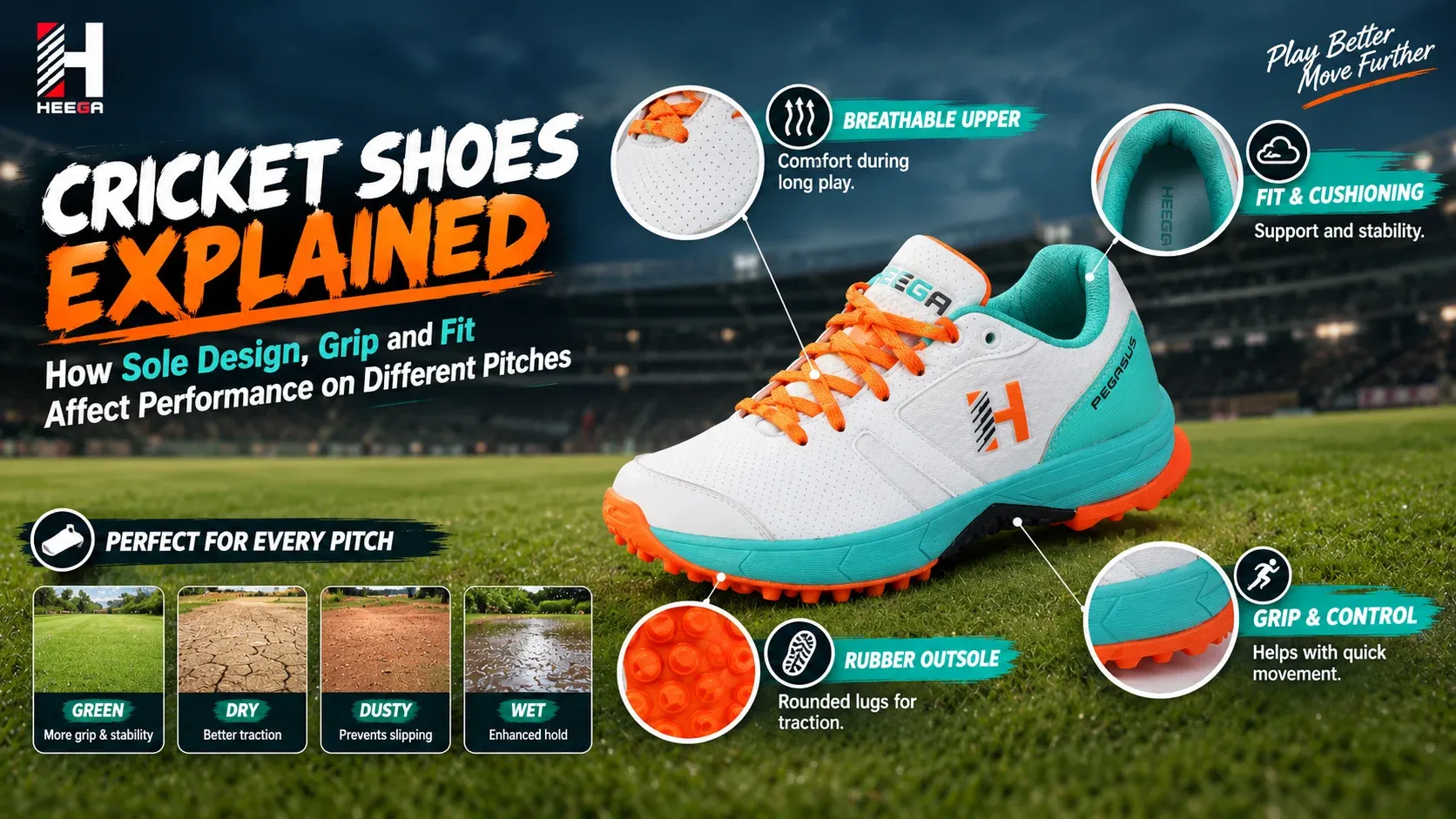
Introduction: Why Cricket Shoes Matter More Than You Think
When players prepare for a cricket match, they often focus on their bat, gloves, pads and other essential equipment. Footwear, however, can receive less attention than it deserves.
Yet every cricket movement begins with contact between the feet and the ground.
A batter needs a stable base to play a drive. A fast bowler needs reliable footing during the run-up and delivery stride. A fielder must accelerate, change direction and stop without losing balance. A wicketkeeper needs comfortable, controlled movement while responding to the ball.
The shoes worn during these actions can influence how effectively players interact with the playing surface.
Cricket shoes are designed to provide different combinations of traction, support, cushioning and flexibility. Their effectiveness depends partly on the surface underneath them. A pair designed for natural grass may not be ideal for an artificial practice pitch, while shoes suitable for a dry indoor surface may provide insufficient traction on damp grass.
Understanding these differences helps players select footwear that suits their playing environment.
In this guide, we will explain how cricket shoe stud patterns work, why sole design matters, how different pitches affect grip, and what players should consider before choosing footwear for training or competitive cricket.
What Are Cricket Shoes?
Cricket shoes are specialised sports shoes designed to support the movement patterns involved in batting, bowling, wicketkeeping and fielding.
Unlike ordinary casual shoes, cricket footwear is developed with attention to the traction, stability and comfort required during cricket-specific movements.
Different models use different sole designs and stud configurations to suit particular surfaces and playing conditions.
Some feature removable or fixed studs, while others use rubber traction patterns suitable for artificial surfaces or indoor training.
The correct option depends on where the player trains, how they play and the conditions they regularly encounter.
Why Ordinary Sports Shoes May Not Be Enough
Running shoes are generally designed around forward movement, while cricket involves a wider variety of actions.
Players regularly need to:
- Accelerate over short distances.
- Stop quickly while maintaining balance.
- Move laterally during fielding.
- Pivot while playing shots.
- Maintain footing during the bowling action.
- Spend long periods standing or moving on the field.
Cricket footwear should support these movements without creating unnecessary discomfort or restricting natural motion.
Ordinary trainers may be suitable for some light drills on appropriate surfaces, but they may not provide the traction or stability required for every cricket environment.
Understanding the Main Parts of Cricket Shoes
Before comparing stud patterns and sole designs, it helps to understand the main components of a cricket shoe.
1. The Outsole
The outsole is the bottom layer that contacts the playing surface.
Its design influences traction, wear resistance and the shoe's interaction with the ground.
Depending on the model, the outsole may feature rubber patterns, moulded studs, metal studs or a combination of traction elements.
2. The Studs
Studs are raised elements on the outsole that help the shoe grip a surface.
Their shape, length, spacing and arrangement influence how they interact with grass, soil or artificial turf.
Studs are particularly important on natural playing fields, where the footwear must balance grip with the ability to release from the ground during movement.
3. The Midsole
The midsole sits between the outsole and the footbed.
It contributes to cushioning and can influence how the shoe absorbs impact during running, jumping and repeated movement.
Different shoes use different midsole materials and thicknesses to balance cushioning, stability and responsiveness.
4. The Upper
The upper is the part that surrounds the foot.
It helps hold the foot in place and contributes to comfort, breathability and overall fit.
A well-fitting upper can reduce unwanted foot movement inside the shoe, particularly during quick direction changes.
5. The Heel and Forefoot
The heel helps support the back of the foot, while the forefoot is heavily involved in push-off and rapid movement.
The way these areas are constructed can affect how the shoe feels during running, landing and acceleration.
All these components work together. A good stud pattern cannot compensate for a shoe that fits poorly or lacks the stability a player needs.
What Is Traction in Cricket Shoes?
Traction refers to the grip between the shoe and the playing surface.
It helps players generate force when accelerating, maintain control when stopping and reduce unwanted slipping during movement.
However, effective traction does not simply mean maximum grip.
A shoe must provide an appropriate level of grip for the surface and allow the foot to release naturally when the player changes direction.
Why Too Little Grip Can Be a Problem
Insufficient traction can make it difficult to accelerate, stop or maintain balance.
For example, a fielder running across damp grass may lose footing if the shoe's outsole cannot grip the surface adequately.
A bowler may also struggle to maintain a stable approach if the footwear slips during the run-up.
Can Too Much Grip Be a Problem?
Yes. Traction needs to be appropriate for the surface and movement.
If a shoe grips excessively or fails to release easily, the foot may become restricted during a pivot or direction change. This can create unwanted stress on the ankle, knee and other structures.
The aim is not to choose the shoe with the most aggressive studs in every situation. It is to select footwear that provides suitable traction and controlled release for the intended playing surface.
Cricket Shoe Stud Patterns Explained
The stud pattern is one of the most important differences between cricket shoes.
Manufacturers arrange studs according to the intended playing conditions and the design goals of the shoe.
Three broad categories are commonly encountered: metal-stud shoes, moulded-stud shoes and rubber-patterned or turf-style shoes.
Metal Stud Cricket Shoes
<AsyncImage query="cricket fast bowler wearing metal spike cricket shoes on natural grass pitch close up footwear" aspectRatio="16:9" width="100%" />
Metal studs are commonly associated with natural grass cricket surfaces, particularly where players require traction on grass and soil.
Their design allows the studs to penetrate the surface to some extent, depending on stud length, soil condition and ground firmness.
Advantages
Metal-stud cricket shoes can provide useful traction on suitable natural grass pitches.
They may be particularly appropriate for fast bowlers who need dependable footing during the run-up and delivery stride.
They can also suit fielders who need to accelerate and stop on grass.
Limitations
Metal studs are not ideal for every surface.
On hard artificial turf, concrete or indoor floors, they may provide poor comfort, damage the surface or be unsuitable under facility rules.
The amount of grip also depends on the ground. Very hard soil may not allow studs to penetrate effectively, while soft or wet ground can create different traction challenges.
Players should select the stud configuration according to the pitch, ground conditions and competition requirements.
Moulded-Stud Cricket Shoes
<AsyncImage query="moulded rubber stud cricket shoes outsole sports footwear close up" aspectRatio="16:9" width="100%" />
Moulded studs are generally made from rubber or another durable synthetic material and are formed as part of the outsole.
They can provide a practical option for players who need traction across a range of training surfaces.
Advantages
Moulded-stud shoes can be suitable for:
- Grass surfaces that do not require metal spikes.
- Some firm outdoor practice areas.
- General cricket training.
- Players who prefer a less aggressive stud configuration.
Their suitability depends on the specific outsole and playing surface.
Limitations
Moulded studs may not penetrate soft or slippery grass as effectively as an appropriate metal-stud design.
They can also wear down over time, reducing the effectiveness of the traction pattern.
Players should check the manufacturer's surface recommendations rather than assuming every moulded-stud shoe is suitable for all outdoor pitches.
Rubber-Tread and Turf-Style Cricket Shoes
<AsyncImage query="cricket training shoes rubber turf outsole small rubber nubs close up" aspectRatio="16:9" width="100%" />
Some cricket shoes feature a rubber outsole with multiple small lugs or a textured tread pattern instead of traditional spikes.
These designs may be suitable for artificial turf, indoor practice facilities and certain firm surfaces, depending on the manufacturer's specifications.
Advantages
Rubber-tread shoes can provide:
- Distributed contact across firm surfaces.
- Flexibility for movement drills.
- Comfortable everyday training.
- A practical alternative where spikes are unsuitable.
Limitations
A rubber-tread shoe may not provide enough penetration or traction on wet grass or soft soil.
Its performance depends on the depth, spacing and shape of the tread, along with the material used.
Always verify that the shoe is designed for the surface where it will be used.
How Cricket Shoes Perform on Different Pitches
Cricket is played on a variety of surfaces, including natural grass, compacted soil, artificial turf and indoor practice areas.
Each surface creates different demands for traction and stability.
Natural Grass Pitches
Natural grass is one of the most common playing environments for cricket.
However, not every grass pitch behaves the same way. Soil firmness, grass length, moisture and ground maintenance all influence the interaction between the shoe and the surface.
On Dry, Firm Grass
Firm grass may provide a stable base, but very hard ground can limit how deeply studs penetrate.
Players should look for a shoe that offers dependable grip without creating discomfort from excessive pressure beneath the foot.
The appropriate choice may be a suitable metal-stud or moulded-stud model, depending on the conditions.
On Damp Grass
Damp grass can be slippery, especially when the underlying soil is firm or covered with moisture.
Players may need footwear with a traction pattern designed for natural grass.
Even with appropriate shoes, however, wet conditions can increase the risk of slipping. Players should reduce unnecessary sharp movements and follow ground staff or match officials' instructions when conditions become unsafe.
On Soft Grass
Soft soil may allow studs to penetrate more deeply.
This can provide traction, but studs that are too short or unsuitable for the conditions may fail to provide adequate grip.
The ideal configuration depends on the depth and firmness of the surface, so players should use footwear recommended for the ground.
Artificial Turf Pitches
Artificial turf is used in many training facilities, schools, clubs and recreational cricket grounds.
Its surface differs from natural grass because the shoe interacts with synthetic fibres, backing material and, in some installations, an infill layer.
Why Rubber Tread May Be Suitable
Some artificial turf surfaces are designed for shoes with rubber tread or short moulded studs.
These designs can distribute contact across the surface while supporting acceleration and lateral movement.
However, artificial pitches vary considerably. A surface designed for one type of sports footwear may not be suitable for metal studs.
Players should follow the facility's rules and the shoe manufacturer's guidance.
Avoid Assuming Every Turf Pitch Is the Same
A short-pile synthetic cricket pitch may behave differently from a longer artificial grass field.
The amount of traction needed can vary according to the surface construction and whether the player is batting, bowling or fielding.
If a club regularly uses artificial pitches, selecting shoes specifically recommended for those surfaces is a sensible starting point.
Indoor Cricket Facilities
Indoor facilities can include synthetic flooring, artificial turf or other sports surfaces.
The correct footwear depends on the material and the facility's requirements.
Shoes with suitable non-marking rubber outsoles may be preferred in some indoor venues, while other surfaces may allow different designs.
Metal studs are generally inappropriate on hard indoor floors unless a facility explicitly provides a suitable surface and permits them.
Before a session, check the venue's footwear policy to avoid damaging the playing surface or compromising grip.
Hard and Compacted Ground
Some outdoor cricket areas have firm, compacted soil with limited grass coverage.
On these surfaces, long studs may not penetrate effectively and can create uncomfortable pressure points.
A suitable moulded outsole or a shoe recommended for firm ground may provide a better balance of comfort and traction.
The important consideration is how the shoe interacts with the actual surface, not simply whether it is marketed as a cricket shoe.
Why Sole Design Matters for Fast Bowlers
Fast bowling places particular demands on the feet.
A bowler accelerates during the run-up, gathers momentum, lands during the delivery stride and follows through after releasing the ball.
Throughout this sequence, the shoes must support controlled movement and appropriate traction.
Traction During the Run-Up
The run-up involves repeated contact with the ground as the bowler builds speed.
Insufficient grip can affect acceleration and confidence.
Footwear with an appropriate outsole can help the bowler maintain a more consistent approach, although technique and physical preparation remain essential.
Stability During the Delivery Stride
The delivery stride creates substantial forces as the bowler lands and transfers momentum.
The shoe must interact appropriately with the surface without excessive slipping or unwanted restriction.
Fast bowlers should use footwear that suits the pitch and their bowling action.
Because fast bowling places significant physical demands on the body, players should develop their technique under qualified coaching and avoid making sudden changes to footwear, stud length or training intensity without considering how these changes affect movement.
Cushioning and Impact
Cushioning helps manage repeated impact during running and landing.
However, more cushioning is not always better. A very soft shoe may feel comfortable but may not provide the stable platform a particular bowler prefers.
The ideal combination depends on the player's body, bowling style, footwear design and playing conditions.
Cricket Shoes for Batters: Balance and Movement
Batting involves a combination of small adjustments, quick acceleration and controlled rotation.
A batter needs to move forward to drive, move backward to respond to shorter deliveries, and reposition the feet while maintaining balance.
Stability During Shot Execution
A stable base helps a batter control body position while swinging the bat.
If the feet slip during a shot, the batter may struggle to maintain balance and direct the stroke accurately.
Suitable traction helps support controlled movement, but good footwork and technique remain the main foundations of batting.
Support During Quick Singles
Running between the wickets involves acceleration, deceleration and changes in direction.
The shoes should provide a comfortable fit and enough traction for the playing surface.
A shoe that is too loose can allow unwanted movement inside the footwear, while one that is too tight may create discomfort during extended play.
Players should test the fit while standing and moving rather than relying solely on the labelled size.
Cricket Shoes for Fielders and Wicketkeepers
Fielders and wicketkeepers require different movement patterns, but both benefit from footwear that supports balance and controlled changes of direction.
Fielders Need Responsive Movement
Fielders may accelerate toward the ball, slide or reach to stop it, then transition quickly into a throwing position.
Their footwear should support these movements without compromising comfort.
A suitable outsole can help the player maintain traction when moving across the field.
However, no shoe eliminates the risk of slipping, particularly on wet or uneven ground.
Wicketkeepers Need Comfort and Control
Wicketkeepers frequently squat, rise, shuffle laterally and move quickly in response to the ball.
They may spend long periods in a low position, so comfort and fit are important.
The best shoe depends on the surface, the keeper's movement style and the support provided by the particular model.
A highly aggressive stud pattern is not automatically necessary for every wicketkeeper, especially when playing on firm or artificial surfaces.
Cushioning, Flexibility and Support: What Should You Look For?
Studs and outsoles receive much of the attention, but other shoe characteristics can influence comfort and movement.
Cushioning
Cushioning helps reduce the sensation of repeated impact during running and practice.
Players who train for long periods may value a comfortable midsole that suits their feet and movement patterns.
The correct level of cushioning is personal. It should not make the shoe feel unstable.
Flexibility
The shoe should allow natural foot movement.
Excessively stiff footwear can feel restrictive during some movements, while an outsole that is too flexible may not provide the structure a player prefers.
The ideal balance depends on the intended use and shoe design.
Heel Stability
A secure heel helps keep the foot positioned inside the shoe.
If the heel lifts excessively while running, the shoe may not fit properly.
Try the footwear with cricket socks and check whether the heel remains secure during walking, gentle jogging and controlled changes of direction.
Breathability
Cricket matches and training sessions can last for extended periods.
Breathable materials may help manage heat and moisture inside the shoe, improving comfort during use.
Players should also allow their footwear to dry appropriately after training.
How to Choose the Right Cricket Shoes
The best cricket shoes are those that suit your playing surface, role, fit and training needs.
Use the following steps when comparing options.
1. Identify Your Main Playing Surface
Determine whether you usually play on natural grass, artificial turf, compacted soil or an indoor surface.
If you play across multiple environments, prioritise the surface you use most frequently and consider a second pair if your playing conditions require different footwear.
2. Select an Appropriate Stud Pattern
Choose between metal studs, moulded studs and rubber-tread designs according to the manufacturer's surface recommendations.
Do not assume one pattern is suitable for every pitch.
3. Check the Fit
Try the shoes with the socks you normally wear for cricket.
Your toes should have adequate room, and your heel should feel secure.
Avoid footwear that pinches, rubs or allows excessive movement inside the shoe.
4. Consider Your Playing Role
Fast bowlers may prioritise traction, stability and comfort during the delivery stride.
Batters may focus on balance and comfortable movement.
Fielders may value responsive traction and a secure fit.
Wicketkeepers may prioritise comfort during repeated crouching and lateral movement.
These are useful considerations, not rigid rules. Individual preferences and surface conditions still matter.
5. Test Comfort and Stability
Walk, jog gently and perform controlled movements while trying the shoes on a suitable surface.
Notice whether the footwear feels secure and comfortable.
Do not test metal studs on inappropriate floors or surfaces.
6. Consider Durability and Maintenance
Check the outsole construction, upper materials and any care instructions.
Shoes used frequently may experience wear in the heel, forefoot and traction elements.
Regular inspection helps you identify when the footwear needs replacing.
Common Mistakes Players Make When Buying Cricket Shoes
Choosing footwear based on appearance alone can lead to an uncomfortable or unsuitable purchase.
Here are some common mistakes to avoid.
Buying the Wrong Stud Pattern
Metal studs may be unsuitable for artificial turf or indoor flooring, while rubber tread may not provide sufficient grip on soft grass.
Always match the shoe to the intended surface.
Choosing Shoes That Are Too Tight
Tight footwear can create discomfort and rubbing, especially during long sessions.
The fit should secure the foot without compressing it unnecessarily.
Assuming More Studs Always Mean More Grip
Traction depends on stud shape, spacing, material, length and surface conditions.
A larger number of studs does not automatically guarantee better performance.
Ignoring the Shoe's Condition
Worn studs, damaged outsoles, loose stitching and deteriorated uppers can affect comfort and traction.
Inspect your footwear regularly and replace it when it can no longer provide suitable support.
Using One Pair for Every Environment
Some shoes are versatile, but no single design is ideal for every surface.
If you regularly move between natural grass and indoor facilities, check whether your footwear is appropriate for both.
Cricket Shoe Maintenance: How to Keep Your Footwear in Good Condition
Proper maintenance can help preserve the performance and useful life of cricket shoes.
Clean the Outsole After Playing
Remove accumulated soil, grass and debris after outdoor sessions.
Use a suitable brush and follow the manufacturer's cleaning instructions.
Check the Studs
Inspect metal or moulded studs for wear, looseness or damage.
If the model has replaceable studs, use compatible replacements and follow the manufacturer's fitting instructions.
Dry Shoes Naturally
After playing in damp conditions, allow the shoes to dry in a ventilated area.
Avoid placing them directly beside a heater or exposing them to excessive heat, which may damage adhesives and materials.
Store Them Properly
Keep cricket shoes in a clean, dry location.
Allow them to air out after use, and avoid storing damp footwear in a sealed bag for long periods.
Replace Worn Footwear When Necessary
If the outsole has lost significant traction, the shoe no longer fits securely or structural damage develops, consider replacing it.
A visually attractive shoe is not useful if its grip and support have deteriorated.
Do Expensive Cricket Shoes Always Perform Better?
Not necessarily.
Price can reflect materials, construction, brand positioning and specialised design features, but it does not guarantee that a particular shoe will suit every player.
A more expensive shoe may include advanced cushioning or a specialised outsole, yet a less expensive model may be a better match for a recreational player's surface and requirements.
When comparing cricket shoes, consider:
- Surface compatibility.
- Fit and comfort.
- Traction design.
- Stability.
- Cushioning.
- Durability.
- Your playing frequency and budget.
The best purchase is one that provides appropriate performance for your actual needs.
How Heega Sports Supports Your Cricket Equipment Needs
At Heega Sports, we understand that every part of a player's equipment contributes to the overall cricket experience.
Bats, balls, protective gear, kit bags and footwear all serve different purposes, and choosing suitable products helps players prepare for training and competition.
Our cricket equipment range includes Kashmir Willow cricket bats, junior and adult bats, cricket balls, batting gloves, batting pads, helmets, kit bags, practice nets and training accessories.
When selecting cricket shoes, players should prioritise correct fit, appropriate traction and compatibility with the surfaces on which they play.
Explore the available cricket equipment at Heega Sports to find products suited to your training routine and playing needs.
The Future of Cricket Footwear
Cricket footwear continues to evolve as manufacturers explore new materials, outsole patterns and cushioning systems.
Future developments may focus on improving the balance between traction, comfort, durability and movement.
However, the fundamental requirements remain the same.
Players need shoes that fit properly, interact appropriately with the playing surface and support the movements required by their role.
Technology can improve footwear design, but it cannot replace good technique, physical preparation or sound decisions about playing conditions.
Final Thoughts: Choose Cricket Shoes That Match Your Pitch
Cricket shoes are more than an accessory. Their stud patterns, outsole construction, cushioning and fit influence how players interact with the ground.
Metal studs can be useful on suitable natural grass surfaces. Moulded studs offer a practical option for certain outdoor conditions, while rubber-tread designs may suit artificial turf and indoor training where permitted.
However, no single design is ideal for every player or pitch.
The right choice depends on the actual surface, the player's role, the shoe's construction and individual comfort. Fit and appropriate traction should always take priority over appearance or price alone.
Whether you are a batter working on footwork, a fast bowler building a consistent run-up, a fielder improving reaction speed or a wicketkeeper practising lateral movement, suitable footwear can support your training.
Take time to understand your playing conditions, compare the available designs and maintain your shoes properly.
When your footwear matches your needs, you can focus more confidently on the skills that matter most: moving well, maintaining balance and playing your best cricket.
🏏 Get Ready for Your Next Match With Heega Sports
Explore cricket bats, balls, protective equipment, kit bags, practice nets and training accessories designed to support players at every stage of their cricket journey.
Shop Now
Heega Sports – Supporting Better Training, Better Movement and Better Cricket.
Related posts
 Batting Gloves for Cricket: How Finger Design, Palm Materials and Grip Texture Affect Bat ControlDiscover how cricket batting gloves, finger design, palm materials and grip texture influence bat control, comfort, protection and batting performance.
 Cricket Shoes for Fast Bowlers: How Ankle Support, Heel Stability and Traction Affect the Bowling ActionLearn how cricket shoes for fast bowlers affect ankle support, heel stability, traction, and landing control. Find the right fit for your bowling action.
 Kashmir Willow Cricket Bats: How Wood Density, Grain Patterns and Moisture Affect PerformanceDiscover how Kashmir Willow cricket bat density, grain patterns and moisture affect bat weight, balance, durability, and batting performance.