Choosing the Right Cricket Ball for Your Child: Tennis Ball, Soft Ball, or Leather Ball?
Introduction: The Right Cricket Ball Makes Learning Easier
When parents buy cricket equipment for their child, most of the attention goes toward choosing the right cricket bat.
However, selecting the correct cricket ball is equally important.
Using the wrong type of ball can affect:
- Confidence
- Technique
- Safety
- Skill development
A beginner who starts with a hard leather cricket ball may become afraid of batting or catching.
On the other hand, an experienced junior player who never progresses beyond tennis balls may struggle when moving into competitive cricket.
The key is choosing the right ball at the right stage of your child's development.
Across Nepal, Germany, the United States, Canada, the Netherlands, and the United Kingdom, junior cricket coaches gradually introduce different types of cricket balls as children improve their skills.
This guide explains the advantages of tennis balls, soft cricket balls, and leather cricket balls so parents can make the best decision.
Why the Choice of Cricket Ball Matters
Different cricket balls are designed for different purposes.
The correct ball helps children:
- Learn safely
- Build confidence
- Develop proper technique
- Progress naturally
There is no single ball that suits every age or every skill level.
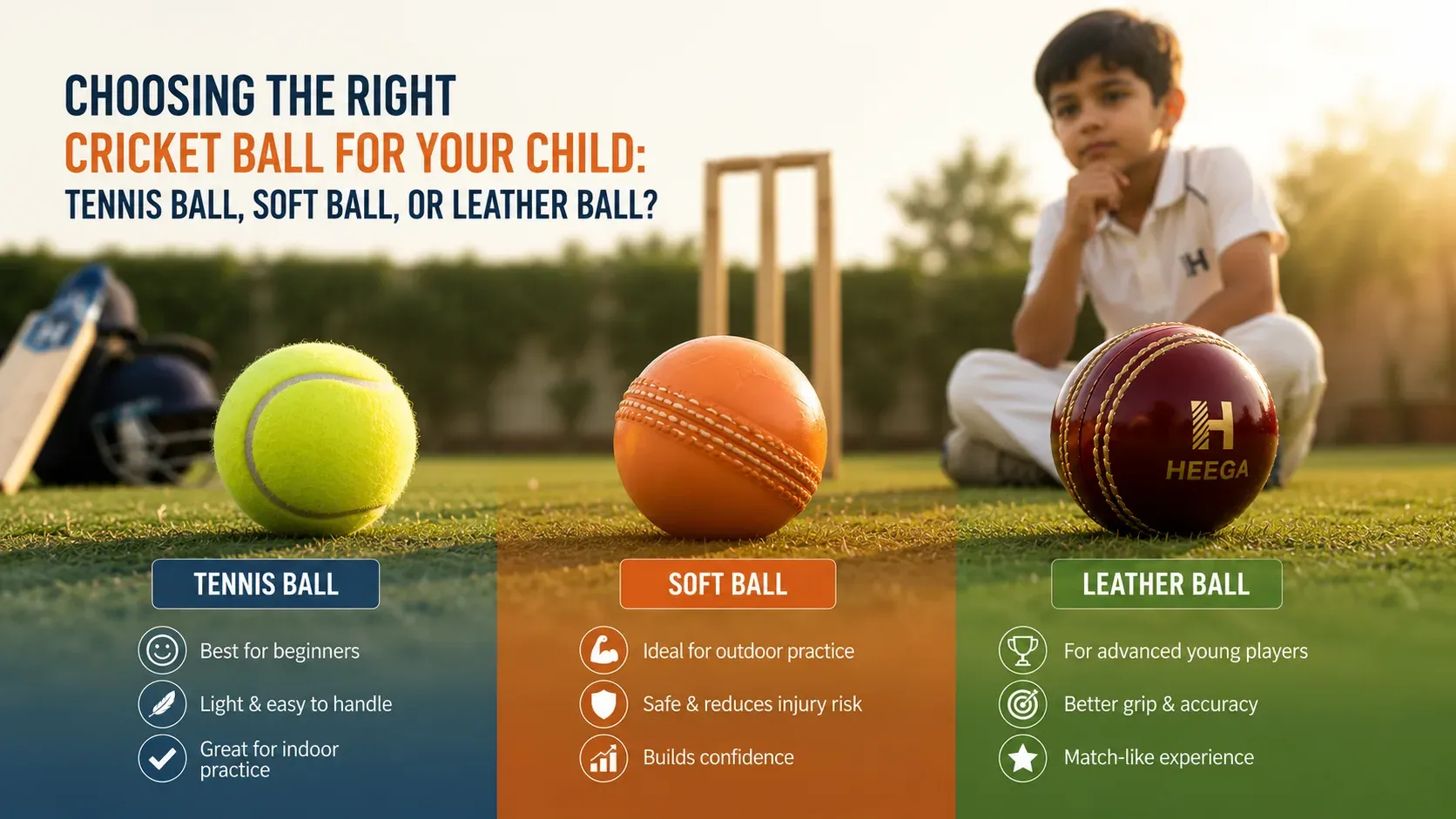
Tennis Balls: The Best Starting Point
For complete beginners, tennis balls are often the safest option.
Advantages
- Soft and lightweight
- Less fear of getting hit
- Easy to catch
- Affordable
- Suitable for home practice
Children can comfortably practice:
- Batting
- Catching
- Throwing
- Fielding
Tennis balls are ideal for introducing cricket in a fun and relaxed way.
Soft Cricket Balls: The Next Step
Once children become comfortable with tennis balls, many coaches recommend soft cricket balls.
These balls feel more like real cricket balls while remaining beginner-friendly.
Benefits
- Slightly heavier than tennis balls
- Better bounce
- Improved batting practice
- Builds confidence before leather-ball cricket
Soft balls help children adjust gradually without feeling overwhelmed.
Leather Cricket Balls: For Structured Cricket
Leather cricket balls are used in:
- Club cricket
- School matches
- Academy training
- Competitive cricket
They provide the most authentic cricket experience.
However, beginners should only use leather balls under proper supervision while wearing suitable protective equipment.
When Should Children Move to Leather Balls?
There is no fixed age.
Children are usually ready when they:
- Have developed good batting technique.
- Catch confidently.
- Wear proper protective gear.
- Receive coaching from qualified instructors.
Coaches often decide when players are ready for leather-ball cricket.
Safety Always Comes First
Whenever children practice with leather cricket balls, they should wear:
- Cricket helmet
- Batting gloves
- Batting pads
- Abdominal guard (where appropriate)
Protective equipment helps children play confidently while reducing injury risk.
Which Ball Is Best for Home Practice?
For most families, tennis balls and soft cricket balls remain the best options for home practice.
They allow children to improve:
- Batting
- Throwing
- Catching
- Hand-eye coordination
without requiring large practice areas.
Match Balls vs Practice Balls
Parents should understand the difference.
Practice Balls
Designed for:
- Regular training
- Skill development
- Frequent use
Match Balls
Designed for:
- Competitive cricket
- Match conditions
- Higher-quality performance
Young beginners usually benefit most from practice balls.
Don't Rush Progression
Some parents believe moving to leather balls earlier will accelerate improvement.
In reality, progressing too quickly can:
- Reduce confidence
- Increase fear
- Encourage poor technique
Children should move to the next stage only when they feel comfortable.
Ask Your Child's Coach
Before buying cricket balls, speak with your child's coach.
Ask:
- Which ball suits their current level?
- Is my child ready for leather-ball practice?
- Which practice balls do you recommend?
Coaches understand each player's development stage.
Nepal: Supporting Safe Cricket Development
As youth cricket expands rapidly across Nepal, academies continue encouraging gradual progression from tennis balls to leather cricket.
Germany: Building Skills Step by Step
German cricket clubs emphasize learning with beginner-friendly equipment before introducing hard-ball cricket.
The United States: Making Cricket Accessible
American cricket programs increasingly use tennis and soft balls to introduce new players to the sport safely.
Canada: Developing Confidence
Canadian youth coaches encourage children to master the basics before progressing to leather cricket.
The Netherlands: Smart Player Development
Dutch academies recognize that choosing the correct cricket ball helps children develop stronger techniques.
The United Kingdom: A Proven Development Path
British junior cricket has long used gradual progression to help young players transition successfully into competitive cricket.
How Heega Sports Supports Every Stage of Learning
At Heega Sports, we offer cricket balls designed for every stage of a young player's development.
Our collection includes:
- Tennis balls
- Soft practice balls
- Leather cricket balls
- Junior cricket bats
- Premium Kashmir Willow bats
- Cricket helmets
- Batting gloves
- Batting pads
- Practice nets
- Cricket kit bags
Whether your child is just beginning or preparing for competitive cricket, Heega Sports provides quality equipment that supports safe and enjoyable learning.
Quick Guide for Parents
Choose:
Tennis Ball if your child is:
- Just starting cricket
- Practicing at home
- Learning catching and batting
Choose:
Soft Cricket Ball if your child:
- Has mastered basic skills
- Wants more realistic practice
- Is building confidence
Choose:
Leather Cricket Ball if your child:
- Trains at an academy
- Plays competitive matches
- Uses full protective equipment
Final Thoughts
Every young cricketer progresses at their own pace.
Choosing the correct cricket ball helps children enjoy learning while developing confidence and proper technique.
Across Nepal, Germany, the United States, Canada, the Netherlands, and the United Kingdom, successful youth cricket programs continue proving that gradual progression creates safer, happier, and more skilled players.
The right cricket ball today helps build a better cricketer tomorrow.
🏏 Find the Right Cricket Ball for Every Stage at Heega Sports
Explore premium-quality tennis balls, soft practice balls, leather cricket balls, junior cricket bats, Kashmir Willow bats, cricket helmets, batting gloves, pads, practice nets, cricket kit bags, and training accessories designed to support every young cricketer's journey.
Shop Now
Heega Sports – Quality Cricket Equipment for Every Young Player, From First Hit to First Match.
Related posts
 Leather Ball Cricket Explained: How Ball Condition, Seam and Swing Influence BowlingLearn how leather ball cricket works and how ball condition, seam position, shine, and swing influence bowling accuracy, movement, and performance.
 How to Choose the Right Cricket Bat for Leather Ball Cricket.Learn how to choose the right cricket bat for leather ball cricket based on willow, weight, balance, profile, size, playing style, and budget.
 Leather Cricket Ball vs Synthetic Cricket Ball: Which One to Choose?Compare leather and synthetic cricket balls for practice, nets and matches. Learn about weight, seam, durability, bounce, performance and player level.