Leather Cricket Ball vs Synthetic Cricket Ball: Which One to Choose?

Introduction: Leather vs Synthetic Cricket Ball
Choosing a cricket ball is not always as straightforward as it seems.
If you are new to cricket equipment, you may simply look for a ball that feels good and fits your budget. But once you start training regularly, you quickly realise that different balls can behave very differently.
A leather cricket ball feels different from a synthetic one.
The bounce can be different.
The seam can feel different in the hand.
The hardness, weight, durability, and response from the bat can also change.
This is why the choice between a leather cricket ball and a synthetic cricket ball matters.
A club cricketer preparing for a competitive match may need a traditional leather ball, while a beginner practising basic batting skills may be perfectly comfortable with a softer synthetic option.
Neither type is automatically the best.
The better choice depends on where you play, what you are practising, your experience level, and how closely you want your training equipment to match competitive cricket.
In this guide, we will compare leather and synthetic cricket balls in simple terms and help you understand which option may suit your training or playing needs.
What Is a Leather Cricket Ball?
A traditional leather cricket ball is designed to reproduce the type of equipment used in competitive cricket.
A typical leather ball contains several internal and external components, including:
- Cork-based core
- Wound yarn
- Leather covering
- Stitched panels
- Raised seam
The exact construction can vary between manufacturers and ball categories.
The purpose, however, remains similar: create a durable and reasonably consistent spherical ball that can withstand repeated impacts.
Leather cricket balls are commonly used in:
- Club cricket
- Academy cricket
- First-class cricket
- Test cricket
- Match preparation
- Advanced net practice
They are particularly useful when players want to experience realistic seam, bounce, weight, and ball movement.
What Is a Synthetic Cricket Ball?
A synthetic cricket ball is made using artificial materials rather than a traditional leather outer covering.
Synthetic balls are available in many designs.
Some are relatively firm and designed to imitate traditional cricket balls.
Others are softer and intended for beginner training or recreational cricket.
Depending on the product, synthetic balls may be suitable for:
- Beginner practice
- School cricket
- Indoor training
- Fielding drills
- Batting drills
- Recreational cricket
- Regular coaching sessions
One advantage of synthetic construction is that manufacturers can create balls with different levels of softness and durability.
This gives coaches and players more options.
Leather Cricket Ball vs Synthetic Cricket Ball
The easiest way to understand the difference is to compare their typical characteristics.
FeatureLeather Cricket BallSynthetic Cricket Ball
Outer material
Leather
Synthetic material
Typical use
Competitive cricket and advanced training
Practice, training and recreational cricket
Seam
Traditional stitched seam
Varies by design
Feel
Firm and match-like
Varies from soft to firm
Bounce
Generally more match-like
Depends on construction
Durability
Designed for intended cricket use
Often suitable for repeated training
Price
Usually higher
Often more economical
Beginners
Can be suitable with supervision
Often easier for beginners
Match preparation
Excellent
Depends on design
Maintenance
Requires more care
Generally simpler
These are general differences. Individual products can vary considerably.
Why Leather Cricket Balls Are Used in Competitive Cricket
Competitive cricket places particular demands on the ball.
It needs to survive repeated impacts while maintaining its basic shape and performance.
The leather covering and stitched construction provide the traditional feel players expect.
A leather cricket ball also gives bowlers a realistic seam to work with.
Fast bowlers can practise:
- Seam position
- Swing
- Release
- Line and length
- Bowling control
Spinners can practise gripping and rotating the ball.
Batters can become familiar with the harder feel of a traditional cricket ball.
For serious match preparation, this realism can be important.
Why Synthetic Cricket Balls Are Popular for Training
Not every cricket session needs a premium leather ball.
Imagine a coach running a two-hour practice session with young players.
There may be dozens of catches, hundreds of throws, and repeated batting drills.
Using expensive match-quality balls for every activity may not be practical.
Synthetic training balls can offer a useful alternative.
They can be selected for drills where the goal is repetition rather than exact match simulation.
They are also often easier to handle for beginners.
Leather Cricket Ball Construction
Understanding construction helps explain why leather balls feel different.
A traditional leather cricket ball generally has a central core surrounded by wound layers.
The leather panels are then fitted around the construction and stitched together.
The seam becomes one of the most recognisable features of the finished ball.
Each component contributes to the final product.
The Core
The core contributes to weight, firmness, resilience, and bounce.
The Wound Layers
The wound material helps build the structure and firmness of the ball.
The Leather
The leather provides the outer playing surface.
The Stitching
The stitching joins the panels and creates the raised seam.
The quality and consistency of these components matter.
Synthetic Cricket Ball Construction
Synthetic cricket balls can be manufactured in several ways.
Instead of traditional leather, they use artificial materials selected according to the intended purpose.
Some synthetic balls are designed to be soft.
Others are manufactured to provide a firmer response.
Some may have a seam-like design, while others have a simpler surface.
This variety is useful because synthetic balls can be created for specific training needs.
A coach might choose a softer option for young beginners and a firmer synthetic ball for more advanced drills.
Which Ball Has Better Bounce?
Bounce depends heavily on construction.
A traditional leather cricket ball generally provides the type of bounce associated with competitive cricket.
This is useful for players preparing for real matches.
Synthetic balls can also offer consistent bounce, but the exact behaviour depends on the material and design.
For beginners, a predictable synthetic ball may be easier to manage.
For advanced players, a leather ball can provide a more realistic experience.
Which Ball Is Better for Bowling Practice?
If you are working on serious bowling technique, a leather cricket ball is generally the more realistic option.
The seam allows bowlers to practise:
- Seam bowling
- Swing bowling
- Finger position
- Wrist position
- Release
- Length control
Synthetic balls can still be useful for repetitive drills.
For example, a coach may use synthetic balls when working on basic accuracy with young players.
The choice should match the training objective.
Which Ball Is Better for Batting Practice?
Again, it depends on the player.
For beginners, a softer synthetic cricket ball can be easier to control.
It can help them learn:
- Bat grip
- Footwork
- Timing
- Shot selection
- Basic defence
Once players become more experienced, leather balls can provide more realistic match preparation.
The harder surface, seam, weight, and bounce require the batter to respond differently.
Leather Cricket Ball for Net Practice
Leather balls are particularly useful when a player wants to recreate match conditions.
During net practice, batters can experience:
- Realistic bounce
- Seam movement
- Bowling pace
- Swing
- Harder impact
Bowlers can also practise with the same type of equipment they may encounter in a match.
This makes leather balls valuable for serious academy and club training.
Synthetic Cricket Ball for Net Practice
Synthetic balls can also be useful in nets.
They can be a practical choice when:
- Many players are training
- The session is focused on repetition
- Beginners are involved
- Equipment needs to be economical
- Softer impact is preferred
However, if the goal is to prepare for a competitive match, players should include realistic leather-ball practice as they progress.
Which Cricket Ball Is Better for Beginners?
For beginners, synthetic balls are often a practical starting point.
A softer ball can reduce hesitation when a new player is learning to face deliveries or practise catching.
Beginners can focus on:
- Watching the ball
- Moving their feet
- Controlling the bat
- Catching correctly
- Throwing accurately
As confidence improves, they can move toward firmer and more realistic equipment.
The transition should be gradual rather than forced.
Cricket Balls for Younger Players
Younger players need equipment that matches their age and physical development.
A full-weight leather cricket ball may not always be the most appropriate option for every junior session.
Coaches and parents can consider:
- Softer training balls
- Lighter balls
- Junior cricket balls
- Synthetic options
The goal should be to make practice productive and comfortable while helping players develop correct technique.
Leather Cricket Ball for Advanced Players
Experienced players generally benefit from realistic equipment.
A leather cricket ball allows them to work with:
- Match-style seam
- Realistic weight
- Firm bounce
- Swing
- Movement off the pitch
- Traditional grip
For players preparing for club cricket, first-class cricket, or Test-style conditions, this type of practice can be particularly valuable.
Synthetic Ball for Advanced Training
Synthetic does not automatically mean low quality.
A well-designed synthetic cricket ball can still be useful for specific training exercises.
For example, coaches can use synthetic balls for:
- Reaction drills
- Fielding exercises
- Catching
- Indoor sessions
- Repetitive batting practice
- Beginner-to-intermediate training
The important point is to understand its purpose.
A training ball does not have to replace a match ball.
It can complement it.
Leather Cricket Ball vs Synthetic Ball: Durability
Durability is another important consideration.
Leather balls are designed to handle the demands of cricket, but their surface naturally changes as they are used.
They can develop:
- Scuff marks
- Surface wear
- Seam wear
- Dirt
- Leather damage
Synthetic balls can be very useful for repetitive training because many are designed to withstand frequent use.
However, durability depends on the quality of the particular product.
A cheap synthetic ball and a well-made synthetic training ball should not be treated as the same thing.
Which Cricket Ball Is Easier to Maintain?
Synthetic balls generally require less maintenance.
They can be practical for schools, beginner groups, and large training programmes where equipment is used frequently.
Leather balls require more care.
Players should protect them from:
- Excessive moisture
- Extreme heat
- Unnecessary dirt
- Heavy impact outside normal cricket use
Proper storage can help extend the useful life of a leather cricket ball.
Leather Ball and Weather Conditions
Weather can influence the condition of a cricket ball.
Moisture can affect leather.
Wet conditions can also make handling and maintaining the ball more difficult.
Players should therefore take care when storing leather balls after outdoor sessions.
If the ball becomes wet, allow it to dry appropriately rather than exposing it to excessive direct heat.
Synthetic Balls for Indoor Cricket Practice
Synthetic balls can be particularly useful indoors.
Indoor training environments may have space limitations.
Coaches may prefer softer options for certain drills.
Synthetic balls can also be useful where repeated throwing and catching are part of the session.
The right option depends on the facility and the purpose of the training.
Red vs White Leather Cricket Balls
If you have decided to buy a leather cricket ball, you still need to consider colour.
A red ball is traditionally associated with:
- Test cricket
- First-class cricket
- Long-format cricket
A white cricket ball is commonly used for:
- ODI cricket
- T20 cricket
- Limited-overs cricket
The correct choice depends on the format you are preparing for.
If your next competition uses a white ball, practising exclusively with a red ball may not reproduce the same visual conditions.
Why Ball Colour Matters
Visibility is important in cricket.
Traditional Test cricket is associated with white clothing and a red ball.
Limited-overs cricket usually involves coloured clothing and a white cricket ball.
The different colour combinations help players track the ball during play.
This becomes particularly important under floodlights.
Cricket Ball vs Tennis Balls
Tennis balls are another popular option for cricket practice.
They are softer and lighter than traditional leather cricket balls.
They can be useful for:
- Beginners
- Children
- Reaction drills
- Casual cricket
- Batting practice
- Hand-eye coordination
However, tennis balls behave differently.
They generally do not reproduce the same hardness, weight, seam, or bounce as a leather cricket ball.
They are best viewed as a separate training tool rather than a direct replacement.
How to Choose the Right Cricket Ball for Practice
For general practice, start with the skill you want to develop.
Batting Basics
A softer synthetic ball may be useful.
Catching
Choose a comfortable training ball suitable for repeated catches.
Bowling Technique
Use a ball that provides a consistent grip and appropriate weight.
Reaction Training
Tennis balls or specialised training balls can work well.
Advanced Batting
Use a leather cricket ball for more realistic practice.
How to Choose a Cricket Ball for Nets
For net practice, consider your playing level.
Beginner Nets
Synthetic or softer training balls can be practical.
Academy Nets
Use a combination of training and leather balls.
Club Nets
Use durable leather practice balls where realistic conditions matter.
Match Preparation
Use the same type of ball expected in competition.
This last point is especially important.
The closer your training environment is to the actual match, the more familiar the conditions can feel.
How to Choose a Cricket Ball for Matches
Match selection is different from training selection.
Always check the rules of your competition.
You may need to follow specifications relating to:
- Weight
- Circumference
- Colour
- Manufacturer
- Construction
- Ball replacement
For official matches, do not assume that any cricket ball is acceptable.
Competition regulations should always take priority.
What Makes a Top Quality Cricket Ball?
Whether leather or synthetic, quality matters.
A top quality cricket ball should be appropriate for its intended use and should provide consistent performance.
For a leather ball, look for:
- Good leather
- Secure stitching
- Clear seam
- Consistent shape
- Suitable weight
- Proper finishing
For a synthetic ball, look for:
- Durable material
- Consistent shape
- Predictable bounce
- Appropriate firmness
- Strong construction
The right quality level depends on how you plan to use the ball.
Common Mistakes When Choosing a Cricket Ball
Buying the Most Expensive Ball
Price does not automatically make a ball suitable for your needs.
Choosing Only by Appearance
A shiny surface looks attractive, but construction is more important.
Using a Soft Ball for Match Preparation
Soft balls can be excellent for beginners but may not reproduce match conditions.
Using a Match Ball for Every Drill
This can unnecessarily increase equipment costs.
Ignoring Player Age
Younger players may require different equipment.
Buying the Wrong Colour
If you are preparing for a specific format, select the appropriate ball.
Ignoring the Seam
For serious bowling practice, seam quality matters.
How to Build a Balanced Cricket Training Kit
You do not need to choose only leather or synthetic balls.
A balanced training setup can include both.
For example:
Everyday Training
Synthetic training balls.
Fielding Drills
Durable training balls.
Beginner Sessions
Softer balls.
Advanced Nets
Leather cricket balls.
Match Preparation
Competition-style balls.
Reaction Drills
Tennis balls or other specialised training options.
This approach gives coaches and players flexibility.
How Coaches Can Use Different Cricket Balls
Coaches can select equipment according to the objective of each session.
A beginner batting session might start with a softer ball.
As players become more comfortable, the coach can introduce firmer equipment.
Advanced players can then move toward leather balls for realistic match preparation.
The same approach works for bowling and fielding.
It allows players to build confidence before facing more demanding conditions.
How Heega Sports Helps You Choose Cricket Equipment
At Heega Sports, we understand that cricket players have different training requirements.
A beginner does not necessarily need the same ball as a club cricketer.
An academy may need durable training balls for daily sessions.
An advanced player may want a leather cricket ball for realistic match preparation.
The right equipment depends on the player, format, training environment, and purpose.
Heega Sports offers a range of cricket equipment, including:
- Leather cricket balls
- Training balls
- Practice cricket balls
- Kashmir Willow cricket bats
- English Willow cricket bats
- Batting gloves
- Batting pads
- Cricket helmets
- Cricket shoes
- Cricket socks
- Cricket kit bags
- Practice nets
- Cricket stumps
- Training accessories
Whether you are learning to play cricket, training at an academy, preparing for club cricket, or getting ready for competitive matches, choosing suitable equipment can make your sessions more productive.
Frequently Asked Questions
Is a leather cricket ball better than a synthetic ball?
Not always. Leather balls are generally better for realistic match preparation, while synthetic balls can be more practical for beginners, drills, and regular training.
Which cricket ball is best for beginners?
A softer synthetic or training cricket ball can be a good choice for beginners, particularly when learning basic batting, bowling, and catching skills.
Which ball should I use for cricket nets?
It depends on your level. Beginners can use training balls, while advanced players should regularly practise with leather balls that resemble their match equipment.
Are synthetic cricket balls good for practice?
Yes. Synthetic balls can be useful for regular practice, fielding drills, beginner training, and situations where repeated use is required.
Can synthetic balls be used in matches?
Only if they meet the requirements of the specific competition. Always check the rules before using a synthetic ball in an official match.
Are tennis balls good for cricket training?
Yes. Tennis balls are useful for recreational cricket and specific drills, but they do not behave exactly like traditional leather cricket balls.
What is the difference between red and white cricket balls?
Red balls are traditionally used in Test and first-class cricket, while white balls are commonly used in ODI and T20 cricket.
How do I maintain a leather cricket ball?
Keep it dry, store it away from extreme heat, avoid unnecessary moisture, and handle the seam and leather carefully.
Which ball is more durable, leather or synthetic?
It depends on the product and how it is used. Synthetic training balls can be very practical for repeated drills, while leather balls are designed for the demands of traditional cricket.
Should academy players use leather cricket balls?
Advanced academy players can benefit from leather-ball practice because it provides more realistic match conditions. Softer training balls can still be useful for specific drills.
Final Thoughts
The choice between a leather cricket ball and a synthetic cricket ball does not have to be complicated.
Start with your purpose.
If you are a beginner learning basic cricket skills, a softer synthetic ball may be the easiest place to start.
If you are coaching young players, training balls can make repeated drills more comfortable and practical.
If you are an academy or club player, a combination of training and leather balls can give you the best of both worlds.
And if you are preparing for competitive cricket, regular practice with the same type of ball used in your matches is extremely valuable.
Leather cricket balls provide the traditional feel, seam, weight, and bounce associated with competitive cricket.
Synthetic cricket balls provide flexibility, affordability, and a range of options for training.
Neither option needs to replace the other.
In fact, the most practical cricket training setup often includes both.
Use the softer option when the drill calls for it.
Use a durable training ball for repetitive sessions.
Move to a leather cricket ball when realistic match conditions matter.
And always consider the player's age, skill level, format, playing conditions, and competition requirements before buying.
At the end of the day, the best cricket ball is not simply the one with the highest price tag.
It is the one that fits your game.
Choose the right ball, practise with purpose, and give yourself the equipment you need to keep improving every time you step onto the cricket field.
🏏 Find the Right Cricket Equipment at Heega Sports
Whether you need a leather cricket ball for match preparation, synthetic training balls for regular practice, or complete cricket equipment for your next season, Heega Sports has options for different levels of players.
Explore:
- Leather cricket balls
- Training balls
- Practice cricket balls
- English Willow cricket bats
- Kashmir Willow cricket bats
- Batting gloves
- Batting pads
- Cricket helmets
- Cricket shoes
- Cricket kit bags
- Practice nets
- Cricket stumps
- Training accessories
Shop Now
Heega Sports – Quality Cricket Equipment for Training, Matches, and Player Development.
Related posts
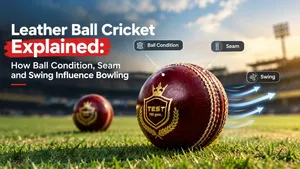 Leather Ball Cricket Explained: How Ball Condition, Seam and Swing Influence BowlingLearn how leather ball cricket works and how ball condition, seam position, shine, and swing influence bowling accuracy, movement, and performance.
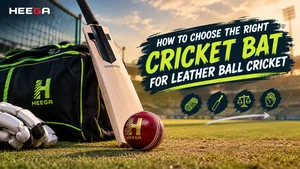 How to Choose the Right Cricket Bat for Leather Ball Cricket.Learn how to choose the right cricket bat for leather ball cricket based on willow, weight, balance, profile, size, playing style, and budget.
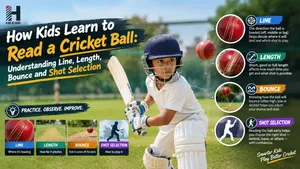 How Kids Learn to Read a Cricket Ball: Understanding Line, Length, Bounce and Shot SelectionLearn how kids can read a cricket ball by understanding line, length, bounce and shot selection to develop better batting skills and confidence.