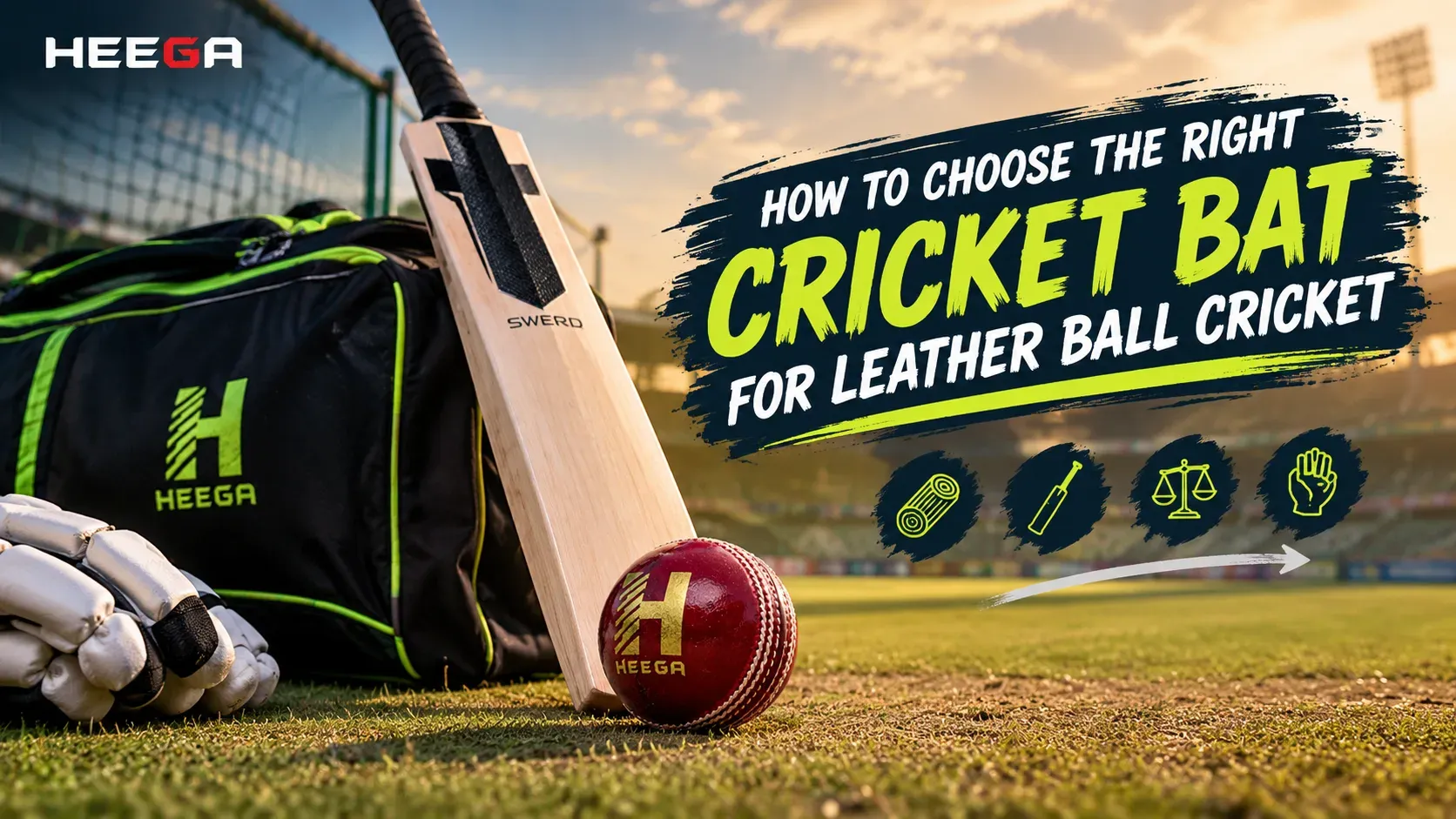
How to Choose the Right Cricket Bat for Leather Ball Cricket.
Introduction: Choosing the Right Bat for Leather Ball Cricket
Leather ball cricket demands more from a bat than casual tennis-ball or soft-ball cricket.
The ball is harder, faster, and capable of producing greater impact. Players must therefore choose equipment that offers the right combination of strength, control, balance, and performance.
A bat that feels comfortable during backyard cricket may not be suitable for academy training, club matches, or competitive leather ball cricket.
The correct bat can help a player:
- Improve shot control.
- Develop better batting technique.
- Handle faster deliveries.
- Play with greater confidence.
- Reduce unnecessary strain.
- Perform more consistently.
However, choosing the right cricket bat is not simply about selecting the most expensive model. The best option depends on the player's age, strength, experience, batting style, playing conditions, and budget.
This guide explains the most important factors to consider before purchasing a cricket bat for leather ball cricket.
Why Leather Ball Cricket Requires the Right Bat
Leather cricket balls are heavier and harder than many recreational cricket balls.
They can travel at high speeds and place considerable impact on the bat. This makes bat construction, willow quality, and preparation especially important.
A suitable leather-ball bat should provide:
- Reliable durability.
- Appropriate blade thickness.
- Comfortable pickup.
- Strong edges and spine.
- A suitable sweet spot.
- Proper balance.
- Compatibility with the player's level.
A bat designed for leather ball cricket should also be prepared correctly before regular match use.
Kashmir Willow or English Willow?
One of the first decisions is choosing between Kashmir Willow and English Willow.
Both types are used in cricket, but they offer different characteristics and price points.
Kashmir Willow Cricket Bats
Kashmir Willow is a popular option for beginners, junior players, academies, and developing club cricketers.
Its advantages may include:
- Good durability.
- Affordable pricing.
- Practical performance.
- Availability in different sizes.
- Suitability for regular training.
For players who are learning leather ball cricket or playing occasional matches, a good Kashmir Willow bat can be a sensible choice.
English Willow Cricket Bats
English Willow is commonly selected by advanced club players and professional-level cricketers.
It is often valued for its feel, responsiveness, and performance characteristics.
English Willow bats are available in different grades, and the price can vary significantly depending on the quality, appearance, construction, and finishing.
However, English Willow does not automatically make a player better. Technique, timing, decision-making, and practice remain more important than the willow category alone.
Select the Correct Bat Size
Bat size should match the player's height, age, strength, and comfort.
Junior players should not use oversized adult bats simply because they may grow into them later.
A bat that is too large or heavy can affect:
- Bat speed.
- Balance.
- Footwork.
- Shot control.
- Confidence.
- Batting technique.
Common bat sizes include:
- Size 3.
- Size 4.
- Size 5.
- Size 6.
- Harrow.
- Short Handle.
- Long Handle.
Height is generally a useful starting point when selecting a size, while comfort and physical strength should also be considered.
A child should be able to lift, control, and swing the bat naturally.
Choose the Correct Bat Weight
Bat weight is one of the most important factors in leather ball cricket.
A heavier bat may provide more mass behind the shot, but it can also reduce swing speed if the player cannot control it properly.
A lighter bat may offer:
- Faster movement.
- Better control.
- Easier defensive play.
- Improved timing.
- Greater manoeuvrability.
A heavier bat may suit a stronger player who can maintain control and bat speed.
The ideal weight is not the heaviest weight a player can lift. It is the weight they can use effectively throughout an innings.
How to Test Bat Weight
Before buying, the player should:
- Lift the bat comfortably.
- Practice the backlift.
- Play a few shadow shots.
- Check whether the wrists feel strained.
- Test both front-foot and back-foot movements.
- Assess whether the bat remains controlled near the end of the swing.
If the bat feels difficult to control during simple movements, it may be too heavy.
Understand Bat Pickup
Two bats with the same listed weight can feel completely different.
This is because of weight distribution and balance.
Pickup refers to how heavy or light a bat feels when lifted and moved through the swing.
A well-balanced bat may feel easier to control than a heavier bat with poor weight distribution.
Players should pay attention to:
- How easily the bat lifts.
- How quickly it moves into position.
- Whether the blade feels excessively bottom-heavy.
- Whether the handle feels comfortable.
- How naturally the bat moves during shadow practice.
Pickup is highly personal. A bat that feels perfect for one player may feel uncomfortable for another.
Consider the Bat Profile
The profile describes the shape and distribution of the blade.
Common profile choices include:
- Low sweet spot.
- Mid sweet spot.
- High sweet spot.
- Thick edges.
- Pronounced spine.
- Traditional blade shape.
- Modern power-hitting profile.
The right profile depends partly on the player's technique and playing conditions.
Low Sweet Spot
A lower sweet spot may suit players who regularly play on lower-bouncing pitches or use strong front-foot strokes.
Mid Sweet Spot
A mid-blade sweet spot is a versatile option for many players and playing conditions.
High Sweet Spot
A higher sweet spot may be useful for players who often play on bouncy pitches or prefer a lighter pickup.
These are general tendencies rather than strict rules. The player should consider actual comfort and performance instead of choosing a profile based only on marketing descriptions.
Why the Sweet Spot Matters
The sweet spot is the area of the blade where contact can feel particularly clean and efficient.
When the ball strikes this area, the player may experience:
- Better feel.
- Reduced vibration.
- Efficient energy transfer.
- Stronger timing.
- Greater confidence.
The sweet spot does not guarantee a boundary. A good shot still depends on footwork, timing, bat angle, and decision-making.
However, selecting a bat with a suitable sweet-spot position can make it more compatible with a player's natural style.
Match the Bat to Your Playing Style
Different batting styles may benefit from different bat characteristics.
For Timing-Based Batters
Players who depend on placement and timing may prefer:
- Balanced pickup.
- Comfortable weight.
- Smooth swing.
- Reliable feel.
- A versatile profile.
For Power Hitters
Aggressive batters may look for:
- Strong edges.
- A substantial spine.
- Suitable blade thickness.
- Enough mass for powerful shots.
- A profile that supports lofted hitting.
The bat should still remain controllable. Excessive weight can make power hitting less effective if the player loses bat speed.
For Defensive Batters
Players who value patience and defensive technique may prefer:
- Comfortable pickup.
- Good control.
- A balanced blade.
- Reliable performance on defensive strokes.
For All-Round Batters
Players who use a wide range of shots may benefit from a versatile bat that provides a good balance of control, power, and manoeuvrability.
Think About the Format You Play
The best bat for one format may not be ideal for another.
Test and Longer-Format Cricket
Longer formats often require:
- Extended concentration.
- Defensive control.
- Repeated use over long innings.
- Reliable comfort.
- Consistent shot execution.
A player may prefer a bat that feels stable and comfortable over many hours.
One-Day Cricket
One-day cricket requires a combination of patience, rotation of strike, boundary hitting, and adaptability.
A versatile bat with good balance may be suitable for this style of play.
T20 Cricket
T20 cricket often involves:
- Fast scoring.
- Aggressive stroke play.
- Lofted shots.
- Rapid bat movement.
- Quick decision-making.
Some players prefer a powerful profile, while others prioritize lightweight pickup and fast swing speed.
There is no universal T20 bat. The best choice depends on the player's strength and technique.
Consider Your Playing Conditions
Playing conditions can influence bat selection.
Players may face:
- Low-bouncing pitches.
- Fast, bouncy pitches.
- Artificial surfaces.
- Dry conditions.
- Damp environments.
- Different ball speeds.
- Different ground sizes.
A player who regularly plays on low-bouncing surfaces may prefer a different sweet-spot position from someone who plays on fast, bouncy wickets.
However, the bat should not be selected based on pitch conditions alone. Comfort, technique, and personal preference remain important.
Check the Handle Design
The handle connects the player's hands to the blade and influences comfort and control.
Cricket bats commonly use different handle constructions, including cane-based designs.
Players should consider:
- Handle comfort.
- Flexibility.
- Shock absorption.
- Grip thickness.
- Overall feel.
A handle that feels uncomfortable can affect confidence and control, especially during long innings or repeated training sessions.
Choose a Comfortable Grip
The grip may appear to be a small detail, but it can influence the entire batting experience.
A suitable grip should:
- Feel secure.
- Prevent unnecessary slipping.
- Offer comfortable thickness.
- Support natural hand placement.
- Reduce discomfort during extended use.
Some players prefer thicker grips, while others prefer a thinner feel.
The grip should allow the player to hold the bat firmly without excessive tension in the hands and wrists.
Inspect the Edges and Spine
Edges and spine are important parts of the bat's blade design.
Thicker edges and a pronounced spine may contribute to the bat's power profile, but the design must remain balanced.
When inspecting a bat, look for:
- Even finishing.
- No visible cracks.
- No major dents.
- A clean toe.
- Secure handle construction.
- Consistent blade shape.
A visually attractive bat is not necessarily a better-performing bat. Construction quality and suitability should be prioritized.
Understand Willow Grades
Willow grades are commonly used to describe the appearance and selection level of a bat.
Depending on the manufacturer, grading systems may differ.
Some bats may feature:
- Straight grains.
- Fewer blemishes.
- More consistent appearance.
- Natural marks.
- Different grain widths.
Grain count alone should not determine the purchase decision.
A bat with fewer visible grains may still perform well, while a bat with many grains may not suit the player's needs.
Players should consider the complete bat, including:
- Willow quality.
- Weight.
- Pickup.
- Profile.
- Preparation.
- Durability.
- Budget.
Do Not Ignore Bat Preparation
A new bat should not automatically be used in a competitive leather ball match immediately after purchase.
Many bats require preparation, including:
- Oiling where appropriate.
- Knocking-in.
- Toe protection.
- Checking for surface damage.
- Following the manufacturer's instructions.
Preparation helps the bat become more suitable for repeated impact.
The exact process depends on the bat's construction and whether it has been factory-prepared.
If the manufacturer states that the bat is ready for use, players should still follow the supplied care instructions and introduce match use gradually.
Why Knocking-In Matters
Knocking-in helps prepare the willow surface for the impact of leather cricket balls.
A traditionally prepared bat may need controlled knocking with a suitable bat mallet before it is used against high-speed bowling.
The process should be gradual.
Players should avoid:
- Using excessive force.
- Skipping preparation.
- Hitting hard deliveries immediately.
- Ignoring small surface marks.
- Using an unsuitable tool.
When unsure, players should seek guidance from a qualified bat specialist or follow the manufacturer's preparation instructions.
Choose the Right Bat for Your Experience Level
Beginners
Beginners should prioritize:
- Correct size.
- Comfortable weight.
- Good control.
- Durable construction.
- Affordable pricing.
A Kashmir Willow bat is often a practical starting point.
Academy Players
Academy players may need a bat that supports regular training and technical development.
They should focus on:
- Pickup.
- Balance.
- Suitable weight.
- Reliable durability.
- Coach recommendations.
Club Players
Club cricketers may want a balance between performance, durability, and price.
Their selection should reflect the format they play and the conditions they regularly face.
Advanced Players
Advanced players may have more specific preferences concerning:
- Willow grade.
- Profile.
- Sweet spot.
- Handle.
- Grip.
- Pickup.
- Weight.
At this stage, personalized selection becomes increasingly valuable.
Should You Buy a Match Bat or Practice Bat?
Some players use separate bats for training and matches.
A match bat may be reserved for competitive use, while another bat is used for:
- Nets.
- Throwdowns.
- Practice matches.
- Technical drills.
- Regular academy sessions.
This approach can help reduce wear on a preferred match bat.
However, practice equipment should still be suitable for the type of ball being used.
A bat used regularly against leather balls must be appropriate for that level of impact.
Common Mistakes to Avoid
Buying the Heaviest Bat
A heavy bat is not automatically powerful if the player cannot swing it efficiently.
Choosing Only by Appearance
A beautiful finish does not guarantee the right pickup or performance.
Ignoring Height and Strength
Oversized equipment can negatively affect technique and control.
Selecting Only by Grain Count
Grain appearance is only one part of bat selection.
Skipping Preparation
Using an unprepared bat against hard leather balls can increase the risk of damage.
Buying Without Testing Pickup
Listed weight does not fully explain how a bat feels in the hands.
Ignoring the Playing Format
A player who mainly plays T20 may have different needs from someone who plays longer formats.
Choosing Only by Price
The most expensive bat is not necessarily the best match for every player.
How to Maintain a Leather Ball Cricket Bat
Proper maintenance can help extend the bat's useful life.
Players should:
- Keep the bat dry.
- Avoid unnecessary moisture.
- Protect the toe.
- Inspect the blade regularly.
- Replace worn grips.
- Store the bat in a suitable place.
- Avoid using it for unsuitable balls.
- Follow the manufacturer's care instructions.
If cracks, handle movement, or significant damage appear, the bat should be inspected before further use.
When Should You Replace Your Bat?
A bat may need replacement when:
- The blade has serious damage.
- The handle becomes loose.
- The toe is badly worn.
- The bat no longer feels comfortable.
- The player has outgrown the size.
- The player's strength or technique has changed.
- The bat has lost its preferred pickup.
- Repairs are no longer practical.
A bat does not need to be replaced simply because a newer model has been released.
The decision should be based on condition, safety, comfort, and performance.
Heega Sports: Helping Players Choose Better Cricket Equipment
At Heega Sports, we understand that every cricketer has different equipment requirements.
Whether you are beginning leather ball cricket, training at an academy, playing club matches, or preparing for competitive cricket, selecting the right bat is an important part of your development.
Our cricket range includes:
- Kashmir Willow cricket bats.
- Junior cricket bats.
- Short Handle bats.
- Harrow bats.
- Long Handle bats.
- Leather cricket balls.
- Practice cricket balls.
- Batting gloves.
- Batting pads.
- Cricket helmets.
- Cricket shoes.
- Cricket kit bags.
- Practice nets.
- Training accessories.
Our goal is to help players find equipment that supports comfort, confidence, and consistent practice.
Final Thoughts
Choosing the right cricket bat for leather ball cricket requires more than selecting a popular brand or expensive model.
The ideal bat should match your:
- Height.
- Strength.
- Skill level.
- Batting style.
- Playing format.
- Playing conditions.
- Budget.
Kashmir Willow can be a practical choice for beginners and developing players, while English Willow may suit players seeking more specialized performance characteristics.
Weight, pickup, profile, sweet spot, handle, grip, and preparation are equally important factors.
The best bat is not necessarily the heaviest, most expensive, or most attractive option.
It is the bat that feels comfortable, supports your technique, and allows you to play your shots with control and confidence.
With the right equipment, regular practice, and proper preparation, players can build a stronger foundation for success in leather ball cricket.
🏏 Find Your Ideal Leather Ball Cricket Bat at Heega Sports
Explore Kashmir Willow cricket bats, junior bats, Harrow bats, Short Handle bats, Long Handle bats, leather cricket balls, batting gloves, pads, helmets, shoes, kit bags, practice nets, and training accessories.
Shop Now
Heega Sports – Helping Every Cricketer Choose the Right Equipment for Better Performance.
Related posts
 Leather Ball Cricket Explained: How Ball Condition, Seam and Swing Influence BowlingLearn how leather ball cricket works and how ball condition, seam position, shine, and swing influence bowling accuracy, movement, and performance.
 Leather Cricket Ball vs Synthetic Cricket Ball: Which One to Choose?Compare leather and synthetic cricket balls for practice, nets and matches. Learn about weight, seam, durability, bounce, performance and player level.
 How Kids Learn to Read a Cricket Ball: Understanding Line, Length, Bounce and Shot SelectionLearn how kids can read a cricket ball by understanding line, length, bounce and shot selection to develop better batting skills and confidence.