Which Colour Ball for Test, ODI and T20?
Which colour ball is used in Test, ODI and T20 cricket?
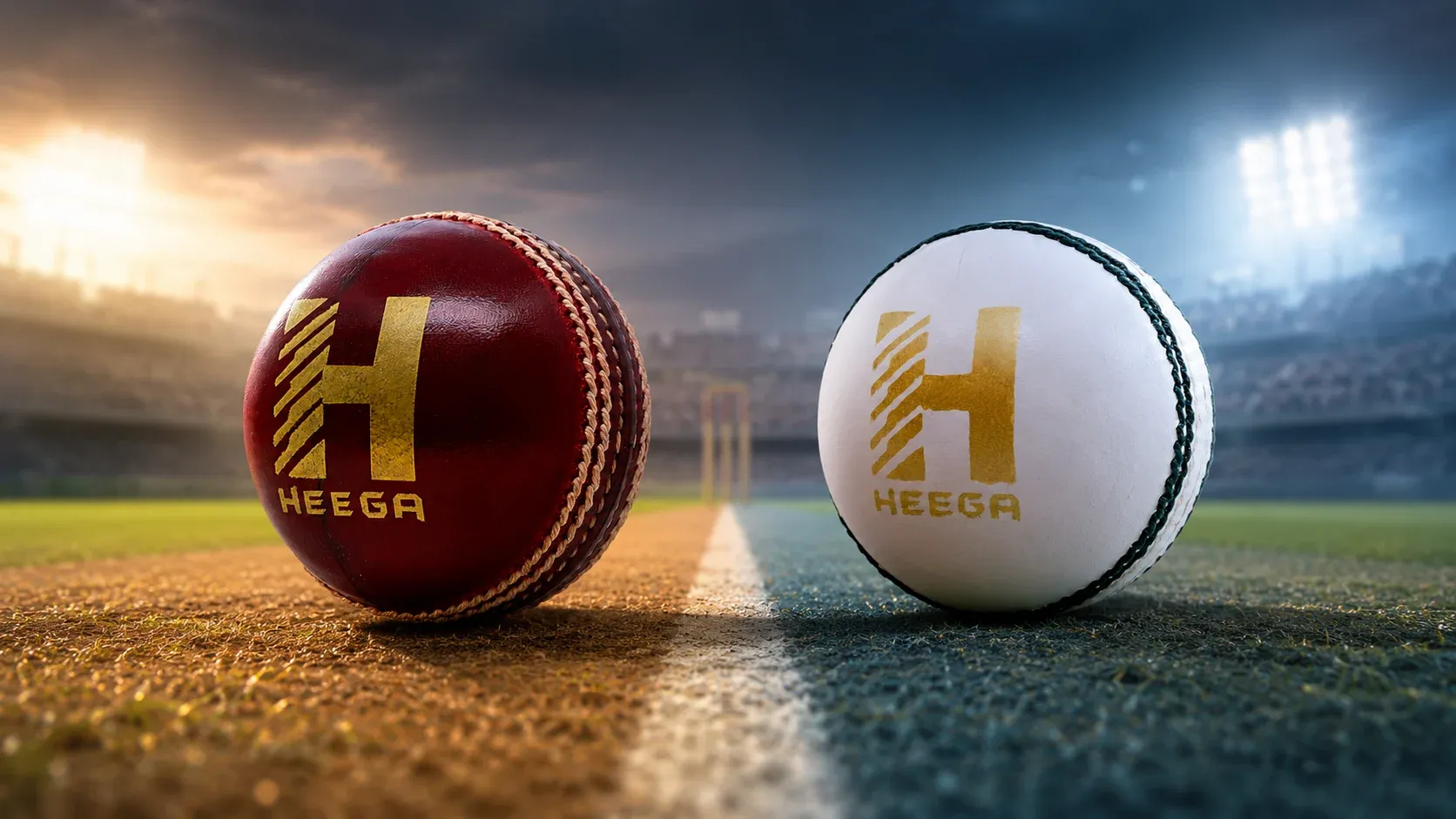
Test and first-class cricket use a red ball. ODIs and T20s use a white ball, chosen for visibility under floodlights. Day-night Tests use a pink ball, which was developed so that longer matches could carry on under lights. The colour follows the format and the light the match is played in.
The rest of this page takes each format in turn. The full red-against-white comparison of swing, wear and shine is in red vs white cricket balls, so it is not repeated here.
Why is the Test ball red?
The red ball has been around since the early days of cricket and is the ball of Test and first-class matches. Red suits daytime cricket because it gives strong contrast against the pitch and its surroundings, and it holds its shape and condition over a long innings, even after 80 to 90 overs. As it ages it develops a darker seam that bowlers can grip, so both seamers and spinners get their share of the game.
Our red match ball is the Heega Test leather ball: four-piece construction, a pure cork core, a leather upper with fine linen stitching, 156 g.
Why do ODIs and T20s use a white ball?
One reason above all: visibility under floodlights. The white ball was introduced in 1977 for World Series Cricket played under lights, and as one-day matches moved into the evening the game needed a ball that could be seen clearly under artificial light. It is the ball of ODIs, T20s and franchise leagues.
Our Super Club white is a four-piece ball made for T20, 30-30 and 40-40+ over cricket.
When is a pink ball used?
Pink came in with day-night Test cricket. A red ball is hard to see against a darker background once the light goes, and a white ball was not considered ideal for every aspect of the longer format, so the pink ball was developed to stay visible from daylight through twilight to floodlights while remaining suited to a long match. It combines visibility under lights with durability, a bridge between the other two.
The Heega Pink Tournament ball is a four-piece alum-tanned leather ball with 68 to 70 stitches of four-strand thread, 155 to 165 g, made for day-night matches. There is also a League Series pink ball for practice sessions.
Is the ball built differently for each colour?
The difference is in the cover. Our red Test ball, Super Club white and Pink Tournament ball are all hand-stitched, four-piece leather balls. A white cover is polished to a smooth finish for visibility and a reliable seam for swing bowling; as the innings goes on it gets scratched, scuffed and less bright. A pink ball uses a coloured leather exterior made to stay visible in day-night play, with a seam that has to remain visible and usable through the long hours a Test asks of it. Construction does vary between manufacturers and competitions, so check the specification of the ball your league plays with.
Which ball should a club or academy buy?
Buy for the format you actually play:
- Multi-day or Test-style cricket: a red ball.
- Limited-overs cricket, ODIs and T20s: a white ball.
- Day-night matches under lights: a pink ball.
Our leather balls are hand-stitched in Meerut, with full-grain leather, a tight seam and a cork-and-wool core, and come in match and practice grades. Clubs and academies buying in volume can order in bulk, including under their own label; tell us the format and we will recommend the construction.
Training balls are a separate matter. Not every coloured ball is meant for match play; practice balls come in other colours for visibility, indoor training and junior coaching, and our indoor leather balls, for instance, are yellow.
For the full range in red, white and pink, see our leather cricket balls.
Related posts
 How Kids Learn to Read a Cricket Ball: Understanding Line, Length, Bounce and Shot SelectionLearn how kids can read a cricket ball by understanding line, length, bounce and shot selection to develop better batting skills and confidence.
 Batting Gloves Explained: How Padding Placement and Finger Protection Help Manage Ball ImpactLearn how batting glove padding placement, finger protection, and fit help manage ball impact. Find practical tips for choosing cricket batting gloves.
 Leather Ball Cricket Explained: How Ball Condition, Seam and Swing Influence BowlingLearn how leather ball cricket works and how ball condition, seam position, shine, and swing influence bowling accuracy, movement, and performance.