Cricket Ball Guide: Types, Weight, Seam and Performance

Introduction: Why the Right Cricket Ball Matters
A cricket ball may look simple when you first pick it up, but there is a lot more to it than meets the eye.
The weight, leather, core, stitching, seam, shape, and surface all play a role in how the ball behaves on the cricket field.
For a beginner, these differences may not be immediately noticeable.
For an experienced player, however, the feel of a cricket ball in the hand can tell you a lot.
A new ball feels different from an older one. A red ball feels different from a white ball. A traditional leather ball behaves differently from softer training balls or tennis balls.
This is why choosing the right ball matters whether you play cricket at school, in an academy, at club level, or in competitive matches.
The right ball can help players practice more consistently and prepare for the conditions they are likely to face in real cricket matches.
In this guide, we explain:
- Different types of cricket balls
- How a cricket ball is constructed
- Why weight matters
- What the seam does
- How the ball affects bowling and batting
- Differences between red and white balls
- Match balls vs training balls
- How to choose the right ball
- How to care for a leather cricket ball
What Is a Cricket Ball?
A traditional leather cricket ball is a carefully constructed piece of sporting equipment.
It is designed to withstand repeated impacts from the bat, pitch, ground, and players while maintaining its shape and playing characteristics.
A traditional leather cricket ball generally consists of:
- A cork-based central core
- Layers of tightly wound yarn or string
- Leather outer panels
- Strong stitching
- A raised seam
- A finished outer surface
Each part has a specific purpose.
The core contributes to the ball's weight, hardness, resilience, and bounce.
The wound yarn helps build the structure around the core.
The leather covering protects the internal construction and provides the surface that interacts with the bat, pitch, and bowler's fingers.
The stitching joins the leather panels and creates the familiar raised seam.
When these components are manufactured and assembled correctly, the result is a balanced and durable cricket ball.
What Is Inside a Cricket Ball?
The inside of a traditional cricket ball is not simply one solid piece.
Its construction usually involves several layers working together.
Cork Core
The cork core forms an important part of the internal structure.
It contributes to:
- Weight
- Hardness
- Resilience
- Bounce
The core must be manufactured consistently because differences inside the ball can affect the final product.
Wound Yarn
Layers of yarn or string are wound around the core.
This helps build the ball to the required size and provides additional structure.
Consistent winding is important because uneven internal construction can contribute to an irregular shape or balance.
Leather Cover
The leather covering protects the internal layers.
It also provides the playing surface.
The quality of the leather can affect durability, feel, appearance, and how the ball changes during use.
What Is the Leather Covering of a Cricket Ball?
The leather covering is one of the most noticeable parts of a traditional cricket ball.
High-quality leather needs to be strong enough to withstand repeated impacts while maintaining its shape.
During a match, the leather comes into contact with:
- The cricket bat
- The pitch
- The outfield
- The bowler's fingers
- The fielder's hands
- Moisture and dirt
Over time, the leather naturally develops marks and changes in appearance.
That change is particularly important in longer formats such as Test cricket, where the ball may remain in use for a significant period.
A good leather cover helps provide durability while maintaining the characteristics expected from a match-quality ball.
What Is the Seam on a Cricket Ball?
If you look closely at a traditional cricket ball, you will see a raised line running around its centre.
This is the seam.
The seam is created where the leather panels are stitched together.
For bowlers, the seam is an important part of the ball.
It can help with:
- Grip
- Seam bowling
- Swing bowling
- Release
- Line and length
- Ball control
Fast bowlers often work on presenting the seam upright.
Spinners can also use the seam as part of their grip and release.
A strong, well-defined seam can therefore be both a structural and functional feature.
Why Does Cricket Ball Stitching Matter?
Stitching holds the leather panels together.
It also helps create the raised seam.
The quality and consistency of the stitching are important because the ball needs to remain structurally sound throughout its intended use.
Premium balls may involve detailed hand stitching, while other balls may use different manufacturing processes.
The exact method can vary between manufacturers and ball categories.
What matters is that the finished ball has secure stitching and a properly formed seam.
What Does Hand Stitched Cricket Ball Mean?
You may have seen cricket balls described as hand stitched.
This refers to the way the leather panels are stitched together.
Hand stitching requires skill and attention to detail.
The stitching needs to be secure and consistent so that the seam remains properly formed.
Hand stitching is often associated with premium or traditional cricket balls, although manufacturing methods can differ from one manufacturer to another.
For buyers, it is useful to look at the complete construction rather than relying on one feature alone.
Standard Cricket Ball Weight and Size
For senior men's cricket under MCC Law 4, the ball has a circumference of 22.4 cm to 22.9 cm and weighs between 155.9 g and 163 g.
These specifications apply to that playing category.
Other age groups and forms of cricket can have different requirements.
This is why players and coaches should always check the rules of their particular competition before selecting a match ball.
Size and weight are important because they influence how the ball feels and performs.
Why Cricket Ball Weight Matters
The weight of a cricket ball affects how it feels in a player's hand.
This is particularly noticeable when:
- Bowling
- Throwing
- Catching
- Batting
- Fielding
A bowler becomes accustomed to a particular weight.
A sudden change can affect grip, rhythm, and release.
For batters, the weight and hardness of the ball can influence how it comes off the bat.
For younger players, coaches may choose lighter or softer options that are more appropriate for their age and development.
How to Check Cricket Ball Weight
A cricket ball gauge is useful for checking certain dimensions, but it does not measure weight.
For weight, use a suitable digital or precision weighing scale.
Place the ball carefully on the scale and record the measurement.
For a more reliable result:
- Make sure the scale is on a stable surface.
- Check that the scale is correctly set to grams.
- Make sure the ball is reasonably clean and dry.
- Place the ball gently on the weighing surface.
- Record the result.
If you are checking several balls, measuring them under the same conditions can make comparison easier.
Why Cricket Ball Circumference Matters
The circumference of a cricket ball is another important measurement.
A ball that falls outside the relevant specification may not be suitable for the intended category of play.
A cricket ball gauge can make size checking faster and easier.
This can be particularly useful for:
- Cricket academies
- Schools
- Clubs
- Coaches
- Equipment managers
- Cricket equipment suppliers
When checking a ball, do not rely only on its appearance.
A ball can look normal but still have an irregularity.
How to Check the Shape of a Cricket Ball
Size and shape are related, but they are not the same thing.
A properly made cricket ball should be reasonably spherical.
To perform a basic visual inspection:
- Hold the ball at eye level.
- Rotate it slowly.
- Look for flattened areas.
- Check the leather panels.
- Examine the seam.
- Look for obvious deformation.
You can also place the ball on a flat surface and roll it slowly.
If it shows an obvious irregular movement, it may need closer inspection.
This simple test does not replace professional measuring equipment, but it can help identify visible problems.
Different Types of Cricket Balls
Not every cricket ball is made for the same purpose.
The main types include:
- Red cricket balls
- White cricket balls
- Pink cricket balls
- Leather match balls
- Training balls
- Synthetic cricket balls
- Soft cricket balls
- Junior cricket balls
The best option depends on the format, playing level, age, and training objective.
Red Cricket Ball
The red ball is strongly associated with traditional long-format cricket.
It is commonly used in:
- Test cricket
- First-class cricket
- Other long-format competitions
The red colour has long been part of the traditional appearance of the game.
It also provides good visibility against the white clothing traditionally worn in Test cricket.
During a long innings, the condition of the red cricket ball gradually changes.
Its surface becomes older, the seam can wear, and bowlers may adapt their tactics as the ball gets older.
White Cricket Ball
The white cricket ball is widely associated with limited-overs cricket.
It is commonly used in:
- ODI cricket
- T20 cricket
- Day-night limited-overs matches
White provides strong visibility in many modern playing conditions, including matches played under floodlights.
However, the white surface can show dirt and wear differently from a red ball.
This means ball maintenance and surface condition remain important throughout the innings.
Pink Cricket Ball
Pink cricket balls are mainly associated with day-night Test matches.
The colour is intended to remain visible as the match moves from daylight toward evening and artificial lighting.
Pink balls have therefore created an interesting bridge between traditional long-format cricket and modern day-night scheduling.
Red Ball vs White Cricket Ball
When comparing a red ball and a white cricket ball, colour is only one difference.
The intended playing environment is also important.
FeatureRed BallWhite Cricket Ball
Common use
Test and first-class cricket
ODI and T20 cricket
Typical format
Long format
Limited overs
Traditional clothing
White clothing
Coloured clothing
Visibility
Strong in daylight
Useful in limited-overs conditions
Ball management
Important over long spells
Important throughout limited-overs innings
The exact specifications can vary depending on the manufacturer and competition.
Always use the ball required by your governing body or tournament.
Cricket Ball vs Tennis Balls
Tennis balls are often used for recreational cricket and certain training drills.
However, a tennis ball is very different from a traditional leather cricket ball.
A tennis ball is generally:
- Softer
- Lighter
- More forgiving
- Designed for tennis
- Without a traditional raised cricket seam
Tennis balls can be useful when players are learning basic batting skills or working on reaction and timing.
However, they cannot completely reproduce the feel, bounce, hardness, seam, or movement of a traditional cricket ball.
Why Tennis Ball Cricket Is Popular
Tennis-ball cricket is popular because it is easy to organize and can be played in many different environments.
The softer ball can make recreational games more accessible.
It can also be useful for:
- Batting drills
- Reaction practice
- Hand-eye coordination
- Timing
- Footwork
- Beginner sessions
For serious players, however, training should eventually include the type of cricket ball they are likely to face in competitive matches.
What Are Training Balls?
Training balls are designed specifically for practice.
They come in different constructions and levels of hardness.
Depending on the product, training balls can include:
- Synthetic cricket balls
- Practice leather balls
- Soft training balls
- Junior balls
- Tennis-style training options
There is no single training ball that is best for every player.
A coach should choose according to the drill, player age, skill level, and environment.
Why Beginners May Use Different Cricket Balls
A beginner does not necessarily need to start with the same cricket ball used in senior competitive cricket.
Learning the basics can be easier with equipment that matches the player's ability.
Coaches may consider:
- Age
- Physical development
- Skill level
- Confidence
- Training environment
- Safety
- Type of drill
As players improve, they can gradually move toward harder and more realistic match-style balls.
Cricket Ball Performance
The performance of a cricket ball is influenced by several factors.
These include:
- Construction
- Weight
- Shape
- Leather
- Seam
- Surface condition
- Pitch
- Weather
- Bowling technique
This is why two balls that look similar can sometimes feel different during play.
The ball is only one part of the equation, but it is an important one.
Cricket Ball and Swing Bowling
Swing bowling is one of the most exciting skills in cricket.
A ball can move through the air because of the interaction between its surface condition, seam orientation, speed, release, and atmospheric conditions.
Bowlers often pay close attention to the condition of the ball.
A new ball may behave differently from an older ball.
This is why experienced bowlers can sometimes use changes in the ball's condition as part of their bowling strategy.
Cricket Ball and Seam Movement
Seam movement happens when the ball deviates after hitting the pitch.
The seam can play an important role in this process.
A bowler may attempt to land the ball with the seam upright and encourage it to move after pitching.
However, seam movement also depends heavily on the pitch.
A green or moist surface can behave differently from a dry or worn pitch.
The bowler's accuracy and release are equally important.
Cricket Ball and Spin
Spin bowling depends heavily on control.
Finger spinners and wrist spinners use different techniques to rotate the ball.
The seam can provide additional grip and reference points.
The surface condition also affects how the ball feels.
As a cricket ball becomes older, spinners may find that its changing surface provides different opportunities.
New Cricket Ball vs Used Cricket Ball
A new cricket ball has a relatively fresh surface and clearly defined seam.
As it is used, the ball experiences repeated contact with:
- Bat
- Pitch
- Ground
- Fielders
- Gloves
- Dirt
- Moisture
Its appearance and surface gradually change.
This is particularly important in Test matches and other longer formats where ball condition can influence bowling tactics.
Cricket Balls in Test Matches
In Test matches, the ball is a major part of the tactical battle.
A new red ball can provide opportunities for fast bowlers.
As the innings continues, the ball becomes older and its condition changes.
Bowlers, batters, and fielders all have to adapt.
This is one reason Test cricket can be so fascinating.
The ball is not simply used from beginning to end without change.
Its condition becomes part of the story of the match.
White Clothing and Red Ball Visibility
Traditional Test cricket is closely associated with white clothing.
The red ball creates a strong visual contrast against the players' clothing, particularly during daytime play.
Limited-overs cricket has a different visual identity.
Coloured clothing and the white cricket ball have become closely associated with modern ODI and T20 cricket.
These visual differences also reflect the different traditions and playing conditions of each format.
How Cricket Ball Condition Changes
No cricket ball stays exactly the same throughout its life.
Repeated impact gradually changes the surface.
The leather may develop marks.
The seam may become less pronounced.
The ball can become softer.
The overall appearance changes.
Small signs of wear are normal.
However, significant damage can affect performance and may make the ball unsuitable for certain types of play.
How to Identify a Damaged Cricket Ball
Before using a ball, look for:
- Cracked leather
- Loose stitching
- Severely damaged seam
- Flattened areas
- Major deformation
- Excessive surface damage
A small scuff does not automatically mean that a ball is unusable.
However, significant structural damage should not be ignored.
For competitive cricket, always follow the rules regarding ball replacement and condition.
How to Store a Leather Cricket Ball
Proper storage can help maintain the condition of your cricket equipment.
Keep the Ball Dry
Avoid unnecessary exposure to moisture.
Avoid Extreme Heat
Do not leave leather balls in direct sunlight or excessive heat for long periods.
Keep Them Clean
Use appropriate cleaning methods and avoid harsh chemicals that may damage the leather.
Protect the Seam
Avoid unnecessary handling that could weaken the stitching.
Avoid Crushing the Ball
Do not place heavy cricket equipment on top of stored balls.
A little care can make a noticeable difference when equipment is used regularly.
How to Choose the Right Cricket Ball
Choosing a cricket ball becomes easier when you know exactly what you need it for.
Ask yourself:
Is it for a match or training?
What age group is using it?
What format are you playing?
What type of pitch will you use?
Do you need a leather or synthetic ball?
How often will the ball be used?
Your answers can help narrow down the options.
Cricket Ball Selection for Beginners
Beginners should focus on comfort, suitability, and learning.
A softer training ball can be useful for basic drills.
As confidence improves, players can gradually move toward harder cricket balls.
The goal is not to buy the most expensive equipment immediately.
The goal is to use equipment that supports learning.
Cricket Ball Selection for Academy Players
Academy players often train several times each week.
For them, durability and consistency become increasingly important.
Coaches may keep different balls for:
- Batting practice
- Bowling practice
- Fielding drills
- Match simulation
- Competitive preparation
Using consistent equipment makes it easier to evaluate player development.
Cricket Ball Selection for Club Players
Club players should select their match ball according to their competition requirements.
For practice, durable training balls can be a practical option.
Clubs may also benefit from keeping a mixture of match and practice equipment so that premium balls are not unnecessarily worn out during every training session.
Cricket Ball Selection for Professional Players
Professional players work with highly specific equipment requirements.
At this level, even small differences in ball feel can be noticeable.
Players and teams may pay close attention to:
- Weight
- Leather quality
- Seam profile
- Surface finish
- Hardness
- Shape
- Competition specifications
The objective is simple: create consistency between training and competitive conditions.
What Makes a Top Quality Cricket Ball?
A top quality cricket ball is not defined by one feature.
Instead, several elements need to work together.
A quality ball should have:
- Consistent internal construction
- Suitable leather
- Accurate weight
- Proper circumference
- Good shape
- Strong stitching
- Well-defined seam
- Durable finishing
- Suitable performance characteristics
Consistency is particularly important.
Players want the ball to feel and behave as expected.
Common Mistakes When Buying a Cricket Ball
Choosing Only by Price
The cheapest ball is not always the best choice for your purpose.
Ignoring the Format
A ball suitable for T20 cricket may not be the appropriate choice for Test cricket.
Choosing Only by Colour
Colour tells you something about the ball's intended use, but it is not the only factor.
Using a Match Ball for Every Training Session
Regular training can quickly wear out premium match balls.
Ignoring Player Age
Young players may require different equipment from senior players.
Not Checking the Seam
A poorly formed or damaged seam can affect the ball's intended performance.
Why Consistent Cricket Balls Improve Training
Imagine ten players practicing with balls that all have different weights, shapes, and levels of wear.
Comparing their performances becomes difficult.
Consistent equipment creates a more controlled training environment.
It allows coaches and players to focus on:
- Technique
- Accuracy
- Timing
- Movement
- Reaction
- Skill development
The equipment will not make a player better by itself.
But suitable and consistent equipment can make quality practice much easier.
Why Cricket Ball Quality Matters for Cricket Matches
In competitive cricket matches, equipment consistency matters.
The ball needs to meet the relevant requirements of the competition.
Players should know what type of ball is being used before the match begins.
This is especially important when moving between:
- School cricket
- Academy cricket
- Club cricket
- First-class cricket
- Test cricket
- Limited-overs cricket
Each environment may have different equipment expectations.
How Heega Sports Supports Cricket Players
At Heega Sports, we understand that good cricket equipment should be practical, reliable, and suited to the player.
A cricket ball is one of the most frequently used pieces of equipment during training and matches.
That is why attention to construction, material, stitching, seam, and overall quality matters.
Our cricket range includes equipment for different levels of the game, including:
- Leather cricket balls
- Training balls
- Practice cricket balls
- Kashmir Willow cricket bats
- English Willow cricket bats
- Batting gloves
- Batting pads
- Cricket helmets
- Cricket shoes
- Cricket socks
- Cricket kit bags
- Practice nets
- Cricket stumps
- Training accessories
Whether you are a beginner, academy player, club cricketer, coach, or competitive player, choosing suitable equipment helps create a better training environment.
Cricket Ball Inspection Checklist
Before using a ball, take a few moments to inspect it.
Size
Is the ball within the relevant specification?
Weight
Does the cricket ball weight match the intended category?
Shape
Is the ball reasonably spherical?
Seam
Is the seam secure and clearly formed?
Leather
Is the leather covering in good condition?
Surface
Is the surface suitable for the intended session?
Type
Is it the correct red, white, pink, or training ball?
Purpose
Is the ball intended for matches, nets, or recreational use?
This simple checklist can help players and coaches avoid unnecessary equipment problems.
Frequently Asked Questions About Cricket Balls
What is a cricket ball made of?
A traditional leather cricket ball generally contains a cork-based core, layers of wound yarn or string, leather panels, and strong stitching.
What is the standard cricket ball weight?
For senior men's cricket under MCC Law 4, the ball weighs between 155.9 g and 163 g.
What is the standard cricket ball circumference?
For senior men's cricket under MCC Law 4, the circumference is between 22.4 cm and 22.9 cm.
Which cricket ball is used in Test cricket?
A red cricket ball is traditionally used in Test cricket. Pink balls may be used for day-night Test matches.
What is a white cricket ball used for?
White cricket balls are commonly used in limited-overs formats such as ODI and T20 cricket.
Why does a cricket ball have a seam?
The seam joins the leather panels and provides bowlers with an important grip and reference point. It can also contribute to seam movement.
Can tennis balls be used for cricket training?
Yes. Tennis balls can be useful for beginner training, recreational games, reaction drills, and timing practice. However, they do not behave like traditional leather cricket balls.
How long does a cricket ball last?
Its lifespan depends on construction, quality, playing conditions, frequency of use, and the type of cricket. Match balls can experience significant wear during competitive play.
What is the best cricket ball for beginners?
The best option depends on the player's age, skill level, and training environment. Softer or lighter training balls can be suitable for some beginners.
How should I store a leather cricket ball?
Keep it dry, away from excessive heat, and protected from crushing or unnecessary moisture. Handle the seam and leather carefully.
Final Thoughts
Choosing a cricket ball is about more than simply picking a red, white, or pink ball.
The construction, weight, leather, stitching, seam, shape, and surface all contribute to how the ball performs.
A red ball has an important place in Test cricket.
A white cricket ball is widely used in limited-overs cricket.
Pink balls have become associated with day-night Test matches.
Training balls and tennis balls can help beginners and recreational players develop basic skills in a more accessible environment.
The most important thing is to choose equipment that matches your purpose.
A beginner may need a softer training option.
An academy player may need durable practice balls.
A club player may need both training and competition-quality equipment.
A professional player needs equipment that meets specific competition requirements.
Whatever your level, a good cricket ball should feel reliable in your hand and perform consistently on the field.
Because when the equipment is right, players can spend less time thinking about the ball and more time focusing on batting, bowling, fielding, and enjoying the game.
A well-made cricket ball does not simply sit in your kit bag—it becomes part of every delivery, every shot, and every moment of the game.
🏏 Explore Cricket Equipment at Heega Sports
Whether you are preparing for your next cricket match, running an academy, coaching young players, or simply heading out for a practice session, choosing the right equipment can make a real difference.
Explore Heega Sports for:
- Leather cricket balls
- Training balls
- Cricket bats
- English Willow cricket bats
- Kashmir Willow cricket bats
- Batting gloves
- Batting pads
- Cricket helmets
- Cricket shoes
- Cricket kit bags
- Practice nets
- Cricket stumps
- Training accessories
Shop Cricket Equipment
Heega Sports – Quality Cricket Equipment for Training, Matches, and Player Development.
Related posts
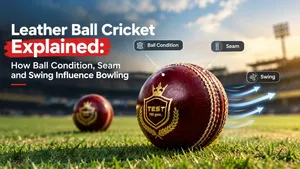 Leather Ball Cricket Explained: How Ball Condition, Seam and Swing Influence BowlingLearn how leather ball cricket works and how ball condition, seam position, shine, and swing influence bowling accuracy, movement, and performance.
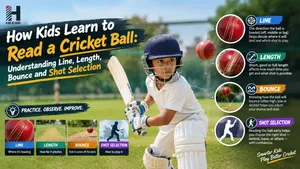 How Kids Learn to Read a Cricket Ball: Understanding Line, Length, Bounce and Shot SelectionLearn how kids can read a cricket ball by understanding line, length, bounce and shot selection to develop better batting skills and confidence.
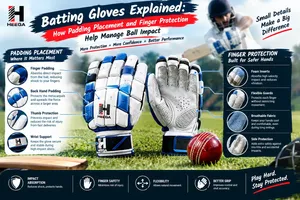 Batting Gloves Explained: How Padding Placement and Finger Protection Help Manage Ball ImpactLearn how batting glove padding placement, finger protection, and fit help manage ball impact. Find practical tips for choosing cricket batting gloves.