Cricket Bat Handle Types Explained: Choosing the Right Handle for Comfort and Control.
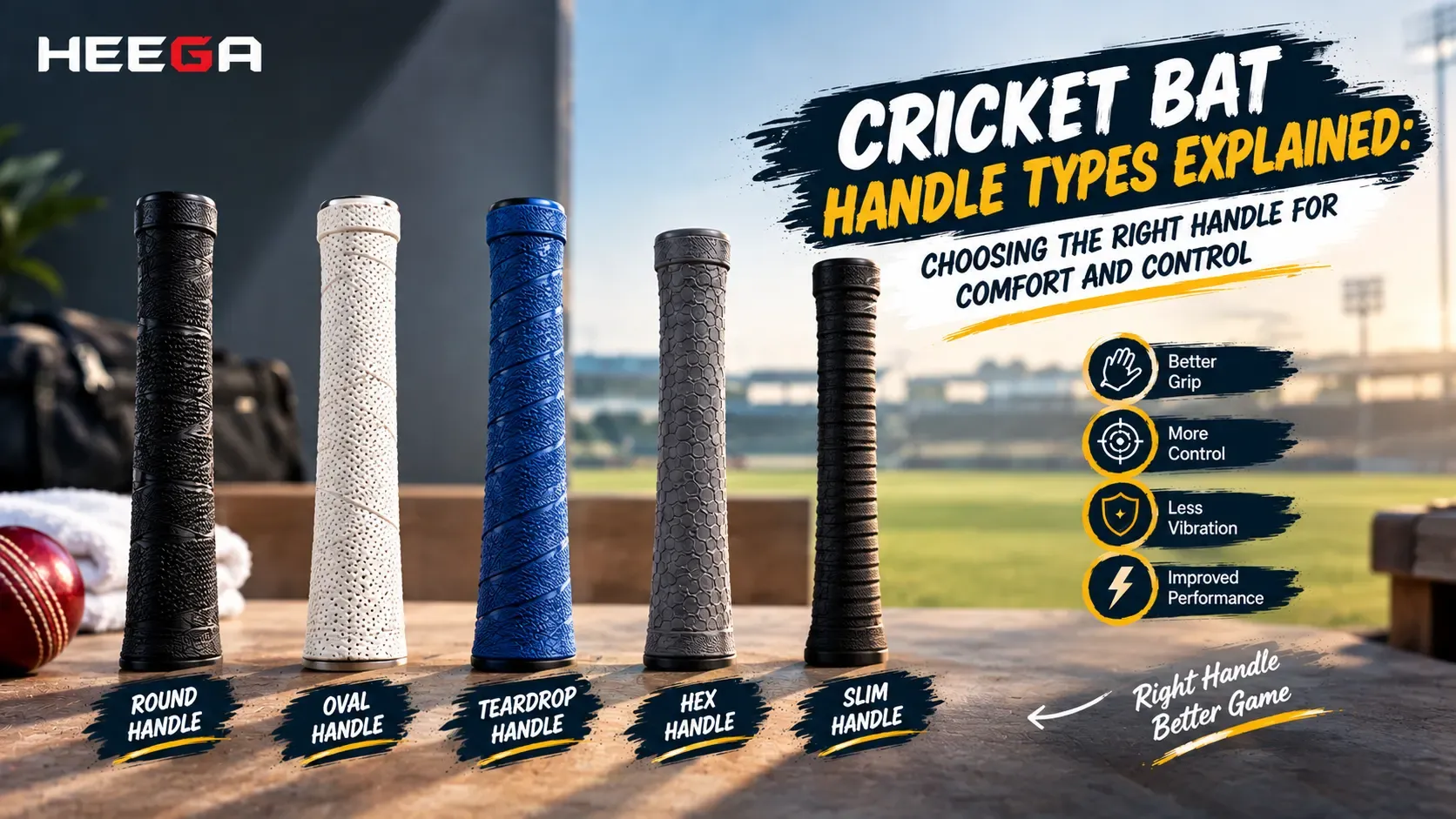
Introduction: The Handle Is an Important Part of Your Cricket Bat
When players choose a cricket bat, they often focus on willow grade, blade profile, edge thickness, weight, and appearance.
The handle, however, deserves equal attention.
The handle connects the batter's hands to the blade. It influences how the bat feels during the backlift, swing, impact, and follow-through.
A suitable handle can help a player maintain:
- Comfortable hand positioning.
- Better control.
- A natural backlift.
- Reduced unwanted vibration.
- Consistent shot execution.
- Greater confidence at the crease.
The right handle is not the same for every cricketer. Different players have different preferences depending on their strength, batting style, experience, and comfort.
This guide explains the main cricket bat handle types, how they are constructed, and what players should consider before selecting a bat.
What Is a Cricket Bat Handle?
The handle is the upper section of the bat that the player holds while batting.
It connects to the blade and transfers movement from the hands to the willow.
A cricket bat handle must perform several functions:
- Provide a secure grip.
- Transfer energy during the shot.
- Help control the bat.
- Absorb some impact vibration.
- Support the player's preferred hand position.
- Maintain structural strength.
The handle is usually covered with a grip, but the construction underneath the grip plays an important role in the bat's overall feel.
Why Cricket Bat Handle Construction Matters
The handle affects how the bat responds during play.
Its construction can influence:
- Flexibility.
- Shock absorption.
- Vibration.
- Control.
- Pickup.
- Comfort.
- Durability.
A handle that is too stiff may feel harsh for some players. A handle that is too flexible may feel less stable for others.
The best option depends on the player's individual preferences and playing requirements.
Common Cricket Bat Handle Materials
Traditional cricket bat handles are commonly made using cane-based construction.
Cane is valued for its combination of strength, flexibility, and shock-absorbing characteristics.
The exact materials and construction methods can differ between manufacturers.
Some handles may include multiple cane pieces joined together, while others may use specialized modern materials or reinforcement methods.
Players should always check the manufacturer's specifications rather than assuming that every bat uses an identical handle design.
Cane Cricket Bat Handles
Cane handles are widely used in traditional cricket bat construction.
They can provide:
- Flexibility.
- Strength.
- Comfortable response.
- Shock absorption.
- Reliable connection between the blade and hands.
The handle's performance depends on its construction, quality, joining method, and overall design.
A well-made cane handle can provide a balanced combination of comfort and control for many players.
Multi-Piece Cane Handles
Some cricket bats use handles made from multiple cane pieces.
The pieces are joined together to create a handle with the required strength and flexibility.
This construction can help manufacturers control the handle's characteristics.
Potential benefits include:
- Consistent construction.
- Controlled flexibility.
- Strength.
- Shock absorption.
- Reliable performance.
The number of pieces alone does not determine whether a handle is better. Overall construction quality and player comfort are more important.
Short Handle Cricket Bats
Short Handle, commonly abbreviated as SH, is one of the most widely used adult bat formats.
The term generally refers to the bat's handle length and overall adult-sized construction.
Short Handle bats are commonly used by adult players and taller junior players who have moved into adult equipment.
A Short Handle bat may suit players who:
- Have reached an appropriate height.
- Can comfortably control adult bat dimensions.
- Prefer standard adult equipment.
- Play regular club or competitive cricket.
The correct choice should still be based on height, strength, comfort, and technique.
Long Handle Cricket Bats
Long Handle bats provide additional handle length compared with standard Short Handle models.
They may be considered by:
- Taller players.
- Players with specific reach preferences.
- Batters who prefer additional handle length.
- Players comfortable with the changed balance.
A Long Handle bat is not automatically better for taller players.
The additional length may affect:
- Pickup.
- Balance.
- Hand position.
- Backlift.
- Swing feel.
Players should test the bat carefully before selecting this format.
Harrow Cricket Bat Handles
Harrow bats are commonly used during the transition between junior and adult cricket equipment.
They can suit teenagers and developing players who are not yet comfortable with a full adult-sized bat.
A Harrow bat may offer a useful balance between:
- Blade size.
- Handle length.
- Weight.
- Control.
- Physical development.
The correct choice depends on the player's height and strength rather than age alone.
Junior Cricket Bat Handles
Junior cricket bats are designed for younger players.
They are available in different sizes, including:
- Size 3.
- Size 4.
- Size 5.
- Size 6.
The handle should allow the child to hold the bat comfortably and control the blade during the swing.
An oversized handle or bat can make it difficult for a young player to maintain proper technique.
Parents should prioritize suitable sizing and comfort rather than buying adult equipment for future growth.
Handle Flexibility and Batting Feel
Flexibility is one of the most important characteristics of a cricket bat handle.
A handle with some flexibility may help absorb impact and reduce the harshness of contact.
A stiffer handle may provide a more direct and solid feeling for certain players.
Neither characteristic is universally better.
The ideal level of flexibility depends on:
- Batting style.
- Player strength.
- Preferred feel.
- Ball speed.
- Personal comfort.
- Experience.
Why Shock Absorption Matters
Leather cricket balls can create significant impact when they strike the bat.
Some of that impact may be felt through the handle.
A well-constructed handle can help manage vibration and improve comfort.
However, shock absorption also depends on:
- Willow characteristics.
- Handle construction.
- Grip.
- Impact location.
- Ball speed.
- Bat condition.
A player who frequently experiences uncomfortable vibration should inspect the bat and consider trying a different handle construction.
Handle Stiffness vs Flexibility
The difference between stiffness and flexibility can influence the bat's response.
A More Flexible Handle
A more flexible handle may appeal to players who prefer:
- Softer impact feedback.
- Greater shock absorption.
- A less rigid feel.
- Comfortable handling.
A Stiffer Handle
A stiffer handle may appeal to players who prefer:
- Direct response.
- A firm feel.
- Stability during powerful shots.
- Less movement in the handle.
These are general preferences. Actual performance depends on the complete bat design and the individual player.
Handle Shape and Comfort
Handle shape can influence how the hands sit on the bat.
Some players prefer a more rounded handle, while others may feel more comfortable with a different shape.
A suitable handle should allow the player to:
- Maintain a relaxed grip.
- Position the hands naturally.
- Control the bat during the swing.
- Avoid excessive wrist tension.
- Adjust between defensive and attacking shots.
Comfort is especially important during long innings and extended practice sessions.
The Role of the Cricket Bat Grip
The grip covers the handle and directly affects the player's contact with the bat.
A good grip can provide:
- Secure hand placement.
- Better traction.
- Improved comfort.
- Reduced slipping.
- Consistent control.
Grip preferences vary between players.
Some prefer thicker grips, while others prefer a thinner grip that provides a more direct feel.
Thick Grip vs Thin Grip
Thick Grips
A thicker grip may be useful for players who prefer:
- Additional cushioning.
- Reduced vibration.
- A fuller handle feel.
- Comfortable hand support.
Thin Grips
A thinner grip may appeal to players who prefer:
- Greater handle awareness.
- A more direct connection.
- A slimmer hand position.
- A lighter-feeling handle.
The correct grip should not make the player squeeze the handle excessively.
Oval and Rounded Handle Preferences
Handle shapes can vary between bats.
A rounded handle may provide a familiar traditional feel for many players.
An oval handle may help some batters distinguish the orientation of the bat and maintain consistent hand positioning.
The ideal shape is personal.
Players should test the handle with their normal batting grip instead of selecting one based only on appearance or terminology.
Handle Shape and Bottom-Hand Control
The bottom hand plays an important role in many batting movements.
Handle shape can influence how comfortably the bottom hand controls the bat.
This may be especially noticeable during:
- Drives.
- Pull shots.
- Flicks.
- Lofted shots.
- Cross-batted strokes.
A comfortable handle should allow the bottom hand to contribute without creating excessive tension.
Handle Shape and Top-Hand Control
The top hand helps guide the bat and maintain control.
A handle that feels comfortable in the top hand may support:
- Defensive strokes.
- Straight-bat shots.
- Controlled drives.
- Late contact.
- Bat-face stability.
Players should ensure that both hands feel comfortable rather than focusing on only one hand.
Handle Length and Bat Balance
Handle length can influence the overall balance of the bat.
A longer handle may change:
- Pickup.
- Hand position.
- Swing arc.
- Balance.
- Reach.
A shorter handle may feel more compact and familiar to many players.
The correct length depends on the player's physical proportions and preferred batting style.
How Handle Type Influences Pickup
Pickup describes how heavy or light a bat feels when lifted and swung.
The handle contributes to this feeling alongside:
- Blade weight.
- Sweet-spot position.
- Edge thickness.
- Spine.
- Profile.
- Overall weight distribution.
A bat with the same listed weight can feel different when its handle construction or balance changes.
This is why players should test pickup before buying.
Handle Type and Bat Speed
Bat speed depends on technique, strength, timing, and equipment.
The handle can influence how easily the player moves the bat into position.
A comfortable handle may help the player maintain a smooth swing.
An uncomfortable or poorly balanced handle may create unnecessary tension and slow movement.
However, handle type alone does not determine bat speed.
Handle Type and Batting Style
Different players may prefer different handle characteristics.
Timing-Based Batters
Timing-based players may prefer:
- Smooth pickup.
- Comfortable flexibility.
- Balanced response.
- Reliable control.
Power Hitters
Power hitters may prefer:
- A firm feel.
- Stable handle response.
- Strong construction.
- Comfortable control during aggressive shots.
Defensive Batters
Defensive players may value:
- Shock absorption.
- Comfortable grip.
- Precise hand control.
- Consistent feel.
All-Round Batters
Players who use different types of shots may prefer a versatile handle that provides comfort across multiple batting situations.
Handle Type and Playing Format
Playing format can influence equipment preferences.
T20 Cricket
T20 batters often require quick movement and aggressive stroke play.
A comfortable handle can help support fast pickup and rapid shot changes.
One-Day Cricket
One-day cricket requires a balance between control, rotation of strike, and attacking play.
A versatile handle may suit players who need to adapt throughout an innings.
Longer Formats
Longer formats demand comfort over extended periods.
Players may place greater importance on:
- Reduced vibration.
- Reliable grip.
- Consistent control.
- Comfortable hand positioning.
Handle Type and Leather Ball Cricket
Leather ball cricket places greater demands on the bat and handle.
The player should select a bat that is designed and prepared for leather-ball use.
Important considerations include:
- Handle strength.
- Shock absorption.
- Bat preparation.
- Grip security.
- Overall construction.
- Manufacturer guidance.
A bat handle should be inspected regularly, particularly when the player faces fast bowling or trains frequently.
How to Test a Cricket Bat Handle
Before buying a bat, players should test the handle carefully.
Check the Grip
Hold the bat using your normal batting grip.
Make sure the handle feels secure without requiring excessive pressure.
Practice the Backlift
Lift the bat into your normal stance.
Notice whether the handle feels comfortable and balanced.
Perform Shadow Shots
Try:
- Straight drives.
- Defensive shots.
- Pulls.
- Cuts.
- Flicks.
Observe how naturally the bat moves.
Check Vibration
If permitted, use controlled contact with an appropriate ball.
Notice whether the impact feels comfortable.
Test Both Hands
Make sure the top hand and bottom hand feel equally comfortable.
Signs of an Uncomfortable Handle
A handle may not suit a player if they experience:
- Excessive vibration.
- Slipping during the swing.
- Wrist discomfort.
- Difficulty controlling the bat.
- Unnatural hand positioning.
- Excessive grip tension.
- Poor pickup.
These signs do not always mean the handle is defective. They may indicate that the bat's design does not match the player's preferences.
Handle Damage and Warning Signs
Players should inspect the handle regularly.
Warning signs can include:
- Movement between the handle and blade.
- Cracks.
- Unusual sounds.
- Loose grip.
- Structural separation.
- Changes in pickup.
- Increased vibration.
If the handle appears damaged, stop using the bat until it has been inspected by a qualified bat specialist.
Can a Cricket Bat Handle Be Repaired?
Some handle problems can be repaired, depending on their severity.
A professional bat specialist may be able to assess:
- Handle cracks.
- Loose connections.
- Grip problems.
- Structural movement.
- Other construction issues.
Not every damaged handle can be repaired safely.
Players should avoid continuing to use a bat with serious handle damage because the problem may become worse.
How to Maintain a Cricket Bat Handle
Proper maintenance can help protect the handle.
Players should:
- Keep the bat dry.
- Avoid excessive moisture.
- Store the bat correctly.
- Replace worn grips.
- Inspect the handle regularly.
- Avoid throwing or misusing the bat.
- Follow manufacturer instructions.
- Use suitable protective equipment.
The handle should not be exposed to unnecessary impact outside normal cricket use.
Handle Maintenance During the Monsoon
Damp conditions can create additional challenges for wooden cricket equipment.
During wet weather:
- Keep the bat away from rain.
- Do not leave it in a wet kit bag.
- Dry the equipment naturally.
- Avoid extreme heat.
- Store the bat in a dry place.
If the handle becomes wet, inspect it carefully before returning to play.
Choosing a Handle for Junior Players
Junior players should prioritize:
- Correct bat size.
- Comfortable grip.
- Suitable handle length.
- Manageable weight.
- Easy control.
- Appropriate flexibility.
Children should not be encouraged to use a handle that feels too large or heavy simply because they may grow into it.
Correct equipment helps young players develop natural batting movements.
Choosing a Handle for Academy Players
Academy players often spend many hours training.
They should consider:
- Comfort during extended sessions.
- Grip security.
- Vibration.
- Pickup.
- Handle strength.
- Coach recommendations.
A handle that feels comfortable during both technical drills and match simulations can support consistent practice.
Choosing a Handle for Club Players
Club players may need equipment that performs across different formats and conditions.
They should evaluate:
- Handle comfort.
- Durability.
- Batting style.
- Match workload.
- Playing conditions.
- Budget.
Testing different bats can help identify the handle characteristics that suit them best.
Choosing a Handle for Advanced Players
Advanced players may have specific preferences regarding:
- Handle shape.
- Flexibility.
- Grip thickness.
- Handle length.
- Vibration.
- Pickup.
- Overall response.
At this level, personalized feel may become more important because the player has developed a consistent technique and knows what feels natural.
Common Cricket Bat Handle Buying Mistakes
Choosing Only by Appearance
A visually attractive handle may not provide the right comfort or response.
Ignoring Grip Comfort
An unsuitable grip can affect control and confidence.
Selecting the Wrong Length
Handle length can influence balance and hand positioning.
Focusing Only on Stiffness
Flexibility should be considered alongside comfort and batting style.
Ignoring Vibration
Excessive vibration may make extended practice uncomfortable.
Copying a Professional Player
A professional's preferred handle may not suit another player's strength or technique.
Buying Without Testing
A bat should be tested whenever possible before purchase.
How Heega Sports Supports Better Bat Selection
At Heega Sports, we understand that every player has different equipment preferences.
Whether you are a junior cricketer, academy player, school batter, club cricketer, or advanced competitor, choosing the right bat involves more than selecting a popular model.
Our cricket range includes:
- Kashmir Willow cricket bats.
- English Willow cricket bats.
- Junior cricket bats.
- Size 3, 4, 5, and 6 bats.
- Harrow bats.
- Short Handle bats.
- Long Handle bats.
- Leather cricket balls.
- Practice cricket balls.
- Batting gloves.
- Batting pads.
- Cricket helmets.
- Cricket shoes.
- Cricket kit bags.
- Practice nets.
- Training accessories.
Our goal is to help players find equipment that supports comfort, control, confidence, and regular development.
Final Thoughts
The handle is one of the most important parts of a cricket bat.
It connects the player's hands to the blade and influences comfort, balance, vibration, pickup, and control.
Cane-based handles remain common in cricket bat construction, while different handle lengths and shapes are available for players with different needs.
Short Handle bats are widely used by adult players, while Harrow and junior bat sizes help younger cricketers progress through their development. Long Handle bats may suit certain taller players or those with specific preferences, but the change in length can also affect balance and pickup.
The ideal handle depends on:
- Player height.
- Strength.
- Batting style.
- Experience.
- Grip preference.
- Comfort.
- Playing format.
There is no single handle type that is perfect for everyone.
Before purchasing, test the grip, backlift, shadow shots, pickup, and impact feel. Also inspect the handle regularly and address any signs of structural damage.
When the handle feels natural in your hands, you can focus more confidently on watching the ball, moving into position, timing your shots, and building a consistent batting technique.
🏏 Find the Right Cricket Bat for Comfort and Control at Heega Sports
Explore English Willow and Kashmir Willow cricket bats, junior bats, Harrow bats, Short Handle bats, Long Handle bats, leather balls, practice balls, batting gloves, pads, helmets, shoes, kit bags, practice nets, and training accessories.
Shop Now
Heega Sports – Helping Every Cricketer Find the Right Handle, Better Control, and Greater Confidence.
Related posts
 Cricket Batting Pads Explained: How Knee Protection, Shin Coverage and Strap Placement Affect Comfort and MobilityLearn how cricket batting pads, knee protection, shin coverage and strap placement affect comfort, mobility, impact protection and batting performance.
 Batting Gloves for Cricket: How Finger Design, Palm Materials and Grip Texture Affect Bat ControlDiscover how cricket batting gloves, finger design, palm materials and grip texture influence bat control, comfort, protection and batting performance.
 How to Choose the Right Cricket Bat Weight: Understanding Bat Speed, Power & ControlLearn how to choose the right cricket bat weight based on strength, playing style, bat speed, control, balance, and experience for better batting performance.