Cricket Bat Toe Protection Explained: How to Prevent Damage and Extend Bat Life
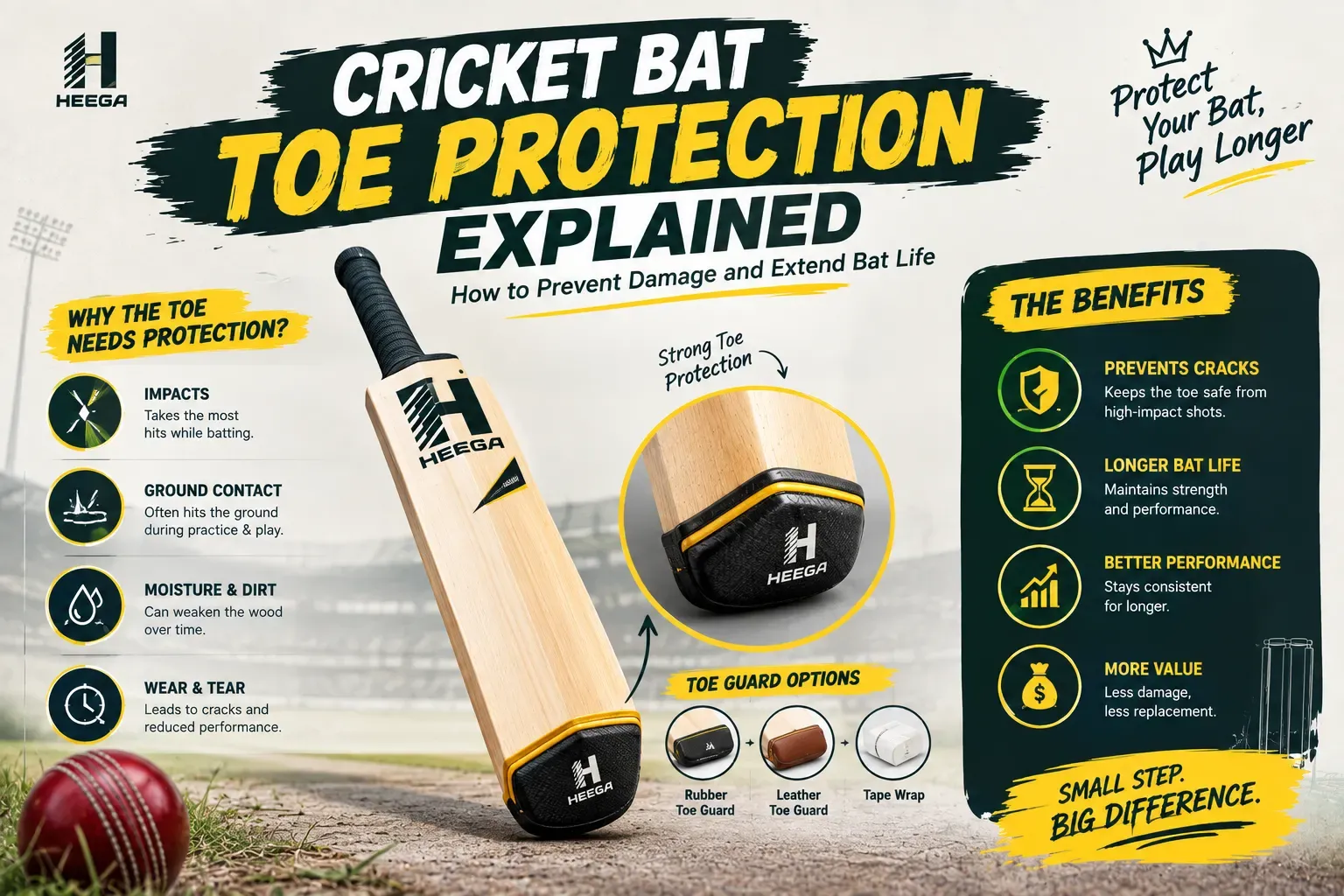
Introduction: Why Cricket Bat Toe Protection Matters
A cricket bat spends most of its life taking punishment.
The ball hits the blade thousands of times. The edges take occasional knocks. The handle absorbs vibration. And then there is one part of the bat that quietly deals with something completely different—the ground.
That part is the toe.
Every time a batter taps the bat before a delivery, places it on the crease or accidentally catches the ground with the bottom edge, the toe is exposed to wear. If the pitch is damp, the problem becomes even more important because willow does not respond well to repeated moisture exposure.
This is where cricket bat toe protection comes in.
A suitable toe guard or protective treatment creates a barrier between the willow and the playing surface. It can help reduce exposure to moisture, dirt and everyday impact while keeping the bottom of the bat in better condition.
But toe protection is not a magic shield.
A well-protected bat can still suffer damage if it is left on wet grass, used on unsuitable surfaces or stored incorrectly. Likewise, a small problem with the toe can become much more serious when it is ignored.
The good news is that looking after the toe is relatively simple.
In this guide, we will explain what cricket bat toe protection does, why toe guards are used, how toe damage happens, what players should check before and after playing, and how a few simple habits can help extend the useful life of a cricket bat.
What Is Cricket Bat Toe Protection?
Cricket bat toe protection is any protective material or treatment applied to the bottom section of the bat to reduce direct exposure of the willow to the ground.
The most common form is a toe guard.
A toe guard is generally fitted across the bottom of the bat and acts as a protective layer between the willow and external conditions.
Depending on the bat and manufacturer, toe protection may be made from different materials and may be fitted in different ways.
The basic purpose remains the same:
Protect the most ground-exposed part of the blade.
A toe guard can help protect against:
- Moisture
- Damp grass
- Dirt
- Minor ground contact
- Scratches
- General wear
- Small impacts
It is particularly useful for players who regularly play outdoor cricket.
Why Does the Toe Need Protection?
The face of the bat gets most of the attention because that is where the ball is struck.
The toe has a different problem.
It is constantly close to the ground.
During a typical innings, a batter may:
- Tap the bat before facing a delivery
- Drag the toe slightly while moving
- Place the bat on the crease
- Rest the bat on the ground
- Play shots where the bottom edge comes close to the surface
- Accidentally strike the ground
None of these actions necessarily cause immediate damage.
The problem is repetition.
A small amount of wear repeated over an entire season can eventually become noticeable.
If moisture is involved, the risk becomes even greater.
How Moisture Can Damage a Cricket Bat Toe
Willow is a natural wood, which means it interacts with its environment.
The toe is particularly vulnerable because it can come into contact with wet grass, damp pitches and muddy surfaces.
Repeated moisture exposure can contribute to:
- Swelling
- Softening
- Cracking
- Discoloration
- Separation of protective materials
- Deterioration of the lower blade
This is one of the biggest reasons players use toe protection.
A toe guard does not make the bat waterproof, but it can create an additional barrier between the willow and the ground.
That distinction is important.
Toe protection helps reduce risk; it does not remove the need for proper bat care.
What Is a Cricket Bat Toe Guard?
A cricket bat toe guard is a protective strip or covering fitted to the bottom of the bat.
Its job is to take some of the everyday contact that would otherwise reach the willow.
Think of it as a small layer of protection at one of the bat's most exposed points.
A properly fitted toe guard should sit securely against the bottom of the blade.
It should not have obvious gaps, loose edges or large areas where dirt and moisture can enter.
What Does a Toe Guard Actually Protect Against?
A toe guard is primarily useful for reducing exposure to ground-related problems.
Moisture
The toe guard creates a barrier between the willow and wet surfaces.
Dirt
Soil and mud can stick to the bottom of an unprotected bat.
Surface Wear
Repeated contact with the crease or ground can gradually wear the lower section.
Minor Impact
The guard can absorb some everyday knocks that might otherwise reach the willow directly.
Scratches and Scuffing
The bottom of the bat can become marked through normal use. Protection helps reduce direct wear.
Does Every Cricket Bat Need a Toe Guard?
Not every bat is necessarily sold with the same type of toe protection, and the need can depend on how and where the bat is used.
For players who regularly play outdoor cricket, a toe guard is generally a sensible protective feature.
This is especially true for:
- Club players
- Academy players
- School players
- Regular net players
- Players who compete frequently
- Players who often play on outdoor grass pitches
For occasional players, the need may be less obvious, but protecting the toe is still useful if the bat is going to be used regularly.
Cricket Bat Toe Protection for Wet Conditions
Wet conditions deserve special attention.
Imagine finishing a match and leaving your bat standing on damp grass while talking to teammates.
It may not seem like a serious problem.
But the bottom of the bat is sitting directly against moisture.
That is exactly the situation players should try to avoid.
After playing in wet conditions:
- Remove visible dirt carefully.
- Wipe the bat gently with a dry cloth.
- Check the toe and protective layer.
- Allow the bat to dry naturally.
- Store it somewhere dry and ventilated.
Do not try to speed up drying by placing the bat next to extreme heat.
Sudden or excessive heat can create its own problems for the wood.
How to Tell If Your Toe Guard Is Working Properly
A toe guard should be inspected from time to time.
Look for:
- Secure edges
- No major lifting
- No large gaps
- No obvious cracks in the protective material
- No trapped moisture
- No major separation from the willow
Run your eyes along the entire bottom rather than checking only the centre.
The corners deserve attention too because they can experience additional wear.
Signs of a Damaged Toe Guard
A damaged toe guard can usually be spotted without specialist equipment.
Watch for:
Loose Edges
If part of the guard begins lifting, the protective barrier may no longer be effective.
Cracks
A cracked guard may allow moisture and dirt to reach the willow underneath.
Gaps
Even a small separation should be monitored.
Peeling
If the material is coming away from the bat, it may need professional attention.
Swelling Around the Toe
If the willow beneath or around the protection looks swollen, moisture may already have become a problem.
Do not simply cover up serious damage and continue using the bat.
Can You Replace a Cricket Bat Toe Guard?
Yes, a damaged toe guard can generally be replaced.
The important part is having the work done properly.
A professional bat repairer can:
- Remove damaged material
- Inspect the willow
- Clean and prepare the area
- Fit suitable replacement protection
- Secure the new guard properly
If the willow underneath has already suffered damage, simply fitting a new guard may not solve the underlying problem.
That is why inspection should come before replacement.
Cricket Bat Toe Protection vs Toe Repair
These are two different things.
Toe protection is preventative.
Toe repair deals with damage that has already occurred.
For example:
A new bat receives a properly fitted toe guard.
That is protection.
A used bat develops a crack or damaged toe and needs professional work.
That is repair.
The best approach is to protect the bat before serious damage occurs.
Common Causes of Cricket Bat Toe Damage
Understanding the causes makes prevention much easier.
1. Wet Grass
One of the most common problems.
The bat may absorb moisture when left directly on wet ground.
2. Repeated Ground Tapping
Constantly tapping the bat can gradually wear the toe.
3. Hard Surfaces
Concrete, rough artificial surfaces and other hard areas can be particularly harsh.
4. Poor Storage
A damp kit bag or humid storage area can contribute to long-term problems.
5. Neglected Toe Guard
A loose or damaged guard can leave the willow exposed.
6. Mud and Dirt
Dirt trapped around the toe can hold moisture against the wood.
7. Accidental Impacts
Dropping the bat or striking the ground hard can cause damage.
Should You Tap Your Cricket Bat on the Ground?
Tapping the bat is a normal part of batting.
Players use it to establish their guard and prepare for the next delivery.
The problem is not an occasional light tap.
The concern comes when the bat is repeatedly slammed into a hard surface or used aggressively against the ground.
A simple habit can help:
Tap naturally, but avoid unnecessary force.
There is no advantage in turning a routine part of your batting setup into a heavy impact.
How to Protect the Toe During Practice
Training sessions can sometimes be harder on cricket bats than matches.
Why?
Because players may spend hours in nets repeatedly hitting balls, tapping the bat and moving around artificial or hard surfaces.
If possible:
- Use a suitable batting surface
- Avoid concrete
- Do not drag the bat unnecessarily
- Keep the bat away from wet areas
- Check the toe after longer sessions
- Use a dedicated practice bat when appropriate
A good match bat does not have to be exposed to every possible training surface.
Cricket Bat Toe Protection During Net Sessions
Net practice is where players often forget about equipment care.
You are focused on the next ball.
Then another.
Then another.
After an hour, the bat may have been tapped and placed on the ground hundreds of times.
At the end of the session, take a few seconds to inspect the toe.
Look for:
- New scratches
- Guard movement
- Dirt buildup
- Moisture
- Small cracks
- Splintering
This simple habit can save you from discovering a bigger problem later.
How to Clean the Toe of a Cricket Bat
Cleaning should be gentle.
If dirt has collected around the bottom:
- Remove loose dirt carefully.
- Use a soft, dry cloth.
- Avoid soaking the toe.
- Do not leave mud sitting on the bat.
- Allow any moisture to dry naturally.
- Check the protective layer afterward.
Avoid treating the bat like outdoor equipment that can simply be washed with water.
A cricket bat is made from wood, and unnecessary water exposure should be avoided.
Can You Use Water to Clean a Cricket Bat Toe?
It is better to avoid unnecessary water.
If the toe has become dirty, remove the dirt with a suitable dry or slightly controlled cleaning method rather than soaking the bottom of the bat.
The main objective is simple:
Clean the bat without introducing more moisture than necessary.
If the toe has become heavily contaminated with mud or the guard is damaged, professional cleaning or repair may be more appropriate.
Cricket Bat Toe Protection and Storage
Storage plays a bigger role in bat life than many players realize.
After playing, do not simply throw the bat into a kit bag and forget about it.
Before storing:
- Make sure the bat is dry
- Check the toe guard
- Remove visible dirt
- Keep the bat in a suitable cover
- Store it away from damp areas
- Avoid extreme temperatures
- Do not leave it against wet surfaces
A bat that is cared for between matches is more likely to remain in good condition during the season.
Why Kit Bags Can Cause Toe Problems
A cricket kit bag can trap moisture.
Suppose you play on a damp day, place the bat inside the bag and leave it there overnight.
The moisture does not simply disappear.
It can remain around the equipment and create a poor storage environment.
This is why players should allow wet equipment to dry before putting everything away for long periods.
The same principle applies to gloves, pads and other cricket equipment.
Cricket Bat Toe Protection for Club Players
Club players often use their bats regularly throughout a season.
A bat may face:
- Weekly matches
- Multiple training sessions
- Different grounds
- Different weather conditions
- Long travel
- Frequent net practice
For these players, toe protection should be treated as part of routine equipment maintenance.
A quick inspection every few sessions can help identify problems early.
Cricket Bat Toe Protection for Academy Players
Academy players often train frequently, which means their bats experience repeated use.
Young players can also develop habits such as tapping the bat aggressively or leaving equipment on the ground.
Coaches and parents can help by teaching simple maintenance habits:
- Keep the bat dry
- Avoid hard surfaces
- Check the toe regularly
- Store equipment properly
- Report cracks early
- Do not use damaged equipment carelessly
Learning these habits early can save money and equipment later.
Cricket Bat Toe Protection for Beginners
Beginners do not need a complicated maintenance routine.
A few simple rules are enough:
Keep It Dry
Do not leave the bat on wet grass.
Protect the Toe
Use appropriate toe protection.
Avoid Hard Surfaces
Do not repeatedly tap or hit the bat against concrete.
Store It Properly
Keep it somewhere dry.
Check It
Look at the toe after playing.
That is already a good start.
How Long Does a Cricket Bat Toe Guard Last?
There is no universal lifespan for a toe guard.
It depends on:
- Playing frequency
- Ground conditions
- Batting habits
- Moisture exposure
- Quality of the protective material
- Storage
- General handling
A player who trains several times a week may wear through protection faster than someone who plays once a month.
Rather than replacing it according to a fixed calendar, inspect its actual condition.
When Should You Replace Toe Protection?
Consider professional replacement when:
- The guard is badly cracked
- Large sections have lifted
- The material is peeling away
- The willow is becoming exposed
- Moisture is getting underneath
- The toe is showing signs of deterioration
Do not wait until the protective layer has completely disappeared.
Early maintenance is usually easier than repairing a heavily damaged toe.
Can Toe Protection Extend Cricket Bat Life?
It can help, particularly by reducing exposure to moisture and ground-related wear.
But bat lifespan depends on much more than toe protection.
Other factors include:
- Willow quality
- Preparation
- Frequency of use
- Ball type
- Playing conditions
- Batting technique
- Storage
- Edge and toe impacts
- General maintenance
Think of toe protection as one part of a larger maintenance routine.
It cannot compensate for poor storage or careless handling.
Cricket Bat Toe Protection and Bat Preparation
Toe protection should be considered alongside proper bat preparation.
A new bat may require appropriate knocking-in and preparation according to the manufacturer's recommendations.
The toe still needs attention during this process.
Make sure:
- The toe is protected
- The guard is secure
- The bat is kept away from moisture
- Preparation is carried out correctly
- The bat is not exposed to unsuitable surfaces
Do not assume that a brand-new bat is automatically ready for every possible playing condition.
Common Mistakes With Cricket Bat Toe Protection
Mistake 1: Ignoring a Loose Toe Guard
A loose guard should be checked rather than ignored.
Mistake 2: Leaving the Bat on Wet Grass
This exposes the toe directly to moisture.
Mistake 3: Storing a Damp Bat
Always allow the equipment to dry properly.
Mistake 4: Using the Bat on Concrete
Hard surfaces can cause unnecessary damage.
Mistake 5: Applying Random Oils or Chemicals
Cricket bats should not be treated with household products simply because they seem useful.
Follow appropriate bat-care guidance instead.
Mistake 6: Covering Damage Without Repairing It
A sticker or temporary covering is not a substitute for proper repair.
Mistake 7: Checking Only the Bat Face
The toe deserves inspection too.
Simple Cricket Bat Toe Protection Routine
You can keep the routine very simple.
Before Playing
Check:
- Toe guard
- Bottom edge
- Corners
- Any visible cracks
During Playing
Avoid:
- Excessive ground tapping
- Concrete surfaces
- Leaving the bat on wet ground
After Playing
Do:
- Remove dirt
- Wipe the bat
- Check for damage
- Dry it properly
Before Storage
Make sure:
- The bat is dry
- The toe is intact
- The guard is secure
- The storage area is dry
That is enough to make a real difference over time.
A Quick Cricket Bat Toe Inspection Guide
Take the bat and inspect it from the bottom.
Look at the Centre
Is the protective layer secure?
Check Both Corners
Are there cracks or splinters?
Check the Edges
Is any part of the guard lifting?
Look for Moisture
Does the toe appear unusually dark or damp?
Feel Carefully
Does anything feel loose or uneven?
If something looks unusual, do not ignore it.
When Should You Stop Using a Cricket Bat?
Not every small mark means a bat needs to be retired.
Minor cosmetic wear is normal.
However, players should take significant problems seriously.
Consider stopping use and having the bat inspected if you notice:
- A significant toe crack
- Serious swelling
- Loose or separated protection
- Major splintering
- Structural movement
- Extensive moisture damage
A qualified bat repairer can determine whether the bat needs repair or whether it is still safe to use.
Does Toe Protection Affect Bat Performance?
The primary purpose of toe protection is protection, not increasing the bat's hitting power.
A toe guard may add a small amount of material to the bottom of the bat, but players should not choose a toe guard expecting it to transform batting performance.
The bigger benefit is preserving the condition of the bat.
When the toe remains protected and properly maintained, the player can focus on using the bat rather than worrying about avoidable damage.
Cricket Bat Toe Protection vs Toe Design
These terms sound similar, but they refer to different things.
Toe design describes the shape and construction of the bottom of the bat.
Toe protection describes the measures used to protect that area from damage.
For example, a bat may have a square toe with a protective guard.
Another may have a rounded toe with a different protective setup.
The shape and protection are related, but they are not the same feature.
Understanding this difference is useful when comparing bats.
What Makes Good Cricket Bat Toe Protection?
A good protective setup should provide:
- Secure attachment
- Good coverage
- Resistance to normal wear
- A sensible moisture barrier
- Clean finishing
- No obvious gaps
- Proper integration with the willow
Most importantly, it should remain secure during normal cricket use.
A beautifully fitted toe guard that starts peeling after a few sessions is not doing its job properly.
Heega Sports: Protecting the Details That Matter
At Heega Sports, cricket equipment is made with the practical demands of players in mind.
A cricket bat is not judged only by how it looks on the first day.
It needs to withstand training sessions, matches, travel, storage and the everyday knocks that come with playing cricket.
That is why details such as the blade, edges, handle, toe and protective finishing all deserve attention.
For players choosing a Heega Sports cricket bat, proper maintenance remains an important part of getting long-term value from the equipment.
Simple habits such as keeping the bat dry, checking the toe guard and storing the bat correctly can go a long way toward preserving its condition.
Whether you are a beginner, academy player or regular club cricketer, looking after your equipment is part of looking after your game.
Frequently Asked Questions About Cricket Bat Toe Protection
1. What is cricket bat toe protection?
Cricket bat toe protection is a protective layer or treatment used on the bottom of a bat to reduce exposure to moisture, dirt, ground contact and everyday wear.
2. What is a cricket bat toe guard?
A toe guard is a protective piece fitted to the bottom of a cricket bat. It creates a barrier between the willow and the playing surface.
3. Does a cricket bat need a toe guard?
A toe guard can be particularly useful for players who regularly play outdoor cricket because it helps protect the toe from moisture and ground-related wear.
4. Can a toe guard prevent water damage?
It can help reduce direct moisture exposure, but it does not make the bat completely waterproof. The bat should still be kept away from wet ground and stored properly.
5. How do I know if my toe guard is damaged?
Look for lifting edges, cracks, gaps, peeling, separation or visible exposure of the willow underneath.
6. Can a damaged toe guard be replaced?
Yes. A professional bat repairer can inspect the toe and replace damaged protective material where appropriate.
7. Can I leave my cricket bat on wet grass?
It is best to avoid doing so. Wet grass can expose the toe to unnecessary moisture and increase the risk of damage.
8. How should I clean my cricket bat toe?
Remove dirt gently and avoid soaking the bat. Use a suitable dry or controlled cleaning method and allow any moisture to dry naturally.
9. Does toe protection make a cricket bat last longer?
Proper toe protection can help reduce moisture exposure and everyday wear, but overall bat life also depends on storage, playing conditions, preparation and general care.
10. Can I repair a cracked cricket bat toe myself?
Minor maintenance may be possible, but significant cracks or structural damage should be assessed by a professional bat repairer rather than covered up and ignored.
Final Thoughts
The toe of a cricket bat may not attract as much attention as the grains, edges or sweet spot, but it has an important job to do.
It is the part of the bat that spends the most time close to the ground, which means it faces a different type of wear.
That is why cricket bat toe protection should be part of every player's equipment-care routine.
A good toe guard can provide an extra layer of protection against moisture, dirt and everyday ground contact. But the guard works best when combined with sensible habits.
Keep the bat dry.
Avoid unnecessary contact with hard surfaces.
Do not leave it sitting on wet grass.
Check the toe after regular training.
And if the protective layer becomes loose or damaged, deal with it early.
You do not need an elaborate maintenance routine to take care of a cricket bat.
A few minutes of attention after a match can make a meaningful difference over an entire season.
Your bat does the hard work every time you walk out to the crease. Looking after the toe is one small way of making sure it stays ready for the next innings.
Shop Cricket Equipment from Heega Sports
Looking for cricket equipment for training, club matches or competitive cricket?
Explore the Heega Sports cricket range, including:
- Cricket Bats
- Kashmir Willow Cricket Bats
- English Willow Cricket Bats
- Leather Cricket Balls
- Batting Gloves
- Wicketkeeping Gloves
- Cricket Protective Equipment
- Cricket Kit Bags
- Cricket Nets
- Cricket Training Equipment
Choose cricket equipment that fits your playing level, training routine and requirements.
Shop Now with Heega Sports and get your cricket gear ready for the next innings.
Related posts
-300x169.webp) Cricket Bat Toe Protection: How to Prevent Damage and Extend Your Bat’s LifespanLearn how cricket bat toe protection helps prevent moisture damage, reduce wear, protect willow, and extend your bat’s lifespan with proper care.
Cricket Bat Toe Protection: How to Prevent Damage and Extend Your Bat’s LifespanLearn how cricket bat toe protection helps prevent moisture damage, reduce wear, protect willow, and extend your bat’s lifespan with proper care. Why Cricket Bats Crack and How Players Can Prevent Damage.Learn why a cricket bat cracks, what causes bat damage, and how proper knocking-in, maintenance, storage, and playing habits can extend bat life.
 Cricket Batting Pads Explained: How Knee Protection, Shin Coverage and Strap Placement Affect Comfort and MobilityLearn how cricket batting pads, knee protection, shin coverage and strap placement affect comfort, mobility, impact protection and batting performance.