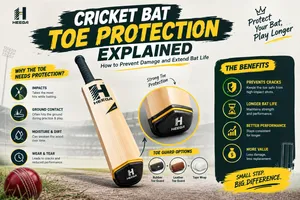
Cricket Bat Toe Protection: How to Prevent Damage and Extend Your Bat’s Lifespan
.webp)
Introduction: Why the Toe of Your Cricket Bat Needs Special Attention
A cricket bat experiences a surprising amount of wear during regular use. Every time a batter plays a shot, the ball strikes the blade. During practice and matches, the bat may also touch the ground, collect moisture, or come into contact with rough surfaces.
While players often pay close attention to the bat's face, edges, handle, and grains, one important area is sometimes overlooked: the toe.
The toe is the bottom end of the bat blade. It frequently comes close to the pitch, crease, grass, and sometimes damp ground. Repeated contact can gradually cause surface wear, while exposure to moisture may contribute to swelling, splitting, or deterioration of the willow.
This is particularly important for wooden cricket bats, including Kashmir Willow and English Willow models. Both need appropriate care to maintain their condition.
Toe protection is not simply about making a bat look new. It is about helping protect a vulnerable part of the blade from avoidable damage.
With suitable protection, careful use, and regular maintenance, players can reduce unnecessary wear and potentially extend the useful life of their cricket bats.
In this guide, we will explain why cricket bat toe protection matters, how different protection methods work, how to maintain the toe correctly, and which mistakes players should avoid.
What Is the Toe of a Cricket Bat?
The toe is the lowest part of the cricket bat blade, opposite the shoulder and handle.
It forms the bottom edge of the blade and is often exposed to conditions that can gradually affect the wood.
During batting, the toe may come into contact with:
- Grass and soil
- Artificial or synthetic playing surfaces
- Damp pitches
- Hard ground around the crease
- Ball impact near the bottom of the blade
- Equipment bags and storage surfaces
The amount of wear depends on how often the bat is used, the playing surface, the player's technique, and how well the bat is maintained.
A batter who regularly grounds the bat heavily or plays on damp surfaces may need to pay closer attention to toe condition.
Why Cricket Bat Toe Protection Matters
Wood is a natural material. Although cricket bats are manufactured and prepared for their intended use, the blade still needs appropriate care.
The toe can be particularly vulnerable because it is close to the ground and may remain in contact with moisture longer than other parts of the bat.
Proper toe protection can help with several aspects of bat maintenance.
1. Reducing Moisture Exposure
Moisture is one of the main concerns when caring for a wooden cricket bat.
If the toe repeatedly touches wet grass or damp ground, the exposed wood may absorb moisture. Depending on the conditions, this can contribute to swelling, deterioration, or splitting.
A suitable toe guard can help reduce direct contact between the wood and the playing surface.
However, no guard makes a bat completely waterproof. The bat should still be kept dry and stored correctly.
2. Limiting Surface Wear
The bottom of the bat can become worn through repeated contact with the ground.
Over time, this may produce scuffing, rough edges, or small areas of surface damage.
A properly fitted protector creates a barrier between the toe and the ground, helping reduce this type of wear.
3. Supporting Long-Term Bat Maintenance
A bat that receives regular attention is easier to maintain than one that is ignored until significant damage develops.
Toe protection is one part of a broader maintenance routine that includes drying the bat correctly, inspecting the blade, checking the handle, and storing the equipment safely.
4. Protecting Your Equipment Investment
A cricket bat can be an important purchase for a recreational player, club cricketer, or serious competitor.
Avoidable damage may shorten its useful life.
Protecting the toe and addressing small problems early can help players get more use from their equipment, although the lifespan of any bat depends on its construction, usage, and care.
What Is a Cricket Bat Toe Guard?
A cricket bat toe guard is a protective covering fitted to the bottom of the blade.
Depending on the product, toe guards may be made from rubber or other protective materials designed for cricket bat maintenance.
The guard acts as a barrier between the exposed wooden toe and the playing surface.
Its main purposes are to help:
- Reduce direct moisture exposure
- Limit abrasion and surface wear
- Protect the bottom edge of the blade
- Maintain the condition of the toe during regular use
Toe guards are available in different designs and sizes. The correct choice depends on the bat's dimensions, construction, and the manufacturer's recommendations.
A guard should fit properly and remain securely attached. A poorly fitted protector can peel away, trap moisture, or interfere with the bat's normal use.
Types of Cricket Bat Toe Protection
Different bats and playing conditions may require different approaches to toe protection.
The most suitable option is one that provides practical protection without interfering with the bat's intended performance.
1. Rubber Toe Guards
Rubber toe guards are a common option for protecting the bottom of a wooden cricket bat.
They provide a physical barrier against ground contact and may help reduce abrasion and direct exposure to moisture.
Potential benefits include:
- A protective layer over the toe
- Reduced wear from repeated ground contact
- A practical option for regular practice
- Compatibility with many traditional wooden bats
The guard must be appropriate for the bat and fitted according to its instructions.
2. Protective Toe Sheets and Related Products
Some bat-care products are designed to cover or protect parts of the bat's toe.
Their material, thickness, adhesive, and intended use can vary.
Before using one, check whether it is suitable for your particular bat and whether the manufacturer recommends it.
Do not assume that every adhesive film or household material is appropriate for a cricket bat.
3. Traditional Bat Preparation and Maintenance
Toe protection does not always mean adding a separate guard.
Correct bat preparation, suitable maintenance, and sensible playing habits also matter.
Players should follow the bat manufacturer's instructions for oiling, knocking-in, and protective treatments. Not every bat needs the same preparation, and some products may be unsuitable for certain bat finishes or constructions.
Important: A toe guard is not a substitute for proper bat preparation or careful storage.
Should Every Cricket Bat Have a Toe Guard?
Not necessarily. The decision depends on the bat, the playing environment, and the manufacturer's recommendations.
A toe guard may be particularly useful for players who practise frequently or regularly encounter damp grass and moist playing surfaces.
However, a guard may not be necessary for every bat or every playing situation.
Before fitting one, consider:
- Whether the bat manufacturer recommends it
- Whether the bat already has toe protection
- How frequently you play
- The typical condition of your playing surface
- Whether the bat's toe has already developed damage
If you are unsure, ask a knowledgeable bat-care specialist or the manufacturer for guidance.
Kashmir Willow vs English Willow: Does Toe Protection Matter for Both?
Both Kashmir Willow and English Willow cricket bats are made from wood and can experience wear at the toe.
Their characteristics, construction, and preparation can differ, but neither type should be treated as immune to moisture or impact damage.
Kashmir Willow Bats
Kashmir Willow bats are popular with beginners, academy players, recreational cricketers, and club players.
A toe guard may be helpful when a bat is used frequently, especially if it regularly touches damp or rough surfaces.
Regular inspection is still important because toe protection cannot prevent all forms of cracking or splitting.
English Willow Bats
English Willow bats are widely used in competitive cricket and are available in many profiles and grades.
Because these bats may represent a significant equipment purchase, players often pay close attention to maintenance.
A suitable toe guard may help reduce ground-related wear, but it cannot prevent every type of damage caused by ball impact, moisture, or improper use.
For both types, correct care is more important than simply fitting a protector and forgetting about the bat.
How to Fit a Cricket Bat Toe Guard Correctly
If you decide to install a toe guard, follow the instructions supplied with the product. The exact process varies by design and adhesive type.
A careful installation generally involves the following steps.
Step 1: Inspect the Toe
Before fitting the guard, examine the bottom of the bat.
Look for:
- Existing cracks
- Splintering
- Loose fibres
- Signs of swelling
- Dirt or moisture
If the toe is wet, allow it to dry naturally before proceeding. If there is significant damage, seek professional advice before covering it.
Step 2: Clean the Surface
The toe should be clean and dry so that the protector can attach properly.
Remove loose dirt carefully without aggressively sanding or cutting the wood.
Avoid applying a guard over a damp surface, as this may trap moisture.
Step 3: Check the Fit
Position the guard according to its instructions.
It should match the dimensions of the toe without leaving large gaps or extending in a way that interferes with normal bat use.
Do not force a protector onto a bat if its size or shape is unsuitable.
Step 4: Apply the Recommended Adhesive
Use only the adhesive or fitting method recommended for that guard.
Avoid experimenting with strong household glues or chemicals. They may damage the bat's surface or make future repairs difficult.
Step 5: Secure the Guard
Follow the product's instructions for pressing, holding, or securing the guard during installation.
Make sure the edges sit correctly against the blade.
Step 6: Allow It to Set
Allow the adhesive to set for the recommended period before using the bat.
Rushing this stage may cause the guard to move or detach during practice.
Step 7: Inspect Before Playing
Before the next session, check that the guard is securely attached and that there are no obvious gaps.
If it begins peeling away, address the problem before the bat is used extensively.
Can You Fit a Toe Guard Yourself?
Many straightforward toe guards are designed for user installation, provided the player follows the instructions carefully.
However, professional fitting may be preferable if:
- The bat has an unusual toe shape
- The protector requires specialist adhesive
- The bat already has visible damage
- The existing guard needs replacing
- You are unsure how to prepare the surface
If the bat is expensive or particularly important to your game, careful fitting is worth the extra attention.
How Moisture Damages a Cricket Bat Toe
Moisture deserves special attention because wooden bats can be affected by repeated exposure to damp conditions.
The toe may come into contact with wet grass or a moist pitch during play. If the bat is then stored while still damp, the wood may remain exposed for longer than necessary.
Depending on the degree and duration of exposure, moisture may contribute to:
- Swelling
- Surface deterioration
- Splitting
- Changes in the wood's condition
- Damage to protective coatings or adhesives
A toe guard may reduce direct exposure, but it cannot guarantee that moisture will never reach the wood.
What to Do If Your Bat Gets Wet
If your bat becomes damp during a match or practice session:
- Wipe away surface moisture with a soft, dry cloth.
- Allow the bat to dry naturally in a ventilated area.
- Keep it away from direct heat.
- Inspect the toe and edges once dry.
- Check the toe guard for lifting or trapped moisture.
Do not place the bat next to a heater, use a hairdryer, or leave it in intense sunlight to speed up drying. Rapid heating can cause uneven drying and may contribute to cracking.
Why Direct Sunlight and Excessive Heat Are Risky
Wood responds to changes in temperature and moisture.
Leaving a cricket bat in direct sunlight for extended periods, inside a hot vehicle, or beside a heat source can expose it to excessive heat.
This may affect the wood, adhesives, grip, or protective materials.
For sensible storage:
- Keep the bat in a cool, dry place.
- Avoid prolonged direct sunlight.
- Do not leave it in a hot car.
- Allow damp equipment to dry naturally.
- Avoid storing the bat in a persistently humid or wet environment.
A stable storage environment helps protect the entire bat, not just the toe.
Does Bat Oil Protect the Toe?
Bat oil is used in the preparation and maintenance of certain wooden cricket bats, particularly some unfinished willow surfaces.
However, bat oil and toe guards perform different functions.
Oil may help condition appropriate exposed willow surfaces when used according to the bat manufacturer's guidance. A toe guard provides a physical barrier against ground contact and abrasion.
Oil should not be treated as a waterproof coating, and applying more oil than recommended can be harmful.
Before using bat oil:
- Check whether your bat requires oiling.
- Follow the manufacturer's instructions.
- Apply only the recommended amount.
- Avoid oiling the splice or areas where the manufacturer advises against it.
- Allow the bat to dry or settle as instructed before use.
Some bats have factory-applied finishes or specific preparation requirements. For these products, follow the manufacturer's care instructions rather than applying a general treatment automatically.
How to Maintain a Cricket Bat Toe Throughout the Season
Toe protection works best when combined with regular inspection.
A quick check after practice can help identify small issues before they become more serious.
After Every Session
Take a moment to:
- Wipe off dirt and moisture.
- Inspect the toe guard.
- Check for peeling edges.
- Look for fresh cracks or splinters.
- Store the bat somewhere dry.
This routine takes very little time and can help you notice changes early.
Every Few Weeks
For frequently used bats, carry out a more careful inspection.
Look at the toe, edges, face, handle, and splice.
Check whether:
- The guard remains firmly attached
- The toe has changed shape
- Cracks have developed
- The handle has become loose
- The grip needs replacing
The inspection frequency should reflect how often you use the bat and the conditions in which you play.
Before Important Matches
Before a competitive game, check the bat for visible damage.
Make sure the toe guard is secure and that the bat feels normal when lifted and swung.
If you notice a substantial crack, loose handle, or structural problem, seek professional advice instead of assuming that a new guard will solve it.
Signs Your Cricket Bat Toe Needs Attention
Knowing what to look for can help players take action early.
Small Surface Marks
Minor scuffing may occur during ordinary use. Clean the area and monitor it for changes.
Peeling Toe Guard
A guard that begins separating from the blade may no longer provide consistent protection. Follow the product's repair or replacement instructions.
Splintering Wood
Visible splinters suggest that the toe may need closer inspection. Avoid pulling fibres away or cutting into the blade yourself.
Cracks
Cracks may develop from impact, drying conditions, moisture, or other stresses. Not every crack means the bat is unusable, but its location and severity matter.
Swelling or Softening
A noticeable change in the toe's shape or texture may indicate moisture-related problems or other damage.
If any of these signs are significant or getting worse, consult a qualified bat repairer.
Can a Toe Guard Repair an Already Damaged Bat?
A toe guard is primarily a preventive measure. It is not a universal repair solution.
If the toe has already developed a crack, split, or other structural damage, covering it may hide the problem without resolving it.
The appropriate repair depends on:
- The location of the damage
- Its depth and length
- The condition of the surrounding wood
- Whether the damage affects the bat's structure
- The bat's intended use
A professional repairer can assess whether the bat needs a repair, further protection, or replacement.
Do not rely on tape or a toe guard to conceal significant damage before a match.
Common Mistakes to Avoid When Protecting a Cricket Bat Toe
Even players who care for their equipment can make avoidable mistakes.
1. Ignoring Moisture
A toe guard does not make a wooden bat waterproof. Dry the bat properly after exposure to damp conditions.
2. Fitting a Guard Over Wet Wood
Trapping moisture beneath a protector may create additional problems.
3. Using the Wrong Adhesive
Unsuitable glue or chemicals can damage the surface or complicate future repairs.
4. Applying Too Much Oil
More oil does not necessarily mean better protection. Follow the manufacturer's recommended preparation process.
5. Ignoring a Loose Guard
A partially detached protector should be checked before the bat is used repeatedly.
6. Continuing to Use a Structurally Damaged Bat Without Inspection
A guard cannot make every damaged bat safe or serviceable. Seek professional advice if you notice substantial cracking or splitting.
7. Storing the Bat While Damp
Always wipe away surface moisture and allow the bat to dry naturally before putting it away.
Does Toe Protection Affect Bat Performance?
A correctly selected and fitted toe guard is intended to protect the bat rather than change the way it plays.
However, any added material contributes some weight, and an unsuitable guard may alter the feel of the bottom of the blade.
For most players, the practical consideration is to choose protection that fits properly and does not interfere with normal use.
Avoid oversized or poorly attached guards that could peel away or create an uneven finish.
After fitting a guard, lift the bat and practise a few familiar movements to make sure it still feels comfortable.
Toe Protection for Academy and Club Cricketers
Players who train regularly may use their bats more frequently than recreational players.
Repeated net sessions, throwdowns, match practice, and competitive games can all contribute to wear.
For academy and club cricketers, a sensible maintenance routine should include:
- Checking the toe guard
- Keeping the bat dry
- Inspecting edges and the blade face
- Monitoring the handle and grip
- Using the correct bat for the session
- Storing equipment properly after training
Players should also follow the coach's or manufacturer's guidance on bat preparation and repair.
Regular care is especially useful when a bat is used several times each week.
Toe Protection for Beginners
Beginners do not need an elaborate maintenance routine, but a few basic habits can make a difference.
After practice, players should learn to wipe their bats clean, avoid leaving them on wet ground, and store them in a suitable place.
Parents and coaches can help younger players understand that a cricket bat is made from wood and needs reasonable care.
If a toe guard is recommended for the bat, it should be fitted correctly rather than treated as a substitute for careful handling.
Developing these habits early helps players take responsibility for their equipment as they progress.
Choosing a Cricket Bat With Long-Term Care in Mind
Toe protection is only one consideration when buying a cricket bat.
Players should also think about:
- Correct bat size
- Comfortable weight and pickup
- Willow type
- Profile and sweet-spot position
- Handle comfort
- Playing frequency
- Budget
- Manufacturer care recommendations
A bat that suits the player's size, strength, and technique is generally a better choice than one selected only for appearance or price.
It is also worth checking the manufacturer's guidance on knocking-in, oiling, toe protection, and repairs before the first use.
How Heega Sports Supports Your Cricket Journey
At Heega Sports, we understand that the right cricket equipment needs proper care to remain useful throughout training and competition.
Whether you play recreationally, represent a club, attend an academy, or compete regularly, maintaining your bat is an important part of looking after your equipment.
Our cricket range includes:
- Kashmir Willow cricket bats
- Junior cricket bats
- Batting gloves
- Batting pads
- Cricket helmets
- Leather cricket balls
- Practice balls
- Cricket kit bags
- Cricket shoes
- Practice nets
- Training accessories
When choosing a new bat or other cricket equipment, consider the specifications that suit your game and follow the manufacturer's instructions for preparation and maintenance.
Explore the available range at Heega Sports.
A Simple Cricket Bat Toe Protection Checklist
Use this quick checklist to help keep your bat in good condition.
Final Thoughts
The toe of a cricket bat may be small, but it plays an important role in the bat's overall condition.
Repeated contact with the ground, exposure to moisture, and ordinary wear can gradually affect the bottom of the blade. A suitable toe guard can help reduce direct contact and abrasion, while regular maintenance helps players identify problems before they become more serious.
The most effective approach combines appropriate protection with sensible habits.
Keep the bat dry, inspect the toe regularly, use only suitable care products, and avoid exposing the wood to excessive heat or moisture. If you notice significant cracking or splitting, seek professional advice instead of simply covering the damaged area.
These steps cannot prevent every form of damage, but they can help you look after your cricket bat more effectively.
A well-maintained bat is not just about appearance. It is about getting the best practical use from your equipment and being ready for the next training session or match.
🏏 Protect Your Equipment. Prepare for Your Next Innings.
Explore cricket bats, batting equipment, cricket balls, kit bags, practice nets, and training accessories at Heega Sports.
Shop Now
Heega Sports – Supporting Better Cricket Through Quality Equipment and Smarter Care.
Related posts
 Cricket Bat Toe Protection Explained: How to Prevent Damage and Extend Bat LifeLearn how cricket bat toe protection prevents moisture, cracks and damage. Discover toe guards, maintenance tips and simple ways to extend your bat's life.
 Why Cricket Bats Crack and How Players Can Prevent Damage.Learn why a cricket bat cracks, what causes bat damage, and how proper knocking-in, maintenance, storage, and playing habits can extend bat life.
 Cricket Batting Pads Explained: How Knee Protection, Shin Coverage and Strap Placement Affect Comfort and MobilityLearn how cricket batting pads, knee protection, shin coverage and strap placement affect comfort, mobility, impact protection and batting performance.