Why Cricket Bats Crack and How Players Can Prevent Damage.

Introduction: Why Does a Cricket Bat Crack?
Few things are more frustrating for a cricketer than discovering a crack in their bat.
You have spent hours practicing with it.
You have become comfortable with its pickup.
You know exactly how it feels when the ball meets the sweet spot.
Then one day, you notice a small line on the blade.
It can be worrying.
But cracks are not always a sign that a cricket bat is about to become unusable.
Wood is a natural material, and cricket bats are designed to absorb repeated impacts from a hard cricket ball. Over time, normal wear can produce small marks, surface cracks, or damage around areas that receive more stress.
The important thing is understanding the difference between normal wear and serious structural damage.
More importantly, players can take practical steps to reduce avoidable damage.
Proper preparation, sensible playing habits, regular inspection, suitable storage, and good maintenance can all help.
A bat cannot be expected to last forever.
However, careless use can shorten its life considerably.
This guide explains why cricket bats crack, where cracks usually appear, what causes them, how players can prevent unnecessary damage, and what to do when a crack eventually appears.
A Cricket Bat Is Made From Natural Wood
Before understanding cracks, it helps to understand the material itself.
Cricket bats are commonly made from willow.
Two of the most familiar choices are:
- Kashmir Willow
- English Willow
Willow has characteristics that make it suitable for cricket.
It is relatively lightweight while being capable of handling repeated impact.
However, it is still wood.
That means the blade can develop marks, dents, bruises, and cracks during normal use.
Unlike a manufactured metal object, every piece of willow is slightly different.
The grain pattern, density, moisture content, structure, and natural characteristics can vary from bat to bat.
This is one reason two bats used in exactly the same way may not age in exactly the same way.
Not Every Crack Means the Bat Is Finished
This is an important point for players.
A small surface crack is not necessarily the same as a major structural crack.
Some bats develop tiny cracks around the edges, toe, or surface after regular use.
These may be manageable with appropriate repair and maintenance.
A serious crack, however, can affect the structural integrity of the blade.
Players should therefore avoid immediately assuming that every crack means the bat needs replacing.
Instead, inspect the damage carefully.
Look at:
- Location
- Length
- Depth
- Width
- Whether it is spreading
- Whether the blade feels different
- Whether the edges are separating
- Whether the handle is affected
If you are unsure, have the bat inspected by a qualified cricket bat repair professional.
Why Cricket Bats Crack
There is rarely one single reason.
Cracking can result from a combination of factors.
Common causes include:
- Repeated high-impact shots
- Inadequate knocking-in
- Poor-quality or unsuitable balls
- Batting on hard surfaces
- Excessive moisture
- Very dry conditions
- Mishits
- Edge impacts
- Toe impacts
- Poor storage
- Lack of maintenance
- Natural wear
Understanding these causes gives players a better chance of preventing avoidable problems.
Repeated Impact Is the Biggest Factor
A cricket bat is designed to hit the ball.
That sounds obvious, but the amount of impact involved is easy to underestimate.
During a single practice session, a player may face dozens or even hundreds of deliveries.
Across a season, that can become thousands of impacts.
Every clean shot places stress on the blade.
Mishits can create even greater localized stress.
Eventually, the wood may show signs of wear.
This does not necessarily mean the bat was defective.
Sometimes it simply means the equipment has been heavily used.
Mishits Can Create Extra Stress
The sweet spot is generally where a well-struck shot feels clean.
But players do not hit the sweet spot every time.
Sometimes the ball hits:
- The edge
- The toe
- The lower blade
- The upper blade
- The back of the bat
These impacts can place stress on areas that are not intended to absorb the same level of repeated impact.
Regular mishits can therefore accelerate wear.
Improving batting technique is not only good for scoring runs.
It can also help reduce unnecessary stress on equipment.
Edge Impacts Are Particularly Important
The edges of a bat are thinner than the main hitting area.
They can therefore be more vulnerable to damage from repeated impacts.
A thick edge does not mean the bat is impossible to break.
Players should still avoid deliberately hitting the ball toward the edge during practice.
When a player regularly mistimes deliveries, small dents and cracks can gradually develop.
Toe Damage Is Another Common Problem
The toe is the bottom part of the bat.
It is close to the ground and can experience both impact and moisture exposure.
Players may accidentally:
- Hit the ground while playing a shot.
- Drag the bat across the crease.
- Leave it on wet grass.
- Tap it repeatedly on hard surfaces.
Over time, these actions can damage the toe.
This is one reason toe protection can be useful.
A suitable toe protector can provide an additional barrier against moisture and everyday wear.
Moisture Can Weaken a Cricket Bat
Wood and water do not make a good combination.
A cricket bat exposed to excessive moisture can absorb water through exposed areas.
The toe is particularly vulnerable because it frequently comes close to the ground.
Repeated moisture exposure can contribute to:
- Swelling
- Softening
- Splitting
- Structural deterioration
This is why players should keep their bats dry.
If the bat becomes wet, wipe it down and allow it to dry naturally in a suitable environment.
Never Leave a Wet Bat in Your Kit Bag
This is one of the easiest mistakes to prevent.
A player finishes practice on a damp morning.
They put the bat straight into their cricket kit bag.
Then they forget about it.
The trapped moisture can remain around the equipment.
Instead, take the bat out after practice and allow it to dry properly.
Good storage habits are especially important in humid or rainy conditions.
Extreme Dryness Can Also Be a Concern
Moisture gets most of the attention, but excessively dry conditions can also affect wooden equipment.
Rapid environmental changes can influence wood.
Players should avoid storing their bats:
- Directly beside heaters
- In extremely hot locations
- In direct sunlight for long periods
- In places with severe temperature fluctuations
The goal is not to control every environmental variable.
It is simply to avoid unnecessary extremes.
Why Knocking-In Matters
New bats need appropriate preparation before they are exposed to full-intensity cricket balls.
This process is commonly known as knocking-in.
Knocking-in helps prepare the willow for impact.
The basic principle is gradual exposure.
Instead of immediately taking a new bat into a high-speed net session, the player gradually conditions the blade according to the manufacturer's recommendations.
A properly prepared cricket bat is better equipped to handle normal use.
Can Poor Knocking-In Cause Cracks?
It can increase the risk of premature damage.
A player who skips or rushes the preparation process may expose the willow to high-impact deliveries before it has been adequately prepared.
This is particularly important for bats supplied without full knocking-in.
Players should always check the manufacturer's instructions.
Different bats may have different preparation requirements.
Why Players Should Not Rush a New Bat
Getting a new bat can be exciting.
Naturally, players want to take it straight into the nets and start hitting big shots.
But patience can pay off.
A gradual introduction to harder cricket balls can help the bat adapt to regular impact.
Think of the preparation stage as part of owning the bat.
The few extra sessions spent preparing it can be far more valuable than rushing into full-intensity use.
Practice Balls Can Make a Difference
Not every cricket ball is designed for the same purpose.
Players may use:
- Leather cricket balls
- Practice balls
- Synthetic balls
- Tennis balls
- Soft training balls
The hardness and construction of the ball can influence the amount of impact delivered to the bat.
A player should use equipment appropriate for the bat and training environment.
If a bat is being prepared or is not designed for certain high-impact practice conditions, players should follow the manufacturer's recommendations.
Tennis Ball Cricket Can Still Affect a Bat
Tennis ball cricket is generally gentler than traditional leather-ball cricket.
However, players sometimes modify tennis balls or use heavier training balls in ways that increase impact.
A wooden bat can still experience unnecessary stress.
The safest approach is to use the bat according to its intended purpose.
A bat designed for tennis-ball practice may have different requirements from a bat intended for competitive leather-ball cricket.
Hard Surfaces Can Accelerate Bat Damage
A cricket bat should not be treated like an all-purpose hitting tool.
Using it against unsuitable surfaces can create unnecessary stress.
Avoid using a wooden bat to hit balls on:
- Concrete
- Asphalt
- Stone
- Very hard artificial surfaces
unless the equipment is specifically designed for that purpose.
The bat is built to strike the ball, not the ground.
Ground Contact Is a Common Source of Wear
During batting, the bat naturally comes close to the ground.
Players may accidentally strike the surface when playing certain shots.
This is particularly common with:
- Drives
- Defensive strokes
- Late cuts
- Aggressive front-foot shots
Good technique can reduce unnecessary ground contact.
Players should also avoid repeatedly tapping the bat hard against the pitch.
Why Bat Weight Matters
Bat weight can influence how much control a player has.
A bat that is too heavy can make it harder to:
- Control the swing
- Play late
- Adjust to deliveries
- Maintain technique
It can also increase the likelihood of mishits.
The right bat weight depends on the player's strength, size, technique, and playing style.
Choosing a comfortable weight is therefore important for both performance and equipment longevity.
A Heavier Bat Is Not Automatically Stronger
Some players believe heavier bats must be more durable.
That is not necessarily true.
Durability depends on several factors, including:
- Willow quality
- Construction
- Bat preparation
- Playing conditions
- Ball type
- Usage
- Maintenance
A heavier bat can still crack.
A lighter bat can still be durable.
Weight alone does not determine lifespan.
Why Bat Quality Matters
Not every piece of willow has exactly the same characteristics.
Natural wood contains variations.
Players should therefore buy from reputable suppliers and understand what they are purchasing.
A quality bat should also be appropriate for the player's level and intended use.
But even a premium bat requires care.
A high-end bat can still be damaged through improper use.
Kashmir Willow vs English Willow and Cracking
Both Kashmir Willow and English Willow bats can develop cracks.
The difference is not simply about one being impossible to damage.
English Willow is often associated with higher-level cricket and premium performance characteristics.
Kashmir Willow is widely used by junior players, club cricketers, academies, and developing players.
Both should be maintained properly.
The important factors are:
Preparation + Usage + Conditions + Maintenance
Humidity and Weather Can Affect Bat Care
Players around the world experience different cricket conditions.
A cricketer in a humid environment may have different equipment-care concerns from someone playing in a dry climate.
For example, players may need to pay closer attention to:
- Moisture
- Damp storage
- Wet grass
- Dry heat
- Temperature changes
This is particularly relevant for players in countries such as India, Nepal, Canada, Germany, the Netherlands, the United States, and the United Kingdom, where playing conditions can vary significantly.
Why Proper Storage Matters
When you finish playing, don't simply throw the bat into a corner.
Store it carefully.
Good storage means:
- Keep it dry.
- Keep it protected.
- Avoid direct sunlight.
- Avoid extreme heat.
- Avoid excessive pressure on the blade.
- Use an appropriate bat cover.
A good cover can protect the surface from scratches and accidental contact with other equipment.
Inspect Your Bat Regularly
You do not need a professional inspection after every practice session.
A quick visual check is enough.
Look at:
- The face
- Edges
- Toe
- Shoulders
- Handle
- Grip
- Existing cracks
If you notice a new crack, monitor it carefully.
If it starts growing, seek professional advice.
Where Do Cracks Usually Appear?
Cracks can appear in different locations.
Common areas include:
Toe
Often exposed to moisture and ground contact.
Edges
More vulnerable to mishits and impacts.
Face
Repeated ball impact can produce surface marks and cracks.
Shoulders
These areas can experience stress during use.
Handle
Handle damage can sometimes develop through impact or excessive vibration.
The location can provide clues about what may have caused the problem.
Cracks Around the Toe Need Attention
Toe cracks deserve particular attention because the bottom of the bat is exposed to the playing surface.
If the toe becomes damaged, moisture can potentially enter more easily.
A small problem can therefore become larger if ignored.
Toe protection and regular inspection can help players catch problems early.
What Should You Do When You Find a Crack?
First, stop and inspect it.
Do not immediately continue using the bat at maximum intensity.
Ask:
- Is it only a surface line?
- Is the crack deep?
- Is it opening?
- Is it spreading?
- Is the edge separating?
- Does the bat feel different?
If the damage appears significant, take it to a qualified bat repair professional.
Early repair can sometimes prevent further deterioration.
Can Small Cracks Be Repaired?
In some cases, yes.
Professional bat repair specialists can assess and repair certain types of cracks.
Depending on the damage, repairs may involve:
- Suitable adhesives
- Bat repair tape
- Fibreglass reinforcement
- Edge repair
- Toe repair
- Other specialist techniques
The correct method depends on the location and severity of the damage.
Players should avoid experimenting with aggressive DIY repairs on expensive bats.
Why Super Glue Is Not Always the Answer
When players discover a crack, the first instinct may be to grab household glue.
That is not always a good idea.
Different adhesives behave differently.
An inappropriate adhesive can:
- Create a poor repair
- Affect the wood
- Make professional repair more difficult
- Produce an uneven finish
If the bat is valuable or the crack appears serious, professional assessment is the safer option.
Bat Tape Can Provide Additional Protection
Specialist bat tape can sometimes be used to reinforce certain areas or protect the blade.
However, tape is not a universal solution.
It should not be used to hide serious structural damage.
If a crack continues to spread under tape, the underlying problem remains.
Think of protective tape as one maintenance tool—not a replacement for proper repair.
Why Players Should Avoid Overusing a Damaged Bat
Continuing to use a significantly damaged bat can make the problem worse.
A small crack may remain manageable.
Repeated high-speed impacts can cause it to spread.
If you notice a crack getting larger, reduce use and seek professional advice.
Protecting the bat early is generally easier than repairing extensive damage later.
How Batting Technique Can Protect Your Equipment
Good technique is beneficial for more than scoring runs.
A batter who consistently finds the middle of the blade can reduce unnecessary edge impacts.
Proper footwork can improve body positioning.
Good balance can improve control.
Correct shot selection can reduce awkward contact.
In this way, technique and equipment care are connected.
A technically efficient player may naturally place less unnecessary stress on the bat.
Why Footwork Matters
Poor footwork can force a batter into awkward positions.
The result may be:
- Reaching for the ball
- Late contact
- Edge shots
- Off-balance swings
- Mishits
Developing better footwork can improve both batting performance and control.
This is one reason regular technical coaching is valuable.
Don't Use Your Match Bat for Everything
Some players use the same bat for every activity.
That can increase wear.
If possible, players may choose to use different equipment for:
- Match play
- Throwdowns
- Nets
- Practice matches
- Casual cricket
Keeping a primary match bat for important games can help reduce unnecessary wear.
This is especially useful for players who train frequently.
Why Backup Bats Are Useful
Experienced players often keep more than one bat available.
A backup can become useful if:
- The primary bat is damaged.
- The grip fails.
- Conditions change.
- The player wants a different weight.
- The main bat needs repair.
Having an alternative means the player does not have to continue using damaged equipment.
Cricket Bat Maintenance Should Be Simple
You do not need a complicated maintenance schedule.
A basic routine can go a long way.
After Every Session
Remove dirt and check for visible damage.
After Damp Conditions
Dry the bat naturally.
Every Few Sessions
Inspect the toe, edges, face, and handle.
When a Crack Appears
Monitor it and seek advice if it develops.
During Storage
Keep the bat dry and protected.
Simple habits are easier to maintain consistently.
Common Mistakes That Can Cause Bat Damage
Using a New Bat Without Proper Preparation
Skipping knocking-in can expose the willow to unnecessary impact.
Using the Wrong Ball
Very hard or unsuitable balls can increase stress.
Hitting on Hard Surfaces
Concrete and stone can cause serious damage.
Leaving the Bat Wet
Moisture can affect exposed wood.
Storing It in Extreme Heat
Excessive heat can affect wooden equipment.
Ignoring Cracks
Small damage can become more serious.
Choosing an Oversized or Overweight Bat
Poor control can increase mishits.
Using Household Adhesives
Incorrect repairs can complicate future professional work.
How Parents Can Help Young Players
Young players are still learning how to care for equipment.
Parents can help by creating a simple routine.
Teach children to:
- Keep the bat dry.
- Use a bat cover.
- Avoid hitting hard surfaces.
- Check the toe.
- Avoid throwing the bat.
- Tell an adult when they notice damage.
These habits can become part of their cricket education.
Cricket Bat Care for Academy Players
Academy players often train multiple times per week.
That makes equipment inspection even more important.
A simple weekly check can include:
- Bat face
- Edges
- Toe
- Handle
- Grip
- Existing cracks
- Overall condition
Coaches can also help players recognize the difference between normal surface marks and serious damage.
When Should You Replace a Cricket Bat?
Not every crack requires replacement.
But there are situations where a new bat may make more sense.
Consider replacement when:
- Structural damage is severe.
- The blade is badly split.
- The handle has serious damage.
- Repairs are no longer practical.
- The bat no longer performs reliably.
- The equipment has reached the end of its useful life.
A repair professional can help determine whether repair or replacement is more appropriate.
Can a Cricket Bat Last for Years?
Yes, with appropriate use and care, a quality bat can remain useful for a long time.
However, lifespan varies.
It depends on:
- How often you play
- Ball type
- Bat quality
- Playing level
- Bat preparation
- Maintenance
- Playing conditions
- Storage
- Mishits
A player who trains every day with a leather ball will naturally put more stress on a bat than someone who plays occasionally.
There is no universal lifespan.
The Importance of Playing With the Right Equipment
A bat should match the player.
Consider:
- Size
- Weight
- Balance
- Profile
- Handle
- Willow
- Playing level
A comfortable bat is easier to control.
Better control can lead to cleaner contact.
Cleaner contact can reduce unnecessary mishits.
The right equipment therefore supports both performance and durability.
How Heega Sports Supports Cricket Players
At Heega Sports, we understand that players want cricket equipment that can support them through regular practice and competition.
Our cricket range includes:
- Kashmir Willow cricket bats
- English Willow cricket bats
- Junior cricket bats
- Cricket bat care products
- Leather cricket balls
- Practice cricket balls
- Batting gloves
- Batting pads
- Cricket helmets
- Cricket shoes
- Cricket kit bags
- Practice nets
- Training accessories
Whether you are a junior cricketer learning the basics, a club player training every week, or a competitive batter preparing for important matches, choosing suitable equipment and caring for it properly can help create a better playing experience.
A Practical Cricket Bat Protection Checklist
Before using your bat, ask:
- Has it been properly prepared?
- Is the bat the correct size?
- Is the weight comfortable?
- Is the grip secure?
- Is the toe protected?
- Is the face free from serious damage?
After playing, check:
- Did the bat get wet?
- Are there new marks?
- Is the toe intact?
- Are the edges still secure?
- Has an existing crack changed?
If something looks unusual, investigate it early.
Final Thoughts
Cracks are a normal concern for anyone who regularly uses a wooden cricket bat.
The good news is that many causes of premature damage can be reduced through simple habits.
Prepare the bat correctly.
Use suitable cricket balls.
Avoid hard surfaces.
Pay attention to mishits.
Protect the toe.
Keep the bat dry.
Store it properly.
Inspect it regularly.
And never ignore a crack that appears to be getting worse.
It is also important to remember that natural wood will eventually show signs of use.
A few small surface marks do not necessarily mean the bat has failed.
What matters is understanding the condition of your equipment and responding appropriately.
For young players, this can mean learning basic bat care from parents and coaches.
For club and competitive players, it may mean scheduling regular inspections and repairs.
For serious cricketers, it can mean keeping a backup bat available and using different equipment for practice and match situations.
The best approach is not to try to make your bat last forever.
It is to avoid unnecessary damage and get the maximum useful life from the equipment you have.
A well-maintained cricket bat feels more reliable.
A reliable bat gives players confidence.
And when a player can walk to the crease knowing their equipment has been properly prepared and cared for, they can focus on what really matters:
Watching the ball, making good decisions, and playing their best cricket.
🏏 Protect Your Cricket Bat With Heega Sports
Explore cricket bats, Kashmir Willow bats, English Willow bats, junior bats, bat care products, leather cricket balls, practice balls, batting gloves, pads, helmets, cricket shoes, kit bags, practice nets, and training accessories.
Shop Now
Heega Sports – Helping Players Protect Their Equipment and Play With Confidence.
Related posts
-300x169.webp) Cricket Bat Toe Protection: How to Prevent Damage and Extend Your Bat’s LifespanLearn how cricket bat toe protection helps prevent moisture damage, reduce wear, protect willow, and extend your bat’s lifespan with proper care.
Cricket Bat Toe Protection: How to Prevent Damage and Extend Your Bat’s LifespanLearn how cricket bat toe protection helps prevent moisture damage, reduce wear, protect willow, and extend your bat’s lifespan with proper care.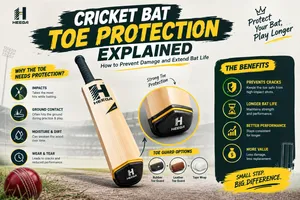 Cricket Bat Toe Protection Explained: How to Prevent Damage and Extend Bat LifeLearn how cricket bat toe protection prevents moisture, cracks and damage. Discover toe guards, maintenance tips and simple ways to extend your bat's life.
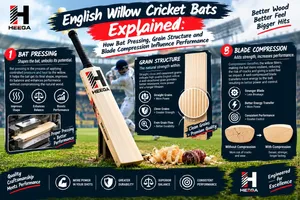 English Willow Cricket Bats Explained: How Bat Pressing, Grain Structure and Blade Compression Influence PerformanceLearn how English willow bat pressing, grain structure, and blade compression influence performance, durability, shot response, and bat selection.