Cricket Leg Guards Explained: How Fit, Protection, and Comfort Improve Batting Confidence
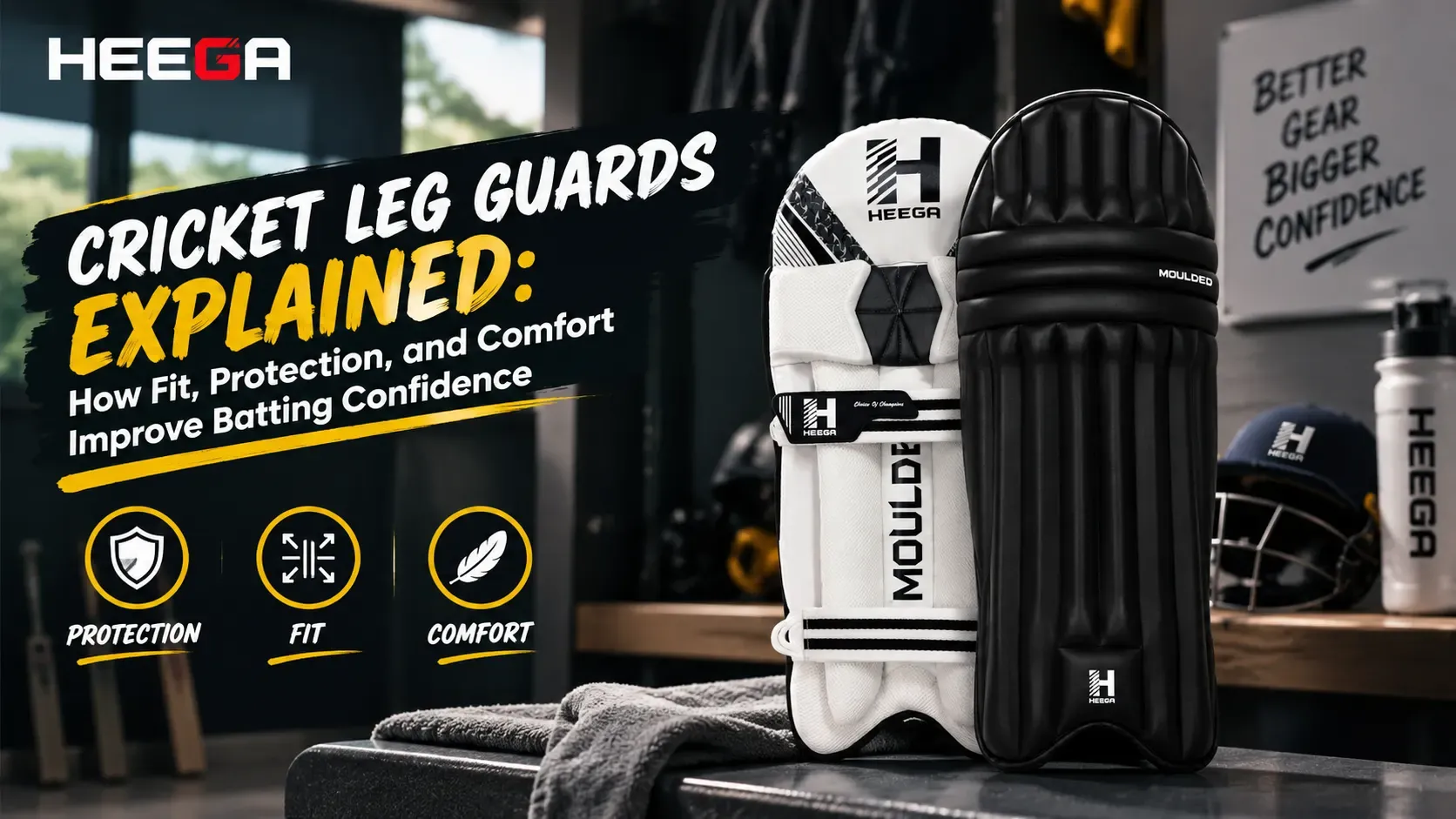
Introduction: Why Cricket Leg Guards Matter
When players think about cricket protection, helmets and batting gloves often receive the most attention.
But the lower legs are also exposed to fast-moving cricket balls, especially when a batter faces quick bowling.
A well-placed delivery can strike the shin or lower leg before the batter has enough time to react.
This is where cricket leg guards become an important part of batting equipment.
The purpose of a leg guard is simple:
Protect the lower leg while allowing the batter to move naturally.
However, choosing the right pair involves more than simply finding a guard that looks strong.
The guard needs to fit properly, remain secure during movement, provide suitable coverage, and stay comfortable throughout an innings.
For beginners, academy players, club cricketers, and competitive batters, the right leg guards can provide an important combination of protection and confidence.
What Are Cricket Leg Guards?
Cricket leg guards are protective equipment worn over the lower legs while batting.
They are designed to help protect areas that may be exposed when a batter takes their stance at the crease.
Depending on the design, leg guards can cover areas such as:
- Shin.
- Lower leg.
- Knee area.
- Sides of the lower leg.
- Ankle region.
Different models use different shapes, padding systems, straps, and materials.
The right choice depends on the player's size, playing level, comfort requirements, and style of cricket.
Why Do Batters Need Leg Protection?
Cricket balls can travel at high speeds.
Even when a batter is correctly positioned, not every delivery can be avoided.
A ball can strike the leg because of:
- A missed shot.
- An inside edge.
- A straight delivery.
- A short-pitched ball.
- A late reaction.
- A deflection from the bat.
Leg guards create a protective barrier between the ball and vulnerable parts of the lower leg.
They do not eliminate every risk, but they are an important part of standard batting protection.
Protection Should Be the First Priority
Comfort is important.
Fit is important.
Weight is important.
But the primary purpose of a leg guard is protection.
A suitable pair should provide adequate coverage for the areas it is designed to protect.
Players should therefore avoid choosing leg guards based only on appearance or price.
Fit Can Make a Big Difference
Two players can use the same model of leg guard and have completely different experiences.
Why?
Because body shape and leg size vary.
A properly fitted guard should sit securely without creating excessive pressure.
It should remain in position when the player:
- Walks.
- Runs.
- Takes their stance.
- Moves toward the ball.
- Completes a shot.
- Runs between wickets.
What Happens When Leg Guards Are Too Large?
Oversized leg guards can create several problems.
They may:
- Move during batting.
- Feel bulky.
- Restrict movement.
- Interfere with the pads or footwear.
- Become uncomfortable during long innings.
A guard that constantly shifts can become a distraction.
What Happens When They Are Too Small?
A guard that is too small may not provide adequate coverage.
It can also create uncomfortable pressure around the leg.
Players should therefore avoid choosing equipment based solely on age or appearance.
Body size and fit are more useful considerations.
Comfort Matters During Long Innings
A batter may spend a considerable amount of time wearing protective equipment.
If leg guards are uncomfortable after a few overs, they can become a distraction.
Good leg guards should allow the player to remain focused on:
- The bowler.
- The ball.
- Footwork.
- Shot selection.
- Running between wickets.
Comfort is therefore part of performance preparation.
Lightweight Does Not Mean Weak
Modern cricket protection is often designed to balance protection with mobility.
A lightweight leg guard can reduce unnecessary bulk while still providing suitable coverage.
The important consideration is not simply weight.
Instead, look at the overall combination of:
- Protection.
- Construction.
- Fit.
- Coverage.
- Comfort.
- Movement.
How Leg Guards Affect Batting Movement
Batting requires constant movement.
A player may move:
- Forward.
- Backward.
- Across the crease.
- Toward the ball.
- Into position for running.
Protective equipment should support these movements rather than interfere with them.
Footwork and Leg Guards Work Together
Good batting footwork allows players to position themselves correctly.
But bulky or poorly fitted protective equipment can make movement feel restricted.
This is why players should practice batting while wearing their actual match equipment.
It allows them to understand how the equipment feels during movement.
Take Your Stance While Testing Leg Guards
One of the simplest ways to test a leg guard is to take your normal batting stance.
Check whether:
- The guard stays in place.
- Your knees can bend naturally.
- Your feet can move freely.
- The straps remain comfortable.
- The guard does not interfere with your pads or shoes.
If something feels uncomfortable while standing still, it may become even more noticeable during an innings.
Knee Movement Is Important
Batters regularly bend their knees while preparing to face the ball.
They may also change their body position while playing different shots.
A leg guard should provide protection without unnecessarily restricting knee movement.
Straps Help Keep the Guard Secure
Straps are an important part of leg-guard design.
They help keep the guard positioned correctly during movement.
The straps should be secure enough to prevent excessive movement without being uncomfortably tight.
Don't Overtighten the Straps
Some players assume tighter straps automatically mean better protection.
That is not always true.
Overtightening can create:
- Pressure points.
- Discomfort.
- Restricted movement.
- Poor circulation.
The goal is a secure fit, not excessive pressure.
Leg Guards and Batting Pads Are Different
Batting pads and leg guards are often discussed together, but they are not necessarily the same thing.
Batting pads generally provide broader protection around the lower leg and knee area as part of a complete batting setup.
Leg guards can refer to protective lower-leg equipment or specialized guard designs depending on the product.
When purchasing, players should carefully check the product's intended use, coverage, and sizing.
Why Complete Protective Equipment Matters
Leg guards should be considered as part of a complete batting setup.
A batter may also use:
- Helmet.
- Batting gloves.
- Batting pads.
- Thigh guard.
- Abdominal guard.
- Arm protection.
- Chest protection.
The exact combination depends on the player's level, playing conditions, and personal requirements.
Junior Players Need Properly Sized Protection
Young players are still growing.
Protective equipment should therefore be checked regularly.
A guard that fitted correctly several months ago may no longer fit the same way after a period of growth.
Parents and coaches should periodically check:
- Length.
- Coverage.
- Strap position.
- Comfort.
- Movement.
Why Oversized Protection Can Be a Problem for Young Players
Buying oversized equipment for future use may appear economical.
However, equipment that does not fit properly can be uncomfortable and difficult to control.
For young players, appropriately sized equipment can make training more comfortable and help them develop good movement habits.
Leg Guards for Academy Players
Academy players may spend several hours each week training.
They need equipment that can handle repeated use.
Durability becomes particularly important for players who regularly participate in:
- Net sessions.
- Practice matches.
- Fitness sessions.
- Academy competitions.
Comfort also matters because equipment may be worn for extended periods.
Leg Guards for Club Cricketers
Club cricketers often combine training with regular competitive matches.
A reliable pair of leg guards can become part of their standard match kit.
Club players should also inspect their guards regularly because repeated use can cause:
- Strap wear.
- Padding compression.
- Surface damage.
- Stitching deterioration.
Leg Guards for Fast Bowling
Players who regularly face faster bowling may place greater importance on protective coverage.
Fast deliveries provide less reaction time.
This makes reliable protective equipment particularly important.
However, protection should never encourage a batter to ignore proper technique or safe playing practices.
Leg Guards for Spin Bowling
Spin bowling creates different movement demands.
Batters may:
- Move down the pitch.
- Sweep.
- Reverse sweep.
- Use the crease.
- Move across the stumps.
Leg guards should therefore remain secure and comfortable during these movements.
Batting Confidence and Protective Equipment
Confidence is an important part of batting.
A batter who feels properly protected can concentrate more easily on the delivery.
Protective equipment cannot replace skill.
But suitable equipment can reduce unnecessary distractions.
This is especially useful when facing challenging bowling.
Comfort Can Improve Focus
Imagine trying to bat while constantly adjusting a loose guard.
The player may spend more attention on the equipment than on the bowler.
A secure and comfortable guard allows the batter to focus on the game.
Small equipment improvements can therefore contribute to a better overall batting experience.
Don't Choose Leg Guards Only by Appearance
Cricket equipment can look impressive.
Modern guards are available in different colors, shapes, and designs.
But appearance should not be the main buying factor.
Instead, consider:
- Protection.
- Fit.
- Coverage.
- Comfort.
- Mobility.
- Durability.
How to Test Leg Guards Before Buying
Whenever possible, try the guards while wearing the rest of your batting equipment.
Put on:
- Cricket trousers.
- Batting pads if applicable.
- Cricket shoes.
Then take your normal batting stance.
Move around.
Practice a few basic movements.
This gives you a much better idea of how the equipment will perform during actual cricket.
Practice Before Match Day
New equipment should not ideally be worn for the first time in an important match.
Players should use new leg guards during practice first.
This helps identify:
- Pressure points.
- Strap problems.
- Movement restrictions.
- Sizing issues.
By match day, the player should already be comfortable with the equipment.
Common Mistakes When Buying Leg Guards
Choosing the Wrong Size
A poor fit can reduce comfort and coverage.
Buying Only for Looks
Appearance should come after protection and fit.
Overtightening Straps
This can create unnecessary pressure.
Ignoring Movement
Protection should not come at the cost of basic mobility.
Waiting Until Match Day to Test Them
New equipment should be used in practice first.
Ignoring Wear and Tear
Damaged straps or compressed padding can affect how the guard performs.
How to Maintain Cricket Leg Guards
Protective equipment also needs care.
After training or matches:
- Remove dirt.
- Allow the guards to dry.
- Check the straps.
- Inspect stitching.
- Store them properly.
Avoid leaving damp equipment inside a closed cricket kit bag.
Keep Leg Guards Dry
Sweat and moisture can accumulate during cricket sessions.
Allow the guards to dry naturally after use.
Avoid storing wet protective equipment for long periods.
Inspect the Padding Regularly
Padding can become compressed after repeated use.
Check whether the protective sections still feel secure and intact.
If the equipment shows significant damage, consider replacing it.
Check the Straps and Stitching
Straps experience repeated tension.
Stitching can also wear down over time.
Before important matches, inspect the fastening system.
A small repair or replacement may prevent equipment problems during play.
When Should You Replace Leg Guards?
Replacement may be appropriate when:
- Padding is significantly damaged.
- Straps no longer secure properly.
- Stitching is coming apart.
- Protective sections have deteriorated.
- The guard no longer fits.
- The equipment has become uncomfortable.
Do not continue relying on visibly damaged protective equipment.
Leg Guards and Different Playing Conditions
Cricket is played in many environments.
Players may train on:
- Grass wickets.
- Artificial surfaces.
- Indoor cricket facilities.
- Hard practice areas.
The equipment should remain comfortable and secure across the environments where it is actually used.
Nepal, Germany, USA, Canada, Netherlands, and UK
Cricket continues to develop across a wide range of countries.
Players in Nepal, Germany, the United States, Canada, and the Netherlands are increasingly participating in clubs, academies, schools, and competitive programs.
The United Kingdom has a long-established cricket structure spanning grassroots, club, academy, county, and professional cricket.
Despite differences in climate, facilities, and playing pathways, the basic need for suitable protective equipment remains the same.
A batter needs protection that allows them to move naturally and concentrate on the ball.
How Heega Sports Supports Better Batting Preparation
At Heega Sports, we understand that protective equipment should support the player throughout training and match play.
Our cricket equipment range includes:
- Cricket leg guards.
- Batting pads.
- Thigh guards.
- Abdominal guards.
- Batting gloves.
- Cricket helmets.
- Cricket bats.
- Kashmir Willow bats.
- English Willow bats.
- Leather cricket balls.
- Practice balls.
- Cricket shoes.
- Cricket kit bags.
- Practice nets.
- Training accessories.
Whether you are a beginner, junior player, academy cricketer, club player, or competitive batter, suitable protective equipment can help create a more comfortable and confident batting experience.
A Simple Cricket Leg Guard Buying Checklist
Before buying, consider:
Protection
Does the guard provide suitable coverage for the areas you need to protect?
Fit
Does it stay securely in position without excessive pressure?
Comfort
Can you wear it comfortably during a complete training session or innings?
Mobility
Can you bend your knees, move your feet, and take your normal batting stance?
Construction
Are the padding, straps, stitching, and protective sections durable enough for your level of use?
Compatibility
Does it work comfortably with your other batting equipment?
Final Thoughts
Cricket leg guards are a small but important part of a batter's protective equipment.
Their job goes beyond simply covering the lower leg.
A well-fitted guard should provide appropriate protection while allowing the player to move naturally, maintain balance, and focus on the delivery.
The most expensive option is not automatically the right option.
Instead, players should look for the right combination of protection, fit, comfort, mobility, and durability.
For young players, correct sizing is especially important.
For academy and club players, durability and comfort become increasingly valuable.
For experienced batters, the feel and movement of the equipment can become part of their match preparation.
Ultimately, good protective equipment should become almost invisible during play.
You should not constantly think about whether the guard is moving or whether the straps are uncomfortable.
You should be thinking about the bowler, the ball, your footwork, and your next shot.
That is where the real value of well-fitted cricket leg guards comes in.
When protection feels comfortable, confidence can follow.
🏏 Protect Your Game With the Right Cricket Equipment
Explore cricket leg guards, batting pads, batting gloves, helmets, thigh guards, abdominal guards, cricket bats, leather balls, practice balls, cricket shoes, kit bags, practice nets, and training accessories at Heega Sports.
Shop Now
Heega Sports – Supporting Better Protection, Better Comfort, and Better Cricket.
Related posts
 Cricket Batting Pads Explained: How Knee Protection, Shin Coverage and Strap Placement Affect Comfort and MobilityLearn how cricket batting pads, knee protection, shin coverage and strap placement affect comfort, mobility, impact protection and batting performance.
 Why Batting Gloves Matter: Understanding Protection, Grip, Flexibility & Hand ComfortLearn why batting gloves matter for protection, grip, flexibility and comfort, plus how to choose the right cricket batting gloves for your playing level.
 Batting Gloves Explained: How Padding Placement and Finger Protection Help Manage Ball ImpactLearn how batting glove padding placement, finger protection, and fit help manage ball impact. Find practical tips for choosing cricket batting gloves.