What Cricket Wear Is Best for Mobility?

What cricket wear is best for mobility?
The cricket wear that lets you move is the wear that fits. Our own buying guide puts it plainly: clothing should allow you to move naturally, with a comfortable fit, breathability, flexibility, moisture management and durability. A batter needs freedom of movement, a bowler an unrestricted run-up, a fielder room to sprint, bend, jump and dive.
That is the whole principle. The rest of this page is how it applies to each part of the kit.
Compression or loose fit: which moves better?
Our guides do not rank one against the other. What they do say is that fit matters more than price: a product that is the wrong size is not a good product for you, whatever it cost. So before you buy anything, test it the way you will use it. Walk. Bend. Grip. Take your stance. Move sideways.
Where a close fit earns its place in our range, it is on specific parts of the body rather than the whole kit:
- Socks, where compression is used to promote blood flow and reduce muscle fatigue.
- Finger sleeves, which are elastic compression protectors for support during practice and matches.
- The arm sleeve, cut for a snug, supportive fit that stays in place during play.
Loose is not the same as free. Batting gloves that are too loose may move on the hand; too tight and they restrict finger movement. The same holds for most of what you wear.
What should a batter wear to keep footwork free?
Batters move forward, move back, shuffle, rotate and run between wickets. Pads that are unnecessarily bulky or poorly fitted make those movements feel less natural. Lightweight pads appeal to players who value mobility, but protection should remain the priority; find the balance rather than chasing the lightest pair.
For the arms, our arm guard sleeve is built on the same trade-off. It is flexible and lightweight so the arm moves freely without giving up protection, with breathable fabric and reinforced padding, and it weighs 120 g. It is made for adult male players and suits both batting and fielding.
What helps a bowler or fielder move?
For a fielder, one delivery you are standing still and the next you are sprinting, then stopping, turning, diving or throwing. Equipment should allow those movements rather than restrict them, which is why comfortable clothing and suitable footwear matter most in the field.
A fast bowler's footwear has to work through the run-up, acceleration, delivery stride, braking and repeated overs. If your shoes become uncomfortable during a long spell, reassess whether they suit your surface and workload. Match the sole to the ground you actually play on: spiked footwear on natural grass where conditions call for it, rubber soles on many artificial surfaces.
Do socks and finger sleeves make any difference to movement?
Socks do, more than most players expect. Our performance socks carry anti-slip grip pads on the sole, which add traction inside the shoe during sudden sprints, quick changes of direction and slides on turf. That keeps the foot stable in the shoe instead of moving around inside it.
The compression range comes in ankle-length and high-ankle styles. The towel compression socks add soft terry loops in the areas that take impact, to absorb shock and prevent blisters, and the fabric regulates temperature and wicks moisture away. The current socks range includes cushion ankle, crew ankle and ankle-length cotton socks.
For the hands, our finger sleeves come ten to a pack. They are elastic compression protectors meant to give finger protection, comfort and support during practice and matches, and they are lightweight.
What should I check before buying?
- Does it fit correctly?
- Does it suit your playing role?
- Does it allow natural movement?
- Does it provide appropriate protection?
- Have you tested it with realistic movement?
If the answers are yes, it will move with you. The full ten smart choices guide covers the rest of the kit. For the items on this page, start with our socks.
Related posts
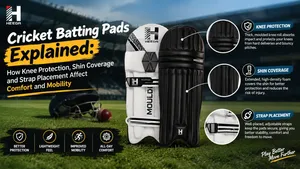 Cricket Batting Pads Explained: How Knee Protection, Shin Coverage and Strap Placement Affect Comfort and MobilityLearn how cricket batting pads, knee protection, shin coverage and strap placement affect comfort, mobility, impact protection and batting performance.
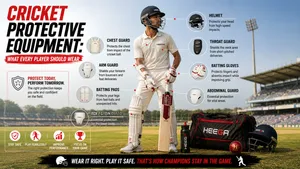 Cricket Protective Equipment: What Every Player Should WearLearn what cricket protective equipment every player needs, including helmets, batting pads, gloves, abdominal guards, chest guards, arm guards and more.
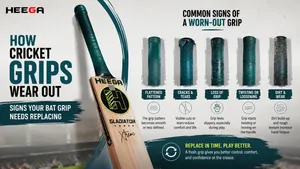 How Cricket Grips Wear Out: Signs Your Bat Grip Needs ReplacingLearn how cricket bat grips wear out, when to replace them, and how grip thickness, texture, moisture, and wear affect comfort and bat control.