English Cricket Bat Willow: The Craftsmanship Behind What Makes It Special
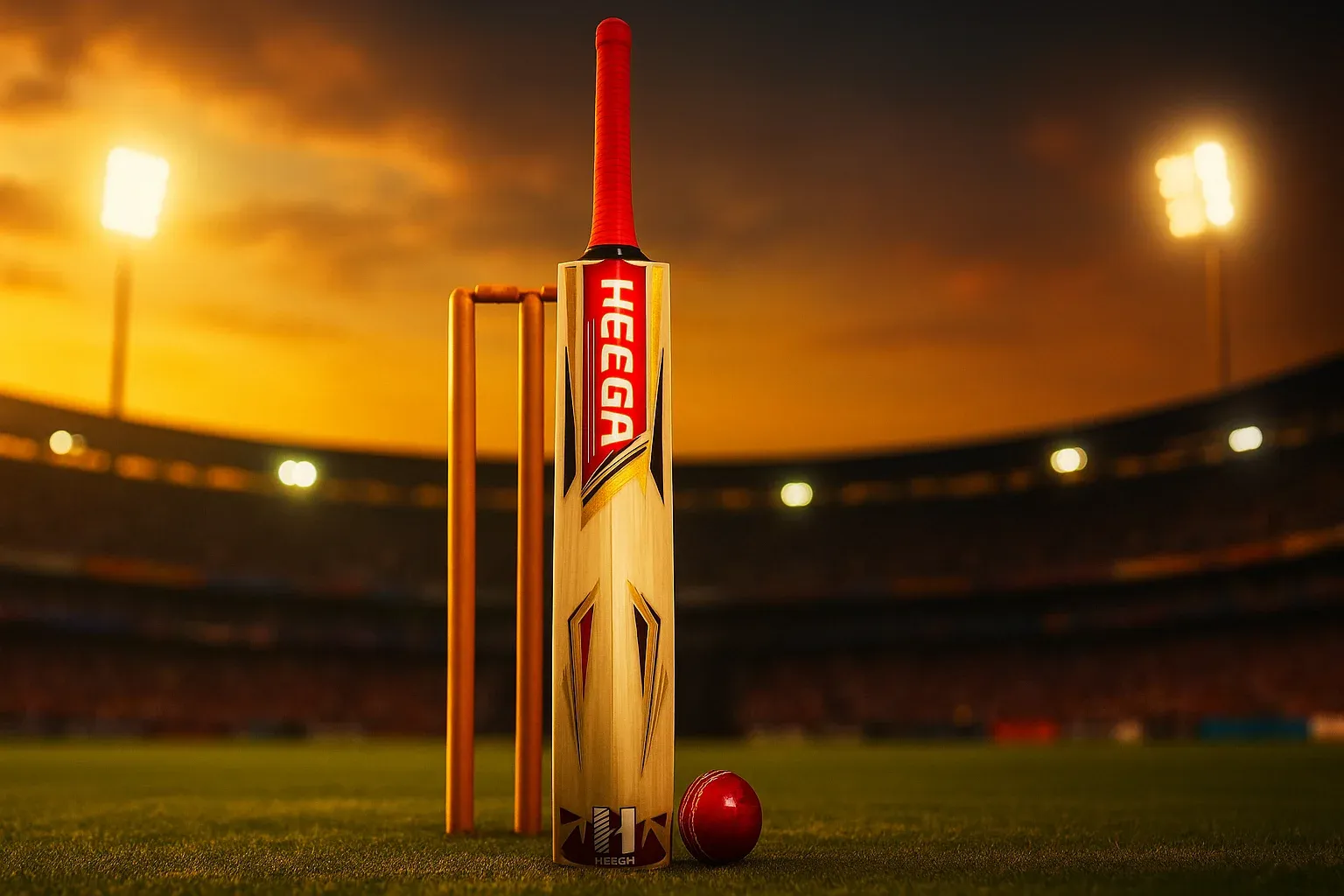
Introduction: Why English Willow Is Special
A cricket bat may look simple.
It is a carefully shaped piece of wood, designed to help a batter strike a cricket ball.
But creating a high-quality bat involves much more than cutting wood into the shape of a blade.
The process begins with the willow itself.
The quality of the timber, the age of the tree, grain structure, moisture content, cleft preparation, pressing, shaping, and finishing can all influence the final bat.
This is why English cricket bat willow has earned a strong reputation among serious cricket players.
English Willow is traditionally associated with premium cricket bats because the timber can offer an excellent combination of performance, responsiveness, and relatively low weight.
However, the material is only one part of the story.
The craftsmanship behind the bat is equally important.
A skilled bat maker has to understand the natural characteristics of every willow cleft and work with the wood rather than simply forcing it into a standard shape.
In this guide, we will explore how English Willow cricket bats are made, why the timber is valued, how different grades are determined, and what players should know before buying one.
What Is English Cricket Bat Willow?
English Willow comes from willow trees, particularly varieties cultivated and managed for cricket bat production in England.
The timber is prized because of its combination of:
- Lightweight characteristics
- Strength
- Shock absorption
- Responsiveness
- Bat-making suitability
The wood is processed into clefts before being shaped into cricket bats.
Unlike manufactured materials, every piece of willow is naturally different.
Two clefts from the same tree can have different grain patterns, densities, blemishes, and performance characteristics.
That natural variation is one reason every handmade bat can have its own appearance and feel.
Why Willow Is Used for Cricket Bats
Cricket bats need to perform under repeated impact.
Every time a batter strikes the ball, the blade experiences considerable force.
The wood therefore needs to provide a useful balance between flexibility, strength, and impact response.
Willow has become the traditional material because it can provide these characteristics while remaining practical for bat manufacturing.
The best timber can produce a bat that feels responsive without requiring excessive weight.
English Willow vs Kashmir Willow
When discussing cricket bat materials, players often compare English Willow with Kashmir Willow.
Both are widely used in cricket bat manufacturing, but they have different characteristics and price points.
English Willow
English Willow is generally used for premium and professional-level bats.
Players often choose it for:
- Performance
- Responsive feel
- Lightweight pickup
- Premium construction
- Higher-end bat options
Kashmir Willow
Kashmir Willow is widely used for:
- Beginners
- Junior players
- Training
- Recreational cricket
- Budget-conscious players
Kashmir Willow can offer excellent value and durability.
The choice should depend on the player's skill level, playing frequency, budget, and requirements.
The Willow Tree: Where the Process Begins
Before a bat reaches a cricket ground, its journey begins with a willow tree.
Growing suitable timber requires time.
The tree needs to develop wood with characteristics that can eventually make it useful for bat production.
Factors such as:
- Growing conditions
- Tree age
- Soil
- Climate
- Tree health
- Natural growth patterns
can influence the timber.
This is one reason the final quality cannot be completely standardized.
Nature plays an important role.
Selecting Suitable Willow Trees
Bat makers need suitable timber before the manufacturing process can begin.
The tree is assessed for characteristics that may make it appropriate for cricket bat production.
The objective is to obtain timber that can eventually produce a strong and responsive bat.
Once suitable timber is available, it can be processed into clefts.
What Is a Willow Cleft?
A willow cleft is a piece of timber prepared specifically for bat manufacturing.
The cleft provides the basic wooden structure from which the cricket bat will eventually be shaped.
At this stage, the bat does not yet look like a finished cricket bat.
It is simply carefully prepared willow timber.
The cleft contains the natural grain that will become an important visual and structural feature of the finished blade.
Why Grain Structure Matters
The grain is one of the most noticeable features of a premium willow bat.
Straight, well-defined grains are often associated with high-quality English Willow.
However, grain appearance should not be the only factor used to judge a bat.
A bat's performance can also depend on:
- Timber density
- Pressing
- Profile
- Weight
- Balance
- Sweet spot
- Bat preparation
A visually attractive bat is not automatically the best-performing bat for every player.
The Importance of Moisture Content
Fresh timber contains moisture.
Before willow can be turned into a cricket bat, it needs to reach an appropriate moisture level.
Too much moisture can affect stability and processing.
Too little moisture can also create problems.
Professional bat manufacturing therefore involves careful timber preparation and storage.
The goal is to create wood that can be shaped and pressed while maintaining suitable characteristics for long-term use.
Cleft Preparation Requires Precision
Once the timber is selected, the cleft needs to be prepared.
The bat maker considers the natural grain and orientation of the wood.
The cleft is then cut and shaped into a form suitable for further processing.
This stage is important because the final bat profile depends partly on how effectively the raw material is prepared.
Pressing the Willow
Pressing is one of the important stages in cricket bat production.
The prepared willow is compressed using specialized equipment.
This helps prepare the timber to handle repeated impacts from cricket balls.
The exact pressing process can vary depending on the manufacturer and desired bat characteristics.
Too little or too much pressing can affect the final performance.
Experienced bat makers therefore use their knowledge to achieve an appropriate balance.
Why Pressing Matters for Performance
A cricket bat needs to withstand repeated ball impacts.
Proper pressing can help prepare the blade for this demanding use.
It can influence how the timber responds when the ball strikes the bat.
However, pressing does not transform poor-quality timber into premium willow.
The quality of the original cleft remains important.
Shaping the Cricket Bat
After preparation and pressing, the cleft can be shaped.
This is where the raw timber begins to resemble a cricket bat.
The bat maker carefully creates:
- Blade shape
- Spine
- Edges
- Shoulders
- Toe
- Profile
- Sweet spot
Every part needs to work together.
The Role of the Bat Profile
The profile determines how wood is distributed throughout the blade.
Different profiles can create different playing characteristics.
For example, a bat may have:
- A pronounced spine
- Thick edges
- A low sweet spot
- A mid sweet spot
- A full profile
The ideal profile depends on the player and the conditions in which the bat will be used.
Why the Sweet Spot Matters
The sweet spot is the area where the bat can deliver an efficient response when the ball is struck cleanly.
When contact occurs in this area, players may experience:
- Strong rebound
- Better timing
- Reduced vibration
- A satisfying feel
Bat makers carefully design the profile and shape to position the sweet spot according to the intended design.
Edge Thickness and Bat Performance
Modern cricket bats often feature substantial edges.
Larger edges can contribute to the overall hitting profile.
However, edge thickness is only one aspect of bat design.
Players should also consider:
- Weight
- Balance
- Spine
- Sweet spot
- Pickup
- Handle
- Overall shape
A large edge does not automatically mean better performance.
The Handle Is Also Important
The blade receives most of the attention, but the handle is equally important.
A cricket bat handle needs to help absorb vibration and provide control.
Many quality bats use cane-based handle construction.
The handle connects the player's hands to the blade.
Its flexibility and construction influence how the bat feels during impact.
How Handles Reduce Vibration
When a cricket ball strikes the blade, some vibration travels through the bat.
The handle helps manage these vibrations before they reach the player's hands.
A well-constructed handle can therefore contribute to:
- Comfort
- Control
- Reduced harshness
- Better overall feel
This is another example of how craftsmanship affects the final product.
Bat Grading Explained
English Willow cricket bats are commonly categorized into different grades.
Grades can be influenced by factors such as:
- Grain appearance
- Natural blemishes
- Timber quality
- Grain spacing
- Cosmetic characteristics
Higher grades generally have cleaner visual characteristics.
Lower grades may contain more natural marks or irregularities.
Importantly, grading is not a simple guarantee of performance.
Does a Higher Grade Always Mean a Better Bat?
Not necessarily.
Players often assume that the highest grade will automatically produce the best performance.
In reality, individual bats can feel different even when they carry similar grades.
A slightly lower-grade bat with excellent pickup and balance may suit a particular player better than a higher-grade bat that feels uncomfortable.
The right bat should be selected based on the complete package.
Why Natural Blemishes Are Not Always a Problem
Willow is a natural material.
Small marks, blemishes, knots, or grain variations can occur naturally.
These characteristics do not necessarily mean that a bat is defective.
In many cases, they are simply part of the natural appearance of the timber.
Players should focus on the bat's construction, condition, performance characteristics, and suitability for their playing style.
Handcrafting Makes Every Bat Different
One of the interesting aspects of premium cricket bat manufacturing is that no two pieces of willow are exactly alike.
The bat maker works with the natural timber.
Instead of treating every cleft identically, experienced craftsmen may adjust the shape based on:
- Grain direction
- Timber characteristics
- Weight
- Desired profile
- Balance
This creates subtle differences between bats.
Machine Work and Skilled Craftsmanship
Modern bat manufacturing uses both machinery and traditional craftsmanship.
Machines can provide:
- Consistent shaping
- Accurate dimensions
- Efficient production
- Repeatable profiles
Craftsmanship remains important for:
- Selecting timber
- Final shaping
- Weight adjustment
- Balance
- Finishing
- Quality control
The combination of technology and human expertise allows manufacturers to produce modern premium bats efficiently.
Sanding and Finishing the Bat
Once the main shape is complete, the bat is carefully sanded.
The surface is refined to create a smooth finish.
This stage removes rough areas and prepares the blade for finishing.
The bat may then receive additional treatments depending on the manufacturer's process.
Applying the Bat Face and Protection
Some bats are finished with protective coverings or facing materials.
These can help protect the willow surface during use.
Players should still remember that protective materials do not make a bat indestructible.
The bat remains a wooden sporting product and should be used appropriately.
The Importance of Bat Knocking-In
A new English Willow bat generally needs appropriate preparation before regular match use.
This process is commonly called knocking-in.
The purpose is to gradually prepare the blade for repeated impacts.
Players may use:
- A bat mallet
- Controlled practice
- Appropriate cricket balls
The process should be performed carefully.
Rushing straight into high-intensity match play with an inadequately prepared bat can increase the risk of damage.
Why Bat Preparation Matters
Even premium English Willow requires proper care.
A player can spend a significant amount of money on a quality bat, but poor preparation can reduce its usable life.
Players should follow the manufacturer's preparation and maintenance recommendations.
Choosing Cricket Balls for a New Bat
The type of cricket ball used during early practice also matters.
Players should avoid using unsuitable or excessively hard balls during the initial preparation period.
Once the bat is appropriately prepared, players can gradually introduce match-quality cricket balls.
Controlled progression can help protect the blade while allowing the player to become familiar with the bat.
Why English Willow Bats Can Be Expensive
Premium English Willow bats can cost considerably more than entry-level alternatives.
There are several reasons.
The price can reflect:
- Timber selection
- Willow grade
- Skilled craftsmanship
- Hand finishing
- Manufacturing time
- Quality control
- Brand positioning
Premium bats are not expensive simply because of the wood.
The manufacturing process also contributes to the final cost.
English Willow for Professional Players
Professional players often demand equipment that provides consistent performance.
At the highest level, players may pay close attention to:
- Exact weight
- Pickup
- Balance
- Profile
- Sweet spot
- Handle feel
- Bat response
Small differences can become noticeable when players train and compete at elite levels.
English Willow for Club Players
Club players can also benefit from English Willow.
However, the most expensive grade is not always necessary.
A club player should first consider:
- How often they play
- Their budget
- Desired weight
- Playing style
- Preferred profile
- Batting technique
A well-selected mid-range bat can be an excellent choice for regular club cricket.
English Willow for Developing Players
Developing players need equipment that supports their technique.
For younger or less experienced players, correct sizing and manageable weight are especially important.
Players should avoid selecting a bat simply because it looks large or expensive.
The bat should be comfortable enough to control during repeated practice.
How to Choose the Right English Willow Bat
When shopping for an English Willow bat, consider these factors.
1. Bat Weight
Choose a weight you can comfortably control.
2. Pickup
Swing the bat and evaluate how heavy it feels.
3. Balance
Check whether the bat feels stable during movement.
4. Profile
Choose a profile that suits your stroke play.
5. Sweet Spot
Consider whether the sweet spot position matches your batting style.
6. Handle
Make sure the handle feels comfortable in your hands.
7. Willow Grade
Choose a grade that fits your budget and requirements.
8. Playing Format
Consider whether you mainly play:
- Test cricket
- One-day cricket
- T20 cricket
- Club cricket
- Practice cricket
English Willow for Different Playing Conditions
Playing conditions can also influence bat preferences.
A player who frequently plays on slower surfaces may have different preferences from someone who regularly plays on hard, fast pitches.
Factors such as:
- Pitch behavior
- Bounce
- Ball speed
- Outfield conditions
- Match format
can influence equipment choices.
There is no single bat profile that works perfectly everywhere.
Bat Care Can Extend Its Life
A premium bat deserves proper maintenance.
Players should:
- Store the bat in a dry environment
- Avoid extreme temperatures
- Inspect the toe regularly
- Maintain the grip
- Use suitable cricket balls
- Follow knocking-in recommendations
- Avoid hitting hard objects
- Repair damage promptly
Good maintenance can help preserve both performance and appearance.
Common Mistakes When Buying English Willow
Players often make mistakes when choosing premium bats.
Buying Only for Appearance
Beautiful grains are attractive, but appearance is not everything.
Choosing Too Much Weight
A heavy bat may reduce control and swing speed.
Ignoring Pickup
Measured weight does not tell the complete story.
Focusing Only on Grade
Grade should not be the only buying factor.
Skipping Bat Preparation
A new bat needs appropriate preparation before intense use.
Poor Storage
Excessive moisture or heat can damage wooden equipment.
English Cricket Bat Willow and Modern Bat Design
Traditional willow craftsmanship continues to evolve alongside modern cricket.
Today's bats may feature:
- Larger hitting areas
- Modern profiles
- Thick edges
- Lightweight designs
- Improved handles
- Specialized balance points
Manufacturers are constantly trying to find better ways to combine power, speed, control, and comfort.
Yet the fundamental material remains important.
The natural characteristics of English cricket bat willow continue to influence the final performance of the bat.
Why Craftsmanship Still Matters
Technology can improve manufacturing consistency.
However, craftsmanship remains essential because willow is a natural material.
A skilled maker understands that each cleft is different.
They can adjust the final shape according to the characteristics of the timber.
This human element helps turn a piece of willow into a finished cricket bat that feels balanced and purposeful.
The Journey From Tree to Cricket Ground
The complete process can be summarized as:
Willow Tree → Timber Selection → Cleft Preparation → Drying → Pressing → Shaping → Handle Fitting → Sanding → Finishing → Quality Control → Bat Preparation → Cricket Ground
Every stage contributes to the final product.
A mistake at one stage can affect the final result.
This is why premium bat production requires experience and attention to detail.
Sustainability and Responsible Willow Production
Willow is a natural resource.
Responsible forestry and managed cultivation are important for maintaining a reliable supply of suitable timber.
Sustainable production can help ensure that future generations of players can continue enjoying traditionally crafted wooden cricket bats.
Manufacturers and suppliers can contribute by supporting responsible sourcing and reducing unnecessary waste during production.
The Future of English Willow Cricket Bats
The future of cricket bat manufacturing will likely combine traditional craftsmanship with modern technology.
Manufacturers may increasingly use:
- Computer-assisted design
- More precise weight measurement
- Advanced quality control
- Improved handle construction
- Better moisture monitoring
- Modern pressing techniques
However, the fundamental challenge will remain the same:
How do you turn naturally grown willow into a bat that helps a player perform at their best?
That question will continue driving innovation.
How Heega Sports Supports Cricket Players
At Heega Sports, we understand that choosing the right cricket equipment is an important decision for players at every level.
Whether you are a beginner, club player, academy player, or experienced cricketer, your equipment should match your playing requirements.
Our cricket range includes options such as:
- English Willow cricket bats
- Kashmir Willow cricket bats
- Mongoose-style cricket bats
- Cricket balls
- Batting gloves
- Batting pads
- Cricket helmets
- Cricket shoes
- Cricket kit bags
- Practice nets
- Training accessories
- Bat care products
We aim to make quality cricket equipment accessible to players who want to train, improve, and enjoy the game.
Frequently Asked Questions
What is English cricket bat willow?
English cricket bat willow refers to willow timber traditionally used to manufacture premium cricket bats. Its natural characteristics make it suitable for producing responsive wooden blades.
Is English Willow better than Kashmir Willow?
English Willow is generally positioned as a premium bat material and is popular among advanced and professional players. Kashmir Willow can provide excellent durability and value for beginners and developing players.
Does higher willow grade mean better performance?
Not always. Grade is influenced by appearance and timber characteristics, while actual performance also depends on weight, balance, profile, pressing, and construction.
Does an English Willow bat need knocking-in?
New bats generally require appropriate preparation before regular high-intensity use. Players should follow the manufacturer's recommendations.
How long can an English Willow bat last?
There is no fixed lifespan. Durability depends on usage, ball type, preparation, maintenance, playing conditions, and how the bat is stored.
Can beginners use English Willow?
Yes, but beginners should prioritize correct size, manageable weight, balance, and comfort rather than choosing a bat solely because it uses premium willow.
Final Thoughts: Craftsmanship Turns Willow Into a Cricket Bat
A premium cricket bat is the result of many carefully controlled steps.
The process begins with naturally grown willow.
The timber is selected, prepared, dried, pressed, shaped, fitted with a handle, sanded, finished, and inspected before it reaches a player.
Throughout this process, craftsmanship plays an important role.
The natural grain and characteristics of the wood influence the final bat, while the bat maker's decisions determine how effectively those characteristics are turned into a usable cricket bat.
This is what makes English cricket bat willow so interesting.
It is not simply a type of wood.
It is the starting point of a traditional manufacturing process that combines natural material with skilled craftsmanship and modern bat design.
For professional and serious club players, the appeal of English Willow often comes from its combination of performance potential, responsive feel, and premium construction.
But the best bat is not necessarily the most expensive one.
It is the bat that matches your size, strength, batting style, preferred weight, balance, and playing requirements.
When the right willow is combined with careful craftsmanship and proper bat care, the result can be equipment that supports a player's development for season after season.
From the willow tree to the finished blade, every stage matters.
And every well-made cricket bat carries a little bit of that craftsmanship onto the pitch.
🏏 Explore Quality Cricket Bats at Heega Sports
Looking for a cricket bat that matches your playing style?
Explore English Willow and Kashmir Willow cricket bats, along with cricket balls, batting gloves, pads, helmets, shoes, kit bags, practice nets, and bat care products at Heega Sports.
Shop Now
Heega Sports – Quality Cricket Equipment for Players Who Want to Play Better.
Related posts
 English Willow Cricket Bat Knocking-In Explained: Preparing the Blade Before Match UseLearn how to knock in an English Willow cricket bat, prepare the blade before match use, avoid common mistakes, and protect your bat from premature damage.
 English Willow Cricket Bats Explained: How Bat Pressing, Grain Structure and Blade Compression Influence PerformanceLearn how English willow bat pressing, grain structure, and blade compression influence performance, durability, shot response, and bat selection.
 English Willow Cricket Bats: How to Identify Quality, Check Bat Balance and Avoid Buying MistakesLearn how to identify a quality English willow cricket bat, check its balance and pickup, understand grain patterns, and avoid common buying mistakes.