English Willow Cricket Bat Grades Explained: What Grade Should You Choose?
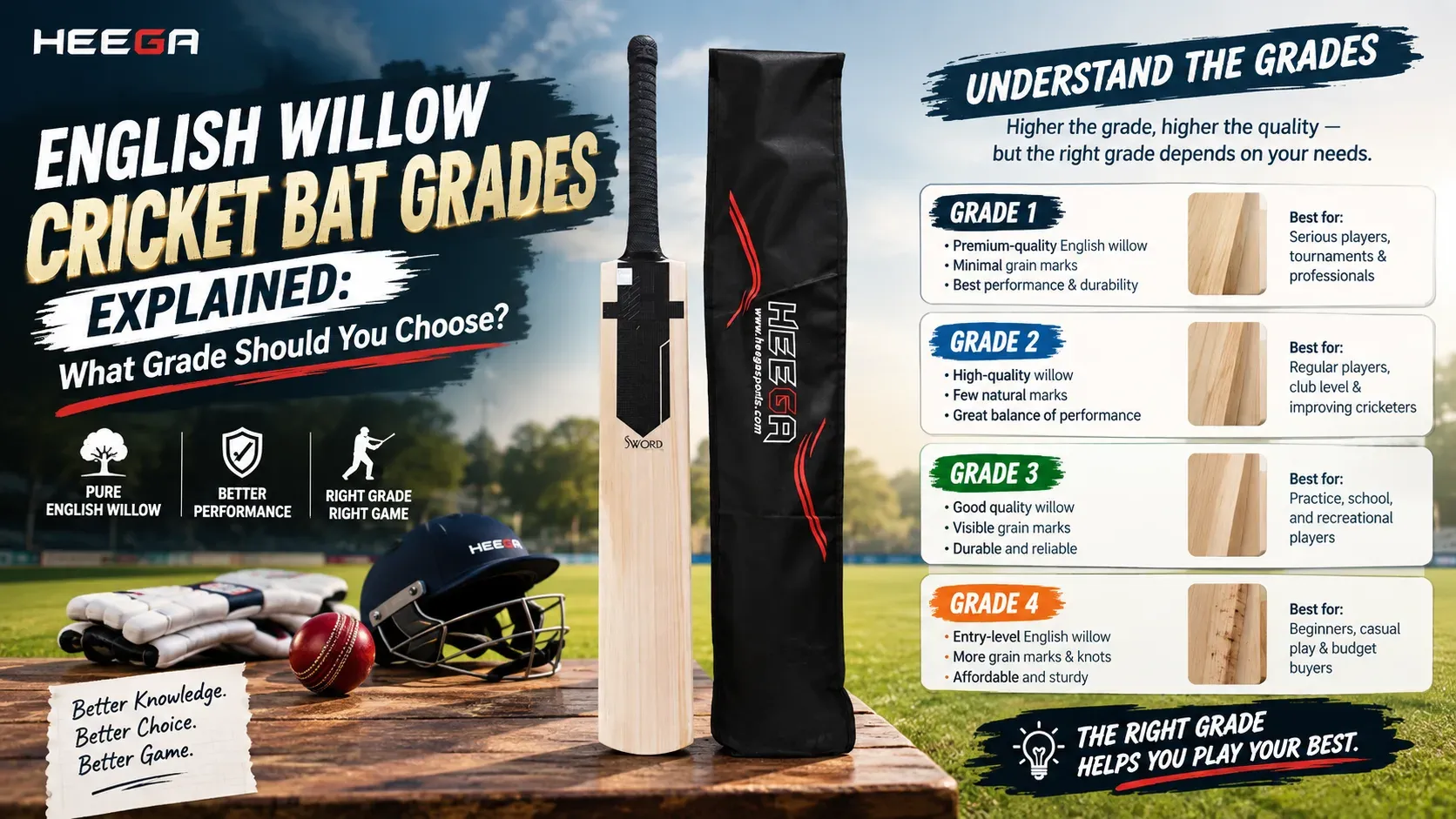
Introduction: Does a Higher Bat Grade Always Mean a Better Bat?
When shopping for an English Willow cricket bat, one of the first details buyers notice is the grade.
Grade 1.
Grade 2.
Grade 3.
Sometimes even Grade 4 or other manufacturer-specific classifications.
These labels can make the buying process confusing, especially for players who are purchasing their first premium bat.
Many people assume that a higher grade automatically means better performance. Others believe that the bat with the cleanest grains must be the strongest or most powerful option.
The reality is more balanced.
Willow grade can provide useful information about the appearance and selection of the wood, but it does not tell the entire story. Bat weight, pickup, profile, pressing, handle construction, craftsmanship, preparation, and the player's technique all influence performance.
A Grade 2 bat that feels perfectly balanced may be a better choice for you than a Grade 1 bat that is too heavy or uncomfortable.
Understanding grades can help you make a more informed decision without spending money simply for a label.
What Does English Willow Grade Mean?
English Willow grading is generally associated with the visual characteristics and selection of the willow cleft used to make a cricket bat.
Manufacturers and suppliers may consider factors such as:
- Grain appearance.
- Grain straightness.
- Natural blemishes.
- Knots.
- Colour.
- Consistency of the wood.
- Overall visual presentation.
Higher grades commonly have cleaner and more uniform appearances. Lower grades may show more natural marks, irregularities, or colour variation.
However, grading systems are not completely identical across all manufacturers. One brand's Grade 1 may not be directly comparable with another brand's Grade 1.
This is why buyers should examine the complete product description and, whenever possible, inspect the actual bat rather than relying only on the printed grade.
Is Grade a Direct Measure of Bat Performance?
Not necessarily.
Grade is primarily a classification of willow selection and appearance. It may be connected to the quality of the cleft, but it does not independently determine how well a bat will perform for every player.
Performance can also be influenced by:
- The amount of wood in the blade.
- Bat profile.
- Sweet-spot location.
- Pressing.
- Edge thickness.
- Spine shape.
- Weight distribution.
- Handle quality.
- Manufacturing consistency.
- Proper preparation.
- The player's technique.
A visually premium bat may not feel right for your hands.
A bat with more visible marks may still offer excellent performance when well made and properly prepared.
Understanding the Common English Willow Grades
The following categories are commonly used as general references. Exact descriptions may vary between brands and manufacturers.
Grade 1 English Willow
Grade 1 is generally associated with premium willow selection and a clean, attractive appearance.
These bats may feature:
- Straight and evenly spaced grains.
- Minimal visible blemishes.
- Consistent colour.
- Premium finishing.
- Carefully selected clefts.
Grade 1 bats are often aimed at serious club players, advanced cricketers, and players who appreciate premium craftsmanship.
However, not every Grade 1 bat will have the same pickup or profile. A player should still test the bat before buying.
Grade 2 English Willow
Grade 2 bats can offer a strong balance between appearance, quality, and price.
They may contain some natural marks or slight variations in grain appearance while still providing reliable playing characteristics.
This category can be suitable for:
- Regular club cricketers.
- Academy players.
- Developing advanced players.
- Players who want premium willow at a more accessible price.
For many players, Grade 2 can be a practical middle-ground option.
Grade 3 English Willow
Grade 3 bats may show more natural marks, colour variation, or irregularities than higher grades.
That does not automatically make them unsuitable for cricket.
A well-made Grade 3 bat can still be useful for:
- Practice.
- Academy training.
- Club cricket.
- Developing players.
- Players working within a limited budget.
The important consideration is whether the bat feels comfortable and performs consistently.
Grade 4 and Other Grades
Some manufacturers offer Grade 4 or additional classifications.
These bats may include more visible natural characteristics and are often positioned as affordable entry-level English Willow options.
They can be suitable for players who want to experience English Willow without making a large investment.
Because grading systems differ, always check how the manufacturer defines the specific grade.
Why Grain Appearance Gets So Much Attention
The grains are the visible lines running along the face of the bat.
They are often one of the first things buyers inspect.
A bat with straight, evenly spaced grains may look more premium. This visual appeal is one reason higher-grade bats often cost more.
However, grain appearance should not become the only deciding factor.
A player should also consider:
- How the bat feels.
- Whether the weight is manageable.
- How easily it can be lifted.
- Whether the profile suits their technique.
- Whether the handle feels comfortable.
- Whether the bat is appropriate for their playing level.
A beautiful bat that is difficult to control may not be the right purchase.
Does a Higher Grain Count Mean Better Quality?
Not always.
Some buyers believe that counting the grains is the best way to judge a bat. Grain count can be an interesting visual detail, but it does not provide a complete performance assessment.
Grain count alone does not reveal:
- Bat balance.
- Pickup.
- Pressing quality.
- Sweet-spot size.
- Handle construction.
- Structural condition.
- Suitability for a particular player.
A bat with fewer grains may perform very well. A bat with many grains may not suit your preferred weight or profile.
The best approach is to view grain count as one detail among many.
Natural Marks Do Not Automatically Mean Poor Quality
Willow is a natural material.
Small marks, colour differences, and other visible characteristics can occur naturally in wood.
Some bats may have:
- Small knots.
- Specks.
- Colour variation.
- Slight grain irregularities.
- Natural surface marks.
These features do not automatically mean the bat is unusable.
In many cases, they are simply part of the natural appearance of the willow.
However, buyers should distinguish between harmless natural characteristics and actual damage. If you notice cracks, serious dents, loose areas, or structural concerns, ask the seller or a qualified bat professional before purchasing or using the bat.
Grade 1 Does Not Always Mean the Heaviest or Most Powerful Bat
A common misconception is that premium-grade bats must be heavier or more powerful.
This is not a reliable rule.
A bat's performance depends on several design and construction factors. A lighter bat with excellent pickup may allow a player to generate better bat speed and timing than a heavier bat.
Similarly, a heavier bat may work well for a strong player who can control it comfortably.
The best choice depends on the player, not simply on the grade.
Weight and Grade Should Be Considered Separately
When choosing a bat, ask two separate questions:
- What grade of willow suits my budget and expectations?
- What weight can I control comfortably?
These are different decisions.
A premium-grade bat that is too heavy may create problems with:
- Backlift.
- Timing.
- Wrist control.
- Footwork.
- Shot selection.
- Bat speed.
A slightly lower-grade bat with better control may help you play more naturally.
Pickup Can Be More Important Than the Listed Weight
Pickup describes how heavy or light the bat feels when lifted and moved.
Two bats with the same listed weight can feel different because of their balance and weight distribution.
A bat with a comfortable pickup can help with:
- Faster preparation.
- Easier backlift.
- Quicker adjustments.
- Better control.
- Reduced fatigue.
This is why players should not select a bat only by reading the weight printed on the label.
Whenever possible, hold the bat and perform a few controlled shadow shots.
How to Test a Bat Before Buying
If you are able to inspect the bat in person, follow these simple steps:
Step 1: Hold the Bat Naturally
Use your normal batting grip.
Step 2: Lift It Into Your Backlift
Notice whether the bat feels comfortable or difficult to raise.
Step 3: Perform a Controlled Forward Movement
Try a gentle shadow drive.
Step 4: Try a Horizontal-Bat Movement
Check whether the bat feels manageable during a cut or pull-style movement.
Step 5: Observe Your Wrist Position
Your wrists should not feel excessively strained.
Step 6: Check Overall Balance
The bat should feel stable rather than awkward or excessively bottom-heavy.
This simple test can help you choose a bat that matches your physical ability.
How Bat Profile Relates to Willow Grade
Bat profile refers to the shape and distribution of wood across the blade.
It can influence:
- Sweet-spot position.
- Pickup.
- Balance.
- Edge thickness.
- Shot feel.
- Overall bat character.
A Grade 1 bat may have a profile that does not suit your technique. A Grade 2 or Grade 3 bat may offer a more comfortable design for your preferred shots.
When comparing bats, do not separate grade from the complete profile.
Consider the entire construction.
Sweet-Spot Position Matters
The sweet spot is the area of the blade where contact can feel particularly clean and effective.
Its position can influence how the bat feels during different shots.
A lower sweet spot may appeal to players who often play on low-bouncing pitches or prefer certain front-foot strokes.
A middle sweet spot can provide a versatile feel.
A higher sweet spot may suit players who frequently play back-foot shots or encounter bouncy conditions.
These are general preferences, not strict rules. Your technique and playing environment should guide the decision.
Choosing a Grade for Your Playing Level
Different players have different needs.
Beginners Moving Into Leather-Ball Cricket
Players who are new to leather-ball cricket may not need the most expensive grade.
Their priorities should include:
- Correct bat size.
- Comfortable weight.
- Good control.
- Reliable construction.
- Proper preparation.
- A sensible budget.
A suitable Grade 3 or entry-level English Willow bat may be a practical starting point, depending on the player's needs.
Academy Players
Academy players are often developing their technique and playing regularly.
They may benefit from a bat that offers:
- Consistent pickup.
- Comfortable weight.
- Good balance.
- A suitable profile.
- Durability for regular training.
Grade 2 or Grade 3 can be suitable options, although the right choice depends on the player and the specific bat.
Club Cricketers
Club players often need equipment that can handle frequent practice and competitive matches.
They may consider Grade 1, Grade 2, or Grade 3 depending on:
- Budget.
- Match frequency.
- Skill level.
- Personal preferences.
- Bat availability.
- Playing conditions.
There is no requirement for every club player to use Grade 1.
Advanced and Professional Players
Advanced players may have highly specific preferences.
They may choose premium grades because they value:
- Willow selection.
- Consistent craftsmanship.
- Custom shaping.
- Specific weight.
- Preferred pickup.
- Match preparation.
- Premium finishing.
Even at this level, the grade remains only one part of the decision.
Should Young Players Buy Premium English Willow?
Young players should choose equipment according to their current physical development and skill level.
A child or teenager may still be growing, which means their ideal bat weight and size can change.
Parents and coaches should consider:
- Height.
- Strength.
- Bat control.
- Playing frequency.
- Competition level.
- Budget.
- Future equipment needs.
A very expensive bat may not be necessary if the player is still learning basic batting movements.
Correct sizing and comfortable handling should come first.
Is a Lower-Grade Bat Good for Practice?
Yes, a lower-grade English Willow bat can be useful for practice, depending on its construction and condition.
Some players prefer to use a separate bat for:
- Net sessions.
- Throwdowns.
- Training matches.
- Technical drills.
- Casual practice.
This can help preserve a preferred match bat from unnecessary wear.
However, every bat should still be properly prepared and used with suitable equipment.
Can a Lower-Grade Bat Be Used in Matches?
A lower-grade bat can be used in matches if it is appropriate for the playing level, competition rules, condition, and player's requirements.
The grade itself does not automatically decide whether a bat is match-ready.
Check:
- Bat condition.
- Size.
- Weight.
- Preparation.
- Competition regulations.
- Personal comfort.
- Manufacturer guidance.
A well-maintained bat that suits the player can be more useful than a premium bat that does not.
The Importance of Bat Preparation
English Willow bats generally require preparation before serious use.
Depending on the manufacturer's instructions, this may include:
- Oiling.
- Knocking-in.
- Toe protection.
- Edge care.
- Gradual use with an appropriate ball.
The purpose is to prepare the blade for repeated impact and reduce the risk of avoidable damage.
Players should not assume that a premium grade removes the need for preparation.
Every bat should be treated according to its care instructions.
Why Knocking-In Matters
Knocking-in gradually prepares the striking areas of the bat.
The process should be completed patiently rather than rushed.
It may involve:
- Controlled mallet work.
- Gradual increases in impact.
- Careful attention to edges.
- Suitable practice balls.
- Inspection for damage.
If you are unfamiliar with the process, seek guidance from the seller or a qualified bat technician.
Bat Maintenance After Purchase
Good maintenance can help protect your investment.
Players should:
- Keep the bat dry.
- Store it in a suitable place.
- Use a protective cover.
- Avoid unnecessary impacts against hard surfaces.
- Check the toe regularly.
- Inspect the edges.
- Replace worn grips.
- Follow the manufacturer's care recommendations.
Natural willow requires attention, regardless of its grade.
Common Buying Mistakes
Buying Only for Grain Appearance
A clean grain pattern may look attractive, but it does not guarantee the best pickup or performance.
Assuming Grade 1 Is Always Best
The highest grade may not match your budget, technique, or preferred weight.
Choosing a Heavy Bat to Hit Bigger Shots
Power depends on timing, technique, bat speed, and control—not weight alone.
Ignoring the Handle
An uncomfortable handle can affect grip and confidence.
Forgetting Preparation
Even a premium bat needs appropriate preparation before serious use.
Comparing Different Brands Without Checking Their Grading Systems
Grades may be defined differently by different manufacturers.
Buying Without Understanding Your Playing Style
A bat should support your natural game instead of forcing you to change it unnecessarily.
A Practical Grade-Selection Guide
Use the following questions to narrow down your options:
Choose a Premium Grade If:
- You play regularly at a high level.
- Your budget allows it comfortably.
- You value premium willow appearance.
- You have clear preferences about bat construction.
- You understand your ideal weight and pickup.
Consider a Mid-Range Grade If:
- You play regular club cricket.
- You want a balance between quality and price.
- You need a reliable bat for matches and practice.
- You are still refining your equipment preferences.
Consider an Entry-Level Grade If:
- You are new to English Willow.
- You are developing your technique.
- You mainly need a practice bat.
- You have a limited budget.
- You want to learn what type of bat suits you.
These are general guidelines. The actual feel and construction of the bat should always be considered.
Questions to Ask the Seller
Before buying, ask:
- Which grading system does the brand use?
- What is the actual bat weight?
- Where is the sweet spot positioned?
- How does the bat feel during pickup?
- Is it prepared or unprepared?
- Does it require oiling and knocking-in?
- What type of protection is recommended?
- Is the bat suitable for match use?
- What care instructions should be followed?
- Is the bat appropriate for my playing level?
Clear answers can help prevent disappointment after purchase.
How Heega Sports Helps You Choose the Right Bat
At Heega Sports, we understand that choosing a cricket bat involves more than selecting a price range.
Players need equipment that matches their technique, physical ability, playing frequency, and personal preferences.
Our cricket range includes options for different stages of development, including:
- English Willow cricket bats.
- Kashmir Willow cricket bats.
- Junior cricket bats.
- Leather cricket balls.
- Practice cricket balls.
- Batting gloves.
- Batting pads.
- Cricket helmets.
- Cricket shoes.
- Cricket kit bags.
- Practice nets.
- Training accessories.
Whether you are buying your first English Willow bat or upgrading for regular club cricket, our goal is to help you find equipment that supports comfortable practice and confident performance.
Final Thoughts
English Willow cricket bat grades can help buyers understand differences in willow selection and appearance, but the grade should never be the only factor in your decision.
Grade 1 bats may offer a premium appearance.
Grade 2 bats can provide a practical balance between quality and price.
Grade 3 and other entry-level options may be useful for developing players and those working within a budget.
The most suitable choice depends on the complete bat.
Consider its weight, pickup, profile, sweet spot, handle, balance, preparation, and condition. Most importantly, think about your own playing style and physical ability.
A technically skilled batter with a comfortable, well-balanced bat can often perform better than a player using an expensive bat that is too heavy or difficult to control.
Choose wisely, prepare the bat properly, and maintain it carefully.
The right bat is not simply the one with the highest grade.
It is the one that feels natural in your hands and helps you play your best cricket.
🏏 Find the Right English Willow Cricket Bat at Heega Sports
Explore English Willow cricket bats, Kashmir Willow bats, junior cricket bats, leather balls, practice balls, batting gloves, pads, helmets, cricket shoes, kit bags, practice nets, and training accessories designed for players at every level.
Shop Now
Heega Sports – Helping Every Cricketer Choose the Right Bat for Their Game.
Related posts
 English Willow Cricket Bat Grades Explained: What Separates Grade 1, Grade 2 & Grade 3 Bats?Learn the differences between Grade 1, Grade 2, and Grade 3 English Willow cricket bats, including grains, appearance, performance, durability, and value.
 English Willow Cricket Bat Knocking-In Explained: Preparing the Blade Before Match UseLearn how to knock in an English Willow cricket bat, prepare the blade before match use, avoid common mistakes, and protect your bat from premature damage.
 English Willow Cricket Bats Explained: How Bat Pressing, Grain Structure and Blade Compression Influence PerformanceLearn how English willow bat pressing, grain structure, and blade compression influence performance, durability, shot response, and bat selection.