Grounded for Glory: Choosing the Right Sole for Every Surface

Every great innings, every perfect delivery, every diving save begins from the same place—the ground beneath your feet.
Your shoes don’t just carry you; they connect you to the pitch, dictating how well you move, pivot, and react.
In cricket, the difference between a boundary and a run-out, a perfect yorker and a no-ball, often comes down to footwork precision and stability. And that precision starts with choosing the right sole for the right surface.
At Heega Sports, we believe your game deserves a foundation as strong as your passion. This is why our cricket shoes are engineered with surface-specific sole designs, ensuring superior grip, comfort, and performance—no matter the pitch conditions.
Let’s dig deep into the science, design, and strategy behind choosing the perfect sole for your cricket shoes.
1. Why the Sole Matters More Than You Think
Your cricket shoe sole isn’t just a layer of rubber or spikes—it’s your anchor, stabilizer, and energy transfer system all in one.
A good sole provides:
- Traction: Prevents slipping during sudden sprints or pivots.
- Shock absorption: Reduces fatigue from long hours of play.
- Flexibility: Allows natural foot movement for dynamic shots and deliveries.
- Durability: Endures abrasive surfaces like turf, matting, or concrete nets.
The wrong sole, on the other hand, can ruin your performance—causing instability, blisters, or even injury.
That’s why elite players trust shoes built for specific conditions rather than one-size-fits-all designs.
2. The Different Surfaces in Cricket
To understand how soles matter, you first need to understand where you play. Cricket surfaces vary widely, and each demands a unique grip and traction setup.
a. Turf (Natural Grass Pitches)
- Found in professional stadiums and high-level clubs.
- Moisture, softness, and unevenness can vary.
- Require metal or rubber spikes for deeper traction.
b. Artificial Turf (Matting or Astro Turf)
- Common for training or local tournaments.
- Smooth, hard surface that can heat up and reduce grip.
- Needs rubber-studded soles for firm grip and foot protection.
c. Cement or Concrete Practice Nets
- Hardest surface type.
- Demands soles with shock absorption and cushioning.
- Flat rubber soles work best to maintain balance and comfort.
Understanding your most frequent playing surface is the first step toward choosing shoes that truly enhance your game.
3. Types of Cricket Shoe Soles
Let’s explore the three main types of cricket shoe soles and how each helps you stay grounded, agile, and powerful.
a. Spiked Soles – For Natural Turf Dominance
Best For: Soft, grassy, or damp pitches.
Spiked soles come with metal or rubber spikes that dig into the turf, offering unbeatable traction.
Advantages:
- Maximum grip while batting, bowling, or fielding.
- Prevents slipping on uneven or wet surfaces.
- Provides stability for high-speed bowling run-ups and sudden stops.
Who Uses Them:
- Fast bowlers for stability during delivery stride.
- Batters for explosive movement between the wickets.
- Fielders for diving and sprinting without losing footing.
Heega’s ProGrip Spiked Series shoes are engineered with replaceable spikes, breathable mesh uppers, and cushioned midsoles—keeping you quick, grounded, and confident in every play.
b. Rubber-Studded Soles – For Versatility and Durability
Best For: Artificial turf, dry grounds, and cement pitches.
Rubber-studded soles have small, evenly spaced rubber grips that provide traction without damaging the surface.
Advantages:
- Ideal for practice and indoor sessions.
- Lightweight yet strong grip.
- Longer life than spiked soles.
- Comfortable even for extended wear.
These are perfect for amateurs, training sessions, or school matches where players switch between multiple pitch types.
Heega’s MultiTurf Rubber Series shoes feature dual-density studs and shock-absorbing soles, giving unmatched control and comfort across varied surfaces.
c. Hybrid Soles – The All-Rounder’s Choice
Best For: Players who train on multiple surfaces.
Hybrid soles combine partial spikes in the front and rubber studs at the back, giving the best of both worlds.
Advantages:
- Superior front-foot traction with comfort at the heel.
- Reduces pressure during long spells or innings.
- Versatile for both turf and matting.
These are popular among all-rounders and semi-professional players who switch between training and match pitches frequently.
Heega’s Hybrid Flex Series blends innovation with practicality—giving every player stability without compromise.
4. The Science Behind Sole Design
Behind every great cricket shoe lies serious science.
The design of the sole affects everything from performance to injury prevention.
a. Traction Mapping
Modern soles use traction mapping—a layout of spikes or studs based on pressure points.
This ensures grip where it’s needed most: forefoot (for push-off) and heel (for braking).
b. Cushioning Systems
EVA midsoles and gel inserts absorb impact shock, protecting knees and ankles during sprints and jumps.
c. Flex Zones
Heega shoes are built with natural flex zones, allowing free foot movement during pivots, cuts, and slides.
d. Outsole Materials
Durable TPU and rubber compounds resist wear and tear while maintaining flexibility—a crucial balance for agility.
5. Matching Soles to Your Role
Not all players move the same way, so not all shoes should feel the same.
For Batters
- Need grip for quick starts and stops.
- Prefer spiked or hybrid soles for traction during stroke play.
- Lightweight design for fast running between wickets.
For Bowlers
- Require stable landing and push-off support.
- Use full-spike or half-spike soles to prevent slipping during delivery stride.
- Reinforced toe protection is essential.
For Fielders
- Constant lateral movement, diving, and sprinting demand excellent grip.
- Hybrid soles or rubber studs balance flexibility with traction.
Heega designs shoes tailored to each player type, ensuring that your role on the field defines your sole—literally.
6. How Weather and Pitch Conditions Affect Choice
The same ground can behave differently across seasons, and so should your shoes.
In Wet or Damp Conditions
- Opt for metal spikes to penetrate soft turf.
- Avoid flat soles—they’ll slip easily.
In Hot, Dry Weather
- Choose rubber studs for durability and comfort.
- Ensure good ventilation to prevent foot fatigue.
During Indoor or Net Practice
- Use non-marking rubber soles to maintain stability without damaging the floor.
Heega’s adaptive designs ensure multi-weather performance, helping players maintain control even when conditions change unexpectedly.
7. Fit, Comfort, and Support: The Trio That Defines Performance
Even the perfect sole can’t save you from discomfort if your shoes don’t fit right.
Look for:
- Snug fit without pressure on toes.
- Ankle padding for rotational stability.
- Breathable uppers to reduce heat and sweat.
- Arch support for long innings comfort.
Heega’s cricket shoes use memory foam insoles, mesh ventilation panels, and ergonomic heel counters—all designed to minimize fatigue and maximize performance.
8. Maintenance Tips for Longer Shoe Life
A good pair of shoes deserves good care. Here’s how to make them last:
- Clean regularly: Remove dirt and grass with a soft brush after each game.
- Air dry only: Avoid direct sunlight or heaters—it damages materials.
- Check spikes/studs: Replace worn ones promptly for consistent grip.
- Use shoe bags: Protect from dust and moisture during travel.
With the right maintenance, Heega cricket shoes will stay match-ready for seasons to come.
9. Why Heega Shoes Stand Out
At Heega Sports, we merge design innovation with athlete insight to create cricket shoes that truly perform.
Our key design pillars include:
- Surface-specific soles for precision grip.
- Cushioned midsoles for fatigue-free play.
- Ventilated design for all-weather comfort.
- Durable construction for long-lasting reliability.
Each pair undergoes rigorous field testing, ensuring pro-level quality for every player—from club amateurs to league pros.
When you choose Heega, you’re not just wearing shoes—you’re stepping into engineering built for victory.
10. The Future of Cricket Shoe Soles
Tomorrow’s cricket shoes will be smarter, lighter, and more responsive. Expect innovations like:
- Smart traction sensors to analyze movement patterns.
- 3D-printed midsoles customized to foot shape.
- Nano-grip outsoles adapting to pitch moisture.
- Sustainable rubber compounds reducing environmental impact.
Heega is already investing in adaptive sole technology, blending sustainability with unmatched performance. The goal: shoes that understand your game as well as you do.
Conclusion: Stay Grounded, Play Fearless
Cricket isn’t just played with the bat and ball—it’s played through your feet. Every pivot, sprint, and dive depends on how well your shoes translate your intent into motion.
Choosing the right sole isn’t a detail—it’s a game-defining decision.
Whether you’re sprinting between wickets, charging in to bowl, or patrolling the boundary, Heega cricket shoes ensure that every move you make stays powerful, stable, and precise.
After all, greatness begins from the ground up.
So stay grounded—and play for glory.
Shop Now
Explore Heega’s full range of Cricket Shoes—crafted for grip, comfort, and all-surface performance.
Shop Now at Heega Sports
Related posts
 Kashmir Willow Cricket Bat Durability: What Causes Cracks, Surface Wear and Blade Damage?Discover what affects Kashmir Willow cricket bat durability, why cracks and surface damage occur, and how proper care can extend your bat's lifespan.
 Cricket Shoes Explained: How Stud Patterns, Grip and Sole Design Affect Performance on Different PitchesLearn how cricket shoes, stud patterns, grip and sole design affect traction, stability, comfort and performance on grass, turf and artificial pitches.
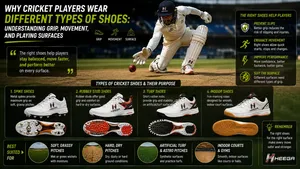 Why Cricket Players Wear Different Types of Shoes: Understanding Grip, Movement, and Playing SurfacesDiscover why cricket players wear different types of shoes and how spikes, rubber soles, grip, cushioning, stability, and playing surfaces affect cricket performance.