Why Cricket Players Wear Different Types of Shoes: Understanding Grip, Movement, and Playing Surfaces

Introduction: Cricket Shoes Are More Than Just Footwear
When watching a cricket match, it is easy to overlook a player's shoes.
Most of the attention goes toward the bat, ball, helmet, gloves, and pads.
But every movement on the field begins from the feet.
A batter needs stable footwork while facing a fast delivery.
A fast bowler needs to generate speed while controlling the landing of the front foot.
A fielder may need to sprint, stop suddenly, change direction, or dive.
A wicketkeeper must remain balanced and react quickly.
All of these movements place different demands on footwear.
This is why cricket players use different types of shoes.
The right pair can provide:
- Grip
- Stability
- Comfort
- Traction
- Support
- Cushioning
- Movement control
Cricket shoes are therefore designed around the demands of the game rather than simply appearance.
Why Footwear Matters in Cricket
Cricket involves repeated movement across different surfaces.
Players may:
- Sprint between wickets.
- Run in from a bowling mark.
- Push off during shots.
- Change direction while fielding.
- Jump for catches.
- Stop quickly.
- Stand for long periods.
Without appropriate traction and support, these movements can become more difficult.
Cricket Is Played on Different Surfaces
The playing surface can vary considerably.
Players may train or compete on:
- Natural grass.
- Artificial turf.
- Indoor cricket surfaces.
- Hard practice areas.
- Damp grounds.
- Dry grounds.
Different surfaces require different levels of grip.
What Are Cricket Spikes?
Spikes are cricket shoes designed with studs that provide traction on grass surfaces.
They are commonly used by players who need strong grip during competitive cricket.
Why Spikes Provide More Grip
The spikes penetrate or interact with the grass and soil surface.
This can help prevent excessive slipping during:
- Bowling.
- Sprinting.
- Batting.
- Fielding.
Full-Spike Cricket Shoes
Full-spike shoes feature multiple spikes across the sole.
They are often designed for players who want substantial traction on natural grass.
Fast bowlers may particularly value strong grip because of the forces generated during their run-up and delivery.
Why Fast Bowlers Need Grip
A fast bowler can generate significant speed during the approach to the crease.
During delivery, the bowler needs to:
- Brake.
- Transfer momentum.
- Plant the front foot.
- Rotate the body.
- Release the ball.
A stable connection with the ground is essential.
Bowling Shoes Face Heavy Stress
The repeated landing of the front foot can put considerable stress on footwear.
This is one reason specialist bowling shoes may emphasize:
- Stability.
- Support.
- Durability.
- Traction.
Batters Have Different Footwear Requirements
Batters also need grip, but their movement patterns are different.
A batter may need to:
- Move forward.
- Move backward.
- Shuffle across the crease.
- Push off quickly.
- Run between wickets.
Their shoes need to balance grip with mobility.
Batting Footwork Requires Stability
When playing a front-foot shot, the batter transfers weight forward.
A stable shoe can help provide a secure base.
When moving onto the back foot, the player needs to shift weight quickly.
Footwear should allow this movement without unnecessary instability.
Rubber-Soled Cricket Shoes
Rubber-soled cricket shoes are often used on artificial surfaces, indoor facilities, or situations where traditional metal spikes are unsuitable.
They can provide useful traction without penetrating the surface.
Why Rubber Soles Are Useful
Rubber soles can provide:
- Flexible movement.
- Comfortable walking.
- Suitable indoor traction.
- Lower surface impact.
Training Shoes vs Match Shoes
Players do not necessarily need the same footwear for every training session.
Training environments can include:
- Nets.
- Indoor halls.
- Artificial wickets.
- Grass grounds.
- Fitness sessions.
Different environments may require different footwear.
Artificial Turf Changes the Equation
Artificial cricket pitches have different traction characteristics from natural grass.
Traditional metal spikes may not always be appropriate.
Rubber or specialized turf shoes can therefore be a better option depending on the surface.
Indoor Cricket Requires Appropriate Soles
Indoor surfaces generally require non-marking footwear.
Players need grip without damaging the floor.
Why Non-Marking Soles Matter
Indoor sports facilities often have flooring that can be damaged or marked by unsuitable shoes.
A non-marking sole helps maintain the playing surface.
All-Round Cricket Shoes
Some cricket shoes are designed to provide a balance between traction, comfort, and versatility.
They may work across several training environments.
These can be useful for players who regularly move between different grounds.
Why Shoe Weight Matters
Heavy shoes can increase fatigue during long sessions.
Lighter shoes may allow faster movement.
However, reducing weight should not come at the expense of essential support.
Lightweight Shoes and Speed
Fielders often value lightweight footwear because quick movement is important.
A lighter shoe can make repeated acceleration and changes of direction feel easier.
Cushioning Is Important Too
Cricket involves repetitive impact.
Players may run:
- Between wickets.
- During fielding.
- During bowling run-ups.
Cushioning can help improve comfort during long sessions.
Why Bowlers Need Support
Fast bowling involves repeated high-impact movements.
Adequate support can help the foot remain stable during the delivery stride.
This is one reason specialist bowling footwear can differ from general training shoes.
Heel and Forefoot Design
Different areas of a cricket shoe may have different construction priorities.
The heel may focus on:
- Impact management.
- Stability.
- Cushioning.
The forefoot may focus on:
- Flexibility.
- Traction.
- Push-off.
Grip Is About More Than Spikes
Traction depends on several factors, including:
- Stud design.
- Sole material.
- Ground conditions.
- Player movement.
- Surface moisture.
A shoe with many studs is not automatically ideal for every condition.
Damp Grounds Require Care
Wet grass can become slippery.
Players may require appropriate traction to reduce unwanted movement.
However, even the best cricket shoes cannot eliminate all risks on extremely wet surfaces.
Dry and Hard Grounds Feel Different
Hard surfaces can create different traction and impact characteristics.
Players may value cushioning and stability more strongly in such conditions.
Why Shoe Fit Matters
Even a technically advanced cricket shoe will not perform properly if it does not fit correctly.
A good fit should provide:
- Secure heel placement.
- Comfortable toe space.
- Stable midfoot support.
- Minimal unwanted movement.
Shoes Should Not Be Too Loose
Excess movement inside the shoe can reduce stability.
It may also create discomfort during repeated movement.
Shoes Should Not Be Too Tight
Overly tight shoes can cause:
- Pressure points.
- Discomfort.
- Reduced movement.
- Foot fatigue.
Comfort should be a priority.
Toe Space Matters
The toes should have enough room to move naturally without the foot sliding forward excessively.
Cricket Shoe Width Can Matter
Players have different foot shapes.
Some may prefer a wider fit.
Others may prefer a more secure, narrower feeling.
This is why trying shoes before purchase can be useful whenever possible.
Why Fast Bowlers and Batters May Choose Different Shoes
The demands are not identical.
A fast bowler needs:
- Strong traction.
- Stability.
- Landing support.
- Durability.
A batter may prioritize:
- Lightweight movement.
- Comfort.
- Grip.
- Flexibility.
Fielders Need Quick Movement
Fielders often cover large areas.
Their footwear needs to support:
- Acceleration.
- Deceleration.
- Sideways movement.
- Sudden changes of direction.
Wicketkeepers Have Different Needs
Wicketkeepers spend much of the game moving around the crease.
They require:
- Stable footing.
- Quick lateral movement.
- Flexibility.
- Comfort.
Shoe Selection and Playing Role
A simple guide is:
Fast Bowler
Prioritize traction, stability, and support.
Batter
Prioritize comfort, grip, balance, and movement.
Fielder
Prioritize lightweight construction, traction, and agility.
Wicketkeeper
Prioritize stability, flexibility, and lateral movement.
Why Shoe Choice Changes With Age and Level
Junior players may not need highly specialized footwear immediately.
As players become more competitive, they may benefit from shoes designed for their specific role.
Beginners Should Focus on Comfort
For developing players, a comfortable and appropriately fitted pair can be more valuable than expensive specialist footwear.
Advanced Players May Need Specialized Options
Competitive players who train frequently may have more specific footwear requirements.
Their choice can depend on:
- Playing role.
- Ground type.
- Training frequency.
- Match format.
- Personal preference.
Cricket Shoes and Injury Prevention
Footwear alone cannot prevent injuries.
However, suitable traction and support can help players move more confidently.
Players should also prioritize:
- Proper warm-ups.
- Strength training.
- Mobility.
- Recovery.
- Appropriate workload.
Too Much Grip Can Also Be a Problem
More traction is not always better.
If the foot remains firmly planted while the body rotates or moves rapidly, excessive resistance can place additional stress on the body.
This is why shoe selection should match the surface.
Surface-Specific Footwear Is Important
The ideal shoe depends on where you are playing.
A shoe designed for natural grass may not be appropriate for an indoor court.
Likewise, indoor shoes may not provide sufficient traction on a grass cricket ground.
How to Choose Cricket Shoes
Before buying cricket shoes, consider:
1. Where You Play
Natural grass, artificial turf, or indoor?
2. Your Playing Role
Bowler, batter, fielder, or wicketkeeper?
3. Frequency of Use
Occasional player or regular academy athlete?
4. Fit
Does the shoe feel secure and comfortable?
5. Grip
Does the sole match your playing surface?
6. Weight
Does it feel comfortable during movement?
7. Support
Does the shoe provide sufficient stability?
How to Test Cricket Shoes
If possible, try basic movements before buying.
Walk.
Jog.
Change direction.
Perform a short acceleration.
Practice a batting stance.
For bowlers, simulate a controlled delivery stride.
The shoe should feel secure without restricting natural movement.
Don't Choose Shoes Only by Appearance
Cricket footwear can look impressive.
Bright colors and modern designs may attract attention.
But performance should come first.
Consider:
- Fit.
- Grip.
- Support.
- Comfort.
- Surface compatibility.
Don't Use Worn-Out Shoes Indefinitely
Cricket shoes experience repeated stress.
Over time, the sole and upper can wear down.
Signs of replacement may include:
- Reduced grip.
- Damaged sole.
- Loose stitching.
- Reduced cushioning.
- Unusual instability.
Why Sole Wear Matters
Once the sole becomes worn, the shoe may no longer provide the traction it originally offered.
This can affect confidence and movement.
Cleaning Cricket Shoes
Players should follow the manufacturer's care instructions.
Generally, it is sensible to:
- Remove dirt after use.
- Allow shoes to dry properly.
- Avoid storing them while wet.
- Inspect the sole regularly.
Why Drying Matters
Constant moisture can contribute to unpleasant odors and material deterioration.
Proper storage helps extend footwear life.
Cricket Shoes in Different Countries
Cricket is played in diverse environments across Nepal, Germany, the United States, Canada, the Netherlands, and the United Kingdom.
Players in each region can encounter different combinations of:
- Weather.
- Grass conditions.
- Artificial surfaces.
- Indoor facilities.
This makes adaptable footwear particularly valuable.
Nepal
Cricket continues to expand across Nepal, with players training on a mixture of established and developing facilities.
Choosing footwear according to the playing surface can help players adapt to these environments.
Germany
Indoor cricket facilities can be particularly valuable in Germany because of seasonal weather.
Players may therefore use footwear suited to indoor and artificial surfaces as well as outdoor grounds.
United States
The growing cricket infrastructure in the USA includes a variety of venues.
Players may encounter natural grass and artificial surfaces depending on where they play.
Canada
Seasonal weather can significantly influence cricket training.
Indoor facilities can become important during colder months, creating different footwear requirements.
Netherlands
Dutch cricket combines outdoor cricket with structured facilities.
Players may need footwear suitable for changing ground conditions.
United Kingdom
The UK's long cricket season can expose players to different grass and weather conditions.
Appropriate footwear becomes especially important when grounds are damp or soft.
Heega Sports and Cricket Equipment
At Heega Sports, we understand that cricket performance depends on more than a bat and ball.
Players also need dependable equipment for movement, protection, and training.
Our cricket range includes:
- Cricket bats.
- Leather cricket balls.
- Practice balls.
- Batting gloves.
- Batting pads.
- Cricket helmets.
- Cricket shoes.
- Cricket kit bags.
- Practice nets.
- Training accessories.
The right equipment can help players prepare more confidently for training and competition.
Why Good Footwear Supports Better Training
When players are not distracted by uncomfortable footwear, they can focus more on:
- Technique.
- Footwork.
- Bowling rhythm.
- Fielding movement.
- Running between wickets.
Comfort can therefore contribute to a better overall training experience.
Cricket Shoes Are Part of Performance Equipment
A cricket shoe may not attract as much attention as a bat.
But it plays an important role in connecting the player to the ground.
Every run begins with a step.
Every bowling delivery begins with a run-up.
Every fielding movement begins with footwork.
That makes footwear an important part of cricket equipment.
Final Thoughts
Cricket players wear different types of shoes because the game demands different forms of movement across different surfaces.
Fast bowlers need traction and stability.
Batters need balance, comfort, and freedom of movement.
Fielders need agility and reliable grip.
Wicketkeepers need flexibility and stability.
Natural grass may require different footwear from artificial turf or indoor surfaces.
Spikes can provide strong traction on suitable grass surfaces, while rubber-soled shoes can be more practical for indoor or artificial environments.
The most important lesson is simple:
the best cricket shoe is not necessarily the most expensive or the most specialized. It is the shoe that matches the player's role, surface, fit, and movement requirements.
When the feet are comfortable and secure, players can focus on what matters most—playing the game.
🏏 Step Onto the Field With Confidence
Explore cricket shoes, Kashmir Willow cricket bats, leather balls, batting gloves, pads, helmets, cricket kit bags, practice nets, and other cricket essentials at Heega Sports.
Shop Now
Heega Sports – Helping Players Move Better, Train Harder, and Play With Confidence.
Related posts
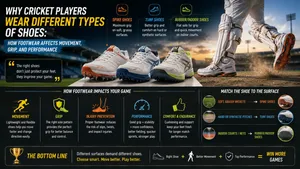 Why Cricket Players Wear Different Types of Shoes: How Footwear Affects Movement, Grip, and PerformanceDiscover why cricket players wear different types of shoes and how spikes, rubber soles, traction, comfort, and footwear design affect movement, grip, balance, and performance.
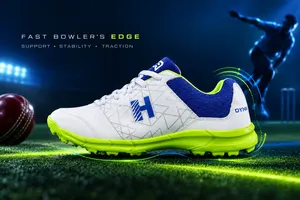 Cricket Shoes for Fast Bowlers: How Ankle Support, Heel Stability and Traction Affect the Bowling ActionLearn how cricket shoes for fast bowlers affect ankle support, heel stability, traction, and landing control. Find the right fit for your bowling action.
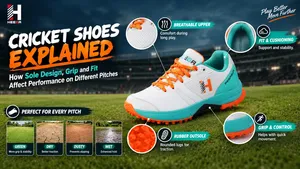 Cricket Shoes Explained: How Stud Patterns, Grip and Sole Design Affect Performance on Different PitchesLearn how cricket shoes, stud patterns, grip and sole design affect traction, stability, comfort and performance on grass, turf and artificial pitches.