Why Cricket Players Wear Different Types of Shoes: How Footwear Affects Movement, Grip, and Performance

Introduction: Cricket Shoes Are More Important Than They Look
When people think about cricket equipment, they usually think about bats, balls, gloves, pads, and helmets.
Cricket shoes often receive much less attention.
Yet footwear plays an important role in almost every movement a player makes on the field.
A batter needs stable footing while playing a shot.
A fast bowler needs reliable traction during their run-up and delivery stride.
A fielder needs to accelerate, stop, change direction, and dive.
A wicketkeeper needs quick lateral movement and balance.
The wrong footwear can make these movements more difficult.
The right footwear can provide:
- Better grip.
- Improved stability.
- Greater comfort.
- More confident movement.
- Better traction.
- Appropriate support.
This is why cricket players use different types of footwear depending on their role, playing surface, weather, and level of competition.
Why Cricket Players Cannot Use Just Any Sports Shoes
Cricket involves movements that are different from many other sports.
Players may need to:
- Sprint.
- Stop suddenly.
- Change direction.
- Rotate.
- Slide.
- Jump.
- Land repeatedly.
- Bowl at high speed.
- Bat from a stable base.
Running shoes may be comfortable for straight-line movement, but cricket requires much more than running.
Cricket footwear is designed around the demands of the game.
What Makes Cricket Shoes Different?
Cricket shoes are designed to provide a combination of:
- Traction.
- Stability.
- Cushioning.
- Flexibility.
- Comfort.
- Durability.
The ideal combination depends on the player's position and surface.
The Two Main Types of Cricket Footwear
Cricket shoes can broadly be divided into:
- Spiked cricket shoes
- Rubber-soled or non-spiked cricket shoes
Each has different advantages.
What Are Cricket Spikes?
Spiked shoes contain small metal or molded elements on the sole that penetrate the playing surface.
Their purpose is to improve traction.
They are especially useful when players need strong grip on suitable grass surfaces.
Why Fast Bowlers Often Prefer Spikes
Fast bowlers generate significant force during their run-up and delivery.
Their front foot absorbs substantial impact when they land.
Reliable traction can help them maintain a stable base.
Spikes can therefore be particularly useful for bowlers who require strong grip.
Why Bowlers Need Stable Footing
During delivery, a bowler's body moves at high speed.
A stable landing position helps them transfer energy through the delivery action.
Poor traction can create unwanted movement.
Full Spikes vs Rubber Soles
Different cricket shoes use different sole designs.
Some provide aggressive traction for grass.
Others use rubber soles that offer versatility across training environments.
The right choice depends on the playing surface.
Metal Spikes
Metal spikes provide strong traction on suitable natural grass surfaces.
However, they are not appropriate for every ground.
Players should always follow the rules and surface requirements of the venue.
Molded Spikes
Some cricket shoes use molded traction elements.
These can provide grip without removable metal spikes.
They may be convenient for players who move between different playing environments.
Rubber-Soled Cricket Shoes
Rubber-soled shoes are popular for:
- Training.
- Artificial surfaces.
- Indoor cricket.
- Harder ground conditions.
- Casual cricket.
They offer a different balance of comfort and versatility.
Why Rubber Soles Are Useful for Training
Players often train on surfaces that are not identical to match grounds.
Rubber soles can be practical when players need footwear that works across different environments.
Cricket Shoes for Batters
Batters need footwear that allows them to maintain balance while moving around the crease.
Important characteristics include:
- Grip.
- Comfort.
- Stability.
- Flexibility.
- Lightweight construction.
Footwork and Batting
Good batting requires efficient footwork.
A batter may move:
- Forward.
- Backward.
- Across the crease.
- Toward the ball.
The shoes need to provide enough traction without restricting natural movement.
Why Too Much Grip Can Also Be a Problem
Maximum grip is not always ideal.
A batter needs to move naturally.
If the shoe grips excessively and does not allow the player to rotate or move comfortably, movement can feel restricted.
The goal is appropriate traction.
Cricket Shoes for Fast Bowlers
Fast bowlers have some of the most demanding footwear requirements.
They need:
- Reliable grip.
- Stability.
- Impact protection.
- Comfort.
- Support during repeated deliveries.
Bowling Creates Repeated Impact
A fast bowler may deliver many balls during a match or training session.
Each delivery involves:
- Run-up.
- Acceleration.
- Planting.
- Rotation.
- Follow-through.
The shoes need to cope with these repeated movements.
Why Traction Matters During the Run-Up
A bowler needs confidence while accelerating.
If the foot repeatedly slips during the run-up, the delivery rhythm can be affected.
Reliable traction can help the bowler maintain consistency.
Why Stability Matters During Landing
The delivery stride places significant demands on the lower body.
Stable footwear can help the player maintain control during landing and follow-through.
Cricket Shoes for Spinners
Spin bowlers may have different requirements from fast bowlers.
They still need grip and stability, but their movement patterns can be less dependent on high-speed running.
Comfort and controlled rotation are important.
Cricket Shoes for Fielders
Fielders are constantly moving.
They may need to:
- Sprint toward the ball.
- Stop quickly.
- Change direction.
- Dive.
- Throw.
- Chase boundaries.
Good traction is essential.
Why Fielders Need Quick Direction Changes
A fielder may sprint toward a ball and suddenly need to move sideways.
The shoes must provide enough grip to support these changes.
Boundary Fielders Have Different Demands
Boundary fielders may spend significant time sprinting across larger areas.
Lightweight shoes can help reduce fatigue during repeated movement.
Cricket Shoes for Wicketkeepers
Wicketkeepers need quick reactions.
Their footwear should allow:
- Lateral movement.
- Squatting.
- Rising.
- Short bursts of acceleration.
- Stable positioning.
Why Lateral Movement Matters
A wicketkeeper may move quickly in either direction to collect a wide delivery or react to an edge.
Footwear that supports quick movement can be valuable.
The Importance of Cushioning
Cricket players spend long periods standing and moving.
Cushioning can help improve comfort during extended sessions.
However, too much cushioning can sometimes reduce the player's connection with the ground.
The best footwear balances comfort with stability.
Shoe Weight Matters
Heavy footwear can increase fatigue.
Lightweight footwear can make movement feel easier.
However, reducing weight should not come at the expense of:
- Support.
- Durability.
- Protection.
- Stability.
Flexibility Is Important
Cricket players need to move naturally.
Shoes that are too stiff may restrict movement.
Some flexibility allows the foot to work naturally during batting and fielding.
Breathability and Hot Weather
Cricket can involve long periods in hot conditions.
Breathable materials can improve comfort by allowing heat and moisture to escape.
This can be especially useful during extended matches and training sessions.
Sweat and Cricket Shoes
Sweaty feet can become uncomfortable.
Good ventilation and appropriate socks can help manage moisture.
Players should also allow shoes to dry properly after use.
Cricket Shoes and Weather Conditions
Weather can influence footwear selection.
Wet grass may require different traction from dry ground.
Hot conditions may increase the importance of ventilation.
Cold conditions may require different preparation.
Wet Grounds
Wet surfaces can become slippery.
Players need to follow ground regulations and use footwear appropriate for the conditions.
Dry Grounds
Dry surfaces may offer different levels of natural traction.
The right sole design can help players maintain control.
Artificial Cricket Surfaces
Many training facilities use artificial pitches.
Rubber-soled shoes are often practical for these environments.
Players should always check the surface and footwear recommendations.
Indoor Cricket
Indoor cricket requires specialized consideration.
Metal spikes are generally unsuitable for indoor surfaces.
Non-marking or appropriate rubber soles are typically more practical.
Practice vs Match Footwear
Players do not always need the same footwear for every activity.
Training may involve:
- Artificial pitches.
- Indoor surfaces.
- Grass.
- Hard practice areas.
Match conditions may be very different.
Having appropriate footwear for each environment can be useful.
Why Shoe Fit Matters
Even high-quality cricket shoes cannot perform properly if they do not fit correctly.
A good fit should provide:
- Secure heel placement.
- Comfortable toe space.
- Stable midfoot support.
- No excessive movement inside the shoe.
Shoes Should Not Be Too Tight
Tight footwear can create discomfort.
It may also reduce natural foot movement.
Shoes Should Not Be Too Loose
Loose shoes can allow the foot to move excessively inside the footwear.
This can reduce stability.
Why Socks Matter
Socks are often overlooked.
Appropriate cricket socks can improve:
- Comfort.
- Moisture management.
- Fit.
- Protection against rubbing.
Breaking In New Cricket Shoes
Players should avoid wearing completely new shoes for the first time in an important match.
Training sessions provide an opportunity to understand:
- Comfort.
- Grip.
- Fit.
- Pressure points.
Why Blisters Can Become a Problem
New footwear can create friction.
Gradually using new shoes can help players identify potential problems before competition.
Cricket Shoes and Injury Prevention
Footwear cannot guarantee injury prevention.
However, appropriate footwear can support stable movement.
Good shoes combined with:
- Proper warm-up.
- Correct technique.
- Strength.
- Mobility.
- Workload management.
can contribute to safer participation.
Footwear Cannot Fix Poor Technique
A bowler cannot solve an inefficient bowling action simply by buying better shoes.
A batter cannot fix poor footwork through footwear alone.
Equipment should support technique rather than replace it.
Why Shoe Traction Should Match the Player
Different players have different movement demands.
A fast bowler may prioritize stability and traction.
A batter may prioritize balance and flexibility.
A fielder may prioritize lightweight movement.
The ideal shoe is therefore not necessarily the same for every player.
How Shoe Design Can Influence Confidence
Equipment can influence how comfortable a player feels.
If a player trusts their footwear, they may feel more confident accelerating, stopping, or changing direction.
Confidence does not come from shoes alone, but reliable equipment can support it.
Cricket Footwear and Training Drills
Different training drills create different demands.
Sprint drills may require traction.
Batting drills require balance.
Fielding drills require movement and stopping ability.
Players should select footwear suitable for the session.
Why Coaches Pay Attention to Footwear
Coaches understand that movement is part of technique.
A player struggling with footwork may sometimes benefit from examining their footwear as well as their technique.
Cricket Shoes and Youth Players
Young players need comfortable footwear that fits their current size.
Parents should avoid buying excessively large shoes simply so children can "grow into them."
Poor fit can affect comfort and movement.
When Should Young Players Replace Cricket Shoes?
Replacement may be necessary when:
- The sole is heavily worn.
- Traction has reduced.
- The shoe no longer fits.
- Structural support has deteriorated.
- The footwear causes discomfort.
How to Maintain Cricket Shoes
Good maintenance can extend footwear life.
Players should:
- Clean dirt after use.
- Allow shoes to dry naturally.
- Avoid storing wet shoes in closed bags.
- Check the sole regularly.
- Inspect spikes for wear.
Do Not Dry Shoes With Excessive Heat
Direct high heat can damage some shoe materials and adhesives.
Natural drying is generally safer.
Storing Cricket Shoes
Shoes should be stored in a dry, ventilated environment.
Avoid leaving them wet inside a cricket kit bag for long periods.
Why Kit Bags Matter
A good cricket kit bag can help players organize footwear separately from clothing and equipment.
Keeping shoes isolated can also help prevent dirt from spreading to other items.
Cricket Footwear in Different Countries
Cricket is played across very different environments in Nepal, Germany, the United States, Canada, the Netherlands, and the United Kingdom.
These regions can present different combinations of:
- Weather.
- Ground types.
- Playing surfaces.
- Training facilities.
Nepal
Players may encounter warm conditions and a mixture of natural and training surfaces.
Comfortable, durable footwear can be especially valuable during long practice sessions.
Germany
Seasonal weather can create significant differences between outdoor and indoor cricket.
Versatile footwear can be useful for players who train throughout the year.
United States
The expanding cricket environment in the USA includes different types of grounds and facilities.
Players may need footwear suited to both natural and artificial surfaces.
Canada
Seasonal conditions make indoor training particularly important during colder periods.
Non-spiked footwear can be useful for indoor practice.
Netherlands
Windy and changeable outdoor conditions can make reliable traction particularly valuable.
United Kingdom
British cricket often involves grass grounds with changing weather conditions.
Players may choose footwear based on the ground and match requirements.
How to Choose Cricket Shoes
Before buying cricket shoes, consider:
1. Your Playing Role
Are you primarily a:
- Batter?
- Fast bowler?
- Spinner?
- Fielder?
- Wicketkeeper?
- All-rounder?
2. Your Playing Surface
Determine whether you regularly play on:
- Natural grass.
- Artificial pitches.
- Indoor surfaces.
- Hard practice areas.
3. Your Traction Requirements
Choose the sole type appropriate to the surface and competition rules.
4. Comfort
A shoe should remain comfortable throughout a long session.
5. Fit
Make sure the heel, midfoot, and toe area fit securely.
6. Durability
Regular players need footwear that can withstand repeated training.
What Should Beginners Look For?
Beginners do not necessarily need the most expensive cricket shoes.
They should prioritize:
- Correct fit.
- Comfortable construction.
- Suitable grip.
- Appropriate sole type.
- Reasonable durability.
What Should Serious Players Look For?
Players training and competing frequently may place greater emphasis on:
- Advanced traction.
- Lightweight construction.
- Stability.
- Cushioning.
- Durability.
- Role-specific design.
Why Expensive Does Not Always Mean Better
The most expensive shoe is not automatically the right shoe.
The best footwear is the one that matches the player's:
- Role.
- Surface.
- Foot shape.
- Playing conditions.
- Training requirements.
The Right Shoes Support Better Movement
Cricket is a movement-based sport.
Every delivery requires some form of movement.
Every run requires acceleration.
Every catch requires positioning.
Every bowling spell requires repeated footwork.
Footwear is therefore part of the performance system.
Heega Sports and Cricket Equipment
At Heega Sports, we understand that cricket performance depends on more than just the bat.
Players need a complete setup that supports training and competition.
Our cricket range includes:
- Cricket bats.
- Leather cricket balls.
- Practice balls.
- Batting gloves.
- Batting pads.
- Cricket helmets.
- Cricket shoes.
- Cricket kit bags.
- Practice nets.
- Training accessories.
Choosing reliable equipment allows players to concentrate on developing their skills.
Final Thoughts
Cricket shoes may seem like a small part of a player's equipment, but they influence some of the most important movements in the game.
A fast bowler needs reliable traction during their run-up and delivery.
A batter needs balance while moving around the crease.
A fielder needs confidence while sprinting and changing direction.
A wicketkeeper needs quick lateral movement.
Different playing surfaces also create different footwear requirements.
Spiked shoes can provide strong traction on suitable natural grass.
Rubber-soled footwear can offer greater versatility for training and artificial surfaces.
The most important factor is not choosing the most expensive shoe.
It is choosing footwear that matches the player's role, surface, fit, comfort, and playing conditions.
Players should also maintain their footwear carefully, replace worn-out shoes when necessary, and avoid using unsuitable footwear simply because it looks good.
Ultimately, cricket shoes cannot make someone a better player by themselves.
But the right footwear can remove unnecessary distractions and help players move with greater confidence.
In cricket, every movement begins with the ground beneath your feet—and the right shoes help you make that movement with confidence.
🏏 Move Better. Play With Confidence.
Explore quality cricket shoes, bats, leather balls, practice balls, batting gloves, pads, helmets, kit bags, practice nets, and training accessories at Heega Sports.
Shop Now
Heega Sports – Supporting Every Step From Training Ground to Match Day.
Related posts
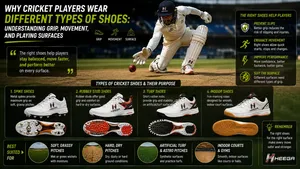 Why Cricket Players Wear Different Types of Shoes: Understanding Grip, Movement, and Playing SurfacesDiscover why cricket players wear different types of shoes and how spikes, rubber soles, grip, cushioning, stability, and playing surfaces affect cricket performance.
 Cricket Shoes for Fast Bowlers: How Ankle Support, Heel Stability and Traction Affect the Bowling ActionLearn how cricket shoes for fast bowlers affect ankle support, heel stability, traction, and landing control. Find the right fit for your bowling action.
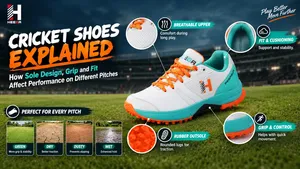 Cricket Shoes Explained: How Stud Patterns, Grip and Sole Design Affect Performance on Different PitchesLearn how cricket shoes, stud patterns, grip and sole design affect traction, stability, comfort and performance on grass, turf and artificial pitches.