How Backyard Cricket Can Build Real Skills for Young Players.

Introduction: Cricket Development Does Not Always Need a Cricket Ground
When people think about cricket training, they often imagine a proper cricket ground, professional nets, expensive equipment, and a coach standing nearby.
Those things can certainly help.
But young players can also learn a surprising amount through something much simpler:
Backyard cricket.
A small garden, open space, driveway, or other suitable safe area can become a place where children experiment with batting, bowling, catching, throwing, and running.
The biggest advantage is that backyard cricket usually feels less like training.
It feels like play.
And that matters.
Children often learn naturally when they are enjoying themselves. They try unusual shots, invent rules, challenge their friends, and repeat activities simply because they are fun.
Without realizing it, they may also be developing:
- Hand-eye coordination.
- Reaction speed.
- Bat control.
- Throwing accuracy.
- Catching ability.
- Footwork.
- Decision-making.
- Communication.
- Confidence.
Backyard cricket should not replace proper coaching when a child wants structured development.
Instead, it can complement coaching by giving young players additional opportunities to play and experiment.
Why Is Backyard Cricket So Valuable for Kids?
Formal coaching usually has specific objectives.
Backyard cricket can be much more flexible.
A child can simply pick up a bat and start playing.
There is no need to spend twenty minutes explaining a drill.
The child learns through action.
That freedom can encourage creativity.
Play Creates More Repetitions
Imagine a child attends one coaching session each week.
They may have limited time to practice certain skills.
At home, they can spend another ten or fifteen minutes playing.
Those additional repetitions can be useful.
A child might:
- Face more balls.
- Catch more throws.
- Practice more swings.
- Bowl more deliveries.
- Repeat movement patterns.
Small amounts of regular practice can add up over time.
Backyard Cricket Encourages Experimentation
Children naturally experiment when there is less pressure.
They may try:
- Unusual shots.
- Different bowling speeds.
- Creative field placements.
- New running strategies.
Some attempts will fail.
That is perfectly fine.
Experimentation can help children understand what works and what does not.
Batting Practice Can Be Simple
A child does not need a professional bowling machine to practice batting.
A parent can throw gentle balls from a safe distance.
The objective can be simple:
Watch the ball and make controlled contact.
This helps children focus on timing rather than simply trying to hit the ball as hard as possible.
Use Different Batting Challenges
Parents can create simple targets.
For example:
Straight Shot Challenge
Can the child hit the ball toward a designated safe area?
Placement Challenge
Can they hit different areas rather than always trying to hit boundaries?
Defence Challenge
Can they play several controlled defensive shots?
These activities encourage children to think about placement and control.
Practice Timing Instead of Power
Young players often believe that hitting harder means batting better.
That is not always true.
Timing can be more important than raw power.
Backyard cricket gives children an opportunity to discover this themselves.
A well-timed shot can travel farther than a badly timed swing.
Soft Balls Can Make Home Practice Safer
Depending on the playing area and the child's age, soft or suitable practice balls can be useful.
They allow children to work on:
- Bat control.
- Timing.
- Reactions.
Parents should choose equipment appropriate for the environment and supervise younger players.
Bowling Practice Does Not Need a Full Pitch
A child can practice bowling by aiming at a target.
Place a suitable target at a safe distance.
It could be:
- Stumps.
- A cone.
- A marked area.
The child can focus on hitting the target consistently.
Accuracy Games Are More Useful Than Endless Bowling
Instead of simply bowling as many balls as possible, create a challenge.
For example:
Can you hit the target three times in five attempts?
This gives the child a clear objective.
Teach Line and Length Through Games
Children can learn basic bowling concepts without complicated explanations.
Create different target zones.
Ask the child to try landing the ball in each zone.
This introduces the idea of changing length and placement in a simple way.
Try a "Beat the Batter" Game
A parent can gently bowl to the child.
The child earns points for:
- Defending successfully.
- Playing controlled shots.
- Finding a target area.
The game can be adapted to the child's ability.
Catching Is Perfect for Backyard Practice
Catching is one of the easiest cricket skills to practice at home.
Parents can start with gentle throws.
Then gradually introduce:
- Higher catches.
- Side catches.
- Low catches.
- Moving catches.
The difficulty should increase only when the child is comfortable.
Use Catching Challenges
Try:
How many catches can you complete without dropping one?
But remember that the purpose is not to embarrass the child when they make mistakes.
The challenge should encourage them to try again.
Practice Reaction Skills
A parent can stand a short distance away and gently throw the ball in slightly different directions.
The child must react and catch.
This can help develop:
- Visual tracking.
- Reaction speed.
- Movement.
- Hand-eye coordination.
Throwing Is an Important Skill Too
Children should practice throwing with control.
They can aim at:
- Stumps.
- Cones.
- Targets.
The focus should be on accuracy and safe technique rather than maximum throwing power.
Introduce Run-Out Games
A simple backyard game can recreate a match situation.
The parent rolls or throws the ball toward a target.
The child fields it and attempts to hit the stumps.
This combines:
- Fielding.
- Movement.
- Throwing.
- Decision-making.
Running Between Wickets Can Be Practiced
Children also need to understand running.
A safe open space can be marked with two points.
The child can practice:
- Starting quickly.
- Turning efficiently.
- Calling.
- Running with a partner.
Keep the distance appropriate for the available space.
Communication Is Part of Backyard Cricket
If two children are playing together, encourage them to communicate.
They can practice calls such as:
- "Yes!"
- "No!"
- "Wait!"
- "Leave it!"
This helps children understand that cricket depends on communication.
Backyard Cricket Can Improve Decision-Making
Real cricket involves constant decisions.
Should the batter:
- Attack?
- Defend?
- Run?
- Stay?
Backyard games can introduce these choices in a relaxed environment.
Create Simple Match Situations
Instead of playing endless deliveries, create scenarios.
For example:
"You need four runs from three balls."
Now the child must decide how to approach the situation.
This introduces pressure in a fun way.
Play Short Matches
Children do not need a 50-over match at home.
Short formats can be more exciting.
Try:
- Five-ball innings.
- Ten-ball innings.
- One-over matches.
- Target-chasing games.
Short games keep children involved.
Give Everyone a Chance to Bat and Bowl
If siblings or friends are playing, rotate roles.
One child can bat.
Then bowl.
Then field.
This gives everyone a broader experience.
Don't Always Let the Best Player Win
If adults are playing with children, they do not need to dominate.
Parents can adjust the difficulty.
For example:
- Bowl slower.
- Use softer balls.
- Give children extra runs.
- Create larger target areas.
The goal is to keep the game competitive enough to be interesting without making it frustrating.
Let Kids Invent Their Own Rules
This is one of the most enjoyable parts of backyard cricket.
Children may create rules such as:
- One bounce catches.
- Certain areas count as boundaries.
- A particular shot earns bonus points.
As long as the game remains safe, creativity can be encouraged.
Creative Rules Can Encourage Problem-Solving
When children invent rules, they are making decisions.
They are deciding:
- What is fair?
- How should points work?
- What happens after a tie?
These are useful problem-solving experiences.
Backyard Cricket Can Build Confidence
Formal matches can sometimes make children nervous.
At home, the environment is usually more relaxed.
There is less fear of embarrassment.
Children can attempt new things without worrying about teammates or spectators.
That freedom can build confidence.
Mistakes Become Easier to Accept
A child may miss a catch.
They may get bowled.
They may bowl a wide.
At home, they can simply try again.
This helps children understand that mistakes are part of learning.
Parents Should Avoid Turning Every Game Into Coaching
This is important.
If every backyard game becomes a technical lesson, children may stop seeing it as fun.
Sometimes parents should simply play.
Laugh.
Compete.
Enjoy the game.
Coaching can happen when necessary, but not every moment needs correction.
Ask Questions Instead of Giving Constant Instructions
Instead of saying:
"You should have played that shot differently."
try:
"What do you think you could try next time?"
This encourages children to think independently.
Let Children Choose What They Want to Practice
Ask:
"What should we do today?"
They might choose:
- Batting.
- Bowling.
- Catching.
- Fielding.
- A mini-match.
Giving children choices can increase engagement.
Keep Sessions Short
Young children have limited attention spans.
A 15-minute enjoyable session can be more useful than an hour that ends in frustration.
The right duration depends on the child's age, interest, and energy level.
Make Practice Consistent
Backyard cricket does not need to happen every day.
Even a few short sessions each week can provide additional opportunities to play.
Consistency is usually more valuable than occasional marathon sessions.
Use Cones and Stumps for Simple Drills
A few basic training items can make home practice more varied.
Cones can create:
- Target zones.
- Running lanes.
- Fielding positions.
Stumps can be used for:
- Bowling targets.
- Run-out drills.
- Batting games.
Practice Nets Can Add More Options
If space allows, a suitable practice net can provide a more controlled environment for batting and bowling.
It can help contain the ball and make practice more convenient.
Parents should always ensure the setup is appropriate for the available space and equipment.
Cricket Equipment Should Match the Child
Children should use equipment appropriate for their age and physical development.
This includes:
- Bat size.
- Bat weight.
- Ball type.
- Protective equipment.
- Gloves.
- Footwear.
The goal is comfortable, safe participation.
Don't Buy Expensive Equipment Just for Backyard Cricket
A child does not need professional-level equipment to enjoy cricket at home.
Start with what is appropriate.
As interest and skill develop, equipment can be upgraded gradually.
Safety Comes Before the Game
Backyard cricket should always take place in a suitable environment.
Before starting, check for:
- Vehicles.
- Glass windows.
- Hard obstacles.
- Slippery surfaces.
- Other people nearby.
- Uneven ground.
Choose a safe area whenever possible.
Avoid Hard-Ball Cricket in Unsafe Spaces
Leather cricket balls can travel quickly and cause injury or property damage.
They are not suitable for every backyard environment.
When space is limited, use an appropriate softer training ball and adjust the activity accordingly.
Protective Equipment Still Matters
If a child is facing a harder ball, appropriate protective equipment should be considered.
This can include:
- Helmet.
- Batting gloves.
- Pads.
- Other suitable protective gear.
Parents should follow age-appropriate safety guidance.
Backyard Cricket Can Support Formal Coaching
Home practice and coaching can work together.
A coach may teach a skill.
The child can then enjoy practicing that skill at home.
For example:
Coach teaches catching technique → Parent practices simple catches at home.
This reinforces learning without replacing professional coaching.
Ask the Coach What to Practice
Parents can ask:
"Is there one skill my child should work on at home this week?"
This can make home practice more focused.
The child can then practice without being overwhelmed by too many technical instructions.
Keep Track of Progress in a Fun Way
Children may enjoy simple progress charts.
For example:
Week 1: 5 catches.
Week 2: 8 catches.
Week 3: 10 catches.
The objective is to show improvement rather than create pressure.
Use Rewards Carefully
Parents do not need to offer prizes for every successful drill.
Intrinsic enjoyment is more valuable.
Celebrate achievements naturally:
"That was a great catch."
"Your bowling was much more accurate today."
Positive feedback can be enough.
Invite Friends to Play
Backyard cricket becomes even more enjoyable when friends join.
Small groups can create:
- Mini matches.
- Fielding games.
- Batting challenges.
- Team competitions.
The social aspect can keep children connected to the sport.
Siblings Can Make Excellent Practice Partners
Older or younger siblings can participate too.
Adjust the rules so everyone can enjoy the game.
The goal is participation rather than creating a professional competition.
Adults Can Make the Game More Fun
Parents do not always need to act like coaches.
Sometimes the best thing they can do is become a teammate.
Celebrate boundaries.
Laugh at funny shots.
Try unusual challenges.
Let the child win occasionally.
Create memories.
Those experiences can become an important part of a child's relationship with cricket.
Backyard Cricket Can Create Lifelong Memories
Many cricketers remember playing informal cricket as children.
The exact score may be forgotten.
But they remember:
- Playing with parents.
- Competing with siblings.
- Laughing with friends.
- Creating unusual rules.
- Trying to hit imaginary boundaries.
These experiences can make sport meaningful.
Nepal: Backyard Cricket Can Support Growing Youth Participation
As cricket continues developing across Nepal, informal cricket can give children additional opportunities to play outside structured sessions.
Simple games can help children build familiarity with the sport.
Germany: Informal Games Can Introduce Children to Cricket
For families introducing cricket in Germany, backyard games can provide an easy way to help children understand basic cricket concepts before entering more structured programs.
United States: Home Cricket Can Help New Players Learn
As youth cricket continues expanding across the United States, simple home games can make the sport more accessible to children who are still learning the basics.
Canada: Indoor and Outdoor Practice Can Complement Each Other
Canadian families may have different opportunities depending on the season.
When suitable space is available, simple cricket games can provide additional practice outside formal sessions.
The Netherlands: Informal Play Can Support Skill Development
Young players can benefit from combining structured coaching with relaxed games that allow them to experiment and enjoy the sport.
United Kingdom: Backyard Cricket Remains Part of Cricket Culture
The UK's strong cricket tradition includes plenty of informal games.
For children, these relaxed experiences can complement school, club, and academy cricket.
How Heega Sports Supports Young Players
At Heega Sports, we believe children should have opportunities to enjoy cricket both during structured training and informal play.
Our range includes:
- Junior cricket bats.
- Kashmir Willow cricket bats.
- Practice cricket balls.
- Leather cricket balls.
- Batting gloves.
- Batting pads.
- Cricket helmets.
- Cricket shoes.
- Cricket kit bags.
- Practice nets.
- Training accessories.
The right equipment can make home practice more comfortable while giving young players opportunities to develop their skills.
A Simple 20-Minute Backyard Cricket Session
Parents looking for a quick routine can try this:
5 Minutes — Catching
Start with easy catches and gradually vary the height and direction.
5 Minutes — Batting
Use gentle throws and focus on controlled shots.
5 Minutes — Bowling
Choose a target and challenge the child to hit it consistently.
5 Minutes — Mini Match
Finish with a short game or target challenge.
This keeps the session varied and prevents boredom.
A Few Simple Backyard Cricket Games
1. Target Bowling
Hit the stumps or a designated target.
2. Catching Ladder
Complete increasingly difficult catches.
3. Run Chase
Score a small target within a limited number of balls.
4. Boundary Challenge
Earn points for controlled shots into different areas.
5. One-Over Match
Each player gets one over to bat and bowl.
These games can be adjusted according to age and ability.
What Parents Should Remember
Backyard cricket is not about creating a professional training facility at home.
It is about giving children another opportunity to play.
Keep the environment:
- Safe.
- Positive.
- Flexible.
- Age-appropriate.
- Fun.
If the child is smiling and asking to play again, the session has already achieved something important.
Final Thoughts
Young cricketers do not develop only through formal coaching.
They also develop through play.
Backyard cricket gives children the freedom to experiment, make mistakes, create their own games, and repeat basic skills without the pressure of a formal match.
A simple throw-and-catch session can improve coordination.
A target-bowling game can develop accuracy.
A short batting challenge can improve timing.
A mini-match can introduce decision-making.
And a game with parents or friends can create memories that last much longer than the practice session itself.
The most important thing is not how advanced the equipment is.
It is not how perfect the technique looks.
And it is certainly not whether every session produces a measurable improvement.
The most important thing is that children continue to enjoy playing.
Because a child who enjoys picking up a bat today is more likely to want to pick it up again tomorrow.
From Nepal, Germany, the United States, Canada, and the Netherlands to the established cricket culture of the United Kingdom, informal cricket can play a valuable role in introducing children to the game and keeping them connected to it.
Sometimes the best cricket training is simply a child, a ball, a bat, and enough space to play.
🏏 Make Every Backyard Session More Fun With Heega Sports
Explore junior cricket bats, Kashmir Willow bats, practice balls, batting gloves, pads, helmets, cricket shoes, kit bags, practice nets, and training accessories designed to help young players enjoy cricket and develop their skills.
Shop Now
Heega Sports – Helping Young Cricketers Learn, Play, Practice, and Enjoy the Game.
Related posts
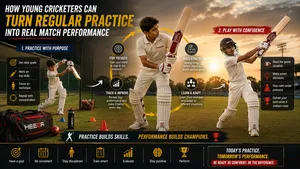 How Young Cricketers Can Turn Regular Practice Into Real Match Performance.Learn how young cricketers can turn regular practice into match performance through realistic drills, match simulations, decision-making, pressure training, and consistency.
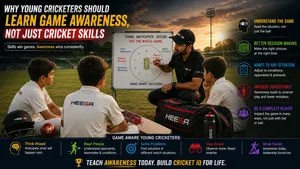 Why Young Cricketers Should Learn Game Awareness, Not Just Cricket SkillsLearn why young cricketers need game awareness alongside cricket skills, including decision-making, field placement, match situations, communication, and strategy.
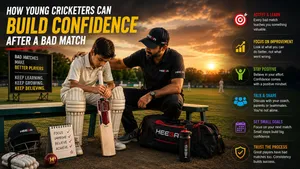 How Young Cricketers Can Build Confidence After a Bad Match.Learn how young cricketers can rebuild confidence after a bad match, handle mistakes, manage pressure, and return to practice with a positive mindset.