How Batters Judge a Cricket Ball Before It Reaches Them

Introduction: Great Batting Starts Before the Ball Arrives
A cricket batter has only a short amount of time to decide what to do.
The bowler begins the run-up.
The delivery is released.
The ball travels toward the batter.
Within a fraction of a second, the batter must decide whether to:
- Defend.
- Attack.
- Leave.
- Move forward.
- Move backward.
- Play on the front foot.
- Play on the back foot.
To a casual viewer, this can look like pure reaction.
But experienced batters are doing much more than simply reacting.
They are reading the delivery.
Before the ball reaches them, they collect information from the bowler's movement, release point, seam, trajectory, speed, and bounce.
The brain processes these clues extremely quickly.
That ability to recognize what is coming is one of the most valuable skills in batting.
What Does "Reading the Ball" Mean?
Reading the ball means identifying useful information about a delivery as early as possible.
A batter may try to determine:
- Where the ball will pitch.
- How fast it is travelling.
- Whether it will swing.
- Whether it may seam.
- Whether it is short or full.
- Which shot is appropriate.
The earlier the batter understands the delivery, the more time they have to respond.
Batting Is Not Just About Hand-Eye Coordination
Hand-eye coordination is important.
But elite batting involves much more.
A batter combines:
- Visual perception.
- Anticipation.
- Footwork.
- Decision-making.
- Balance.
- Technique.
- Experience.
These skills work together during every delivery.
The Bowler's Run-Up Can Provide Clues
Batters often observe the bowler before release.
The run-up may reveal:
- Bowling rhythm.
- Delivery type.
- Approach angle.
- Changes in pace.
However, good bowlers deliberately make their deliveries look similar to prevent the batter from predicting what is coming.
Watching the Release Point
The release point is one of the most important visual cues available to a batter.
At release, the batter can begin identifying:
- Ball trajectory.
- Line.
- Length.
- Speed.
- Seam presentation.
A clear view of the release point can provide valuable extra information.
Why Early Information Matters
Imagine two batters facing the same delivery.
One recognizes the length immediately.
The other identifies it a fraction later.
That tiny difference can influence:
- Foot movement.
- Bat position.
- Shot selection.
- Timing.
At high levels, small differences can matter enormously.
The Importance of Watching the Ball
One of the simplest pieces of batting advice is also one of the most important:
Watch the ball.
But watching the ball effectively is more complicated than simply keeping your eyes open.
The batter needs to maintain visual attention throughout the delivery.
Tracking the Ball From Hand to Bat
Experienced batters attempt to follow the ball continuously.
They observe it:
from the bowler's hand → through the air → toward the pitch → after the bounce → toward the bat.
This helps them update their prediction as new information becomes available.
Reading the Line
Line refers to the direction in which the ball is travelling relative to the batter.
A batter may recognize:
- Outside off.
- On off stump.
- Middle stump.
- Leg stump.
- Down the leg side.
The line immediately affects possible shot selection.
Why Line Changes the Decision
A delivery outside off stump may be left alone.
A ball attacking the stumps may require defensive action.
A delivery on the pads may create an opportunity for a scoring shot.
The batter therefore needs to identify line quickly.
Reading the Length
Length is one of the most important factors in batting.
A delivery can be:
- Full.
- Good length.
- Short.
- Yorker length.
- Half-volley.
- Bouncer.
The batter's response depends heavily on where the ball is expected to pitch.
Full Deliveries
Full balls can provide opportunities for:
- Drives.
- Straight shots.
- Cover drives.
- On-side strokes.
But if the line is dangerous, a batter may still choose caution.
Good-Length Deliveries
Good-length balls can be difficult because they force the batter to decide whether to move forward or backward.
This uncertainty is exactly what bowlers try to create.
Short Deliveries
Short balls give the batter different options.
Depending on pace and height, the batter may:
- Pull.
- Hook.
- Cut.
- Defend.
- Duck or sway away.
Yorkers
Yorkers reach the batter close to the feet.
They give very little room for attacking shots.
Recognizing a yorker early is therefore extremely valuable.
Reading Seam Position
The seam can provide clues about how a ball may behave.
A batter may notice:
- Upright seam.
- Angled seam.
- Visible rotation.
- Changes in seam presentation.
This information can help them anticipate movement.
Swing Can Change the Expected Path
A ball may begin outside the batter's expected line and move during flight.
This makes reading the ball more challenging.
The batter needs to keep updating their prediction.
Seam Movement Happens After the Bounce
A bowler may also produce movement after the ball hits the pitch.
The batter cannot rely entirely on the initial trajectory.
They must be prepared for the ball to change direction after pitching.
Reading Spin
Facing spin creates a different visual challenge.
Batters may observe:
- Wrist position.
- Finger position.
- Seam orientation.
- Ball rotation.
- Flight.
These clues can help indicate the type of spin delivery.
Reading the Bowler's Wrist
Experienced batters sometimes watch the bowler's wrist closely.
A wrist-spinner's release can provide clues about:
- Leg spin.
- Googly.
- Topspinner.
- Flipper.
However, skilled bowlers work hard to disguise these differences.
Reading Finger Position
Finger-spinners may create different deliveries through changes in finger position and release.
Small changes can produce significantly different results.
The Importance of Ball Rotation
Rotation can provide visual information.
A batter may notice the ball spinning differently depending on the delivery.
This becomes particularly important when facing high-quality spin bowling.
Batters Also Read the Pitch
Reading the ball is only half the equation.
Batters also consider how the pitch is behaving.
They may ask:
- Is the ball bouncing high?
- Is it staying low?
- Is it turning?
- Is it slowing down?
- Is it moving after pitching?
Previous deliveries provide information about what may happen next.
Previous Balls Create a Pattern
Cricket is a game of patterns.
A bowler may repeatedly bowl:
- Outside off.
- Short balls.
- Full deliveries.
- Slower balls.
The batter notices these patterns.
But Patterns Can Be Traps
A bowler may deliberately establish one pattern and then change the delivery.
For example:
Three balls outside off may be followed by an inswinging delivery.
The batter's expectation can then become a weakness.
Anticipation vs Prediction
There is an important difference.
Prediction means expecting a particular outcome.
Anticipation means preparing for possibilities while remaining flexible.
Good batters avoid becoming too committed to one prediction.
Why Over-Predicting Can Be Dangerous
If a batter decides too early that a ball will be short, they may move backward.
If the bowler instead delivers a full ball, the batter can become trapped.
Good batting requires commitment at the correct moment.
Footwork Begins With Reading
Once a batter understands the likely length, footwork becomes easier.
A front-foot delivery may encourage:
- Forward movement.
- Head position over the ball.
- Controlled drives.
A shorter ball may encourage:
- Back-foot movement.
- Weight transfer.
- Pull or cut options.
Why Head Position Matters
Good head position helps maintain balance and visual tracking.
If the batter's head moves too early, they may lose sight of the ball.
Balance Creates Better Decisions
A balanced batter has more options.
They can adjust late.
They can change shot selection.
They can defend if necessary.
Late Decision-Making Is a Skill
The best batters do not always decide their shot immediately.
They often wait until they have enough information.
Then they commit.
This is particularly important against swing and seam bowling.
Why Playing Late Can Help
Playing the ball late can give batters additional time to observe movement.
This can be useful against:
- Swing bowlers.
- Seam bowlers.
- Fast bowlers.
But Playing Too Late Has Risks
Timing everything late is not automatically correct.
The batter still needs to move efficiently and meet the ball at the appropriate point.
The goal is not simply to delay the shot.
The goal is to make the decision at the right moment.
Reading Spin Requires Different Footwork
Against spin, batters may need to decide whether to:
- Step down the pitch.
- Move back.
- Sweep.
- Defend.
- Use the crease.
The decision depends on the ball's flight and expected turn.
Using the Crease
Batters can change their position relative to the stumps.
They may move:
- Forward.
- Back.
- Across.
This can change the bowler's angles and create different scoring options.
Reading the Bowler's Intent
Experienced batters sometimes recognize tactical intentions.
A bowler may be trying to:
- Attack the stumps.
- Create an edge.
- Force a mistake.
- Stop boundaries.
- Set up a slower delivery.
Understanding intent can improve decision-making.
Field Placement Provides Clues
The field can also reveal information.
If the captain places:
- Multiple slips.
- A deep square leg.
- A fine leg.
- A deep midwicket.
the batter may gain clues about the bowling plan.
But Field Placements Can Be Misleading
Captains and bowlers can use field placements strategically.
A field may suggest one type of delivery while the bowler produces another.
Batters therefore need to combine field information with what they see at release.
The Bowler's Angle Matters
The angle from which the ball is delivered can influence the batter's perception.
A bowler coming around the wicket may create a different line and angle compared with over the wicket.
Pace Changes Everything
Fast bowling reduces reaction time.
This means the batter needs to recognize the delivery earlier.
Slower bowling gives slightly more time but may create other challenges.
Why Slower Balls Can Be Difficult
A slower ball can look similar to a normal delivery.
If the batter commits too early, they may mistime the shot.
This is why anticipation must remain flexible.
Reading Bouncers
Against short bowling, the batter must quickly identify:
- Height.
- Speed.
- Line.
- Whether the ball is targeting the body.
The response may involve:
- Ducking.
- Swaying.
- Pulling.
- Hooking.
- Defending.
Reading Yorkers
Yorkers are difficult because they reach the batter's feet quickly.
The batter needs to recognize the full length early enough to get the bat down.
Reading Slower Yorkers
A slower yorker can be especially deceptive.
The batter may expect a faster delivery and mistime their movement.
Reading Spin Variations
Spinners can use variations such as:
- Topspin.
- Backspin.
- Side-spin.
- Googly.
- Arm ball.
- Carrom ball.
The batter's ability to recognize subtle differences becomes important.
Experience Improves Ball Reading
Ball reading is not something players master instantly.
It develops through:
- Practice.
- Match experience.
- Observation.
- Video analysis.
- Repetition.
The more deliveries a player faces, the more patterns they begin to recognize.
Why Net Practice Helps
Structured net sessions allow batters to repeatedly face different types of bowling.
Coaches can deliberately create situations involving:
- Swing.
- Seam.
- Spin.
- Short bowling.
- Yorkers.
- Slower balls.
Facing Different Bowlers Matters
A batter who only practices against one bowling style may struggle when conditions change.
Training against different bowlers develops adaptability.
Video Analysis Can Improve Perception
Recording batting sessions can reveal whether a batter is:
- Watching the ball.
- Moving too early.
- Falling across.
- Misreading length.
- Committing to shots too soon.
Technology Can Measure Reaction
Modern cricket analysis can provide information about:
- Ball speed.
- Release point.
- Shot timing.
- Bat movement.
- Contact point.
This helps coaches identify areas for improvement.
Mental Focus Is Essential
Reading a delivery requires concentration.
A batter cannot make good decisions if their attention is elsewhere.
Resetting Between Deliveries
Each ball is a new situation.
A batter may:
- Get beaten.
- Hit a boundary.
- Survive an appeal.
- Make an error.
The next delivery still needs fresh attention.
Why Emotional Control Matters
A batter who becomes frustrated may start making decisions too early.
A calm batter can continue observing the ball clearly.
Reading the Game Situation
The match context also affects decision-making.
For example:
A batter chasing a large target may accept more risk.
A batter protecting a small lead may prioritize survival.
The same delivery can therefore require different decisions.
Reading the Bowler and Reading the Match
Elite batting combines both.
The batter asks:
What is the ball doing?
and:
What does the team need right now?
Communication With the Non-Striker
The non-striker can also provide useful information.
Players may discuss:
- Bowling patterns.
- Field changes.
- Pitch behavior.
- Possible tactics.
This creates a shared understanding.
Why Partnership Communication Matters
Two batters can recognize patterns together.
One may notice a field change.
The other may notice a bowling variation.
Communication helps both players remain alert.
The Skill of Leaving the Ball
Sometimes the best decision is to do nothing.
Leaving a dangerous delivery can be a sign of excellent judgment.
This is particularly valuable in longer formats.
Patience Is Part of Ball Reading
A batter who tries to attack every delivery ignores important information.
Patience allows them to wait for the right ball.
Good Batters Learn What Not to Hit
Batting is not only about finding scoring opportunities.
It is also about recognizing deliveries that should be ignored.
Why Decision-Making Beats Pure Reaction
Reaction alone is not enough against high-level bowling.
A batter who anticipates the likely options can begin moving before the final decision is obvious.
This creates more time for execution.
Reading the Ball Is a Continuous Process
The batter's decision does not happen at one single moment.
It develops continuously:
Bowler's approach → release → trajectory → bounce → movement → shot selection → contact
Each stage provides additional information.
Why Every Delivery Is a Puzzle
A cricket ball can contain several possibilities.
The batter has to solve the puzzle quickly.
That is what makes batting such a demanding skill.
Different Playing Conditions Require Different Reading Skills
Players across Nepal, Germany, the United States, Canada, the Netherlands, and the United Kingdom may experience very different bowling and pitch conditions.
A batter developing internationally therefore needs to learn how to adapt their perception and technique.
Nepal
Players may encounter varied pitch and weather conditions while cricket continues to grow through clubs and academies.
Germany
Indoor and outdoor cricket environments can provide different training experiences, encouraging players to develop adaptable batting skills.
United States
As cricket continues expanding, players may face a wide range of surfaces, bowling styles, and playing environments.
Canada
Seasonal cricket conditions can create different challenges, making adaptability particularly valuable.
Netherlands
Structured cricket environments provide opportunities for players to develop technically disciplined batting.
United Kingdom
The UK's long cricket tradition provides extensive opportunities to face swing, seam, pace, and varied conditions.
How to Improve Ball Reading
Players can develop this skill through deliberate practice.
Drill 1: Release-Point Watching
Focus specifically on the bowler's release.
Drill 2: Length Calling
Before playing the ball, mentally identify whether it is full, good length, or short.
Drill 3: Leave Practice
Practice deciding which deliveries should be left alone.
Drill 4: Random Bowling
Ask bowlers to mix deliveries unpredictably.
Drill 5: Video Review
Record sessions and review decision-making.
Don't Guess Every Delivery
Players should avoid trying to predict every ball.
Instead, they should:
Observe → Assess → Decide → Execute.
This keeps the batting response flexible.
Build the Skill Gradually
Young or developing batters should first focus on:
- Watching the ball.
- Recognizing length.
- Maintaining balance.
- Choosing appropriate shots.
Advanced skills can develop later.
Equipment Can Support Better Batting Practice
Reliable cricket equipment allows players to practice consistently.
Appropriate bats, balls, gloves, and protective equipment can make structured training more comfortable.
Heega Sports for Cricket Training
At Heega Sports, we understand that developing better batting requires consistent practice with reliable equipment.
Our cricket range includes:
- Kashmir Willow cricket bats.
- English Willow cricket bats.
- Leather cricket balls.
- Practice balls.
- Batting gloves.
- Batting pads.
- Cricket helmets.
- Cricket kit bags.
- Practice nets.
- Training accessories.
The right equipment can help players focus on learning, repetition, and performance.
Final Thoughts
Great batters do not simply wait for the cricket ball to arrive.
They begin gathering information before the ball reaches them.
They watch the bowler.
They study the release.
They recognize the line.
They judge the length.
They observe the seam.
They assess the speed.
They read the pitch.
They consider the field.
Then they choose a response.
This process happens incredibly quickly, but it is built through years of repetition and experience.
The best batters also understand that reading the ball does not mean knowing exactly what will happen.
It means being prepared for what might happen.
That flexibility allows them to react without panicking and attack without losing control.
In the end, batting is not simply about hitting a cricket ball.
It is about seeing information early, making the right decision, and executing that decision under pressure.
And sometimes, the difference between a brilliant shot and a dismissal begins with something incredibly small:
what the batter noticed before the ball even reached the bat.
🏏 Improve Your Batting With the Right Cricket Equipment
Explore quality cricket bats, leather balls, practice balls, batting gloves, pads, helmets, cricket kit bags, practice nets, and training accessories at Heega Sports.
Shop Now
Heega Sports – Helping Players Read Better, Train Smarter, and Bat With Confidence.
Related posts
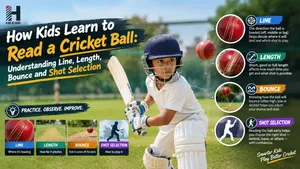 How Kids Learn to Read a Cricket Ball: Understanding Line, Length, Bounce and Shot SelectionLearn how kids can read a cricket ball by understanding line, length, bounce and shot selection to develop better batting skills and confidence.
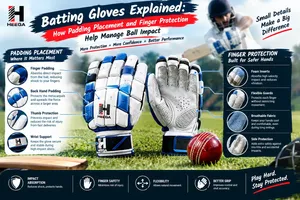 Batting Gloves Explained: How Padding Placement and Finger Protection Help Manage Ball ImpactLearn how batting glove padding placement, finger protection, and fit help manage ball impact. Find practical tips for choosing cricket batting gloves.
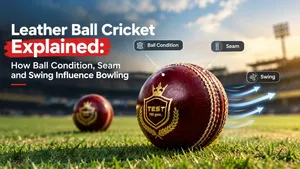 Leather Ball Cricket Explained: How Ball Condition, Seam and Swing Influence BowlingLearn how leather ball cricket works and how ball condition, seam position, shine, and swing influence bowling accuracy, movement, and performance.