How Batting Gloves Affect Your Cricket Performance

Introduction: Batting Gloves Are More Than Protection
When choosing cricket equipment, players usually spend considerable time selecting a bat.
They compare willow, weight, edges, spine, profile, and balance.
Batting gloves often receive much less attention.
But once a batter steps onto the field, their gloves are in constant contact with the bat.
Every defensive shot, drive, cut, pull, sweep, and attacking stroke depends on the hands maintaining control.
That makes batting gloves an important part of the connection between the player and the bat.
A good pair of gloves can provide a combination of:
- Grip
- Comfort
- Protection
- Flexibility
- Shock absorption
- Secure fit
- Breathability
The purpose is not simply to protect the hands.
The gloves should allow the player to hold and control the bat naturally while dealing with the forces created when the ball makes contact.
Why Hands Matter So Much in Batting
The hands play a central role in batting.
They help control:
- Bat angle
- Swing direction
- Shot placement
- Timing
- Power
- Follow-through
Even a technically strong player can struggle if their gloves are uncomfortable or their grip feels unreliable.
The Connection Between Gloves and Bat Control
A batter holds the bat through the grip.
The gloves sit between the hands and the handle.
This creates a simple but important connection:
Hands → Gloves → Bat Handle → Bat → Ball
Every part of this chain influences the overall feel.
Grip Is One of the Most Important Features
A batting glove should allow the player to maintain a secure hold on the bat.
The palm material and glove construction can influence how the handle feels.
Why Grip Matters During a Swing
A cricket bat moves quickly during a shot.
The hands need to control that movement without unnecessary slipping.
A reliable grip can help the batter maintain control throughout the swing.
Sweat Can Change Grip
Long innings and hot conditions can cause the hands to sweat.
Moisture can change how the glove feels against the bat handle.
This is why ventilation and suitable palm materials can be valuable.
Why Moisture Management Matters
If gloves become excessively damp, they may feel uncomfortable and less secure.
Players who regularly play in warm conditions should pay particular attention to breathability and moisture management.
Batting Gloves Provide Protection
A cricket ball can travel at considerable speed.
The hands are therefore vulnerable when batting.
Batting gloves use protective components to reduce the impact from accidental contact.
What Areas Do Batting Gloves Protect?
Depending on the design, protection can cover areas such as:
- Fingers
- Knuckles
- Back of the hand
- Thumb
- Side of the hand
Finger Protection Is Especially Important
The fingers are among the most exposed parts of the hands.
Modern batting gloves may incorporate protective sections designed to reduce impact from a ball.
Why Knuckle Protection Matters
The knuckles can also be exposed during certain impacts.
Protective inserts can provide an additional layer between the hand and the ball.
Protection Should Not Eliminate Flexibility
A glove covered with rigid protection may not feel comfortable if it restricts natural hand movement.
Good glove design aims to balance protection with flexibility.
Why Flexibility Matters
Batting involves continuous hand movement.
The fingers and wrists need to move naturally while the player:
- Changes bat angle
- Rotates the wrists
- Adjusts grip pressure
- Plays different shots
Batting Gloves and Grip Pressure
Not every shot requires the same grip pressure.
A batter may hold the bat more softly during a defensive stroke and apply greater force during an attacking shot.
Comfortable gloves can make these adjustments easier.
Why a Natural Grip Is Important
Players should not feel as though their gloves are forcing their hands into an unnatural position.
The glove should support the player's technique rather than interfere with it.
Glove Size Can Affect Performance
One of the most important factors when choosing batting gloves is size.
A glove should fit securely while allowing normal movement.
What Happens If Gloves Are Too Large?
Oversized gloves may:
- Move around the hand
- Reduce precision
- Create excess material
- Feel unstable
- Affect bat control
What Happens If Gloves Are Too Small?
Gloves that are too tight can:
- Restrict movement
- Create pressure
- Reduce comfort
- Cause unnecessary hand fatigue
Why Finger Length Matters
The fingers should sit naturally inside their protective sections.
If the glove is too short or too long, the protective areas may not align properly.
The Thumb Needs Proper Protection
The thumb is involved in maintaining the bat grip and can be exposed to impact.
A suitable glove should provide comfortable thumb protection without restricting movement.
Wrist Fit Also Matters
Many batting gloves use adjustable wrist closures.
A secure wrist fit helps keep the glove properly positioned.
Why Loose Wrist Closures Can Be Annoying
If the glove shifts during a swing, the batter may become distracted.
A secure closure helps maintain a consistent fit.
Why Comfort Matters During a Long Innings
Cricket innings can last for extended periods.
A batter may remain at the crease for a considerable amount of time.
Small discomforts can become increasingly noticeable.
Pressure Points Can Become Distractions
A glove may initially feel comfortable but create pressure after prolonged use.
Players should test gloves during training before using them in important matches.
Batting Gloves and Shock Absorption
When the bat strikes the ball, vibrations can travel through the blade and handle.
The gloves provide an additional layer between the hands and the bat.
Why Shock Management Matters
Repeated vibration can contribute to discomfort, particularly during long batting sessions.
Glove padding and construction can influence how the impact feels.
The Bat Handle Still Plays a Major Role
Gloves are not responsible for managing every vibration.
The bat's handle, grip, willow construction, and overall design also influence how impact is transmitted.
Gloves and Bat Handles Work Together
The combination matters.
A comfortable handle with an appropriate grip and well-fitting gloves can create a more natural connection between the player and the bat.
Palm Material Can Change the Feel
Different batting gloves use different materials and textures on the palm.
The objective is usually to provide a combination of:
- Grip
- Durability
- Comfort
- Flexibility
Leather Palms
Leather can provide a traditional feel and durability depending on its quality and construction.
Synthetic Palms
Synthetic materials can offer different combinations of flexibility, grip, durability, and moisture management.
Why There Is No Single Best Palm Material
Players have different preferences.
The best option is the one that provides the desired combination of grip and comfort for the player's conditions.
Batting Gloves and Batting Style
Different players use different techniques.
Some rely heavily on wrist work.
Others prefer a firmer grip.
Some play with soft hands.
Others generate significant bat speed.
Why Wristy Players May Notice Glove Flexibility
Players who use their wrists extensively may prefer gloves that allow natural movement.
Power Hitters May Notice Protection and Stability
Players who regularly play aggressive shots may place different demands on their gloves.
Secure fit and impact protection can become particularly important.
Gloves and Different Cricket Formats
Batting gloves are used across:
- Test cricket
- One-day cricket
- T20 cricket
- Club cricket
- Academy cricket
- Recreational cricket
The playing format can influence how long gloves are worn and how much stress they experience.
Longer Matches Increase Comfort Demands
In longer formats, players may spend hours wearing their gloves.
Comfort and breathability become increasingly important.
T20 Cricket Can Demand Quick Adjustments
Short-format cricket often involves aggressive batting and rapid decision-making.
Players need equipment that feels secure and responsive.
Why Training Gloves Matter
Players should not think of gloves only as match equipment.
Training can involve thousands of repetitions.
That makes durability important.
Training Creates Repeated Wear
Regular practice can cause wear around:
- Palms
- Finger sections
- Thumb
- Wrist closure
- Stitching
Why Players Should Inspect Their Gloves
Before training or competition, check for:
- Torn material
- Loose stitching
- Damaged protection
- Worn palms
- Weak wrist closures
When Should Batting Gloves Be Replaced?
There is no universal replacement schedule.
Players should assess their gloves based on condition and usage.
Replace them when protection, fit, grip, or structural integrity has noticeably deteriorated.
Why Damaged Protection Should Not Be Ignored
If protective inserts are damaged or displaced, the glove may no longer provide the intended protection.
Players should follow the manufacturer's guidance.
Batting Gloves Need Proper Care
Good care can help maintain glove condition.
Players should:
- Air gloves after use
- Keep them dry
- Avoid storing them while damp
- Follow manufacturer cleaning instructions
- Store them in a ventilated kit bag
Why You Should Not Leave Wet Gloves in a Closed Bag
Sweaty gloves can retain moisture.
Keeping them inside a closed kit bag for long periods can create unpleasant odors and may contribute to material deterioration.
Dry Gloves Naturally
Excessive heat can damage certain materials.
Allow gloves to dry naturally unless the manufacturer recommends another method.
Why Players Should Carry a Spare Pair
Players who train or compete frequently may benefit from carrying spare gloves.
A second pair can be useful if the primary gloves become:
- Wet
- Damaged
- Uncomfortable
Batting Gloves and Match Preparation
Equipment preparation should happen before the match begins.
Players should check:
- Gloves
- Bat
- Pads
- Helmet
- Shoes
- Abdominal guard
- Kit bag
Why Gloves Should Be Tested Before Match Day
A player should already know how the gloves feel.
Trying a completely new pair during an important match can create unnecessary distractions.
Breaking In New Batting Gloves
Some gloves may feel slightly stiff when new.
Regular practice can help players become comfortable with their movement and fit.
Why Players Should Avoid Excessive Modification
Players sometimes alter equipment to achieve a preferred feel.
Any modification should be safe and consistent with the manufacturer's instructions and competition regulations.
Batting Gloves and Hand Fatigue
Poorly fitting gloves can contribute to discomfort during long sessions.
If the gloves restrict movement or create pressure, the player may become fatigued more quickly.
Why Comfortable Gloves Help Concentration
Cricket requires constant decision-making.
A batter needs to focus on:
- Bowling speed
- Line
- Length
- Field placement
- Shot selection
Equipment discomfort can become an unnecessary distraction.
Gloves and Confidence
Confidence at the crease comes primarily from skill, preparation, and experience.
However, familiar equipment can contribute to a player's sense of readiness.
Why Familiar Gloves Can Feel Better
Players often develop preferences based on what they have used repeatedly.
A familiar pair can provide a predictable feel during the innings.
Batting Gloves Are Not a Substitute for Technique
It is important to maintain realistic expectations.
Better gloves cannot fix:
- Poor footwork
- Incorrect bat swing
- Weak timing
- Poor shot selection
Gloves support technique.
They do not replace it.
Why Equipment Should Complement Skill
The best equipment choices make it easier for players to use their existing skills comfortably.
Batting Gloves and Protective Equipment
Gloves are only one part of a batter's protective setup.
A complete setup may include:
- Helmet
- Batting pads
- Abdominal guard
- Thigh protection
- Arm protection
- Chest protection
- Inner gloves
Why Complete Protection Matters
Cricket involves fast-moving equipment and significant physical demands.
Players should use appropriate protective equipment according to their playing environment and level.
Choosing Gloves According to Your Level
Beginners may prioritize:
- Comfort
- Basic protection
- Fit
- Affordability
Club players may look for:
- Better durability
- Enhanced protection
- Improved grip
Advanced players may have highly specific preferences.
Why Price Alone Should Not Decide
An expensive glove is not automatically the right glove for every player.
The most important factors are:
- Fit
- Protection
- Comfort
- Grip
- Construction
- Suitability for the player's needs
How to Test Batting Gloves
Before buying, players should perform a few simple checks.
Step 1: Wear Both Gloves
Check whether both hands feel comfortable.
Step 2: Close the Wrist Straps
Make sure the closure secures the gloves without excessive pressure.
Step 3: Hold Your Bat
Use your normal bat and grip.
Step 4: Perform Shadow Shots
Try several movements.
Step 5: Check Finger Movement
Make sure the fingers can move naturally.
Step 6: Check Protection
Make sure protective sections sit correctly.
Step 7: Compare With Another Pair
If possible, try different models.
Why Testing With Your Own Bat Helps
The same glove can feel different depending on the bat handle and grip.
Using your own bat provides a more realistic test.
Common Batting Glove Mistakes
Choosing the Wrong Size
Poor fit can affect comfort and control.
Buying Only for Appearance
Looks should not be the main deciding factor.
Ignoring Palm Wear
A heavily worn palm may affect grip.
Using Damaged Protection
Protection should be checked regularly.
Storing Gloves While Wet
This can contribute to unpleasant odors and material problems.
Using New Gloves Without Practice
Always test them before competition.
How Heega Sports Supports Batters
At Heega Sports, we understand that batting performance depends on the complete equipment setup.
Our cricket range includes:
- Batting gloves
- Inner gloves
- Kashmir Willow cricket bats
- English Willow cricket bats
- Batting pads
- Cricket helmets
- Abdominal guards
- Thigh protection
- Leather cricket balls
- Practice balls
- Cricket shoes
- Cricket socks
- Cricket kit bags
- Practice nets
- Training accessories
The right combination of equipment helps players train and compete with greater comfort and confidence.
Batting Gloves in Different Cricket Environments
Cricket is played across diverse conditions in Nepal, Germany, the United States, Canada, the Netherlands, and the United Kingdom.
Players may experience differences in:
- Temperature
- Humidity
- Playing surfaces
- Match duration
- Training facilities
These factors can influence glove preferences.
Nepal
Warm outdoor conditions can increase sweating.
Players may therefore place greater importance on breathable gloves and moisture management.
Germany
Seasonal changes can mean players move between outdoor and indoor training environments.
Glove selection should reflect the player's primary playing conditions.
United States
Players may experience a broad range of climates.
Comfort, grip, and breathability can be important considerations depending on local conditions.
Canada
Players may train indoors during colder periods and play outdoors during the warmer season.
Having gloves suited to regular training demands can be useful.
Netherlands
Cooler and wetter weather can create different equipment challenges.
Players should keep gloves dry and properly stored after outdoor sessions.
United Kingdom
Changing weather conditions can make moisture management and glove care particularly important.
The Future of Batting Gloves
Batting glove technology continues to develop.
Future designs may focus on:
- Lighter protective materials
- Better ventilation
- Improved impact management
- More ergonomic finger protection
- Improved palm durability
- Personalized fit
Manufacturers will continue trying to balance protection with comfort and flexibility.
Final Thoughts
Batting gloves may look like a relatively simple part of cricket equipment, but they play an important role in the connection between a player and their bat.
They help protect the hands while supporting grip, comfort, control, and confidence.
The best gloves are not necessarily the most expensive or the most heavily padded.
They are the ones that fit properly, provide suitable protection, allow natural movement, and give the player confidence when holding the bat.
Players should therefore consider:
- Fit
- Finger protection
- Thumb protection
- Palm material
- Grip
- Flexibility
- Ventilation
- Durability
- Playing conditions
A batter should be able to concentrate on reading the bowler, watching the ball, and choosing the right shot—not worrying about uncomfortable equipment.
The bat may make contact with the ball, but the hands control the bat. And batting gloves help protect and support that critical connection.
🏏 Upgrade Your Batting Setup With Heega Sports
Explore batting gloves, inner gloves, Kashmir Willow and English Willow cricket bats, batting pads, helmets, abdominal guards, leather balls, practice balls, cricket shoes, socks, kit bags, practice nets, and training accessories at Heega Sports.
Shop Now
Heega Sports – Helping Players Grip Better, Stay Protected, and Bat With Confidence.
Related posts
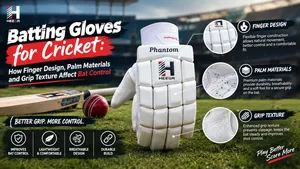 Batting Gloves for Cricket: How Finger Design, Palm Materials and Grip Texture Affect Bat ControlDiscover how cricket batting gloves, finger design, palm materials and grip texture influence bat control, comfort, protection and batting performance.
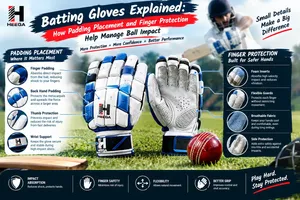 Batting Gloves Explained: How Padding Placement and Finger Protection Help Manage Ball ImpactLearn how batting glove padding placement, finger protection, and fit help manage ball impact. Find practical tips for choosing cricket batting gloves.
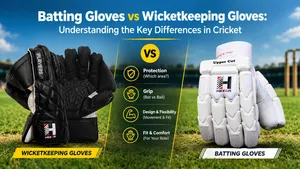 Batting Gloves vs Wicketkeeping Gloves: Understanding the Key Differences in CricketLearn the key differences between batting gloves and wicketkeeping gloves, including protection, grip, flexibility, design, fit, and their role in cricket.