How Cricket Ball Swing Works: What Makes the Ball Move in Air.

Introduction: When a Cricket Ball Moves Without Touching the Bat
One of the most fascinating things in cricket is watching a ball change direction before it reaches the batter.
A fast bowler runs in.
The ball leaves the hand.
For a moment, it appears to be travelling in a straight line.
Then it moves.
Sometimes the movement is subtle.
Sometimes it is enough to beat the outside edge completely.
To a new cricket fan, swing can look almost mysterious.
How does a ball move sideways while travelling forward?
There is no trick involved.
The movement comes from the interaction between the cricket ball, its seam, surface condition, speed, and the airflow around it.
Bowlers spend years learning how to control these factors.
They adjust their grip.
They change the seam angle.
They polish one side.
They vary their release.
They work on wrist position.
And they learn to read the conditions.
Swing bowling is therefore much more than simply bowling fast.
It is a combination of technique, ball condition, atmospheric conditions, and careful control.
Understanding the science behind it can also help players appreciate why some deliveries appear to move dramatically while others barely move at all.
What Is Swing Bowling?
Swing bowling is the sideways movement of a cricket ball through the air.
The ball travels toward the batter while also moving laterally.
This movement happens before the ball reaches the pitch.
That makes swing different from seam movement and spin.
With swing, the ball changes direction while travelling through the air.
With seam movement, the ball changes direction mainly after hitting the surface.
With spin, the bowler deliberately rotates the ball to influence its movement after pitching and sometimes its trajectory through the air.
A skilled fast bowler can use all three forms of movement as part of a broader bowling strategy.
Why Does a Cricket Ball Swing?
The basic explanation involves airflow.
As a ball travels through the air, air moves around its surface.
A cricket ball has a seam running around its circumference.
The seam creates an important difference between the two sides of the ball.
When the ball is held and released with the seam at an angle, the airflow around the two sides can behave differently.
That difference contributes to a sideways force.
The ball then moves toward one side.
This is the basic principle behind conventional swing.
However, real-world swing bowling is more complicated than a simple diagram suggests.
Ball speed, seam angle, surface condition, release position, atmospheric conditions, and turbulence can all influence what happens.
The Seam Is One of the Bowler's Most Important Tools
Look closely at a cricket ball.
You will notice the raised seam running around its middle.
For a swing bowler, this seam is extremely important.
The bowler can position it so that it points at a particular angle during flight.
The seam helps influence how air moves around the ball.
A small change in seam position can therefore change the delivery.
This is why fast bowlers spend so much time practicing their wrist and seam control.
A bowler who cannot consistently control the seam will often struggle to reproduce the same movement from ball to ball.
Seam Position and Wrist Position Work Together
Holding the seam correctly is only part of the process.
The wrist must also remain stable.
A bowler generally wants the seam to leave the hand in a controlled position.
If the wrist collapses at release, the seam may wobble.
That can reduce the intended movement.
This is why coaches often work on:
- Wrist stability
- Seam alignment
- Finger position
- Release point
- Follow-through
The objective is repeatability.
A bowler does not want one brilliant swinging delivery followed by five deliveries with no control.
Consistency is what makes swing bowling dangerous.
What Is Conventional Swing?
Conventional swing is generally associated with a newer cricket ball.
The ball usually has a relatively pronounced seam and a smooth surface.
The bowler positions the seam at an angle and attempts to maintain a difference in airflow around the two sides.
The result is movement through the air.
Both right-arm and left-arm bowlers can produce conventional swing.
The direction depends on how the ball is held, the seam is angled, and which side is presented to the airflow.
Inswing and Outswing
There are two familiar types of conventional swing.
Inswing
The ball moves toward the batter's body.
For a right-handed batter, a right-arm bowler can attempt to bring the ball into the batter.
This can create opportunities for:
- Bowled dismissals
- Leg-before-wicket decisions
- Inside edges
- Mistimed shots
Outswing
The ball moves away from the batter.
Against a right-handed batter, a right-arm bowler can attempt to move the ball toward the off side.
Outswing is particularly dangerous because it can draw the batter into playing at a delivery outside off stump.
The outside edge then becomes a possibility.
Why Outswing Can Be So Effective
Imagine a batter expecting the ball to come toward the stumps.
The bowler releases what initially looks like a good-length delivery.
As it approaches, the ball moves away.
The batter may follow it with the bat.
The result can be a thin edge toward the wicketkeeper or slips.
This is one reason swing bowling is so closely associated with attacking fielding positions.
A captain may place several fielders in catching positions when a bowler is generating significant movement away from the bat.
Why Inswing Creates Different Problems
Inswing attacks the batter from the opposite direction.
Instead of tempting the batter away from the body, the delivery moves toward the stumps.
The batter has less room to leave it.
If the ball swings late, the batter may misjudge where it will arrive.
This can create opportunities for:
- Bowled
- LBW
- Inside edge
- Mistimed defensive shots
Good inswing bowling can therefore attack both the batter and the stumps.
Late Swing Is Especially Dangerous
One of the most difficult deliveries to face is one that moves late.
If a batter sees the ball moving in one direction early, they may begin preparing for the expected line.
If the ball then swings late, their original decision may become incorrect.
The later the movement becomes, the less time the batter has to adjust.
This is why good swing bowling can feel faster than the speed shown on a scoreboard.
The batter is not only reacting to pace.
They are also reacting to changing trajectory.
How Does Ball Shine Affect Swing?
Ball maintenance is an important part of swing bowling.
Players traditionally polish one side of the ball while allowing the other side to become rougher.
The objective is to create different surface conditions.
A smoother side can interact with airflow differently from a rougher side.
This can influence swing.
That is why fielders may carefully polish the ball during an innings.
However, the ball must be maintained within the laws and playing regulations of the competition.
Artificial substances or prohibited methods should never be used to manipulate the ball.
Why Bowlers Polish Only One Side
During a match, the ball naturally becomes older.
One side can remain relatively smooth if players consistently polish it.
The other side gradually becomes rough.
This creates an asymmetry in surface condition.
The bowler can then attempt to use that difference to generate movement.
Fielders often polish the same side repeatedly.
You may see a player rubbing the ball against their clothing before returning it to the bowler.
This familiar sight is part of traditional cricket.
Does Sweat Help Ball Maintenance?
Players naturally use sweat and approved methods to maintain the ball's surface.
Historically, fielders have polished the ball against their clothing.
The important principle is that ball care must remain within the rules of the competition.
The purpose is to maintain the legal condition of the ball rather than artificially alter it.
What Is Reverse Swing?
Reverse swing is a different phenomenon.
It tends to become more relevant as the ball gets older.
Instead of behaving like a typical new-ball swinging delivery, an older ball can begin moving in the opposite direction under suitable conditions.
This can surprise batters.
A player who expects the ball to move one way may suddenly see it move the other way.
Reverse swing became one of the most feared weapons of elite fast bowling.
Why Reverse Swing Is So Difficult to Face
Reverse swing can happen at high pace.
That combination creates a serious challenge.
The batter has to judge:
- Speed
- Line
- Length
- Seam
- Swing direction
all within a very short period.
If the ball changes direction late, there may be almost no time to correct the shot.
This is why experienced batters pay close attention to the bowler's wrist, seam, and release.
What Happens as the Ball Gets Older?
A cricket ball changes throughout an innings.
The surface becomes worn.
The seam gradually changes.
The ball can develop scratches and rough areas.
Its behavior can therefore change as well.
This is one reason bowling strategies often evolve during a match.
A delivery that works beautifully with a new ball may not behave the same way later.
Experienced bowlers learn to adapt.
Ball Condition Can Influence Bowling Strategy
Fast bowlers constantly assess the condition of the ball.
They may look at:
- Seam condition
- Smooth side
- Rough side
- General wear
- Surface moisture
- Shape
The ball's condition can influence which type of delivery they attempt.
Good bowlers do not simply repeat the same plan throughout an innings.
They adapt to what the ball is offering.
What Role Does Bowling Speed Play?
Speed can influence swing.
However, bowling faster does not automatically mean generating more swing.
A bowler needs to balance:
- Pace
- Seam control
- Wrist position
- Release
- Line
- Length
A bowler who increases speed but loses seam control may actually become less effective.
This is why developing fast bowling should not be reduced to trying to bowl as fast as possible.
Seam Bowling and Swing Bowling Are Not the Same
These two types of movement are often confused.
Swing occurs while the ball is travelling through the air.
Seam movement generally occurs when the ball hits the pitch and deviates after bouncing.
A delivery can produce both.
For example, a bowler may swing the ball away from a right-handed batter and then find the seam move it even farther after pitching.
That can create a particularly difficult delivery.
Swing Conditions Can Vary
Swing bowling does not happen in exactly the same way at every ground.
Conditions can influence how the ball behaves.
Bowlers may consider:
- Humidity
- Wind
- Temperature
- Cloud cover
- Pitch conditions
- Ball age
These factors do not guarantee swing.
But they can influence the environment in which a bowler is trying to create movement.
Why Cloudy Conditions Are Often Associated With Swing
Cricket fans often associate overcast conditions with swing bowling.
There is a long-standing belief that cloudy weather can create favorable conditions for movement.
However, swing is not caused simply by clouds.
Airflow, humidity, ball condition, seam position, speed, and release all interact.
A bowler can produce swing under clear skies as well.
The conditions are only one part of the equation.
Wind Can Change How the Ball Behaves
Wind creates another variable.
A strong crosswind can influence the ball's trajectory.
Bowlers may sometimes use the wind strategically by changing their angle or seam presentation.
However, wind does not replace proper swing technique.
A bowler still needs a controlled release.
Why Some Cricket Balls Swing More Than Others
Not every ball behaves identically.
Differences can exist in:
- Construction
- Seam
- Leather
- Surface finish
- Age
- Wear
The ball's condition during the match is particularly important.
A new ball with a pronounced seam may offer different movement from an older, heavily worn ball.
This is one reason professional bowlers pay so much attention to the ball.
How the Bowler's Grip Affects Swing
Grip is the starting point.
A typical fast-bowling grip places the index and middle fingers around the seam.
The thumb provides support underneath.
The exact grip varies between bowlers and delivery types.
For swing bowling, the seam must be controlled during release.
Even small changes in finger pressure can influence how the ball comes out.
Finger Pressure Can Change the Release
The fingers do not simply hold the ball.
They help guide it.
A bowler may adjust pressure between the fingers to influence seam orientation.
However, beginners should avoid trying to copy advanced techniques without proper coaching.
A stable basic grip is more valuable than complicated experimentation.
Wrist Position Is Critical
A stable wrist helps the bowler control the seam.
At release, the wrist should support the intended orientation rather than allowing the ball to wobble excessively.
This is one reason fast bowlers spend so much time on technical drills.
The goal is to make the desired release repeatable.
The Run-Up Also Matters
Swing begins with the ball, but the delivery starts much earlier.
A consistent run-up helps a bowler arrive at the crease in a repeatable position.
Good rhythm can support:
- Balance
- Momentum
- Coordination
- Release consistency
If the run-up changes constantly, the final delivery can change too.
Why Line and Length Still Matter
Swing alone does not make a bowler effective.
The ball still needs to be delivered in a useful area.
A swinging ball that is too wide may simply be left.
A swinging ball that is too short may be attacked.
A swinging ball that is too full may become a scoring opportunity.
This is why elite swing bowlers combine movement with disciplined line and length.
Swing Bowling Against Different Batters
Batting style can influence how a bowler uses swing.
A batter who leaves the ball well may require a different approach.
An aggressive batter may need to be challenged with changes of line.
A batter strong on the front foot may be tested with fuller swinging deliveries.
The bowler should constantly look for weaknesses.
Swing is a weapon.
The bowler still needs a plan for using it.
Why Swing Can Create Catching Opportunities
When the ball moves away from the bat, the outside edge becomes a possibility.
That is why captains often place fielders at:
- First slip
- Second slip
- Third slip
- Gully
depending on the situation.
A good swinging delivery can therefore create a chain reaction:
Seam position → Air movement → Swing → Batting uncertainty → Edge → Catching opportunity
The bowler creates the problem.
The fielders complete the dismissal.
The Importance of the Wicketkeeper
The wicketkeeper also has an important role.
A swinging ball can move late.
The keeper needs to anticipate the likely direction while remaining ready for deviation.
Good communication between the bowler, wicketkeeper, and captain can help create an effective fielding plan.
Swing bowling is rarely an individual effort.
It is part of a team strategy.
Why Left-Arm and Right-Arm Swing Can Feel Different
The angle of the bowler changes the batter's perspective.
A left-arm bowler can create different angles into and away from the batter compared with a right-arm bowler.
This can make swing particularly interesting when the bowling angle changes.
Batters may need to adjust their stance, guard, and decision-making accordingly.
Swing Bowling in Test Cricket
Swing has historically been an important part of Test cricket.
Longer matches give bowlers many opportunities to work with the ball as it changes condition.
A new ball can offer conventional swing.
Later, an older ball may offer different movement.
Bowlers can therefore use changing ball behavior as the innings develops.
This is one reason the contest between bat and ball can become so interesting over long periods.
Swing in Limited-Overs Cricket
Swing is also important in limited-overs cricket.
In shorter formats, bowlers have fewer opportunities to build a long spell.
That makes early movement particularly valuable.
A bowler may use swing during the opening overs to challenge batters before they settle.
Later in an innings, other skills such as yorkers, slower balls, cutters, and changes of pace may become more important.
Swing in T20 Cricket
T20 cricket creates a different tactical environment.
Batters are often looking to score quickly.
Bowlers therefore need to make movement count.
Even a small amount of swing can become valuable if it forces a batter to mistime an attacking shot.
Swing can also be used alongside changes of pace and variations.
The objective is not always to produce dramatic movement.
Sometimes a few inches are enough.
Can Beginners Learn Swing Bowling?
Yes.
But beginners should focus on fundamentals first.
Start with:
- Correct grip
- Stable wrist
- Consistent run-up
- Controlled release
- Basic seam position
- Good line and length
Do not worry about producing huge swing immediately.
A delivery that moves slightly but lands accurately is more useful than a delivery that swings dramatically but goes too far outside the batter's reach.
Simple Swing Bowling Practice Drills
Players can work on swing through controlled practice.
Seam Alignment Drill
Practice releasing the ball with the seam pointing consistently.
Target Drill
Place a target near the desired line and length.
Wrist Stability Drill
Practice the release without allowing the wrist to collapse.
One-Side Maintenance Drill
Use a suitable practice ball and learn how controlled surface awareness affects your understanding of the ball.
Net Practice
Combine seam position with actual batting situations.
The objective is repeatability.
Why Young Bowlers Should Not Chase Speed Alone
Young fast bowlers often want to bowl as quickly as possible.
Speed is exciting.
But control should come first.
A young player should develop:
- Balance
- Coordination
- Safe mechanics
- Seam control
- Accuracy
before aggressively increasing workload or speed.
Qualified coaching is especially important when developing fast bowling technique.
The Batter Can Also Learn to Read Swing
Swing bowling is not only about the bowler.
Batters can learn to recognize clues.
They may watch:
- Seam position
- Wrist position
- Release angle
- Bowler's arm path
- Ball condition
No clue guarantees the direction of movement.
But observation can help a batter make better decisions.
The contest between swing bowler and batter is therefore partly a battle of information.
Why Playing the Ball Late Can Help
Against significant swing, batters often need to avoid committing too early.
Waiting for the ball can give them more information about its final movement.
This can help them decide whether to:
- Leave
- Defend
- Drive
- Adjust the bat face
Good judgment is one of the most important batting skills against swing.
Why Swing Bowling Rewards Patience
A swing bowler may not get a wicket immediately.
They may bowl several deliveries that beat the bat without finding an edge.
The key is patience.
If the bowler continues creating pressure with good line and length, the batter may eventually make a mistake.
Swing bowling is often about building uncertainty.
Common Misconceptions About Swing
“Fast Bowling Automatically Creates Swing”
Not necessarily.
Seam control and release are important.
“Clouds Cause Swing”
Weather is only one factor.
“Old Balls Always Reverse Swing”
Reverse swing depends on several conditions.
“More Swing Is Always Better”
Not if the ball is too wide or too short to threaten the batter.
“Swing and Seam Are the Same”
They are different types of movement.
Understanding these differences helps players improve their cricket knowledge.
How Cricket Ball Quality Can Influence Practice
Players learning swing bowling need consistent practice equipment.
A suitable cricket ball should allow them to develop an understanding of:
- Seam position
- Grip
- Release
- Line
- Length
- Movement
Match balls and training balls may behave differently, so players should understand what type of ball they are using.
The goal during training is to develop repeatable skills that can later transfer into competitive cricket.
Why Ball Maintenance Is Part of Bowling Preparation
A bowler cannot control the condition of the ball completely.
But fielders and bowlers can take care of it within the laws of the game.
Good ball handling includes:
- Keeping the ball clean
- Polishing it legally
- Avoiding unnecessary damage
- Monitoring its condition
This becomes particularly important during longer spells.
Swing Bowling Is a Combination of Science and Skill
The science explains why the ball can move.
The bowler's skill determines whether that movement can be used effectively.
A player needs to combine:
Grip + Seam + Wrist + Release + Speed + Line + Length + Conditions
None of these factors works completely on its own.
A technically sound bowler learns how they interact.
Why Swing Makes Cricket So Interesting
Cricket is often described as a contest between bat and ball.
Swing bowling captures that contest perfectly.
The batter sees the ball leave the bowler's hand.
They make a decision.
The ball then changes its path.
Suddenly, the decision has to change.
That uncertainty is what makes swing so effective.
The batter is not simply reacting to where the ball started.
They are reacting to where they expect it to finish.
How Heega Sports Supports Cricket Players
At Heega Sports, we understand that players need reliable equipment to develop their skills.
Our cricket range includes:
- Cricket bats
- Kashmir Willow bats
- English Willow bats
- Junior cricket bats
- Leather cricket balls
- Practice cricket balls
- Batting gloves
- Batting pads
- Cricket helmets
- Cricket shoes
- Cricket kit bags
- Practice nets
- Training accessories
- Cricket bat care products
Whether you are a young player learning the basics of swing bowling or an experienced cricketer preparing for competitive matches, suitable equipment can make regular practice more productive.
A Simple Checklist for Learning Swing Bowling
Before every practice session, bowlers can check:
- Is my grip comfortable?
- Is the seam positioned correctly?
- Is my wrist stable?
- Is my run-up consistent?
- Am I releasing the ball cleanly?
- Am I maintaining a good line?
- Is my length creating pressure?
- Am I watching the ball's condition?
- Am I adapting to the conditions?
- Am I focusing on control rather than dramatic movement?
These questions can help keep training focused.
Final Thoughts
Swing bowling is one of cricket's most fascinating skills because it combines physics with technique.
A cricket ball can travel forward while also moving sideways.
The seam, surface condition, airflow, release, speed, and environmental conditions all contribute to what happens in the air.
Conventional swing can help a new ball move into or away from the batter.
As the ball gets older, its behavior can change, and under suitable conditions, reverse swing can become a powerful weapon.
But swing is not simply about making the ball move as much as possible.
The best bowlers understand that movement becomes dangerous when it is combined with accuracy.
A ball that swings five inches but lands in the wrong place may not create a problem.
A ball that swings only a couple of inches at the right moment can produce an edge, an LBW opportunity, or a bowled dismissal.
That is the real beauty of swing bowling.
It turns small changes in trajectory into major problems for the batter.
For young bowlers, the journey should begin with the basics.
Learn the grip.
Control the seam.
Develop wrist stability.
Build a repeatable run-up.
Work on line and length.
Then gradually learn how different conditions and ball states influence movement.
For batters, understanding swing is equally valuable.
Watching the seam, observing the release, staying patient, and avoiding early commitments can make a difficult delivery easier to handle.
Ultimately, swing bowling is a conversation between the bowler and the batter.
The bowler asks a question with the delivery.
The batter has to find the right answer before the ball reaches the bat.
Sometimes that answer is a leave.
Sometimes it is a defensive shot.
And sometimes, the ball moves just enough to beat the bat completely.
That small movement is what makes swing bowling such an important and exciting part of cricket.
🏏 Train Your Cricket Skills With Heega Sports
Explore cricket bats, Kashmir Willow bats, English Willow bats, leather cricket balls, practice balls, batting gloves, pads, helmets, cricket shoes, kit bags, practice nets, and training accessories for players at every level.
Shop Now
Heega Sports – Supporting Better Training, Better Equipment, and Better Cricket.
Related posts
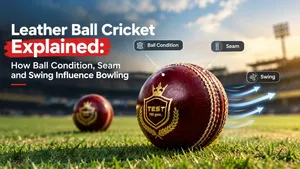 Leather Ball Cricket Explained: How Ball Condition, Seam and Swing Influence BowlingLearn how leather ball cricket works and how ball condition, seam position, shine, and swing influence bowling accuracy, movement, and performance.
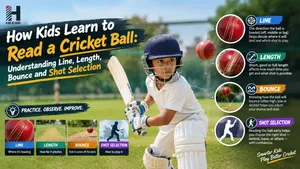 How Kids Learn to Read a Cricket Ball: Understanding Line, Length, Bounce and Shot SelectionLearn how kids can read a cricket ball by understanding line, length, bounce and shot selection to develop better batting skills and confidence.
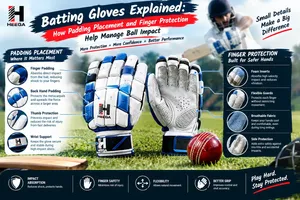 Batting Gloves Explained: How Padding Placement and Finger Protection Help Manage Ball ImpactLearn how batting glove padding placement, finger protection, and fit help manage ball impact. Find practical tips for choosing cricket batting gloves.