How Cricket Bat Balance Affects Pickup and Swing Speed.

Introduction: Why Two Bats of the Same Weight Can Feel Completely Different
When players compare cricket bats, one of the first things they usually check is weight.
A bat might be listed as 2lb 7oz.
Another might weigh 2lb 8oz.
A third could be 2lb 10oz.
It is easy to assume that the lighter bat will automatically feel easier to swing.
But cricket bat weight does not tell the whole story.
Two bats with almost identical weights can feel completely different in the hands.
One may feel quick and effortless.
Another may feel heavier and harder to move.
The reason is often balance and weight distribution.
Where the mass of a cricket bat is positioned can influence how it feels when you pick it up, move it into the backlift, and swing it toward the ball.
This feeling is commonly described as pickup.
For experienced players, pickup can be just as important as the number written on the weighing scale.
A batter who relies on quick hands may want a cricket bat that feels easy to maneuver.
A powerful player may prefer more mass through the blade.
Another player may want a balanced combination of control and hitting power.
There is no single balance that is perfect for everyone.
The best cricket bat is the one that works naturally with the player's technique, strength, and playing style.
What Does Balance Mean on a Cricket Bat?
Balance refers to how the bat's weight is distributed along its length.
Imagine holding a cricket bat around the handle.
The bat does not necessarily feel the same throughout its blade.
Depending on its design, more of its mass may be positioned:
- Closer to the handle.
- Around the middle of the blade.
- Toward the lower part of the blade.
This distribution changes how the bat feels when it is lifted and moved.
A bat can therefore have the same actual weight as another bat while having a completely different pickup.
That is why simply choosing the lightest bat is not always the right approach.
What Is Cricket Bat Pickup?
Pickup describes how a cricket bat feels when you lift and swing it.
Players often describe a bat as having:
- Light pickup.
- Quick pickup.
- Balanced pickup.
- Bottom-heavy pickup.
These descriptions are based on the player's experience rather than simply the bat's actual weight.
For example, a 2lb 8oz bat with excellent balance may feel easier to move than another 2lb 7oz bat with more weight concentrated toward the blade.
This is one of the reasons experienced batters often test bats before making a final decision.
Why Pickup Matters During the Backlift
The backlift is an important part of batting preparation.
Before playing a shot, the batter needs to bring the bat into a position from which they can respond to the delivery.
If the bat feels comfortable during this movement, the batter can prepare naturally.
If it feels unnecessarily heavy or awkward, the player may struggle to get the bat into position quickly.
A comfortable pickup can therefore support:
- Faster preparation.
- Better control.
- Smoother movement.
- More confidence.
- Consistent batting technique.
It does not guarantee better batting.
But equipment that feels natural can make skill execution easier.
Balance and Swing Speed
Swing speed is influenced by many factors.
These include:
- Player strength.
- Bat weight.
- Bat balance.
- Technique.
- Grip.
- Backlift.
- Timing.
- Physical conditioning.
Balance can affect how easily a player moves the bat through its swing path.
A bat that feels well suited to the player may allow smoother acceleration.
A bat that feels too blade-heavy can require more effort to move.
This is especially noticeable when a batter needs to react quickly.
Does a Lighter Bat Always Swing Faster?
Not necessarily.
This is an important point.
A lighter bat can be easier to control, but the player's experience depends on how the weight is distributed.
Consider two bats:
Bat A: 2lb 7oz with a comfortable balance.
Bat B: 2lb 6oz but with more mass toward the blade.
Some players may actually find Bat A easier to swing.
This is because perceived weight is affected by balance.
The number on the scale is important, but it is only one part of the equation.
Why Players Talk About "Feel"
Experienced cricketers often say:
"This bat feels right."
That statement can sound vague.
But there is a real reason behind it.
Players can notice differences in:
- Pickup.
- Balance.
- Handle feel.
- Blade movement.
- Grip comfort.
- Swing path.
After years of batting, these sensations become easier to recognize.
A player may reject a bat that looks excellent on paper simply because it does not feel natural in their hands.
Handle-Heavy Balance
Some bats feel relatively lighter toward the blade because their weight distribution is closer to the hands.
This type of balance can provide a quick and responsive feeling.
Players who rely on:
- Fast hands.
- Quick bat movement.
- Improvisation.
- Wrist work.
- Rapid shot adjustments.
may enjoy this type of pickup.
However, the exact feel depends on the complete bat design.
Blade-Heavy Balance
A blade-heavy cricket bat places more perceived mass toward the lower or middle section of the blade.
This can create a stronger feeling of mass during impact.
Some players like this because they enjoy the sensation of driving the bat through the ball.
It can be particularly attractive to players who prioritize:
- Power.
- Strong drives.
- Lofted shots.
- Boundary hitting.
But blade-heavy does not automatically mean more power.
If the player cannot move the bat efficiently, additional mass may become a disadvantage.
Mid-Balanced Cricket Bats
Some bats sit between these two extremes.
They offer a more neutral feeling.
A mid-balanced bat may appeal to players who want:
- Control.
- Versatility.
- Comfortable pickup.
- Good maneuverability.
- A broad range of shots.
This can be useful for club players and developing cricketers who face different bowling styles and playing conditions.
Balance and Batting Technique
Equipment should complement technique.
A technically sound batter often develops a repeatable backlift and swing.
If their cricket bat has a balance that matches their natural movement, the transition from preparation to shot can feel smoother.
On the other hand, if the bat is poorly suited to the player's strength and movement, they may compensate.
They might:
- Change their backlift.
- Grip the bat too tightly.
- Slow down the swing.
- Lose balance.
- Rely more heavily on their arms.
These adjustments can affect batting comfort.
The Connection Between Balance and Control
Control is one of the biggest benefits of choosing the right balance.
A batter needs to control the bat through different phases of a shot.
This includes:
- Preparation.
- Downswing.
- Contact.
- Follow-through.
If the bat feels manageable, the player can make small adjustments more easily.
This can be particularly important when the delivery does not arrive exactly where expected.
Balance Can Influence Shot Selection
A player's equipment can also influence which shots feel comfortable.
A batter who likes quick cuts and flicks may prefer a responsive pickup.
Someone who spends more time playing traditional drives may enjoy a different balance.
A power hitter may prefer more mass through the blade.
The important thing is to understand your own game.
Instead of asking which balance is "best," ask:
Which balance helps me play my regular shots comfortably?
Front-Foot Batters and Bat Balance
Front-foot players often rely on:
- Drives.
- On drives.
- Cover drives.
- Straight batting.
- Front-foot defense.
These shots require controlled bat movement.
Some front-foot players prefer a little more mass toward the hitting area because of the feeling it provides during impact.
Others prefer a lighter, faster pickup.
There is no fixed rule.
Technique and personal preference should guide the decision.
Back-Foot Batters and Pickup
Back-foot players often need quick reactions.
They may play:
- Cuts.
- Pulls.
- Back-foot punches.
- Square drives.
- Defensive shots against short bowling.
For these players, quick bat movement can be particularly useful.
A comfortable pickup may help them get the bat into position quickly.
But the ideal balance still depends on strength and technique.
Power Hitters Need More Than a Heavy Bat
Power hitting is often associated with heavy cricket bats.
But simply adding weight does not automatically increase performance.
A power hitter needs to move the bat efficiently.
If the bat becomes too heavy, the player may lose:
- Bat speed.
- Timing.
- Control.
- Endurance.
A slightly lighter bat with excellent pickup may produce better results than a heavier bat that the player struggles to control.
Timing Can Matter More Than Raw Power
Good timing allows the batter to transfer energy efficiently.
A well-timed shot can travel quickly without requiring extreme effort.
This is why players should not focus exclusively on hitting power.
A balanced cricket bat can help the player maintain control while generating sufficient bat speed.
The goal is efficiency.
Cricket Bat Balance and Defensive Shots
Defensive batting also requires control.
A batter may need to respond to a fast delivery with a compact defensive movement.
If the bat feels difficult to maneuver, even a defensive shot can become awkward.
A comfortable balance can make smaller movements easier.
This is particularly useful for players who spend long periods at the crease.
Balance During Different Shots
A cricket bat does not move exactly the same way during every shot.
A straight drive involves a different swing path from a pull.
A cut requires different wrist and body movement from a defensive block.
A lofted shot can require a longer follow-through.
The ideal bat should allow the player to move naturally through these different movements.
Versatility can therefore be more valuable than optimizing the bat for one single shot.
Bat Balance and Hand Position
The position of the player's hands also matters.
The top hand provides control.
The bottom hand can contribute to acceleration and shot direction.
If a player grips the bat incorrectly because it feels uncomfortable, the balance can become harder to manage.
This is another reason proper technique and equipment selection should work together.
Grip Can Change the Feeling of Balance
The grip is a small part of a cricket bat, but it can affect how the bat feels.
A thicker or thinner grip may change the player's connection with the handle.
Players may prefer different grip shapes and textures.
If the grip feels comfortable, the player can hold the bat naturally.
This can improve the overall experience of pickup and swing.
Bat Balance and Player Strength
Strength should always be considered when selecting a bat.
A strong adult player may be comfortable with a bat that feels too heavy for a younger player.
A junior batter may benefit from a lighter and more manageable design.
The goal is not to choose the heaviest cricket bat the player can lift.
The goal is to choose a bat they can control repeatedly.
Why Junior Players Should Be Careful With Bat Weight
Young players are still developing their strength and coordination.
An oversized or excessively heavy bat can make it difficult to learn proper technique.
A child may begin using their arms excessively simply because they cannot control the bat.
This can affect:
- Bat speed.
- Balance.
- Timing.
- Footwork.
- Confidence.
Correct sizing should therefore come before chasing performance specifications.
Balance Changes With Bat Size
Junior cricket bats and adult bats are designed differently.
Common junior sizes include:
- Size 3.
- Size 4.
- Size 5.
- Size 6.
- Harrow.
Adult bats commonly include:
- Short Handle.
- Long Handle.
As the player grows, their strength and preferred bat characteristics can change.
This is why equipment should be reassessed regularly.
Balance and the Sweet Spot
Sweet spot position and balance are closely connected.
The sweet spot refers to the part of the blade where well-struck contact can feel particularly clean.
Its position can influence how mass is distributed throughout the bat.
A low sweet spot can create a different overall balance from a high sweet spot.
This is one reason players should consider these specifications together rather than separately.
Balance and Spine Profile
The spine is another important part of bat design.
A pronounced spine can contribute to the distribution of wood through the blade.
Different profiles can create different pickup characteristics.
Two bats with similar weights may therefore feel very different because of their:
- Spine.
- Edges.
- Bow.
- Sweet spot.
- Overall profile.
The complete construction matters.
Balance and Bat Profile
Bat profile can influence the overall character of the cricket bat.
A bat may have:
- Large edges.
- A pronounced spine.
- A flatter face.
- A larger bow.
- A lower sweet spot.
- A higher sweet spot.
These features work together.
It is rarely useful to judge balance from one specification alone.
Does Balance Affect Power?
Balance can influence how easily a player generates bat speed and controls the swing.
But it does not create power by itself.
Power comes from the combination of:
Technique + Strength + Bat Speed + Timing + Quality of Contact
A well-balanced bat can help the player use these abilities efficiently.
That is very different from saying that balance makes a player powerful.
Balance and Long Innings
Batting for a long period can become physically demanding.
A bat that feels awkward can increase fatigue.
Players may start tightening their grip or changing their technique.
A comfortable pickup can make repeated swings feel more manageable.
For players who regularly play longer formats, comfort can become increasingly important.
Balance for T20 Cricket
T20 cricket often demands quick decision-making and aggressive stroke play.
Batters may need to:
- Score quickly.
- Change shots rapidly.
- Attack different areas.
- Use unconventional strokes.
- React to changing field placements.
For some players, quick pickup is therefore highly attractive.
However, T20 players still need control.
A cricket bat that swings quickly but cannot be controlled is not necessarily a good choice.
Balance for Test Cricket
Test cricket creates a different set of demands.
Players may spend hours at the crease.
They need to combine:
- Defense.
- Patience.
- Timing.
- Shot selection.
- Concentration.
A comfortable cricket bat can become an important part of that process.
Players may value balance and feel because they need to repeat controlled movements over a long period.
Balance for Club Cricket
Club cricket presents a mixture of conditions.
Players may face different pitches, bowlers, and match situations throughout a season.
A versatile cricket bat can therefore be useful.
A balanced design may allow players to:
- Defend.
- Drive.
- Cut.
- Pull.
- Rotate the strike.
- Attack when required.
This makes versatility a practical consideration for many club players.
How to Test Cricket Bat Balance
Whenever possible, test a bat before buying it.
Start by holding it normally.
Then try a few shadow movements.
Pay attention to:
- How easily the bat lifts.
- How the backlift feels.
- Whether the bat feels blade-heavy.
- How quickly it changes direction.
- Whether your hands feel comfortable.
- Whether you can control the bat without excessive effort.
Then imagine playing your regular shots.
Does the bat feel natural?
That answer can be more useful than a specification sheet.
A Simple Pickup Test
Try this simple approach.
Hold the bat as you normally would.
Lift it into your batting stance.
Move it through a slow backlift.
Then bring it forward as if playing a straight drive.
Repeat the movement several times.
Next, simulate a cut and pull shot.
If the bat consistently feels comfortable, the balance may suit you.
If you feel that you are fighting the bat, try another design.
Don't Choose a Bat Only Because It Feels Light
A very light pickup can feel exciting in the beginning.
The bat may move extremely quickly.
But players should also consider whether there is enough mass for their style.
A bat should provide a balance between:
- Speed.
- Control.
- Stability.
- Confidence.
- Suitable impact feel.
The lightest-feeling bat is not always the best-performing bat for a particular player.
Don't Choose a Bat Only Because It Is Heavy
The opposite mistake is also common.
Some players believe heavier bats automatically produce bigger shots.
But if the bat slows down the swing, the player may actually lose performance.
A bat should never become so heavy that the batter cannot maintain technique.
Comfort should come first.
Professional Players Have Individual Preferences
Professional cricketers often have very specific equipment preferences.
One player may prefer a lightweight bat with fast pickup.
Another may prefer more mass through the blade.
Another may prioritize a particular sweet spot and profile.
These differences demonstrate an important principle:
There is no universal perfect cricket bat.
Professional equipment is often chosen around the individual player.
Why Players Sometimes Change Bat Balance
A player may change their preferred balance as their game develops.
For example:
A young player may prefer a lightweight bat.
As they become stronger, they may move toward a slightly heavier design.
Later, they may develop a preference for a particular sweet spot or profile.
Their requirements can also change when they move between formats or playing conditions.
Equipment should evolve with the player.
Common Mistakes When Choosing Bat Balance
Choosing Only by Listed Weight
Weight does not tell you how the bat feels.
Choosing the Heaviest Bat
More mass is not automatically better.
Copying Another Player
Your strength and technique are different.
Ignoring Pickup
A bat can have excellent specifications but still feel uncomfortable.
Focusing Only on Power
Control and timing are equally important.
Buying Without Testing
Whenever possible, try the bat in your normal stance and swing.
How Heega Sports Helps Players Choose the Right Cricket Bat
At Heega Sports, we understand that every cricketer has different equipment requirements.
A junior player needs control and comfort.
A club batter may want versatility.
A power hitter may prefer a different combination of weight and pickup.
An experienced player may already know exactly how their ideal cricket bat should feel.
Our cricket range includes:
- Junior cricket bats.
- Size 3, 4, 5, and 6 bats.
- Harrow bats.
- Short Handle bats.
- Long Handle bats.
- Kashmir Willow cricket bats.
- English Willow cricket bats.
- Batting gloves.
- Batting pads.
- Cricket helmets.
- Cricket shoes.
- Leather cricket balls.
- Practice balls.
- Cricket kit bags.
- Practice nets.
- Training accessories.
The aim is simple: provide players with equipment that supports their development and allows them to focus on their game.
How to Choose the Right Cricket Bat Balance
Before buying your next cricket bat, consider these questions.
1. How Strong Are You?
Your bat should match your physical ability.
2. What Is Your Playing Style?
Think about whether you are primarily a technical batter, power hitter, front-foot player, or back-foot player.
3. How Does the Bat Pick Up?
Do not rely only on the listed weight.
4. Can You Control the Bat?
You should be able to move it comfortably through your regular shots.
5. Does the Balance Match Your Technique?
Your equipment should support your natural movement.
6. What Conditions Do You Usually Play In?
Pitch behavior and match format can influence preferences.
7. Does It Feel Natural?
If the bat feels comfortable, that is an important sign.
Final Thoughts
Cricket bat balance is one of the most important characteristics to understand when choosing equipment.
Two bats can have almost identical weights but feel completely different because their weight is distributed differently.
That difference affects pickup.
Pickup affects how the bat feels during the backlift and swing.
And that feeling can influence how comfortably a player performs different shots.
A quick, responsive cricket bat may suit a batter who relies on fast hands and rapid adjustments.
A bat with more mass toward the blade may appeal to a player who enjoys powerful drives and aggressive hitting.
A more neutral balance can provide versatility for players who regularly move between different types of shots.
But none of these options is automatically better.
The correct balance depends on the individual.
Your strength matters.
Your technique matters.
Your playing style matters.
Your preferred shots matter.
The pitch conditions you regularly encounter matter.
Even your personal sense of comfort matters.
This is why buying a cricket bat should not be reduced to a simple question of weight.
Instead, think about the entire experience.
How does the bat pick up?
How does it feel during your backlift?
Can you move it quickly?
Can you control it?
Does it feel stable during contact?
Can you play your regular shots naturally?
These questions can tell you far more about a bat than its weight alone.
Young players should focus primarily on correct sizing, manageable weight, and good technique.
Developing players can begin paying closer attention to pickup and balance.
Experienced batters may have very specific preferences based on years of playing.
That progression is completely normal.
Your ideal cricket bat can change as your game changes.
The most important lesson is simple:
Do not choose a cricket bat simply because it is light, heavy, expensive, or popular. Choose one that feels right for your game.
When balance, pickup, weight, and technique work together, the bat becomes easier to control.
And when the bat feels natural in your hands, you can spend less time thinking about your equipment and more time thinking about the next delivery.
That is where the real value of good bat selection lies.
🏏 Find a Cricket Bat That Feels Right for Your Game
Explore junior cricket bats, Kashmir Willow and English Willow bats, Short Handle and Long Handle options, batting gloves, pads, helmets, cricket shoes, leather balls, practice balls, cricket kit bags, practice nets, and training accessories at Heega Sports.
Shop Now
Heega Sports – Helping Players Find the Right Balance Between Control, Speed, and Performance.
Related posts
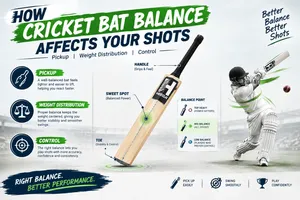 How Cricket Bat Balance Affects Your Shots: Pickup, Weight Distribution, and ControlLearn how cricket bat balance affects pickup, shot control and batting comfort. Understand weight distribution, sweet spot, bat feel and choosing the right balance.
 English Willow Cricket Bats: How to Identify Quality, Check Bat Balance and Avoid Buying MistakesLearn how to identify a quality English willow cricket bat, check its balance and pickup, understand grain patterns, and avoid common buying mistakes.
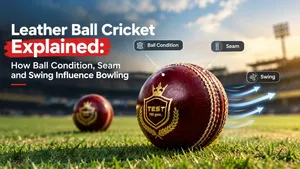 Leather Ball Cricket Explained: How Ball Condition, Seam and Swing Influence BowlingLearn how leather ball cricket works and how ball condition, seam position, shine, and swing influence bowling accuracy, movement, and performance.