How Cricket Players Choose the Right Batting Gloves for Better Control.

Introduction: Your Batting Gloves Matter More Than You Think
When a player buys cricket equipment, the bat usually gets most of the attention.
Players spend hours comparing willow, weight, balance, edges, profiles, and handles.
Batting gloves, on the other hand, are sometimes treated as an afterthought.
That is a mistake.
Your hands are involved in almost every part of the batting movement. They control the bat, absorb vibration, adjust the bat face, and help you respond to different deliveries.
A good pair of cricket batting gloves should therefore do more than simply look good.
They should fit properly.
They should feel comfortable.
They should provide appropriate protection.
They should allow the hands to move naturally.
And they should give you enough grip to control the bat without forcing you to squeeze the handle unnecessarily hard.
Walk into a cricket store and you will find many different gloves.
Some have thick protection.
Others are lighter.
Some use traditional leather.
Others combine synthetic materials with modern protective inserts.
There are gloves designed for beginners, junior players, club cricketers, and serious competitive players.
So how do you know which pair is right for you?
The answer starts with understanding your hands and your playing requirements.
Why Batting Gloves Are Important
A cricket ball can travel extremely quickly.
Even when a batter is wearing protective equipment, the hands remain vulnerable.
The gloves provide a layer of protection between the hands and the bat, while also improving comfort and grip.
A suitable pair can help protect areas such as:
- Fingers
- Knuckles
- Back of the hand
- Thumb
- Wrist area
The padding is designed to reduce the impact of accidental contact.
Protection is especially important when facing fast bowling.
However, protection should never come at the expense of basic control.
A glove that is extremely bulky may protect well but make the bat feel awkward.
The ideal balance depends on the individual player.
Start With the Correct Size
The first thing to get right is fit.
Even an expensive pair of gloves will not perform properly if the size is wrong.
Gloves that are too large can move around the hands.
That movement can become distracting and may reduce control.
Gloves that are too small can feel tight and restrict natural movement.
They may also become uncomfortable during a long innings.
A properly fitted glove should feel secure without squeezing the hand.
The fingers should sit comfortably inside their compartments.
The player should be able to flex the fingers naturally.
How Should Cricket Batting Gloves Fit?
A good fit should feel secure but not restrictive.
When wearing the gloves, check:
- Fingers reach comfortably toward the ends.
- Thumb sits correctly inside its protection.
- Wrist closure feels secure.
- Palm does not feel excessively tight.
- Backhand protection sits over the correct areas.
- Fingers can move naturally.
Try holding a cricket bat while wearing the gloves.
This is important.
A glove can feel comfortable when your hands are empty but completely different once you grip the bat.
The final test should always involve actual bat movement.
Don't Choose Gloves Only by Your Age
Age can provide a general reference for junior players.
But hand size is more important.
Two children of the same age can have noticeably different hand sizes.
Similarly, two adult players may prefer different glove dimensions.
When possible, measure the hand and compare it with the manufacturer's sizing information.
If you are buying gloves for a child, it is particularly important to avoid buying a much larger size simply because they may grow into it.
The glove should fit the player now.
Why Finger Protection Matters
The fingers are among the most important areas protected by batting gloves.
Modern designs may include protective inserts across the fingers and knuckles.
Different gloves use different protection systems.
Some provide relatively flexible protection.
Others use harder protective sections.
The best option depends on the level of cricket you play and how much protection you prefer.
Players regularly facing fast bowlers may prioritize stronger protection.
Players involved mainly in beginner training may prefer a lighter design.
What About Thumb Protection?
The thumb is easy to overlook.
But it is also important.
A poorly protected thumb can be vulnerable to impact.
Look at how the thumb protection is designed.
It should allow enough movement for a natural grip while still providing suitable coverage.
When trying gloves, hold your bat and move through a normal batting grip.
Check whether the thumb feels comfortable.
If it feels trapped or restricted, try another design.
The Palm Is Important for Bat Control
The palm is where the glove meets the handle.
This makes palm material extremely important.
Common materials include:
- Leather
- Synthetic leather
- Combination materials
- Textured synthetic surfaces
Leather can provide a comfortable, natural feel.
Synthetic materials may offer durability and easier maintenance.
The important thing is how the material feels in your hands.
You want enough friction to control the bat without creating excessive resistance.
Why Grip Texture Matters
A good palm should help prevent unwanted slipping.
This becomes particularly important when your hands are sweaty.
Different gloves use different palm textures and patterns.
Some have a smooth feel.
Others have textured surfaces designed to increase traction.
If you tend to sweat heavily while batting, consider a glove with a secure palm texture.
A player should not need to constantly readjust the bat because the gloves are slipping.
Don't Ignore the Wrist Closure
The wrist strap helps secure the glove.
A good closure should hold the glove comfortably in place.
It should not be so tight that it becomes uncomfortable.
It should also not be so loose that the glove moves during batting.
Try tightening and loosening the strap.
Make sure you can adjust it easily.
This may seem like a small detail, but you will appreciate a reliable wrist closure during a long innings.
Lightweight Gloves vs Heavily Padded Gloves
This is one of the biggest choices players face.
Lightweight Gloves
These generally prioritize:
- Mobility
- Flexibility
- Bat feel
- Reduced bulk
They may appeal to players who value freedom of movement.
Heavily Padded Gloves
These generally prioritize:
- Protection
- Impact absorption
- Greater coverage
They may appeal to players who regularly face faster bowling or simply prefer more protection.
Neither option is automatically better.
The right choice depends on your playing level, confidence, and personal preference.
What Should Beginners Look For?
Beginners do not necessarily need the most expensive gloves available.
Instead, prioritize:
- Correct size
- Comfortable fit
- Basic finger protection
- Good palm grip
- Reasonable flexibility
- Suitable durability
A beginner is still learning how to hold and move the bat.
Overly bulky gloves may make this process harder.
Comfort should therefore be one of the main priorities.
What Should Junior Players Look For?
Junior players need gloves designed around smaller hands.
The glove should allow the child to:
- Grip the bat naturally
- Move the fingers freely
- Maintain control
- Feel protected
Avoid buying adult gloves for a child.
Even if the gloves look impressive, an oversized pair can interfere with technique.
The same principle applies to other cricket equipment.
Proper sizing supports better learning.
What Should Club Players Look For?
Club players often spend many hours training and competing.
Durability becomes more important.
A club player may want gloves that can handle:
- Regular net sessions
- Match play
- Long innings
- Repeated use
- Different weather conditions
At this level, comfort becomes particularly valuable.
A glove that feels good for ten minutes may not feel good after two hours.
Try to think about the entire innings rather than just the first few deliveries.
What Should Competitive Players Look For?
Experienced players often know exactly what they want.
They may have preferences for:
- Glove weight
- Finger protection
- Palm material
- Wrist strap
- Finger flexibility
- Padding layout
- Overall shape
At higher levels, small differences can become noticeable.
An experienced player may even prefer a particular model because they have used it successfully for a long time.
Familiarity can be valuable.
Leather vs Synthetic Batting Gloves
Material is another factor to consider.
Leather
Leather gloves can provide:
- Premium feel
- Comfort
- Flexibility
- Natural grip
They may require more care than synthetic materials.
Synthetic Materials
Synthetic gloves can offer:
- Durability
- Easy maintenance
- Consistent performance
- Often lower cost
Some modern gloves combine both materials.
There is no universal winner.
Choose based on your priorities and budget.
Why Ventilation Matters
Your hands can become warm and sweaty during cricket.
Good ventilation can improve comfort.
Some gloves include perforated sections or breathable materials to help air circulation.
This can be particularly useful during:
- Summer cricket
- Long innings
- Extended net sessions
- Tournament days
A glove that remains comfortable for longer can make a noticeable difference.
Sweat Can Change How Gloves Feel
Sweat affects both comfort and grip.
When the hands become wet, the palm may become less secure.
The inside of the glove can also become damp.
Players who sweat heavily should pay attention to ventilation and palm texture.
It can also help to carry a spare pair during long match days.
Changing into a dry pair can restore comfort.
Why You Should Carry a Spare Pair
You never know when equipment may become uncomfortable.
A glove may tear.
It may become soaked.
A strap could fail.
The palm may become too sweaty.
Having a backup pair can prevent a minor problem from becoming a major distraction.
This is especially useful during tournaments or important matches.
A spare pair does not need to be identical to your primary gloves, although many experienced players prefer a familiar backup.
Batting Gloves and Your Cricket Bat Work Together
Your gloves and bat should feel like one setup.
The glove affects how your hands connect with the handle.
The handle affects how the bat feels.
The bat's weight and balance affect how much effort is needed to swing it.
This means changing gloves can sometimes make a familiar cricket bat feel slightly different.
That is normal.
Give yourself time to adjust whenever you change equipment.
How Glove Thickness Can Affect Bat Feel
Thicker gloves create more material between your hands and the handle.
This can improve cushioning.
But it may slightly reduce the direct sensation of the handle.
Thinner gloves can create a more direct feel.
Some experienced players prefer this because they like to feel exactly where their hands are positioned.
Again, this comes down to preference.
Protection vs Flexibility
There is always some balance between protection and freedom of movement.
More padding generally means more material.
More material can sometimes reduce flexibility.
Less padding can improve mobility but may provide less coverage.
Think about the cricket you actually play.
If you regularly face high-speed bowling, protection deserves serious attention.
If you mainly play recreational cricket, a lighter setup may be perfectly appropriate.
Different Batting Styles Can Influence Glove Preferences
A batter's style can influence what feels comfortable.
An aggressive player who frequently plays powerful shots may want a secure, well-padded glove.
A batter who focuses heavily on timing may prefer a lighter glove that provides a more natural bat feel.
Players who spend long periods at the crease may prioritize comfort.
There is no universal rule.
The best glove is the one that supports your style rather than interfering with it.
Try Gloves With Your Normal Grip
This is one of the best buying tips.
Do not simply put the gloves on and open and close your hands.
Hold your bat.
Use your normal top-hand and bottom-hand positions.
Practice a few movements.
Try:
- Defensive strokes
- Drives
- Pull shots
- Cuts
- Controlled backlift
Notice whether the glove moves.
Notice whether the fingers remain comfortable.
Notice whether the palm stays secure.
This gives you a much better idea of whether the gloves are right for you.
Don't Forget the Inner Gloves
Some players wear inner gloves underneath their batting gloves.
These can help with:
- Sweat management
- Comfort
- Hygiene
- Additional cushioning
Inner gloves are particularly useful for players who train frequently.
However, remember that they also add a small amount of thickness.
Your batting gloves should still fit comfortably when worn over them.
How Inner Gloves Can Affect Sizing
If you normally use inner gloves, wear them when trying batting gloves.
A pair that fits perfectly without inner gloves may become too tight once the extra layer is added.
This is a simple detail that many players forget.
How to Break In New Batting Gloves
New gloves can feel slightly stiff.
Do not assume they are wrong immediately.
Use them gradually during practice.
Start with shorter sessions.
Allow your hands to become familiar with the shape.
Over time, the materials may become more comfortable.
Avoid making your first use of a completely new glove during an important match.
You want to know how they feel before competition.
When Should You Replace Batting Gloves?
Batting gloves do not last forever.
Consider replacing them when:
- Padding has become damaged
- Fingers are no longer properly protected
- Palm material has worn significantly
- Stitching is coming loose
- The glove no longer fits comfortably
- The wrist closure has weakened
- The gloves have become excessively hard or uncomfortable
- The internal lining is badly worn
If protection has been compromised, replacement should not be delayed.
Can You Repair Batting Gloves?
Minor issues may sometimes be repairable.
For example, a small section of stitching might be repaired.
However, major damage to protective padding is a different matter.
If the protection itself has been compromised, replacement is usually safer than attempting a temporary repair.
Remember that batting gloves are protective equipment.
Their primary purpose is to help protect your hands.
How to Clean Your Batting Gloves
Always follow the manufacturer's care instructions.
As a general rule, avoid soaking batting gloves unnecessarily.
After use:
- Remove them from your kit bag.
- Allow them to air dry.
- Keep them away from excessive heat.
- Remove dirt gently.
- Store them in a dry location.
Do not leave sweaty gloves sealed inside a cricket kit bag for several days.
Proper care can help extend their useful life.
Never Dry Gloves With Excessive Heat
It may be tempting to place wet gloves directly in strong sunlight or near a heater.
Avoid excessive heat unless the manufacturer specifically recommends it.
Extreme heat can affect materials, adhesives, and protective components.
Natural ventilation is generally the safer approach.
Why Hygiene Matters
Batting gloves spend a lot of time in contact with your hands.
Sweat and moisture can accumulate inside.
Poor hygiene can lead to unpleasant odors.
Regular airing and proper drying can help.
If you use inner gloves, wash and dry them according to their care instructions.
Keeping both layers clean improves the overall experience.
Common Mistakes When Buying Batting Gloves
Choosing the Wrong Size
Oversized or undersized gloves can affect comfort and control.
Buying Only for Appearance
A stylish design does not guarantee a good fit.
Ignoring Finger Protection
Protection should match the level of cricket you play.
Choosing Excessive Padding
More protection is not always more comfortable.
Ignoring Palm Grip
The bat should feel secure in your hands.
Forgetting Inner Gloves
Always consider how the final setup will fit.
Buying Without Trying Them
Whenever possible, hold a bat while wearing the gloves.
Using Damaged Gloves
If protection is compromised, replace them.
How to Choose Gloves on a Budget
You do not need to spend the maximum amount to get useful protection.
Start with your priorities.
If you are a beginner, focus on fit, comfort, grip, and basic protection.
If you are a regular club player, durability and ventilation may become more important.
If you are an experienced competitive player, you may want specific materials and protection systems.
Spend according to your actual requirements.
The most expensive glove is not automatically the best glove for you.
Why Personal Preference Matters
Ask five experienced batters about their favorite gloves and you may get five different answers.
One player may prefer lightweight gloves.
Another may want thick protection.
Someone else may care most about the palm.
Another player may prioritize ventilation.
This is completely normal.
Equipment should support the individual.
Your hand shape, grip style, batting technique, playing conditions, and experience all influence what feels right.
Gloves for Different Playing Conditions
Conditions can affect equipment choices.
Hot Weather
Ventilation and sweat management become important.
Cold Weather
Flexibility and comfort may receive greater attention.
Humid Conditions
A secure grip can be particularly useful.
Indoor Cricket
Players may have different requirements depending on the ball and playing environment.
Your equipment should match the conditions you regularly encounter.
What Parents Should Check Before Buying Gloves for a Child
Parents should focus on:
- Correct hand size
- Comfortable finger length
- Appropriate protection
- Secure wrist closure
- Flexible movement
- Quality construction
Ask the child to hold their bat while wearing the gloves.
If they immediately complain that the gloves feel too tight, too loose, or too bulky, do not ignore it.
Children are still developing their batting technique.
Comfort can make practice more enjoyable.
What Coaches Can Teach Players About Gloves
Coaches can encourage players to inspect their own equipment.
A player should learn to recognize:
- Damaged padding
- Loose stitching
- Worn palms
- Poor fit
- Reduced protection
This teaches young players that equipment maintenance is part of cricket.
It also helps them become more responsible for their own preparation.
How Heega Sports Supports Cricket Players
At Heega Sports, we understand that the right cricket equipment should help players train and compete with confidence.
Our cricket range includes equipment for different ages and playing levels, including:
- Cricket bats
- Kashmir Willow bats
- English Willow bats
- Batting gloves
- Batting pads
- Cricket helmets
- Cricket balls
- Practice balls
- Cricket shoes
- Cricket kit bags
- Practice nets
- Training accessories
Whether you are buying your first pair of batting gloves or upgrading equipment for competitive cricket, choosing the right fit and specification can make your preparation easier.
A Simple Batting Glove Buying Checklist
Before purchasing, ask yourself:
1. Is the size correct?
The glove should fit your hand securely.
2. Can you move your fingers naturally?
Restriction can become uncomfortable during long innings.
3. Is the protection suitable?
Choose protection according to your playing level.
4. Does the palm provide enough grip?
Your hands should remain secure on the handle.
5. Are the gloves comfortable with your inner gloves?
Check the complete setup.
6. Do they feel good while holding your bat?
This is one of the most important tests.
7. Can they handle your normal training routine?
Think about durability.
8. Do they match your personal preference?
Comfort and confidence matter.
The Right Gloves Should Disappear During Batting
This may sound strange, but it is a useful way to think about equipment.
When you are batting well, you should be thinking about the ball.
You should be watching the bowler.
You should be judging the field.
You should be deciding whether to defend, rotate the strike, or attack.
You should not constantly be thinking:
“My gloves feel uncomfortable.”
If your gloves are secure, comfortable, and familiar, they become part of your routine rather than a distraction.
That is exactly what good equipment should do.
Final Thoughts
Choosing the right cricket batting gloves is not simply about finding the most expensive pair on the shelf.
It is about finding gloves that suit your hands, your batting style, your level of cricket, and the conditions in which you play.
Start with size.
Make sure the fingers fit properly.
Check the thumb and knuckle protection.
Look at the palm material.
Pay attention to grip and ventilation.
Consider whether you use inner gloves.
Most importantly, hold your cricket bat while wearing the gloves.
That simple test can tell you more than looking at the gloves in their packaging.
Remember that protection and comfort need to work together.
A heavily padded glove may provide excellent coverage but feel bulky.
A lightweight glove may feel fantastic but offer less protection.
The right balance depends on the player.
For junior cricketers, correct sizing is particularly important.
For club players, durability and comfort become increasingly valuable.
For competitive players, personal preference can become extremely specific.
There is no single perfect pair for everyone.
Your hands are unique.
Your grip is unique.
Your batting technique is unique.
Your playing conditions are unique.
So take the time to find equipment that works for you.
And do not wait until your gloves are completely damaged before replacing them.
Regularly inspect the padding, palm, stitching, wrist strap, and overall fit.
Good cricket equipment should help you feel prepared rather than make you think about equipment during every delivery.
When your gloves fit correctly, provide appropriate protection, and give you a secure connection with the bat, you can focus on what really matters—watching the ball, making good decisions, and building your innings one delivery at a time.
🏏 Find the Right Batting Gloves With Heega Sports
Explore batting gloves, cricket bats, batting pads, cricket helmets, cricket balls, cricket shoes, cricket kit bags, practice nets, and other cricket equipment for players at every level.
Shop Now
Heega Sports – Helping Every Player Feel Ready, Protected, and Confident at the Crease.
Related posts
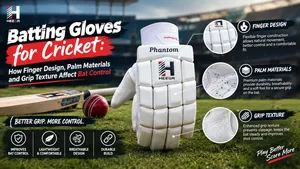 Batting Gloves for Cricket: How Finger Design, Palm Materials and Grip Texture Affect Bat ControlDiscover how cricket batting gloves, finger design, palm materials and grip texture influence bat control, comfort, protection and batting performance.
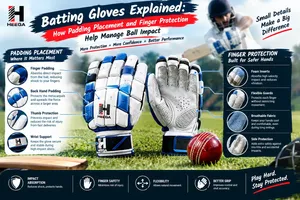 Batting Gloves Explained: How Padding Placement and Finger Protection Help Manage Ball ImpactLearn how batting glove padding placement, finger protection, and fit help manage ball impact. Find practical tips for choosing cricket batting gloves.
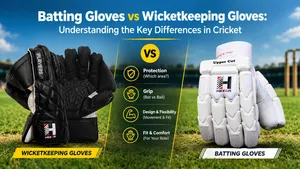 Batting Gloves vs Wicketkeeping Gloves: Understanding the Key Differences in CricketLearn the key differences between batting gloves and wicketkeeping gloves, including protection, grip, flexibility, design, fit, and their role in cricket.