How Cricket Practice Can Help Kids Develop Stronger Coordination and Body Control.

Introduction: Cricket Develops More Than Cricket Skills
When children begin playing cricket, the focus is usually on learning how to bat, bowl, catch, and throw.
But underneath these cricket skills are several important physical abilities.
A child needs to coordinate their eyes and hands to catch a ball.
They need balance to play a controlled shot.
They need body control to change direction while fielding.
They need timing to connect bat and ball.
They need coordination to throw accurately while moving.
These abilities do not develop overnight.
They improve through repeated movement, practice, and experience.
This is one reason cricket can be an excellent sport for helping children develop coordination, balance, timing, agility, reaction speed, and body awareness.
What Is Coordination?
Coordination is the ability to make different parts of the body work together smoothly.
In cricket, this can involve:
- Eyes tracking the ball.
- Hands controlling the bat.
- Feet moving into position.
- The body maintaining balance.
- Arms producing controlled movement.
A simple batting drill can therefore involve several coordination skills at once.
Why Body Control Matters for Kids
Body control means being able to understand and manage how the body moves.
For young players, this can help with:
- Balance.
- Stability.
- Movement.
- Direction changes.
- Controlled actions.
- Safer participation in sport.
Cricket provides many opportunities to practice these abilities.
Hand-Eye Coordination Starts With Simple Activities
Catching is one of the easiest cricket activities for developing hand-eye coordination.
A child watches the ball and attempts to position their hands correctly.
With practice, they gradually become better at judging:
- Speed.
- Direction.
- Height.
- Distance.
Catching Teaches Children to Track Moving Objects
A ball rarely travels exactly the same way every time.
It may bounce differently.
It may move faster than expected.
It may change direction slightly.
Children learn to adjust their body position according to what they see.
Start With Simple Catches
Young children do not need difficult catches immediately.
Parents or coaches can begin with:
- Underarm throws.
- Soft practice balls.
- Short-distance catches.
- Stationary catching.
The difficulty can increase gradually.
Two-Handed Catching Builds Confidence
For beginners, two-handed catching can provide a comfortable starting point.
Children learn to:
- Watch the ball.
- Move into position.
- Keep their eyes on it.
- Bring their hands together.
- Secure the catch.
One-Handed Catching Can Come Later
Once children become comfortable, coaches can introduce more challenging catches.
These may include:
- One-handed catches.
- Side catches.
- High catches.
- Moving catches.
The objective should always be age-appropriate progression.
Batting Develops Timing
Timing is a major part of batting.
A child needs to coordinate:
- Foot movement.
- Head position.
- Hands.
- Bat swing.
- Visual tracking.
The better these movements work together, the easier it becomes to control the shot.
Footwork and Batting Are Closely Connected
A batter cannot rely only on their hands.
They need to move their feet into a useful position.
For example, a player may step forward to a full delivery or move back when facing a shorter ball.
This develops movement awareness.
Balance Helps Children Control Their Shots
Good balance allows young players to remain stable while swinging.
A child who loses balance may find it harder to control the direction of the shot.
Simple balance exercises can therefore support batting development.
Cricket Teaches Children to Move Before They Act
Many cricket skills involve preparation.
A child may need to:
- Move their feet.
- Adjust their body.
- Position their hands.
- Prepare for the ball.
This teaches children that effective movement often happens before the main action.
Bowling Develops Whole-Body Coordination
Bowling involves much more than moving the bowling arm.
A young bowler needs to coordinate:
- Run-up.
- Foot placement.
- Body position.
- Arm movement.
- Release.
- Follow-through.
This makes bowling a complex coordination exercise.
The Run-Up Requires Rhythm
A consistent bowling run-up involves repeated movement patterns.
Children gradually learn to maintain:
- Rhythm.
- Speed.
- Balance.
- Direction.
This can improve overall movement control.
Balance During Delivery Matters
At the point of release, a bowler needs enough control to maintain their body position.
A stable delivery can make it easier to repeat the bowling action.
Fielding Develops Agility
Fielders rarely remain completely still.
They may need to:
- Sprint.
- Stop.
- Turn.
- Dive.
- Change direction.
- Throw.
These movements help children develop agility.
Why Direction Changes Are Useful
Changing direction quickly requires children to control their body while moving.
For example, a fielder may run toward the ball and suddenly need to move sideways.
Repeated practice can improve movement awareness.
Running Between Wickets Develops Coordination
Running between wickets combines speed with decision-making.
Children need to:
- Accelerate.
- Slow down.
- Turn.
- Watch the ball.
- Communicate.
- Judge distance.
This creates a useful combination of physical and mental skills.
Turning Quickly Requires Body Control
When batters complete a run, they need to turn efficiently.
They cannot simply stop and reverse direction.
They must lower their body, change direction, and accelerate again.
This develops control during movement.
Throwing Develops Accuracy and Coordination
Throwing a cricket ball accurately requires coordination between:
- Eyes.
- Feet.
- Legs.
- Hips.
- Torso.
- Shoulder.
- Arm.
- Wrist.
Children gradually learn how these movements work together.
Throwing While Moving Is More Challenging
A stationary throw is relatively simple.
Throwing while running or changing direction requires greater coordination.
Fielding drills can gradually introduce these challenges.
Wicketkeeping Requires Exceptional Coordination
Wicketkeepers need to react quickly while maintaining a stable position.
They may have to:
- Collect low balls.
- Move sideways.
- Catch edges.
- Stand up to the stumps.
- React to deflections.
- Throw quickly.
This provides a wide range of coordination challenges.
Reaction Speed Develops Through Repetition
Cricket regularly presents situations where children need to respond quickly.
A ball may suddenly come toward them.
A batter may hit the ball in an unexpected direction.
A wicketkeeper may need to react to an edge.
These moments develop reaction awareness.
Reaction Drills Can Be Fun
Coaches can use simple activities such as:
- Quick catches.
- Ball drops.
- Reaction throws.
- Short-distance fielding.
- Random-direction catches.
The drills should remain enjoyable and appropriate for the child's age.
Soft Balls Can Be Useful for Beginners
Young children can start with softer practice balls when learning new movement patterns.
This allows them to concentrate on coordination without being overly concerned about the impact of the ball.
Cricket Helps Develop Spatial Awareness
Spatial awareness means understanding where the body and objects are in relation to each other.
Cricket requires children to judge:
- Ball distance.
- Fielder position.
- Running distance.
- Stump location.
- Boundary position.
Judging a High Ball
When a ball goes into the air, a fielder must estimate where it will land.
They may need to move backward, forward, or sideways.
This develops spatial judgment.
Judging the Ball Off the Bat
A child learns to observe the direction and speed of a shot.
Then they must decide how quickly to move.
This combines vision, prediction, and body control.
Balance Exercises Can Support Cricket
Simple balance activities can be included in training.
For example:
- Standing on one leg.
- Controlled single-leg movements.
- Balance reaches.
- Low movement drills.
These activities can help children become more aware of their body position.
Agility Ladders Can Add Variety
Agility ladder exercises are sometimes used in youth cricket training.
They can encourage:
- Quick foot movement.
- Rhythm.
- Coordination.
- Direction changes.
However, children should focus on controlled movement rather than simply moving as fast as possible.
Cone Drills Encourage Controlled Movement
Coaches can arrange cones in different patterns.
Children may need to:
- Run forward.
- Move sideways.
- Turn around cones.
- Stop at a target.
- Accelerate again.
These drills can make movement training more engaging.
Cricket Encourages Bilateral Movement
Many cricket actions require both sides of the body to work together.
For example:
- Catching with both hands.
- Running while carrying the bat.
- Coordinating legs and arms during bowling.
- Moving into batting position.
This helps children develop broader movement skills.
Practice Improves Muscle Memory
Repeated movements can become increasingly familiar.
A child who practices the same basic catching technique regularly may eventually perform it with less conscious effort.
This is sometimes described as developing movement memory.
Repetition Should Still Be Varied
Doing exactly the same drill forever is not ideal.
Once a child becomes comfortable, coaches can change:
- Distance.
- Direction.
- Speed.
- Ball type.
- Starting position.
This encourages adaptation.
Variety Makes Training More Enjoyable
Children are more likely to stay engaged when training includes different activities.
A session could include:
- Catching.
- Batting.
- Running.
- Throwing.
- Fielding.
- Coordination games.
This keeps physical development interesting.
Cricket Can Help Children Become More Comfortable With Movement
Some children naturally enjoy running and physical activity.
Others may initially be less confident.
Cricket provides many different ways to participate.
A child who does not enjoy long-distance running may enjoy:
- Batting.
- Catching.
- Wicketkeeping.
- Throwing.
- Short fielding drills.
Every Child Develops at a Different Speed
Children of the same age may have very different physical abilities.
One child may have excellent coordination.
Another may need more practice.
This is completely normal.
Training should focus on gradual improvement rather than comparison.
Avoid Comparing Children During Practice
Statements such as:
"Look how fast he is."
can make a child feel inadequate.
A better approach is:
"You moved faster than you did last week."
This emphasizes individual progress.
Coordination Improves With Confidence
Children often move better when they feel comfortable.
If they are worried about making mistakes, they may become stiff or hesitant.
A supportive training environment allows them to experiment.
Mistakes Are Part of Coordination Development
A child may:
- Miss the ball.
- Drop a catch.
- Throw inaccurately.
- Lose balance.
- Misjudge a bounce.
These mistakes provide information.
The goal is to learn from them.
Parents Can Practice Coordination at Home
Children do not need a professional cricket ground for every activity.
At home, parents can use simple games involving:
- Soft balls.
- Balloons.
- Tennis balls.
- Safe throwing targets.
Always choose an environment appropriate for the child's age and safety.
Simple Catching Games at Home
A parent can gently throw a soft ball from different angles.
The child tries to catch it.
Gradually change:
- Distance.
- Height.
- Direction.
This can make coordination practice feel like a game.
Balloons Can Be Useful for Beginners
For very young children, balloons move slowly.
This gives them more time to track the object.
Simple balloon games can introduce basic hand-eye coordination before progressing to faster balls.
Target Throwing Can Be Fun
Place a safe target at a suitable distance.
The child attempts to hit it with a soft ball.
This develops:
- Aim.
- Arm control.
- Visual focus.
- Coordination.
Batting With a Soft Ball
Parents can use age-appropriate soft practice balls for simple batting exercises.
The goal should be making controlled contact rather than hitting as hard as possible.
Equipment Should Match the Child
Proper equipment can help children move more naturally.
A cricket bat that is too heavy may make swinging difficult.
Protective equipment that does not fit correctly may distract the player.
Choosing the Right Junior Cricket Bat
Parents should consider:
- Child's height.
- Strength.
- Bat size.
- Bat weight.
- Playing experience.
The child should be able to control the bat comfortably.
Kashmir Willow Can Be a Practical Option
For developing players, Kashmir Willow cricket bats can offer a practical combination of durability and value.
They are often suitable for regular practice when selected in an appropriate size and weight.
Comfortable Protective Equipment Matters
Children may use:
- Batting gloves.
- Batting pads.
- Helmets.
- Abdominal guards.
- Wicketkeeping gloves.
Equipment should fit appropriately and allow normal movement.
Shoes Can Affect Movement
Cricket involves frequent starts, stops, and changes of direction.
Comfortable cricket shoes can help children move confidently on suitable playing surfaces.
Practice Nets Provide a Controlled Environment
Practice nets allow young players to work repeatedly on batting and bowling skills.
They can focus on:
- Timing.
- Footwork.
- Balance.
- Body position.
- Repetition.
Cricket Training Should Be Age-Appropriate
Children do not need adult-level training programs.
Young players benefit from:
- Short activities.
- Variety.
- Games.
- Simple instructions.
- Appropriate equipment.
- Regular breaks.
Fun Should Remain Part of Development
Children are more likely to continue playing a sport when they enjoy it.
Training should therefore include playful activities alongside structured coaching.
Coordination Is Useful Beyond Cricket
The movement skills children develop through cricket can support other activities too.
For example:
- Cycling.
- Running.
- Other ball sports.
- Playground activities.
- General physical activity.
This makes coordination development valuable beyond the cricket field.
Cricket Can Build Athletic Confidence
As children become better at controlling their movements, they may feel more confident participating in sport.
A successful catch or well-timed shot can provide a small but meaningful sense of achievement.
Nepal, Germany, USA, Canada, Netherlands, and UK
Youth cricket continues to develop across Nepal, Germany, the United States, Canada, and the Netherlands, while the United Kingdom has a long-standing cricket development structure.
Wherever children learn cricket, basic physical skills remain important.
The training environment may differ, but young players everywhere benefit from developing movement, coordination, balance, and confidence.
A Simple Coordination Checklist for Young Cricketers
Parents and coaches can observe whether a child is gradually improving in:
- Tracking the ball.
- Catching with control.
- Maintaining balance.
- Moving into position.
- Changing direction.
- Throwing accurately.
- Coordinating footwork with batting.
- Maintaining control during movement.
Improvement does not need to happen immediately.
Small progress over time is what matters.
How Heega Sports Supports Young Players
At Heega Sports, we believe good cricket development combines coaching, practice, confidence, and suitable equipment.
Our cricket range includes:
- Junior cricket bats.
- Kashmir Willow bats.
- Leather cricket balls.
- Practice balls.
- Batting gloves.
- Batting pads.
- Cricket helmets.
- Wicketkeeping gloves.
- Cricket shoes.
- Cricket kit bags.
- Practice nets.
- Training accessories.
Appropriate equipment can help young players practice comfortably while they develop their cricket and movement skills.
Final Thoughts
Cricket is often described as a game of bat and ball.
For children, however, it can also become a practical way to develop important physical abilities.
Every catch teaches hand-eye coordination.
Every shot requires timing.
Every bowling action involves full-body movement.
Every fielding drill can develop agility.
Every run between wickets requires balance and control.
Over time, these repeated experiences can help children become more comfortable with movement and more aware of how their bodies work.
The goal is not to make every child an elite athlete.
It is to give young players opportunities to move, practice, experiment, and gradually improve.
When cricket training remains enjoyable and age-appropriate, children can develop skills that support not only their cricket journey but also their broader confidence in physical activity.
And sometimes, the biggest improvement is not the number of runs scored.
It is seeing a child move with greater confidence, react more naturally, and enjoy what their body can do.
🏏 Help Your Child Build Better Cricket Skills With Heega Sports
Explore junior cricket bats, Kashmir Willow bats, leather balls, practice balls, batting gloves, pads, helmets, cricket shoes, kit bags, practice nets, and training accessories designed to support young players as they learn and grow.
Shop Now
Heega Sports – Helping Young Cricketers Build Skills, Confidence, Coordination, and a Love for the Game.
Related posts
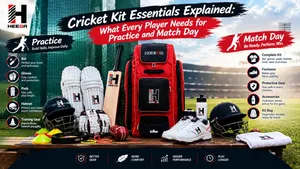 Cricket Kit Essentials Explained: What Every Player Needs for Practice and Match DayDiscover essential cricket kit items for practice and match day, including bats, protective gear, clothing, footwear, and accessories for every player.
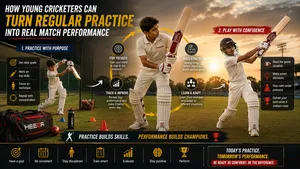 How Young Cricketers Can Turn Regular Practice Into Real Match Performance.Learn how young cricketers can turn regular practice into match performance through realistic drills, match simulations, decision-making, pressure training, and consistency.
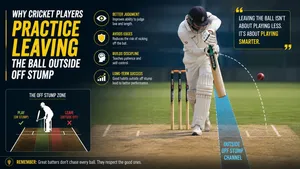 Why Cricket Players Practice Leaving the Ball Outside Off StumpDiscover why cricket players practice leaving the ball outside off stump and how this simple skill improves shot selection, patience, balance, and batting confidence.