How Playing Different Cricket Positions Helps Kids Discover Their Strengths

Introduction: Every Child Has a Different Cricket Strength
When a child starts playing cricket, parents often want to know one thing:
"Is my child a batter or a bowler?"
But for young players, that question may be too early.
A child who looks like a natural batter at eight may become an excellent bowler a few years later.
A player who struggles with batting may discover that they have exceptional catching ability.
Another child may find that wicketkeeping is the position where they feel most comfortable.
Young players are still developing physically, mentally, and technically.
That is why allowing children to experience different cricket roles can be extremely valuable.
Instead of immediately assigning one position, coaches and parents can give children opportunities to explore:
- Batting.
- Bowling.
- Wicketkeeping.
- Close fielding.
- Outfield fielding.
- Running between wickets.
- Leadership responsibilities.
This approach allows children to discover what they enjoy and where their natural abilities may develop.
Why Should Kids Try Different Cricket Positions?
Young players should have time to explore.
Playing different roles can help them understand:
- What they enjoy.
- What they are naturally good at.
- Which skills they want to improve.
- How different parts of cricket work together.
It also gives children a broader understanding of the game.
Children Develop at Different Speeds
Physical development is not identical for every child.
One child may grow quickly.
Another may develop strength later.
Some children develop coordination early.
Others improve gradually.
This matters because cricket roles involve different physical demands.
A child who is not currently strong enough to bowl fast may develop into a capable bowler later.
Early performance should not permanently define a child's cricket identity.
Batting Helps Children Develop Coordination
Batting is one of the most obvious ways children experience cricket.
It can help develop:
- Hand-eye coordination.
- Balance.
- Timing.
- Decision-making.
- Concentration.
- Movement.
Young batters learn to judge where the ball is going and decide how to respond.
What Makes a Good Young Batter?
There is no single formula.
However, young players who enjoy batting may show qualities such as:
- Good coordination.
- Patience.
- Quick reactions.
- Confidence.
- Interest in shot-making.
- Ability to watch the ball carefully.
Some children naturally enjoy the challenge of facing a bowler.
Batting Can Teach Patience
A child does not need to hit every ball.
Learning when to attack and when to defend is an important part of batting development.
This teaches children that good decisions can be just as important as powerful actions.
Bowling Gives Kids a Different Challenge
Bowling allows children to influence the game from another perspective.
They learn about:
- Accuracy.
- Rhythm.
- Coordination.
- Movement.
- Planning.
- Concentration.
Bowling can be particularly enjoyable for children who like controlling the action.
What Makes a Good Young Bowler?
Potential can appear in many forms.
A child may demonstrate:
- Natural rhythm.
- Good coordination.
- Accuracy.
- An interest in experimenting.
- Ability to repeat movements.
- Patience.
Speed is not the only indicator of bowling potential.
Accuracy Comes Before Speed
Young bowlers should not feel that they need to bowl as fast as possible.
Control is extremely important.
A player who can repeatedly land the ball in useful areas is already developing an important cricket skill.
Speed can develop as the child grows stronger and more technically capable.
Spin Bowling Can Reveal Different Strengths
Not every child needs to become a fast bowler.
Spin bowling can suit players who enjoy:
- Variation.
- Flight.
- Accuracy.
- Tactical thinking.
- Changing pace.
Children should have opportunities to experiment with different bowling styles under appropriate coaching.
Wicketkeeping Is a Unique Role
Wicketkeepers are involved in almost every delivery.
They need to remain alert even when the ball is not hit.
Keeping involves:
- Quick reactions.
- Footwork.
- Catching.
- Communication.
- Concentration.
- Anticipation.
Some children discover their strengths here unexpectedly.
Why Some Kids Love Wicketkeeping
Wicketkeeping can be attractive to children who enjoy being constantly involved.
The keeper may:
- Catch edges.
- Collect deliveries.
- Attempt stumpings.
- Communicate with bowlers.
- Encourage fielders.
- Observe the batter closely.
It is an active and mentally demanding role.
Fielding Should Not Be Treated as a Secondary Skill
Young players sometimes believe that batting and bowling are the "important" parts of cricket.
That is a mistake.
Fielding can decide matches.
A catch can change an innings.
A direct hit can produce a run-out.
A diving stop can save valuable runs.
Fielding deserves serious attention from the beginning.
Close Fielding Develops Quick Reactions
Fielders near the batter need to react quickly.
They may have very little time to respond to:
- Edges.
- Deflections.
- Hard shots.
- Mis-hits.
Children who naturally react quickly may enjoy close fielding.
Outfield Fielding Requires Speed and Awareness
Children who enjoy running may prefer outfield positions.
Outfielders need:
- Speed.
- Tracking ability.
- Throwing accuracy.
- Spatial awareness.
- Communication.
This can help develop general athletic ability.
Throwing Is an Important Cricket Skill
A strong throw is useful across many positions.
Children can practice:
- Accuracy.
- Distance.
- Release timing.
- Footwork.
The emphasis should remain on safe technique rather than simply throwing as hard as possible.
Running Between Wickets Is a Skill Too
Cricket is not only about hitting boundaries.
Young players need to understand:
- Calling.
- Turning.
- Judging singles.
- Running efficiently.
- Supporting the partner.
These skills require communication and awareness.
Different Positions Teach Different Decisions
One of the biggest advantages of trying different roles is learning how other players think.
A batter learns what bowlers try to do.
A bowler learns how batters respond.
A wicketkeeper learns how deliveries behave.
A fielder learns how shots develop.
This creates a more complete understanding of cricket.
A Batter Who Tries Bowling May Become Smarter
Imagine a young batter spending time bowling.
They begin to understand:
- Why bowlers change their length.
- Why they use variations.
- Where they want the batter to play.
- How field settings support bowling plans.
When that child returns to batting, they may understand bowlers differently.
A Bowler Who Tries Batting Can Learn Too
The reverse is also true.
A young bowler who regularly bats can learn:
- Which deliveries are uncomfortable.
- When pressure builds.
- Where scoring opportunities appear.
- How batters think.
This can improve their bowling awareness.
Wicketkeeping Can Improve Field Awareness
Keepers see the entire field.
They can observe:
- Field placements.
- Batter movement.
- Bowler rhythm.
- Shot selection.
This perspective can help children understand the tactical side of cricket.
Different Positions Build Different Forms of Confidence
Confidence is not identical for every child.
One child may feel confident holding a bat.
Another may become confident after taking a difficult catch.
Another may enjoy being trusted with the ball.
Giving children multiple opportunities allows them to find environments where they feel successful.
Not Every Child Wants to Be the Star Batter
Parents sometimes assume the best position is batting.
But children have different personalities.
Some enjoy:
- Being involved constantly.
- Taking wickets.
- Catching.
- Organizing the field.
- Supporting teammates.
Every role can contribute to a team.
Avoid Giving Children Labels Too Early
Statements such as:
"You are a batter."
or:
"You are not a bowler."
can become limiting.
A young child may believe the label and stop experimenting.
Instead, use language such as:
"You are developing as a cricketer."
That leaves room for growth.
Physical Growth Can Change a Player's Role
A child's body changes significantly during development.
A player may become:
- Taller.
- Stronger.
- Faster.
- More coordinated.
These changes can influence which cricket roles suit them.
That is another reason not to specialize too early.
Let Skills Develop Naturally
A child does not need to decide their permanent position immediately.
Early cricket can focus on developing broad skills.
This can include:
- Batting practice.
- Bowling practice.
- Catching.
- Throwing.
- Running.
- Wicketkeeping basics.
Later, players can gradually specialize if they want to.
What Does Specialization Mean?
Specialization means focusing more heavily on one role.
For example:
- Specialist batter.
- Specialist bowler.
- Wicketkeeper-batter.
Specialization can become useful as competition becomes more advanced.
But the right time varies from child to child.
Signs a Child May Enjoy Batting
Parents and coaches may notice that a child:
- Asks to bat first.
- Enjoys practicing shots.
- Watches the ball carefully.
- Likes building an innings.
- Enjoys competition between batters.
These can be useful clues.
Signs a Child May Enjoy Bowling
A child may enjoy bowling if they:
- Ask to bowl repeatedly.
- Like hitting targets.
- Enjoy experimenting with variations.
- Focus on accuracy.
- Enjoy creating challenges for batters.
Enjoyment is an important indicator.
Signs a Child May Enjoy Wicketkeeping
Look for children who:
- Enjoy catching.
- React quickly.
- Stay alert.
- Like being close to the action.
- Communicate frequently.
They may naturally enjoy keeping.
Signs a Child May Enjoy Fielding
A child who enjoys:
- Running.
- Diving.
- Catching.
- Throwing.
- Chasing the ball.
may develop into a strong fielder.
Fielding should be celebrated rather than treated as a fallback position.
Parents Should Watch, Not Decide Everything
Parents can observe their child's preferences.
But the child should also have a voice.
Ask:
"Which part of cricket do you enjoy most?"
The answer may be surprising.
Coaches Can Identify Potential
Experienced coaches can observe skills that parents may not notice.
They may identify:
- Coordination.
- Movement patterns.
- Reaction speed.
- Technical potential.
- Tactical awareness.
However, potential should remain flexible during childhood.
Make Position Changes Fun
Children can enjoy rotating positions during practice.
For example:
Session 1
Batter → Fielder
Session 2
Bowler → Batter
Session 3
Wicketkeeper → Batter
Session 4
Fielder → Bowler
This keeps training fresh while exposing children to different skills.
Use Mini-Games to Explore Positions
Parents can create simple games.
Target Bowling
Award points for hitting specific targets.
Catching Challenge
Increase the distance between throws.
Batting Zones
Give children different scoring areas.
Wicketkeeping Reaction Game
Use gentle throws from different angles.
The goal is exploration rather than intense competition.
Don't Force a Child Into a Position
If a child strongly dislikes a particular role, constant pressure can make them dislike cricket itself.
There should be room for experimentation.
A player may eventually discover that the position they disliked at seven becomes their favourite at ten.
But that discovery should happen naturally.
Team Games Help Children Understand Roles
Small-sided cricket can be particularly useful.
Shorter games give children more opportunities to:
- Bat.
- Bowl.
- Field.
- Make decisions.
Instead of waiting a long time for their turn, children remain involved.
Why All-Round Development Is Valuable
A young cricketer who can perform several skills can understand the game more completely.
Even if they eventually specialize, early exposure to multiple roles can provide useful knowledge.
A future specialist batter can benefit from understanding bowling.
A future specialist bowler can benefit from batting experience.
Different Roles Teach Teamwork
Children learn that cricket is not an individual sport.
A batter depends on:
- Their partner.
- Bowlers.
- Fielders.
- Wicketkeeper.
Every role contributes to the team's result.
Leadership Can Develop Through Different Positions
Rotating responsibilities can help children understand leadership.
For example, a child can:
- Organize fielders.
- Encourage teammates.
- Communicate bowling plans.
- Help younger players.
Leadership is not limited to the captain.
Different Positions Build Different Mental Skills
Batting can develop:
- Patience.
- Decision-making.
- Concentration.
Bowling can develop:
- Planning.
- Persistence.
- Control.
Fielding can develop:
- Alertness.
- Reaction speed.
- Responsibility.
Wicketkeeping can develop:
- Communication.
- Anticipation.
- Concentration.
Together, these skills help create a more complete young athlete.
Equipment Should Match the Role
Different positions can require different equipment.
Batters may need:
- Cricket bats.
- Batting gloves.
- Batting pads.
- Helmets.
Wicketkeepers may require:
- Wicketkeeping gloves.
- Leg guards.
- Protective equipment.
Bowlers and fielders also benefit from appropriate footwear and training equipment.
Children should use properly sized and age-appropriate gear.
Why Comfort Matters for Young Players
Uncomfortable equipment can distract children.
A child should not spend an entire session worrying about:
- Heavy pads.
- Poorly fitting gloves.
- An uncomfortable helmet.
- Shoes that do not provide suitable support.
Comfort helps children focus on learning and enjoying cricket.
How Heega Sports Supports Young Cricketers
At Heega Sports, we believe every child deserves the opportunity to discover their own cricketing strengths.
Our range includes equipment for different stages of youth development, including:
- Junior cricket bats.
- Kashmir Willow bats.
- Leather cricket balls.
- Practice balls.
- Batting gloves.
- Batting pads.
- Cricket helmets.
- Wicketkeeping gloves.
- Cricket shoes.
- Cricket kit bags.
- Practice nets.
- Training accessories.
The right equipment can support children as they explore different roles and develop their skills.
Nepal: Young Players Are Exploring More Cricket Roles
As youth cricket continues to grow in Nepal, children are getting more opportunities to experience structured coaching and competitive cricket.
Exposure to different positions can help young players discover where they feel most comfortable.
Germany: Developing Players Through Multi-Skill Training
Growing cricket programs in Germany can benefit young players by encouraging broad skill development before specialization.
This gives children time to understand the sport from multiple perspectives.
United States: New Players Have More Opportunities to Experiment
As youth cricket expands across the United States, children are entering schools, clubs, academies, and community programs.
Introducing different roles can make early experiences more engaging.
Canada: Multiple Roles Can Support Year-Round Development
Young Canadian players may experience different training environments throughout the year.
Practicing different cricket skills can help them remain active and continue developing during their sporting journey.
The Netherlands: Building Complete Young Cricketers
Youth cricket development can benefit from giving children opportunities to bat, bowl, field, and keep wicket.
This broader experience can help players understand the game before deciding where they want to specialize.
United Kingdom: Strong Pathways Can Begin With Exploration
The UK's extensive junior and club cricket structure provides many opportunities for children.
Allowing young players to explore different roles can help them develop naturally before moving into more specialized pathways.
When Should a Child Specialize?
There is no universal age that works for every child.
Specialization should depend on:
- Physical development.
- Skill level.
- Interest.
- Competition level.
- Coaching advice.
- The child's own preferences.
For many young players, broad development is more useful than rushing into one role.
What Parents Can Do at Home
Parents do not need to build a professional cricket facility.
Simple activities can help.
Try:
- Catching with a soft ball.
- Throwing at a target.
- Gentle batting practice.
- Bowling at stumps.
- Reaction games.
- Short backyard matches.
Most importantly, let the child enjoy the activity.
The Best Position May Be the One They Enjoy
Skill matters.
But enjoyment matters too.
A child who loves bowling may practice more.
A child who enjoys keeping may become more attentive.
A child who loves fielding may develop exceptional athletic ability.
Passion can encourage consistent practice.
Final Thoughts
Children do not always reveal their strongest cricketing abilities immediately.
A young player may begin as a batter and discover a love for bowling.
A child who struggles with batting may become an excellent wicketkeeper.
Another may discover that fielding is where they feel most confident.
That is why young cricketers benefit from exploring different positions.
Playing different roles helps children understand the game, develop a wider range of skills, build confidence, and discover what they genuinely enjoy.
Parents do not need to decide a child's cricketing future at an early age.
Instead, they can provide opportunities.
Let children bat.
Let them bowl.
Let them catch.
Let them keep wicket.
Let them run.
Let them make mistakes.
And let them discover what makes cricket exciting for them.
The strongest young cricketers are not necessarily the ones who specialize first.
They are often the ones who spend enough time exploring the game to understand where their strengths, interests, and passion naturally develop.
From Nepal, Germany, the United States, Canada, and the Netherlands to the established cricket pathways of the United Kingdom, the future of youth cricket depends on giving children room to learn and grow.
Don't rush the role. Build the player first.
🏏 Help Your Young Cricketer Explore Every Part of the Game
Explore junior cricket bats, Kashmir Willow bats, leather and practice balls, batting gloves, pads, helmets, wicketkeeping gloves, cricket shoes, kit bags, practice nets, and training accessories designed for young players.
Shop Now
Heega Sports – Helping Young Cricketers Discover Their Strengths, One Skill at a Time.
Related posts
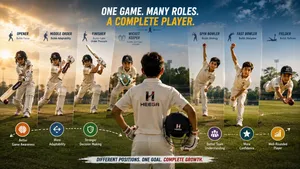 Why Playing Different Cricket Positions Helps Kids Become More Complete Players.Discover why kids benefit from playing different cricket positions. Learn how batting, bowling, wicketkeeping, and fielding develop versatility, confidence, decision-making, teamwork, and game awareness.
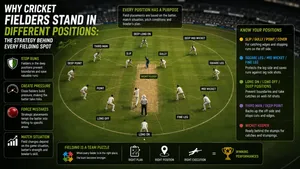 Why Cricket Fielders Stand in Different Positions: The Strategy Behind Every Fielding SpotLearn why cricket fielders stand in different positions and how fielding positions, catching areas, bowlers, and match situations influence field placement.
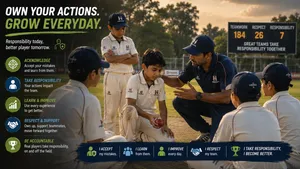 How Cricket Helps Kids Understand the Importance of Taking Responsibility for Their ActionsDiscover how cricket helps kids learn responsibility through teamwork, mistakes, preparation, decision-making, equipment care, discipline, and accountability on and off the field.