How to Check the Shape and Size of a Cricket Ball with a Gauge
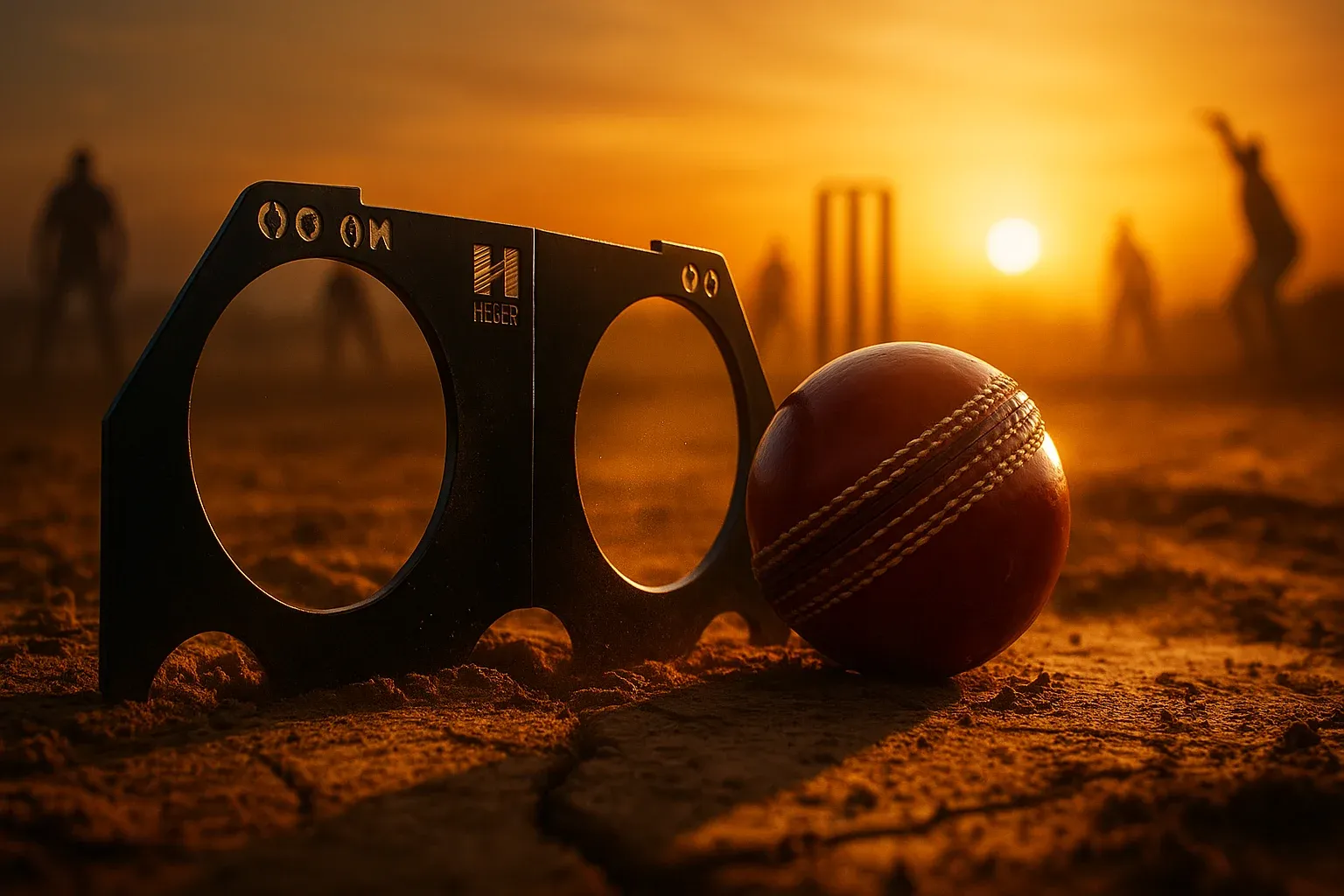
Introduction: Why Cricket Ball Size and Shape Matter
A cricket ball may look like a simple piece of equipment, but its size, weight, shape, and construction can have a noticeable effect on how it performs.
Whether you play cricket at school, in an academy, at club level, or in competitive cricket, using a properly manufactured and correctly sized cricket ball is important.
A ball that is too light, too heavy, misshapen, or outside the required size range may not behave as expected.
It can affect:
- Bounce
- Swing
- Seam movement
- Spin
- Throwing
- Catching
- Batting practice
- Bowling practice
This is why players, coaches, academies, clubs, and equipment suppliers often check the dimensions and condition of their cricket balls.
A simple cricket ball gauge can make this process much easier.
In this guide, we explain how to check a cricket ball's shape, circumference, size, and weight, how different types of cricket balls compare, and why accurate measurements matter.
What Does a Cricket Ball Consist Of?
Before learning how to measure a ball, it helps to understand its basic construction.
A traditional leather cricket ball generally consists of:
- A cork core
- Layers of tightly wound thread or yarn
- Leather covering
- Stitched leather panels
- A raised seam
The exact construction can vary between manufacturers and ball categories.
However, the basic objective remains the same: create a durable, spherical ball that can withstand repeated impacts and provide consistent performance.
Understanding the Cork Core
The cork core forms an important part of many traditional leather cricket balls.
It contributes to the ball's:
- Weight
- Hardness
- Resilience
- Bounce characteristics
The core is surrounded by layers of wound material before the leather covering is added.
Because the internal construction contributes significantly to the final weight and shape, manufacturing consistency is extremely important.
What Is the Leather Covering?
The leather covering forms the outer surface of a traditional cricket ball.
It protects the internal core while providing the surface that interacts with:
- The bat
- The pitch
- The bowler's fingers
- The field
- The atmosphere
As the ball is used, the leather surface gradually changes.
This is particularly important in longer formats such as Test cricket, where the same ball can remain in use for an extended period.
What Are the Rows of Stitching?
Look closely at a traditional cricket ball and you will notice several rows of stitching around the seam.
These stitches hold the leather panels together and create the raised seam.
A well-constructed seam can provide bowlers with a consistent grip and seam presentation.
The stitching is therefore both a structural and functional part of the cricket ball.
What Does Hand Stitched Mean?
Some premium cricket balls are described as hand stitched.
This refers to the process used to stitch the leather panels and create the seam.
Hand stitching requires skill and consistency because the seam needs to remain secure and properly aligned.
Different manufacturers may use different combinations of manual craftsmanship and machinery.
Why the Seam Matters
The seam is particularly important for bowlers.
Fast bowlers can use the seam when working on:
- Seam bowling
- Swing bowling
- Line and length
- Grip
- Release
- Movement
Spinners can also use the seam as part of their grip and release.
Standard Cricket Ball Size
For senior men's cricket under MCC Law 4, the ball's circumference is specified between 22.4 cm and 22.9 cm, while its weight is between 155.9 g and 163 g.
Other playing categories can have different requirements.
Always check the regulations of the competition or governing body relevant to your match.
Why Cricket Ball Weight Matters
Cricket ball weight influences how the ball feels in the hand and how it behaves during play.
A heavier ball can feel different when:
- Bowling
- Throwing
- Catching
- Batting
The correct weight depends on the playing category.
How to Check Cricket Ball Weight
A size gauge cannot measure weight.
For accurate weight measurement, use a suitable digital or precision weighing scale.
Place the cricket ball carefully on the scale and record the result.
Avoid weighing the ball while it is wet or covered with excessive dirt because this can affect the measurement.
Why Circumference Matters
Circumference is one of the easiest dimensions to check using an appropriate cricket ball gauge.
A ball that is significantly outside the required circumference range may not meet the specifications for its intended category.
What Is a Cricket Ball Gauge?
A cricket ball gauge is a measuring tool designed to help check whether a cricket ball falls within a specified size range.
Depending on the design, a gauge may allow you to quickly identify whether the ball is:
- Correctly sized
- Too large
- Too small
- Properly shaped
How Does a Cricket Ball Gauge Work?
A typical gauge provides a reference opening or measurement area.
The ball is placed into the gauge according to the manufacturer's instructions.
If the ball fits correctly within the specified measurement area, it indicates that the circumference is within the intended range.
Always use the instructions supplied with the specific gauge because designs can differ.
Step-by-Step: How to Check a Cricket Ball With a Gauge
Step 1: Clean the Ball
Remove excessive dirt from the surface.
Do not use aggressive cleaning methods that could damage the leather covering.
Step 2: Inspect the Ball Visually
Look for:
- Uneven panels
- Damaged leather
- Loose stitching
- Flattened areas
- Major seam damage
Step 3: Position the Gauge Correctly
Hold the gauge according to its instructions.
Step 4: Place the Ball Into the Gauge
Check the ball without forcing it into the measurement area.
Step 5: Rotate the Ball
If the gauge design allows it, rotate the ball and check different sections.
Step 6: Look for Irregularities
If one section behaves differently from another, inspect the ball more carefully.
Step 7: Measure the Weight Separately
Use a suitable scale to check cricket ball weight.
Why You Should Rotate the Ball
A cricket ball should be approximately spherical.
A ball can appear normal from one angle but show an irregularity from another.
Rotating the ball during inspection helps identify:
- Flat areas
- Uneven shape
- Deformation
- Damaged panels
How to Check Cricket Ball Shape
Size is only one part of the inspection process.
You should also examine the overall shape.
Place the ball on a flat surface and rotate it slowly.
Observe whether it rolls smoothly.
An obviously uneven roll can indicate a shape problem, although this is not a substitute for professional measurement equipment.
Why a Round Shape Matters
A properly shaped cricket ball should travel consistently.
An irregular ball can behave differently when:
- Bowled
- Hit
- Thrown
- Bounced
- Spun
This can make training less predictable.
Red Ball, White Ball, and Pink Balls
Cricket uses different colored balls depending on the format and playing conditions.
The most familiar categories are:
- Red ball
- White ball
- Pink balls
Each has a different role in the sport.
Red Ball
The red ball is strongly associated with longer-format cricket.
It is commonly used in:
- Test cricket
- First-class cricket
- Traditional long-format competitions
Red balls are designed to remain visible during extended daytime play.
White Ball
The white ball is commonly used in limited-overs cricket.
It is associated with:
- One-day cricket
- T20 cricket
- Day-night cricket
The color helps provide visibility against darker backgrounds and under floodlights.
Pink Balls
Pink balls are primarily associated with day-night Test matches.
They are designed to remain visible as lighting conditions change from daylight toward evening and artificial lighting.
Red White Cricket Ball Differences
When players compare red white cricket balls, color is not the only difference they may notice.
Different ball types can have differences in:
- Surface finish
- Visibility
- Usage
- Maintenance
- Playing conditions
- Tournament specifications
Players should always select a ball appropriate for their format and competition.
Cricket Ball vs Tennis Ball
A tennis ball is much softer and lighter than a traditional leather cricket ball.
Tennis balls can be useful for recreational cricket drills and beginner training because they reduce the intensity of impact.
They are not a replacement for a regulation cricket ball in competitive matches.
Why Tennis Ball Cricket Is Popular
Tennis-ball-based games can help players practice:
- Bat swing
- Timing
- Footwork
- Shot selection
- Reaction
They are especially useful for casual sessions and certain beginner drills.
Training Balls
Training balls are available in different constructions.
Depending on the product, training balls can include:
- Synthetic balls
- Practice leather balls
- Softer training balls
- Tennis-ball-style options
The appropriate choice depends on the player's age, skill level, environment, and training objective.
Why Younger Players May Use Different Balls
Younger players may not always train with the same ball used in senior competitive cricket.
Coaches may select equipment according to:
- Age
- Skill level
- Physical development
- Safety
- Training objective
A softer or lighter training ball can make certain drills more accessible.
Why Ball Selection Matters When You Play Cricket
Players should choose equipment appropriate to their level.
A ball designed for professional competition may not be necessary for a beginner's first training session.
Likewise, a soft training ball may not be suitable for a competitive match.
Checking a Ball Before Cricket Matches
Before important cricket matches, teams can inspect their equipment.
Players and coaches should check:
- Ball type
- Weight
- Size
- Seam
- Surface
- Overall shape
Match regulations should always be followed when selecting and replacing cricket balls.
Cricket Balls in Test Matches
In Test matches, ball condition becomes particularly important.
A cricket ball can change throughout the innings as it experiences:
- Bat impact
- Pitch contact
- Fielding
- Friction
- Weather
The condition of the ball can influence how bowlers approach their tactics.
Why Test Cricket Requires Durable Balls
A ball used in Test cricket must withstand a significant amount of use.
Its leather, seam, and internal construction need to remain sufficiently intact throughout its permitted period of use.
White Clothing and Ball Visibility
Traditional Test cricket is associated with white clothing, which is one reason the red ball remains so recognizable in the format.
The contrast between the red ball and white clothing makes the ball easier to track visually during daytime play.
Limited-overs cricket often uses colored clothing and a white ball, creating a different visual environment.
T20 Cricket and White Balls
In T20 cricket, white balls are commonly used.
The format involves:
- Fast scoring
- Aggressive batting
- Short bowling spells
- Frequent fielding changes
Ball visibility and surface condition can therefore become important throughout the innings.
Why Ball Condition Changes
A new cricket ball does not remain new forever.
Repeated contact gradually changes its surface.
Players should therefore understand the difference between:
- New ball condition
- Used ball condition
- Damaged ball condition
How to Identify a Damaged Cricket Ball
Look for:
- Cracked leather
- Loose stitching
- Severely damaged seam
- Flattened sections
- Significant deformation
- Excessive surface damage
A visibly damaged ball may no longer be appropriate for certain types of play.
Why Loose Stitching Matters
The seam is part of the ball's construction.
If stitching becomes loose, the leather panels may begin separating.
This can change the ball's shape and durability.
Why Leather Damage Matters
Small marks are normal during use.
However, serious leather damage can affect the ball's structural integrity.
How to Store Cricket Balls
Proper storage can help protect cricket balls between sessions.
Keep Them Dry
Avoid unnecessary exposure to moisture.
Avoid Extreme Heat
Store balls away from excessive heat.
Keep Them Clean
Remove dirt using suitable methods.
Avoid Crushing
Do not store heavy objects on top of cricket balls.
How to Inspect a New Cricket Ball
When you receive a new ball:
- Check the packaging.
- Inspect the leather.
- Examine the seam.
- Check the shape.
- Measure the weight if necessary.
- Confirm the ball type.
- Store it correctly.
This simple process can identify problems before the ball is used in training or a match.
Why Coaches Should Check Training Equipment
Coaches often manage equipment for multiple players.
A quick inspection can help ensure that training balls are suitable for the intended drills.
This becomes particularly useful in academies and clubs where equipment receives frequent use.
Using a Gauge in Cricket Academies
A cricket ball gauge can be useful for equipment managers and coaches.
It allows them to perform quick size checks on multiple balls.
This can help identify balls that may require closer inspection.
Why Consistent Equipment Improves Training
Imagine a group of players practicing bowling with balls of very different sizes and weights.
The results may become difficult to compare.
Consistent equipment helps coaches evaluate performance more accurately.
Cricket Ball Inspection Checklist
Before using a ball, ask:
Size
Is the circumference appropriate for its intended category?
Weight
Does the cricket ball weight meet the relevant specification?
Shape
Is the ball reasonably spherical?
Seam
Is the seam secure?
Leather
Is the leather covering intact?
Surface
Is the ball appropriate for the intended session?
Type
Is it the correct red, white, pink, or training ball?
Common Mistakes When Measuring a Cricket Ball
Using the Wrong Gauge
A gauge must be appropriate for the intended measurement.
Measuring a Dirty Ball
Excess dirt can interfere with accurate inspection.
Measuring Only One Position
A deformed ball may appear normal from one angle.
Ignoring Weight
Size and weight are separate measurements.
Assuming Every Cricket Ball Has the Same Specification
Different playing categories can have different requirements.
Using a Damaged Ball Without Inspection
Damage can affect performance and safety.
How to Get More Accurate Measurements
For the best results:
- Use calibrated measuring equipment.
- Follow the gauge manufacturer's instructions.
- Measure clean equipment.
- Check multiple areas where appropriate.
- Use a precision scale for weight.
- Record measurements when managing large inventories.
Why Measurement Is Useful for Cricket Equipment Sellers
For cricket equipment suppliers, checking product consistency can be particularly valuable.
A quality-control process can help identify manufacturing issues before products reach customers.
This can improve confidence in:
- Cricket ball size
- Weight consistency
- Seam quality
- Shape
- Overall construction
How Heega Sports Supports Cricket Players
At Heega Sports, we understand that reliable equipment is an important part of cricket development.
Our cricket range includes:
- Leather cricket balls
- Practice cricket balls
- Training balls
- Kashmir Willow cricket bats
- English Willow cricket bats
- Batting gloves
- Batting pads
- Cricket helmets
- Cricket shoes
- Cricket socks
- Cricket kit bags
- Practice nets
- Cricket stumps
- Training accessories
Whether you are a beginner, academy player, club cricketer, coach, or competitive player, choosing suitable equipment helps create a better training environment.
Choosing the Right Cricket Ball for Your Level
The best cricket ball depends on how you intend to use it.
Beginners
Beginners may benefit from softer or lighter training options while learning basic skills.
Younger Players
Younger players can use age-appropriate equipment selected by coaches or parents.
Academy Players
Academy players can gradually progress toward more realistic match equipment.
Club Players
Club players should select balls according to their competition requirements.
Advanced Players
Advanced players may require competition-level cricket balls with specific construction and performance characteristics.
Why the Right Ball Helps Players Develop
Equipment does not automatically make someone a better cricketer.
However, appropriate equipment allows players to practice skills under conditions that are suitable for their development.
A consistent ball can help players work on:
- Bowling accuracy
- Batting timing
- Catching
- Throwing
- Fielding
- Spin control
- Seam awareness
Final Thoughts
Checking the shape and size of a cricket ball may seem like a small detail.
But small details can matter when consistency is important.
A properly sized and well-shaped ball provides a more reliable foundation for training and competition.
Using a suitable gauge allows players, coaches, clubs, academies, and equipment managers to check the ball's circumference and identify obvious size issues.
Weight should be measured separately with an appropriate scale.
The inspection should also include the ball's:
- Cork core construction
- Leather covering
- Seam
- Rows of stitching
- Surface
- Overall shape
Whether you are using a red ball for Test cricket, a white ball for limited-overs cricket, pink balls for day-night Test cricket, or training balls for practice, the equipment should match the intended purpose.
For cricket matches, accurate and appropriate equipment helps maintain consistency.
For training, it allows players to repeat drills with greater confidence.
And for younger players, choosing the correct ball can make learning cricket more comfortable and enjoyable.
The next time you hold a cricket ball, remember that its performance begins with something as fundamental as its shape, size, weight, and construction.
A well-made cricket ball gives every delivery a consistent starting point—and that consistency is what allows players to focus on the game.
🏏 Check Your Cricket Equipment With Confidence
Explore leather cricket balls, training balls, Kashmir Willow and English Willow cricket bats, batting gloves, pads, helmets, cricket shoes, kit bags, practice nets, stumps, and training accessories at Heega Sports.
Shop Now
Heega Sports – Quality Cricket Equipment for Training, Matches, and Player Development.
Related posts
 Kashmir Willow Cricket Bats for Power Hitting: How Blade Shape, Sweet Spot and Edge Thickness Work TogetherLearn how Kashmir willow cricket bat blade shape, sweet spot position, and edge thickness work together to support powerful shots, control, and balance.
 English Willow Cricket Bats: How to Identify Quality, Check Bat Balance and Avoid Buying MistakesLearn how to identify a quality English willow cricket bat, check its balance and pickup, understand grain patterns, and avoid common buying mistakes.
 Ordering Cricket Equipment for a Club or Academy: An Overseas Buyer's ChecklistOrdering cricket equipment for your club or academy from overseas? Use this checklist for bats, protective gear, quantities, samples, shipping and quotations.