How to Keep Your Bat Match-Ready All Season
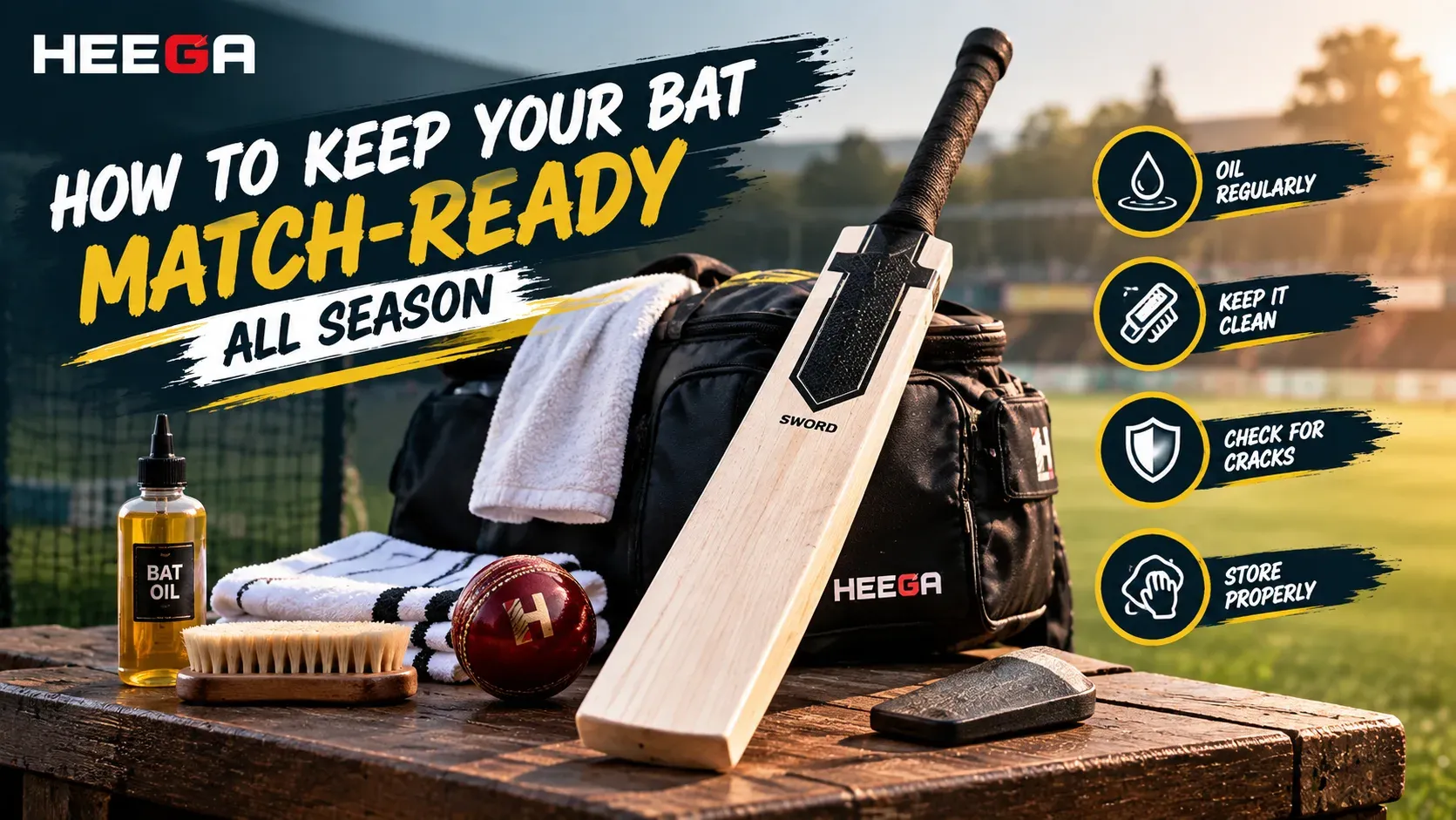
Introduction: Your English Willow Bat Needs More Than Good Technique
An English Willow cricket bat is a significant piece of equipment for many serious cricketers.
Players often spend considerable time choosing the right bat based on willow quality, weight, balance, profile, pickup, and playing style.
But buying a good bat is only the beginning.
Regular maintenance plays an important role in keeping the bat in usable condition throughout a season.
A cricket bat repeatedly absorbs impact from hard leather cricket balls. It can also be exposed to moisture, dust, changing temperatures, rough surfaces, and general wear during training and matches.
Without proper care, even a well-made English Willow bat can develop avoidable problems.
Good maintenance does not mean trying to keep the bat looking completely new.
A used cricket bat will naturally develop marks and surface wear.
The goal is to protect the willow, monitor damage, maintain the handle and grip, protect the toe, and make sure the bat remains suitable for continued use.
Whether you play club cricket, academy cricket, competitive cricket, or regular weekend matches, a sensible maintenance routine can help you get more value from your English Willow cricket bat.
Why English Willow Bat Maintenance Matters
English Willow is valued for its performance characteristics, but it still requires appropriate care.
A bat is exposed to repeated impact every time it meets the ball.
Over time, players may notice:
- Ball marks.
- Surface scratches.
- Small cracks.
- Toe wear.
- Grip deterioration.
- Handle movement.
- Moisture-related issues.
Some wear is completely normal.
The important thing is identifying problems early and addressing them before they become more serious.
Start With a Properly Prepared Bat
Maintenance begins before your first serious innings.
A new English Willow bat should be prepared according to the manufacturer's recommendations.
This can include:
- Appropriate oiling.
- Knocking in.
- Toe protection.
- Gradual introduction to match balls.
Do not assume that every new bat is ready for immediate full-speed match use.
Preparation requirements can vary depending on the bat and manufacturer.
What Does Knocking In Actually Do?
Knocking in is the process of gradually preparing the willow to handle repeated impacts from a cricket ball.
Traditionally, this involves carefully striking the bat's blade with a specialist bat mallet.
The objective is to compress and prepare the surface gradually.
The process should be controlled rather than aggressive.
Do Not Rush the Knocking-In Process
One of the biggest mistakes players make is trying to prepare a new bat in a single session.
A new English Willow bat should be introduced to impact progressively.
Start gently.
Inspect the surface regularly.
Gradually increase the intensity.
Only move toward harder ball use when the bat is appropriately prepared.
Why Gradual Preparation Matters
The surface of the bat needs time to become accustomed to repeated impact.
If a player immediately uses an inadequately prepared bat against high-speed leather-ball bowling, the risk of surface damage can increase.
Patience during preparation can save money and frustration later.
Oiling an English Willow Cricket Bat
Oiling is another important part of traditional bat care.
Raw willow can benefit from appropriate treatment with cricket bat oil when recommended by the manufacturer.
The oil helps maintain suitable moisture levels in the willow.
However, more oil is not necessarily better.
How Much Oil Should You Use?
Players should follow the bat manufacturer's specific instructions.
In general, oil should be applied carefully rather than soaking the bat.
Avoid excessive application.
Too much oil can affect the wood and may create unnecessary problems.
The objective is proper maintenance, not saturation.
Which Parts Should Be Oiled?
Players should generally pay attention to the blade and relevant exposed willow areas while avoiding parts that should not be treated.
The exact process can differ depending on the bat's finish and manufacturer's instructions.
If you are unsure, check the care instructions supplied with your bat.
Keep the Handle Dry and Secure
The handle is a critical part of the cricket bat.
It transfers energy from the player's hands into the blade.
It also experiences repeated vibration during impact.
Players should regularly check for:
- Loose areas.
- Unusual movement.
- Cracks.
- Damage around the handle.
- Grip deterioration.
If you notice a structural problem, stop using the bat and have it inspected by a qualified bat repair specialist.
Check Your Bat Before Every Match
A quick inspection can prevent small problems from becoming major ones.
Before playing, check:
- The blade.
- Edges.
- Toe.
- Shoulders.
- Handle.
- Grip.
- Protective tape.
- Any visible cracks.
You do not need a complicated maintenance routine.
A one-minute inspection can be extremely useful.
Small Surface Marks Are Usually Normal
An English Willow bat will naturally develop marks during use.
Ball marks, small scratches, and changes in the appearance of the blade are not automatically signs that the bat is damaged beyond use.
Do not panic every time the surface looks different.
Instead, distinguish between normal cosmetic wear and structural damage.
When Should You Take a Crack Seriously?
A visible crack deserves attention if it:
- Continues to grow.
- Opens significantly.
- Appears around the toe.
- Develops near the handle.
- Causes unusual movement.
- Changes how the bat feels.
- Produces loose pieces of wood.
When in doubt, stop using the bat and have it professionally inspected.
Protecting the Bat Toe
The toe is one of the most vulnerable parts of a cricket bat.
It can come into contact with:
- Moisture.
- Damp pitches.
- Ground surfaces.
- Shoe contact.
- Hard areas around the crease.
Toe protection can therefore be a valuable part of bat maintenance.
Why Toe Protection Matters
Moisture entering through the toe can potentially cause problems for the willow.
A suitable toe guard or protective solution can help reduce exposure.
Players should use products and methods appropriate to their bat and follow manufacturer guidance.
Avoid Using Your Bat Against the Ground
A cricket bat is designed to strike the ball, not to be repeatedly used as a walking stick or shovel.
Players sometimes tap the bat against the ground between deliveries.
While occasional contact is part of normal cricket, unnecessary or forceful tapping can contribute to toe and edge wear.
Use reasonable care.
Keep Your English Willow Bat Away From Water
Moisture is one of the biggest concerns for wooden cricket equipment.
Avoid:
- Leaving the bat in the rain.
- Placing it on wet ground.
- Storing it in a damp room.
- Keeping it inside a wet kit bag.
- Washing the blade with water.
If the bat becomes wet, allow it to dry naturally in a suitable environment.
Avoid using intense direct heat to speed up drying.
Never Dry a Wet Bat With Extreme Heat
Players may be tempted to place a wet bat near a heater, radiator, fire, or intense sunlight.
This is not recommended.
Rapid drying can affect the wood and potentially cause problems.
Instead, wipe away excess moisture gently and allow the bat to dry naturally in a controlled environment.
Store Your Bat Correctly
Good storage can make a significant difference over an entire season.
Store the bat:
- In a dry location.
- Away from direct sunlight.
- Away from extreme heat.
- Away from excessive humidity.
- In a suitable bat cover when appropriate.
Avoid leaving the bat in a vehicle for long periods, particularly in extreme temperatures.
Why Car Storage Can Be Risky
Cars can become extremely hot.
Rapid temperature changes can affect cricket equipment.
If you regularly travel to matches, try not to leave your English Willow bat inside the vehicle unnecessarily.
Take it with you when practical.
Use a Suitable Bat Cover
A quality bat cover can help protect the blade from:
- Scratches.
- Dust.
- Accidental impact.
- Transport damage.
A cover is particularly useful when the bat is carried between home, training facilities, and matches.
Your Cricket Kit Bag Matters Too
A crowded kit bag can expose the bat to unnecessary pressure.
Avoid placing heavy or sharp equipment directly against the bat.
Organize the bag so that:
- Shoes are separated.
- Wet clothing is removed.
- Protective equipment does not press heavily against the blade.
- The bat has sufficient protection.
Good organization can prevent accidental damage.
Maintaining the Bat Grip
The grip is one of the easiest parts of a bat to overlook.
A worn grip can become:
- Slippery.
- Loose.
- Torn.
- Uncomfortable.
A fresh grip can make the bat feel more secure in the hands.
Check the grip regularly, particularly if you play frequently.
When Should You Replace the Grip?
Consider replacing the grip when:
- It starts slipping.
- It becomes significantly worn.
- The rubber or surface begins breaking down.
- The grip feels uncomfortable.
- It no longer stays securely attached.
A simple grip replacement can make an old bat feel much better in the hands.
Keep Your Bat Clean
English Willow bats do not need aggressive cleaning.
After use, gently remove:
- Loose dirt.
- Dust.
- Grass particles.
Use a dry or slightly suitable cloth according to the manufacturer's recommendations.
Avoid soaking the bat.
Do Not Use Harsh Cleaning Products
Household cleaning chemicals are not designed specifically for cricket bats.
Avoid experimenting with strong cleaners, solvents, or abrasive materials.
They may affect the bat's finish or surface.
Simple and gentle care is usually better.
Maintaining the Bat During the Cricket Season
Maintenance should not happen only when something goes wrong.
Create a simple routine.
After Every Match
Check the blade, toe, edges, grip, and handle.
Every Few Matches
Look more carefully for cracks, looseness, or unusual damage.
After Wet Conditions
Inspect the bat carefully and ensure it is completely dry before storage.
Before Important Matches
Give the bat a complete inspection.
This routine does not take long but can help identify problems early.
Practice With Suitable Cricket Balls
The ball you use during training can affect bat wear.
Hard leather cricket balls create more impact than soft practice balls.
If your bat is new or recently repaired, follow appropriate preparation guidance before using it against full-intensity leather-ball bowling.
Do not assume every bat is ready for unlimited high-speed impact immediately after purchase or repair.
Why Throwdowns Can Still Wear a Bat
Throwdowns may look less demanding than a match, but repeated impacts add up.
A batter can face hundreds of balls during training.
If you train frequently, monitor the condition of your bat even if it is mainly used in nets.
Using a Separate Practice Bat
Some players prefer keeping one bat primarily for training and another for matches.
This can be particularly useful for frequent net sessions.
A practice bat can absorb routine training wear while the match bat receives less unnecessary impact.
This is not essential for every player, but it can be a practical strategy for serious cricketers.
English Willow Bat Maintenance During Travel
Transport can cause accidental damage.
When traveling with your bat:
- Use a protective cover.
- Avoid placing heavy items on it.
- Keep it away from wet equipment.
- Do not leave it exposed unnecessarily.
- Check it after long journeys.
For air travel or long-distance transportation, additional protective packaging may be appropriate.
What If Your Bat Gets Wet?
If your English Willow bat gets wet:
- Remove it from the wet environment.
- Gently wipe away surface moisture.
- Do not use intense heat.
- Allow it to dry naturally.
- Inspect it afterward.
- Seek professional advice if swelling, cracking, or other structural problems appear.
Do not immediately return to hard-ball use after serious water exposure.
Professional Bat Repairs
Not every problem should be repaired at home.
Professional bat repair may be appropriate for:
- Significant cracks.
- Handle damage.
- Loose edges.
- Toe damage.
- Structural problems.
- Major surface damage.
A qualified bat repair specialist can determine whether a bat is suitable for continued use.
Do Not Ignore Handle Problems
A handle problem can be more serious than a cosmetic surface mark.
If the handle feels loose or moves unusually, stop using the bat until it has been inspected.
Continuing to use damaged equipment can make the problem worse.
How Long Can an English Willow Bat Last?
There is no fixed lifespan for a cricket bat.
It depends on:
- Usage frequency.
- Ball quality.
- Bat preparation.
- Playing conditions.
- Maintenance.
- Bat construction.
- Impact intensity.
- Storage.
A bat used several times a week will naturally experience more wear than one used occasionally.
Good maintenance can help preserve a bat, but it cannot prevent normal wear forever.
Signs Your Bat May Be Near the End of Its Life
Consider replacing or professionally assessing the bat if you notice:
- Major structural cracks.
- Serious handle damage.
- Large sections of loose wood.
- Severe toe damage.
- Significant blade deterioration.
- Persistent instability.
- A noticeable change in how the bat performs.
Safety should always come before sentimental value.
Do Not Try to Repair Everything Yourself
Online tutorials can make bat repair appear simple.
Some minor maintenance tasks can be handled by players.
However, structural repairs require experience.
If you are unsure whether damage is serious, seek professional advice instead of experimenting with adhesives, tools, or aggressive repairs.
English Willow Bat Maintenance for Different Players
Beginners
Beginners should focus on:
- Proper preparation.
- Correct storage.
- Basic cleaning.
- Grip maintenance.
- Regular inspection.
Academy Players
Academy players should pay greater attention to:
- Training wear.
- Knocking-in condition.
- Toe protection.
- Regular inspections.
- Practice-ball selection.
Club Players
Club cricketers should monitor their bats throughout the season because regular matches and training can create significant wear.
Advanced Players
Advanced players may maintain multiple bats and work with specialists for repairs, preparation, and customization.
Maintaining a Bat Through Different Weather Conditions
Playing environments can vary significantly.
Hot, humid, wet, and dry conditions can all affect how players store and transport wooden equipment.
Players should avoid exposing the bat unnecessarily to:
- Rain.
- Excessive humidity.
- Extreme heat.
- Direct sunlight.
- Sudden temperature changes.
A stable storage environment is generally preferable.
Nepal, Germany, USA, Canada, Netherlands, and UK
Cricket is played across very different environments.
Players in Nepal, Germany, the United States, Canada, and the Netherlands may experience different seasonal conditions and training environments.
The United Kingdom has a long-established cricket calendar with its own range of weather and playing conditions.
Regardless of location, English Willow bat maintenance follows the same basic principles:
Keep it dry. Prepare it correctly. Inspect it regularly. Protect the vulnerable areas.
Common English Willow Bat Maintenance Mistakes
Using a New Bat Too Hard
A new bat should be prepared appropriately before serious leather-ball use.
Excessive Oiling
More oil does not automatically mean better maintenance.
Storing the Bat in a Damp Kit Bag
Moisture should be removed before storage.
Leaving the Bat in a Hot Car
Extreme temperatures can create unnecessary problems.
Ignoring Small Cracks
Small structural issues can become larger if ignored.
Using Harsh Cleaning Products
Simple care is generally safer than aggressive cleaning.
Continuing to Use a Damaged Handle
Handle problems should be professionally assessed.
A Simple English Willow Bat Maintenance Checklist
Before every match, check:
- Blade condition.
- Edges.
- Toe.
- Handle.
- Grip.
- Protective tape or toe guard.
- Signs of cracks.
- Overall balance and feel.
After every match:
- Remove dirt.
- Let the bat breathe.
- Keep it dry.
- Store it safely.
- Inspect any new marks.
At regular intervals:
- Check the grip.
- Check the toe.
- Inspect the handle.
- Review the blade condition.
- Consider professional maintenance if necessary.
How Heega Sports Supports Better Cricket Preparation
At Heega Sports, we understand that a quality cricket bat deserves quality care.
Alongside cricket bats, our range includes equipment designed to support players throughout their cricket journey:
- English Willow and Kashmir Willow cricket bats.
- Junior cricket bats.
- Batting gloves.
- Batting pads.
- Cricket helmets.
- Leather cricket balls.
- Practice balls.
- Cricket shoes.
- Cricket kit bags.
- Practice nets.
- Bat care and training accessories.
The right equipment combined with proper maintenance can help players prepare more confidently for regular training and match play.
Final Thoughts
An English Willow cricket bat is built to perform, but it still needs proper care.
Regular maintenance does not have to be complicated.
Protect the toe.
Keep the bat dry.
Follow appropriate knocking-in and oiling instructions.
Check the grip.
Inspect the blade.
Watch for cracks.
Store the bat correctly.
And seek professional help when structural damage appears.
Most importantly, do not wait until a problem becomes serious before checking your equipment.
A few minutes of care after training or a match can help you identify potential issues early.
Your English Willow bat may naturally develop marks as it becomes part of your cricket journey.
Those marks are often reminders of innings played, shots practiced, and matches experienced.
The goal of maintenance is not to keep the bat looking brand new forever.
It is to keep the bat safe, usable, and properly cared for throughout its playing life.
Whether you are a beginner, academy player, club cricketer, or experienced batter, looking after your bat is part of looking after your game.
🏏 Keep Your English Willow Bat Match-Ready With Heega Sports
Explore English Willow and Kashmir Willow cricket bats, bat-care accessories, batting gloves, leather balls, practice balls, pads, helmets, cricket shoes, kit bags, practice nets, and training equipment.
Shop Now
Heega Sports – Helping Players Protect Their Equipment and Play Their Best.
Related posts
 Wicket Keeping Leg Guards Explained: Fit, Flexibility and Protection for Faster Movement Behind the StumpsDiscover how to choose wicketkeeping leg guards with the right fit, flexibility, and protection for quicker movement, comfortable crouching, and confident keeping.
 Batting Gloves vs Wicketkeeping Gloves: Understanding the Key Differences in CricketLearn the key differences between batting gloves and wicketkeeping gloves, including protection, grip, flexibility, design, fit, and their role in cricket.
 Wicketkeeping Gloves Explained: How Size, Palm Design & Flexibility Affect KeepingLearn how wicketkeeping glove size, palm design, flexibility, grip, and fit affect keeping performance, comfort, catching control, and confidence.