How to Knock In and Maintain an English Willow Cricket Bat Properly.
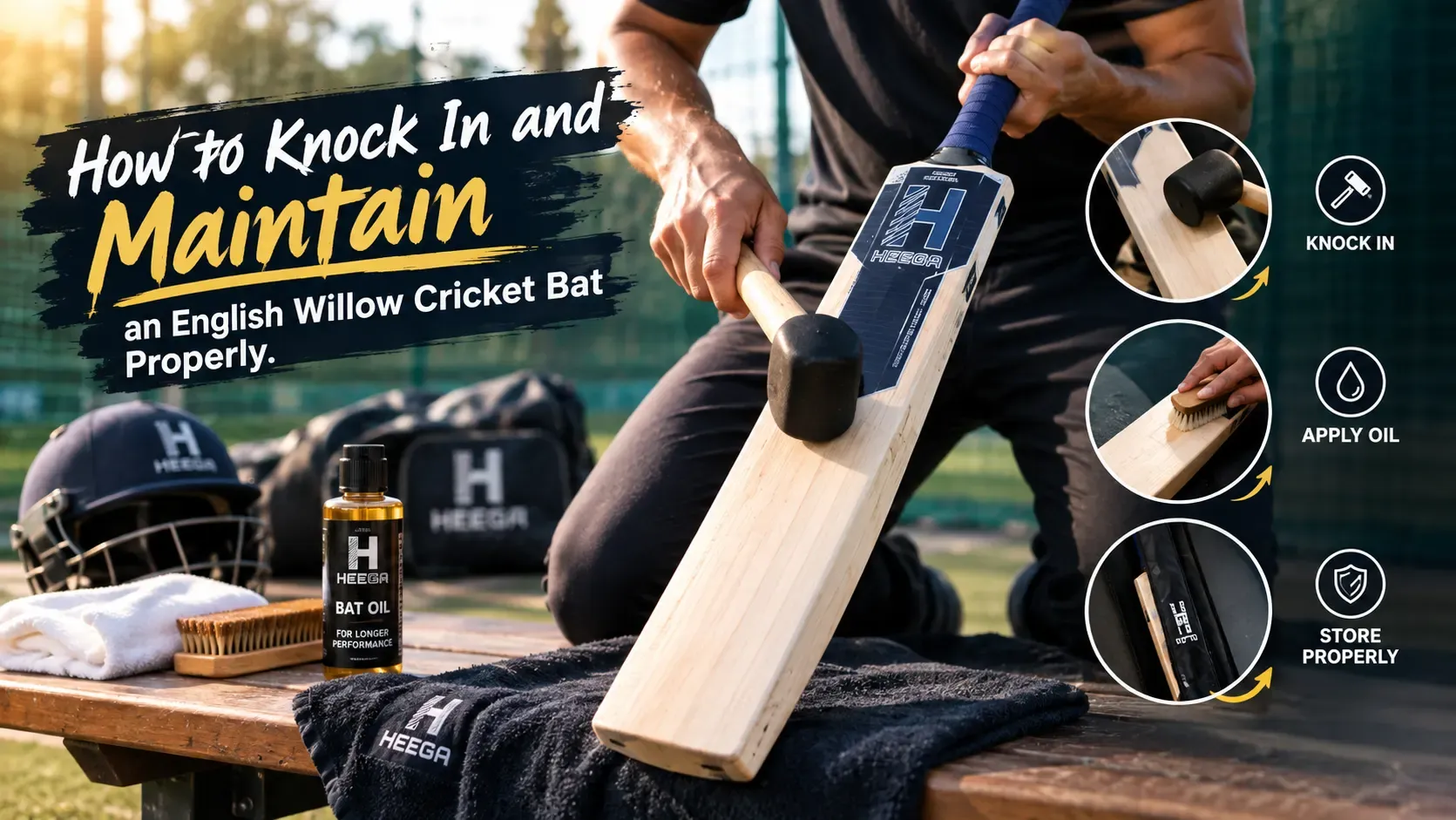
Introduction: Your English Willow Bat Needs More Than Good Technique
An English Willow cricket bat is a carefully crafted piece of sporting equipment.
Players invest in English Willow bats because they value their feel, pickup, responsiveness, and performance. But even a high-quality bat needs proper preparation and regular care.
Buying an expensive bat is only the beginning.
Before using it against fast leather-ball bowling, the bat may need appropriate preparation. During its playing life, it also needs protection from moisture, excessive impact, poor storage, and unnecessary wear.
This is where knocking in and cricket bat maintenance become important.
A properly prepared and maintained bat can provide a more reliable playing experience while helping players get better long-term use from their equipment.
Whether you are a beginner moving into leather-ball cricket, an academy player, club cricketer, or experienced batter, understanding how to care for an English Willow cricket bat can help protect your investment.
This guide explains the complete process—from checking a new bat and preparing the willow to maintaining the grip, protecting the toe, storing the bat correctly, and recognizing when repairs may be necessary.
Why English Willow Cricket Bats Need Proper Care
English Willow is a natural material.
Unlike synthetic equipment, willow can respond to repeated impact, moisture, temperature, and storage conditions.
Every delivery struck with a bat creates impact on the blade.
During a typical training session, a player may face dozens or even hundreds of deliveries.
Without appropriate preparation and care, repeated impact can increase the risk of:
- Surface marks.
- Edge damage.
- Toe damage.
- Handle problems.
- Moisture-related issues.
- Cracks.
- Reduced bat life.
Good maintenance cannot make a bat indestructible.
However, sensible preparation and care can help players avoid unnecessary damage.
What Does Knocking In a Cricket Bat Mean?
Knocking in is the process of gradually preparing the willow surface to handle the impact of a leather cricket ball.
Traditionally, players use a suitable bat mallet to apply controlled impact across different areas of the blade.
The purpose is not simply to hit the bat as hard as possible.
The process should gradually prepare the willow for the type of impact it will experience during cricket.
The exact preparation required depends on the bat and manufacturer.
Some modern bats may come partially prepared or ready for use, while others require more traditional preparation.
Always follow the manufacturer's instructions before beginning.
Does Every English Willow Bat Need the Same Preparation?
No.
Different bats can have different preparation requirements.
Factors may include:
- Willow grade.
- Manufacturing process.
- Factory preparation.
- Surface treatment.
- Manufacturer recommendations.
- Intended playing use.
Some bats are supplied with significant preparation already completed.
Others may require traditional knocking in before facing regular leather-ball bowling.
This is why players should not assume that every new English Willow bat needs exactly the same process.
The safest approach is to check the product instructions first.
Inspect the Bat Before Starting
Before beginning preparation, inspect the bat carefully.
Check:
- The blade.
- Edges.
- Toe.
- Spine.
- Handle.
- Grip.
- Overall finish.
Look for anything unusual, such as:
- Cracks.
- Loose areas.
- Structural damage.
- Handle movement.
- Manufacturing issues.
If there appears to be a problem with a new bat, contact the seller or manufacturer before attempting modifications or repairs.
Oiling an English Willow Cricket Bat
Traditional bat preparation may include applying a suitable bat oil to the willow.
Oil can help maintain the moisture condition of the willow when used correctly.
However, more oil does not mean better protection.
Players should:
- Use a suitable cricket bat oil.
- Apply only the recommended amount.
- Follow the manufacturer's instructions.
- Avoid soaking the bat.
- Keep oil away from areas where it should not be applied.
Over-oiling can be just as problematic as neglecting maintenance.
Why Over-Oiling Can Be a Problem
A cricket bat is made from natural wood, so excessive moisture or oil is not desirable.
Applying too much oil may affect the bat's condition and can make the surface unnecessarily greasy.
Instead of repeatedly applying oil without checking the manufacturer's guidance, players should use a controlled approach.
When in doubt, professional bat preparation is a safer option.
Preparing the Toe of the Bat
The toe is one of the areas most exposed to contact with the ground.
During batting, the toe can repeatedly touch the crease, pitch, or other surfaces.
This makes toe protection particularly important.
Players may use appropriate toe protection or follow the manufacturer's recommended method.
The objective is to reduce unnecessary exposure to:
- Moisture.
- Ground contact.
- Scraping.
- Impact.
A damaged or poorly protected toe can eventually become a more serious problem.
The Traditional Knocking-In Process
For a traditionally prepared bat, knocking in should be gradual.
A typical process involves working through several stages.
Stage 1: Begin With Controlled Impact
Start with gentle impacts using a proper cricket bat mallet.
Do not immediately strike the edges or toe aggressively.
The initial objective is controlled preparation rather than maximum force.
Stage 2: Work Across the Blade
Gradually cover the main hitting area.
Move the mallet across different sections rather than repeatedly striking one location.
The impact should remain controlled and consistent.
Stage 3: Gradually Increase Intensity
As the preparation progresses, the impact can become firmer.
However, there is no benefit in rushing.
The player should monitor the surface throughout the process.
Stage 4: Pay Attention to the Edges
Edges require careful treatment.
They should be prepared gradually rather than receiving heavy direct impacts immediately.
Poor preparation of the edges can increase the risk of damage when the bat later faces hard deliveries.
Why You Should Not Rush Knocking In
One of the most common mistakes is trying to complete the entire preparation process quickly.
Players may be excited to use a new bat and want to take it directly into the nets.
But rushing can create unnecessary risk.
Knocking in is about gradual preparation.
A few extra hours spent preparing the bat properly can be more valuable than damaging the blade during the first serious training session.
What About Using a Leather Ball During Preparation?
After appropriate mallet preparation, some players gradually introduce controlled leather-ball contact.
This should begin with gentle throwdowns rather than high-speed bowling.
The objective is to test how the bat responds to impact while gradually increasing intensity.
Players should not immediately use a newly prepared bat against fast bowling.
Gradually Increase the Intensity
A sensible progression can look like:
Mallet Preparation → Gentle Throwdowns → Controlled Nets → Regular Leather-Ball Use
The exact progression depends on the bat's preparation status and manufacturer recommendations.
The key principle is gradual exposure.
Check the Bat During Preparation
Do not simply knock the bat continuously without inspecting it.
After different stages, check for:
- Unusual dents.
- Surface cracks.
- Edge damage.
- Toe damage.
- Handle movement.
Small surface marks can occur naturally.
However, significant cracks or structural problems should not be ignored.
What Is Normal Wear?
A cricket bat will not remain perfectly new after regular use.
Normal signs of use may include:
- Ball marks.
- Minor surface marks.
- Small cosmetic blemishes.
- Slight changes in the finish.
These do not automatically mean the bat is damaged.
Players should learn to distinguish ordinary wear from structural problems.
What Signs Should Concern You?
More serious warning signs can include:
- Deep cracks.
- Loose handle.
- Significant edge damage.
- Severe toe splitting.
- Unusual movement in the blade.
- Major structural separation.
If any of these appear, stop using the bat until it has been assessed.
Continuing to use a damaged bat can make the problem worse.
Maintain the Cricket Bat Grip
The grip is another part of the bat that needs regular attention.
A worn grip can:
- Feel slippery.
- Reduce comfort.
- Affect hand positioning.
- Make the bat harder to control.
Replace the grip when it becomes excessively worn or damaged.
Players may also have personal preferences regarding grip thickness and texture.
A comfortable grip can improve confidence and control.
Keep the Bat Dry
Moisture is one of the biggest concerns when storing a wooden cricket bat.
Players should avoid leaving the bat:
- On wet ground.
- In damp kit bags.
- Near standing water.
- In excessively humid locations.
- Outside during rain.
If the bat becomes wet, allow it to dry naturally in a suitable environment.
Avoid using excessive direct heat to dry it quickly.
Never Dry a Wet Bat With Extreme Heat
It may be tempting to place a wet bat directly under intense sunlight or next to a heater.
This is not a sensible approach.
Rapid changes in moisture and temperature can affect natural wood.
Instead:
- Wipe away surface moisture carefully.
- Keep the bat in a dry, ventilated environment.
- Allow it to dry naturally.
- Inspect it before further use.
If the bat has become significantly soaked, professional advice may be appropriate.
Store the Bat Properly
Storage can have a major influence on the life of a cricket bat.
When not in use, keep the bat:
- Dry.
- Clean.
- Protected.
- Away from excessive heat.
- Away from damp conditions.
- In a suitable bat cover when appropriate.
Avoid leaving the bat in a vehicle for extended periods, especially in extreme temperatures.
Do Not Leave the Bat at the Bottom of a Wet Kit Bag
After a rainy training session, players should not simply close the kit bag and forget about it.
Wet equipment can create a damp environment around the bat.
After practice:
- Remove the bat from the kit bag.
- Check for moisture.
- Dry other equipment separately.
- Store the bat in a suitable location.
Good post-training habits can prevent avoidable problems.
Clean Your Cricket Bat Carefully
A bat does not need aggressive cleaning.
Players can remove loose dirt and surface marks using appropriate dry or lightly damp methods according to the manufacturer's recommendations.
Avoid:
- Soaking the blade.
- Using harsh chemicals.
- Scrubbing aggressively.
- Using unsuitable cleaning products.
The goal is simple: keep the bat clean without exposing the willow to unnecessary moisture or chemicals.
Protect the Bat During Transport
A good cricket bat deserves protection while traveling.
Use a suitable bat cover or cricket kit bag that prevents unnecessary impact.
During transport:
- Avoid placing heavy objects directly on the bat.
- Keep the blade protected.
- Prevent the bat from rubbing against sharp equipment.
- Avoid leaving it loose in a vehicle.
Small precautions can prevent cosmetic and structural damage.
Practice With the Right Cricket Ball
A bat designed for leather-ball cricket should be used appropriately.
Players should avoid using a valuable English Willow match bat for activities that can cause unnecessary damage.
For example, avoid:
- Hitting unsuitable hard objects.
- Using the bat on rough surfaces.
- Practicing against inappropriate balls.
- Using it for non-cricket activities.
A cricket bat should be treated as specialized sporting equipment.
Why Tennis-Ball Cricket Can Still Matter
Tennis-ball cricket is generally less demanding on a bat than leather-ball cricket, but players should still consider the bat's intended use.
If an English Willow bat is primarily designed and prepared for leather-ball cricket, players should follow the manufacturer's recommendations regarding ball types and usage.
The key is to understand what the bat was designed to handle.
Maintain Your Bat Throughout the Season
Bat maintenance should not happen only when something goes wrong.
Create a simple routine.
After Practice
Check:
- Blade.
- Toe.
- Edges.
- Grip.
- Moisture.
Every Few Weeks
Inspect:
- Surface condition.
- Handle.
- Toe protection.
- Grip wear.
Before Important Matches
Check:
- Grip security.
- Bat condition.
- Toe.
- Edges.
- Any developing cracks.
A few minutes of inspection can help identify problems early.
How Often Should You Re-Oil the Bat?
There is no universal schedule that applies to every English Willow bat.
The correct frequency depends on:
- Manufacturer instructions.
- Bat condition.
- Environmental conditions.
- Previous preparation.
- Amount of use.
Do not repeatedly oil a bat simply because you think more oil means more protection.
Follow the manufacturer's guidance or consult a professional bat specialist.
When Should You Get Professional Bat Repairs?
Professional repair may be appropriate when the bat develops:
- Significant cracks.
- Handle issues.
- Loose components.
- Serious edge damage.
- Toe damage.
- Structural problems.
Small cosmetic marks are usually very different from structural damage.
If you are uncertain about the severity of a problem, professional inspection is preferable to attempting an aggressive DIY repair.
Can a Cricket Bat Be Repaired?
Some cricket bat damage can be repaired.
Depending on the problem, specialists may work on:
- Cracks.
- Edges.
- Toe damage.
- Handles.
- Grips.
- Protective areas.
However, not every damaged bat can or should be repaired.
The decision depends on the severity and location of the damage.
A professional can determine whether repair is practical.
Common English Willow Bat Maintenance Mistakes
Using the Bat Before Proper Preparation
A new bat should be prepared according to its specific instructions.
Over-Oiling
More oil does not automatically provide better protection.
Ignoring the Toe
Repeated ground contact can eventually create problems.
Leaving the Bat in Damp Conditions
Moisture can negatively affect natural willow.
Using Extreme Heat
Rapid drying can be harmful to wooden equipment.
Ignoring Small Cracks
A small crack can potentially become a larger structural issue.
Storing the Bat Carelessly
Heavy equipment and poor transport can damage the blade.
Using the Bat for Unsuitable Activities
A cricket bat should only be used for its intended purpose.
How Long Can an English Willow Cricket Bat Last?
There is no fixed lifespan for an English Willow bat.
Its useful life depends on:
- Quality.
- Frequency of use.
- Bowling speed faced.
- Playing conditions.
- Preparation.
- Maintenance.
- Storage.
- Impact history.
A player who trains several times a week against leather balls may naturally put more wear on a bat than someone who plays occasionally.
Good maintenance can help extend useful life, but all bats eventually experience wear.
When Is It Time to Replace the Bat?
Consider replacement when:
- The bat has serious structural damage.
- The handle is no longer secure.
- The toe is badly damaged.
- The blade has extensive cracking.
- The player has outgrown the bat.
- The bat no longer provides suitable pickup or control.
- Repairs are no longer practical.
A player does not need to replace a bat simply because it has cosmetic marks.
Performance, safety, and structural condition should guide the decision.
English Willow Bat Maintenance for Young Players
Young players may need extra guidance because they are still learning how to handle equipment.
Parents and coaches can encourage children to:
- Keep the bat dry.
- Use a suitable cover.
- Avoid throwing the bat.
- Avoid using it on rough surfaces.
- Report cracks or damage.
- Store it properly after practice.
Teaching maintenance early can create good equipment habits for the future.
English Willow Bat Care for Academy Players
Academy players often face large training workloads.
Their bats may experience repeated impact during:
- Net sessions.
- Throwdowns.
- Practice matches.
- Bowling drills.
- Match simulations.
Regular inspections become especially useful for players who use their bats frequently.
Club Players Should Monitor Match and Practice Wear
Club cricketers may use the same bat across multiple formats and training sessions.
Keeping track of wear can help players decide when a bat should be repaired, protected, or replaced.
It can also be useful to maintain a second bat for practice or as a backup.
Why Professional Players Often Carry Multiple Bats
Professional and advanced players may carry multiple bats because equipment requirements can change.
Reasons include:
- Match conditions.
- Different pitches.
- Training needs.
- Backup requirements.
- Wear and tear.
- Personal preference.
Having a prepared backup can be valuable during important matches.
The Importance of Good Bat Care
A cricket bat is an investment in a player's game.
Proper maintenance does not guarantee that a bat will last forever.
But it can help players:
- Avoid preventable damage.
- Maintain comfort.
- Protect the willow.
- Identify problems early.
- Get better long-term value from their equipment.
The best maintenance routine is one that becomes a habit.
How Heega Sports Supports Better Bat Care
At Heega Sports, we understand that choosing a good cricket bat is only part of the player's equipment journey.
Players also need suitable products and accessories to help them train, protect, and maintain their cricket equipment.
Our cricket range includes:
- English Willow cricket bats.
- Kashmir Willow cricket bats.
- Junior cricket bats.
- Harrow bats.
- Short Handle bats.
- Long Handle bats.
- Cricket bat care products.
- Leather cricket balls.
- Practice cricket balls.
- Batting gloves.
- Batting pads.
- Cricket helmets.
- Cricket shoes.
- Cricket kit bags.
- Practice nets.
- Training accessories.
Whether you are buying your first serious cricket bat or preparing equipment for competitive cricket, proper care should remain part of your routine.
Final Thoughts
An English Willow cricket bat is designed to perform, but it also needs responsible care.
Proper preparation, gradual knocking in where required, sensible oiling, regular inspection, toe protection, careful storage, and appropriate use can all contribute to a better equipment experience.
The most important rule is simple:
Do not treat every cricket bat the same way.
Follow the manufacturer's preparation and maintenance instructions because different bats can have different requirements.
Do not rush the knocking-in process.
Do not over-oil the willow.
Do not leave the bat in damp conditions.
Do not ignore structural damage.
And do not assume that cosmetic marks mean the bat has reached the end of its life.
With the right habits, players can protect their equipment while getting the most from their English Willow bat throughout training and competitive cricket.
A good bat can become an important part of a player's cricket journey.
Taking care of it properly helps make sure it is ready when the next innings begins.
🏏 Protect Your Bat. Prepare Better. Play With Confidence.
Explore cricket bats, English Willow and Kashmir Willow bats, cricket bat care products, leather balls, practice balls, batting gloves, pads, helmets, shoes, kit bags, practice nets, and training accessories at Heega Sports.
Shop Now
Heega Sports – Helping Players Protect Their Equipment and Perform With Confidence.
Related posts
 English Willow Cricket Bat Knocking-In Explained: Preparing the Blade Before Match UseLearn how to knock in an English Willow cricket bat, prepare the blade before match use, avoid common mistakes, and protect your bat from premature damage.
 English Willow Cricket Bats Explained: How Bat Pressing, Grain Structure and Blade Compression Influence PerformanceLearn how English willow bat pressing, grain structure, and blade compression influence performance, durability, shot response, and bat selection.
 English Willow Cricket Bats: How to Identify Quality, Check Bat Balance and Avoid Buying MistakesLearn how to identify a quality English willow cricket bat, check its balance and pickup, understand grain patterns, and avoid common buying mistakes.