How to Pack and Organize Your Cricket Kit Bag to Protect Your Gear All Season Long
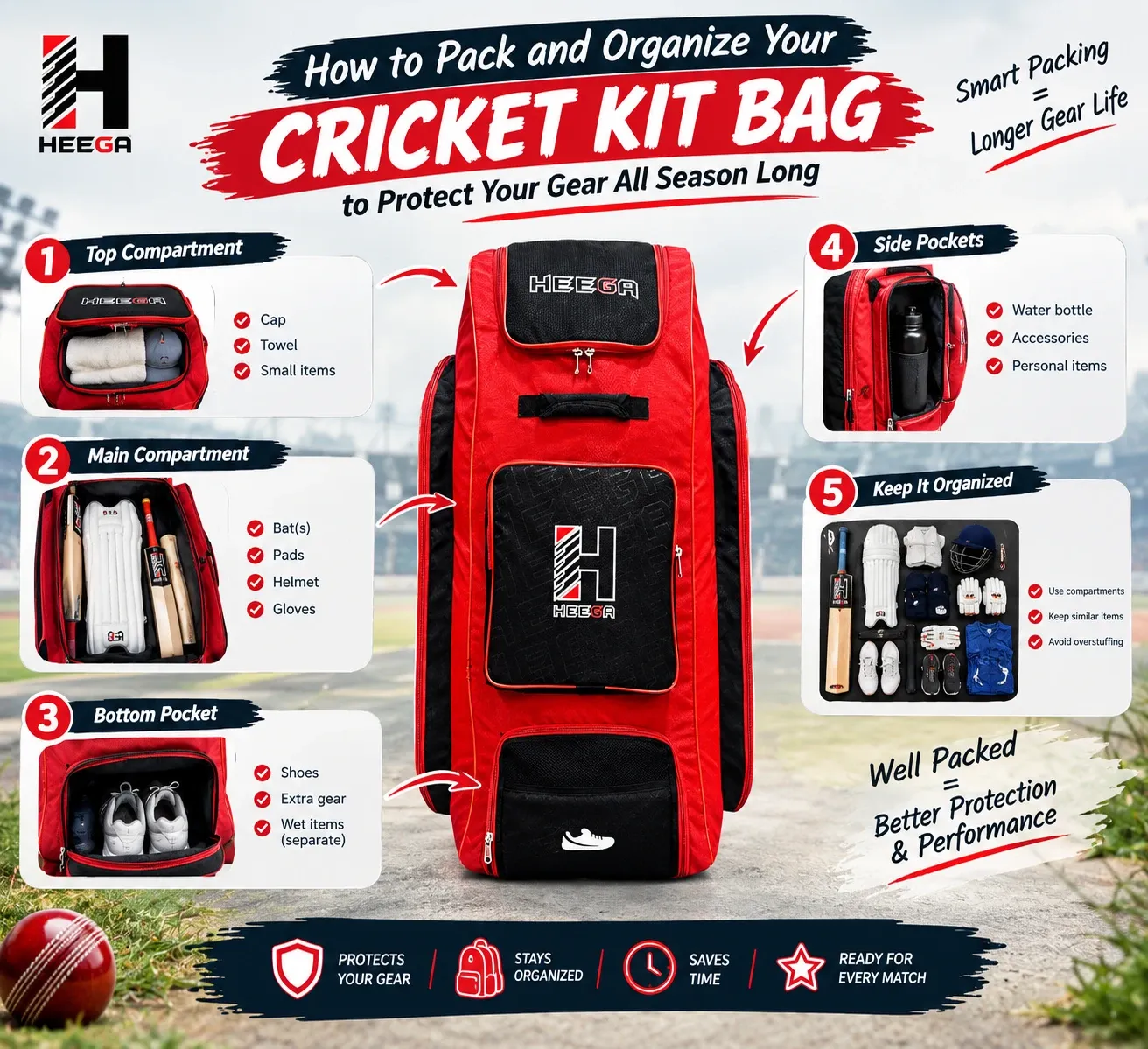
Introduction: Why Proper Cricket Kit Bag Organization Matters
A cricket kit bag is more than just a bag for carrying equipment. It is where your bat, gloves, pads, helmet, shoes, clothing, and smaller accessories stay between practices and matches. When everything is packed without a proper system, equipment can become damaged, wet, dirty, or difficult to find when you need it.
For beginners, organizing a cricket kit bag can also make it easier to understand what equipment is actually needed for training and match days. For professional and regular club players, good organization saves time and helps protect expensive gear throughout a busy season.
A well-packed cricket kit bag should make three things easy:
- Finding your equipment quickly
- Keeping different items protected from each other
- Allowing wet or sweaty gear to dry properly
This guide explains how to pack a cricket kit bag, where to place different pieces of equipment, how to protect your cricket bat and protective gear, and how to maintain your kit throughout the season.
What Should Be Inside a Cricket Kit Bag?
Before organizing your bag, it helps to divide your cricket equipment into different categories.
A typical cricket kit may include:
- Cricket bat
- Batting gloves
- Batting pads
- Helmet
- Thigh guard
- Abdominal guard
- Arm guard
- Chest guard
- Wicketkeeping gloves
- Wicketkeeping pads
- Cricket shoes
- Training shoes
- Cricket clothing
- Socks
- Towels
- Water bottle
- Cricket balls
- Grip or bat accessories
- Sunglasses
- Small first-aid items
- Personal toiletries
You do not necessarily need every item for every session. A beginner attending a basic practice session may need much less equipment than a professional preparing for a competitive match.
The key is to pack according to the type of cricket you are playing.
How to Pack Your Cricket Kit Bag Properly
Good organization starts with a simple rule: heavy and rigid equipment should have its own space, while soft and smaller items should be grouped together.
Do not simply throw everything into the largest compartment.
Instead, arrange your kit in a way that prevents unnecessary pressure, scratches, dirt, and moisture.
Step 1: Start With a Clean Cricket Kit Bag
Before packing your equipment, check the inside of your cricket kit bag.
Remove:
- Old tape
- Grass
- Dirt
- Empty packets
- Used tissues
- Broken accessories
- Old clothing
- Unused match-day items
If the bag itself is dirty, clean it according to the manufacturer's care instructions and allow it to dry completely before packing.
A clean bag gives your equipment a cleaner environment and makes organization much easier.
Step 2: Pack Your Cricket Bat Carefully
Your cricket bat is usually one of the most important and expensive pieces of equipment in your kit.
If your bag has a dedicated bat compartment, use it.
The bat should not be placed under heavy protective equipment, shoes, or other hard objects.
When packing your bat:
- Keep it in its protective cover when appropriate.
- Avoid placing heavy objects directly on top of it.
- Keep it away from wet clothing.
- Make sure the handle is not being forced against other equipment.
- Check that the bat compartment is free from dirt and moisture.
If you carry more than one bat, keep each bat properly separated and protected rather than allowing them to rub against each other.
A little extra care during transportation can help prevent unnecessary scratches and damage.
Step 3: Organize Batting Pads and Gloves
Batting pads are bulky, so they can be used to create structure inside the main compartment.
However, avoid compressing them under excessive weight.
Place gloves somewhere they can breathe rather than burying them underneath wet clothing.
After practice or a match, allow gloves to dry naturally before putting them away for long periods.
Do not leave damp gloves zipped inside a closed bag for several hours if you can avoid it.
This is particularly important during humid weather.
Step 4: Keep Your Helmet Protected
A cricket helmet should have enough space around it to prevent unnecessary pressure.
If your bag has a separate helmet compartment, use it.
Otherwise, position the helmet carefully in the main compartment.
Avoid placing heavy equipment on top of the helmet.
You should also inspect your helmet regularly for:
- Cracks
- Damaged grille components
- Loose fittings
- Worn straps
- Damaged padding
A helmet is safety equipment, so it should be treated differently from ordinary clothing or accessories.
Step 5: Pack Cricket Shoes Separately
Cricket shoes are usually among the dirtiest items in your kit.
They can carry:
- Grass
- Mud
- Dust
- Moisture
- Small stones
If your cricket kit bag has a separate shoe compartment, use it.
If it does not, place your shoes inside a breathable shoe bag or another suitable protective bag before putting them into the main compartment.
Avoid placing dirty shoes directly next to clean clothing.
After playing, remove excess mud and allow the shoes to dry before storing them for an extended period.
Step 6: Keep Wet Clothing Away From Dry Equipment
One of the most common kit-bag mistakes is putting sweaty or wet clothing straight into the same compartment as everything else.
After a long training session, your shirt, trousers, socks, or towel may contain considerable moisture.
If these items remain trapped inside a closed cricket kit bag, they can create an unpleasant environment for other equipment.
Whenever possible:
- Separate wet clothing from dry equipment.
- Use a dedicated laundry or wet-kit bag.
- Open the kit bag when you get home.
- Remove damp clothing immediately.
- Allow equipment to air out before long-term storage.
This simple routine can make a major difference to the condition of your kit.
How to Organize Your Cricket Kit Bag by Compartments
If your cricket bag has multiple compartments, give each compartment a specific purpose.
A simple system could look like this:
Bag CompartmentRecommended Equipment
Bat Compartment
Cricket bat
Large Main Compartment
Pads, gloves, helmet, protective gear
Shoe Compartment
Cricket shoes
Small Pocket
Phone, keys, sunglasses, wallet
Accessory Pocket
Tape, grips, spare laces, small tools
Wet-Kit Section
Used clothing and towels
You do not have to follow this arrangement exactly.
The best organization system is one that allows you to remember where everything belongs.
Keep Small Cricket Accessories in One Place
Small accessories are easy to lose.
Items such as:
- Bat grip
- Grip cone
- Bat tape
- Scissors
- Spare shoelaces
- Sunglasses
- Wristbands
- Scorebook
- Small towels
can quickly disappear into a large cricket bag.
Use a small internal pouch or accessory compartment for these items.
Keeping small equipment together also makes pre-match preparation faster.
Instead of searching through the entire bag, you know exactly where to look.
How to Protect Your Cricket Gear From Moisture
Moisture is one of the biggest enemies of stored cricket equipment.
This is especially important during monsoon weather, humid conditions, or long periods of storage.
Your cricket kit may become wet because of:
- Rain
- Sweating
- Wet grounds
- Damp changing rooms
- Wet towels
- Condensation
- Humid storage areas
The most important rule is simple:
Do not leave wet equipment sealed inside a closed cricket kit bag for a long time.
Once you return home, open the bag and remove anything damp.
Allow equipment to dry naturally in a suitable ventilated area.
Avoid unnecessary direct heat when drying cricket equipment, particularly items that can be affected by high temperatures or rapid drying.
How to Pack Your Cricket Kit Bag for Match Day
Match-day organization should be slightly different from normal training.
You should prepare your kit before leaving home instead of checking everything at the last minute.
Match-Day Cricket Kit Checklist
Before leaving, check:
Batting Equipment
- Cricket bat
- Batting gloves
- Batting pads
- Helmet
- Thigh guard
- Abdominal guard
- Chest guard if required
- Arm guard if required
Clothing
- Match shirt
- Match trousers
- Socks
- Innerwear
- Training or warm-up clothing
- Spare clothing
Footwear
- Cricket shoes
- Spare shoes if needed
- Shoe accessories
Personal Items
- Water bottle
- Towel
- Sunglasses
- Personal essentials
Backup Items
- Spare gloves if available
- Spare grips
- Bat tape
- Extra socks
- Basic first-aid supplies
The exact requirements will depend on your playing role and level of cricket.
How Beginners Should Organize a Cricket Kit Bag
Beginners do not need to carry every piece of cricket equipment they own to every practice.
Start with the equipment required for your session.
For example, a beginner's training bag may contain:
- Bat
- Batting gloves
- Pads
- Helmet
- Shoes
- Cricket clothing
- Water bottle
- Towel
As your training becomes more advanced, you can add other protective equipment and accessories.
Keeping the kit simple also makes it easier to learn what each item does and when it is needed.
How Professional Cricketers Can Organize Their Kit
Professional and serious club players often carry more equipment because they may need to prepare for different conditions.
A professional kit bag may include:
- Multiple bats
- Match and training gloves
- Different footwear
- Spare protective equipment
- Multiple sets of clothing
- Training accessories
- Backup grips
- Bat maintenance items
- Personal recovery equipment
The challenge is not simply carrying more equipment.
The challenge is knowing where everything is.
A professional-level kit should therefore be organized around accessibility.
Frequently used items should be easy to reach, while backup equipment can be stored separately.
Keep Match Gear and Training Gear Organized
If you regularly play both matches and training sessions, consider separating the equipment mentally or physically.
For example:
Training equipment
- Practice clothing
- Training shoes
- Training gloves
- Practice bat
- Training accessories
Match equipment
- Match bat
- Match gloves
- Match clothing
- Main protective equipment
- Match shoes
This can reduce unnecessary wear on your preferred match equipment during routine practice.
It also makes it easier to prepare your bag for a match.
How to Maintain Your Cricket Kit Bag Throughout the Season
Packing your bag correctly is only the first step.
You should also inspect and clean your equipment regularly.
Weekly Kit Check
Once a week, remove everything from the bag.
Check for:
- Moisture
- Dirt
- Damaged straps
- Torn clothing
- Loose stitching
- Worn gloves
- Damaged pads
- Shoe damage
- Bat surface damage
- Missing accessories
This takes only a few minutes but can help you identify problems before an important match.
Clean Your Cricket Kit Bag Regularly
Your kit bag can collect a surprising amount of dirt during a season.
Empty the bag completely and remove loose dust and debris.
Follow the care instructions provided for your particular bag.
Do not assume every cricket bag can be machine washed or soaked.
For most equipment bags, basic surface cleaning and proper drying are safer than aggressive cleaning methods.
Always make sure the bag is completely dry before putting your cricket equipment back inside.
Do Not Store Your Entire Kit in the Bag for Months
A cricket kit bag is designed for carrying and organizing equipment.
It is not always the best place for long-term storage.
If the season has ended or you will not be playing for several weeks, remove the equipment from the bag.
Clean and dry your gear before storing it.
This is particularly important for:
- Gloves
- Clothing
- Shoes
- Towels
- Protective equipment
Your bat should also be stored in appropriate conditions rather than being forgotten inside a closed bag.
How to Organize a Cricket Kit Bag in Rainy Weather
Rain creates additional challenges for cricketers.
If you have played in wet conditions, pay extra attention to what goes back into your bag.
After returning home:
- Remove wet clothing.
- Remove wet towels.
- Take out wet shoes.
- Open protective equipment for ventilation.
- Inspect the bat for moisture.
- Dry the inside of the bag.
- Repack everything only after it is sufficiently dry.
Never assume that closing the bag will make the moisture disappear.
It usually does the opposite by trapping it inside.
Common Cricket Kit Bag Packing Mistakes
Even experienced players can develop bad habits when they are in a hurry.
Here are some of the most common mistakes.
1. Putting Everything Into One Compartment
This makes equipment difficult to find and can increase contact between hard, dirty, and soft items.
2. Leaving Wet Clothes Inside
This can create unpleasant smells and an unhealthy storage environment.
3. Throwing Shoes on Top of Clean Gear
Dirty footwear should be separated from clean clothing and sensitive equipment.
4. Putting Heavy Items on the Bat
Your bat should have suitable protection and should not be treated as a surface for storing other equipment.
5. Ignoring the Helmet
Do not bury or crush your helmet beneath heavy equipment.
6. Forgetting Small Accessories
Missing tape, grips, socks, or other small items can become frustrating on match day.
7. Never Cleaning the Bag
A dirty bag eventually becomes a poor environment for clean equipment.
8. Keeping Everything in the Bag During the Off-Season
Long-term storage requires more care than simply closing the zippers.
Cricket Kit Bag Organization for Different Players
Different players have different equipment requirements.
Player TypeMain Organization Priority
Beginner
Simple organization and essential equipment
School Player
Easy access and separation of training gear
Academy Player
Protection, regular maintenance, and backup equipment
Club Player
Match/training separation and efficient access
Professional
Multiple equipment sets, backup gear, and condition management
The goal is not to have the biggest bag.
The goal is to have the right equipment organized in the right place.
How to Make Your Cricket Kit Bag Easier to Use
A good organization system should be easy to maintain.
Try these simple habits:
Give Everything a Permanent Place
If your gloves always go in the same pocket, you will find them quickly.
Use Separate Bags for Dirty Items
A laundry bag or wet-kit bag can keep used clothing away from clean equipment.
Keep Frequently Used Items Accessible
Do not put your water bottle or towel underneath everything else.
Check the Bag Before Every Match
A two-minute inspection can prevent last-minute problems.
Repack After Every Session
Do not wait until the next match to discover that your previous training clothes are still inside.
How Proper Organization Can Help Extend Gear Life
Organizing your cricket kit bag does not magically make equipment last forever.
However, it can reduce avoidable damage.
For example:
- Separating shoes can reduce dirt transfer.
- Removing wet clothing can reduce moisture exposure.
- Protecting the bat can reduce unnecessary scratches.
- Storing gloves correctly can help them dry properly.
- Keeping protective equipment from being crushed can help preserve its condition.
- Regular inspections can help you notice wear earlier.
Equipment life depends on many factors, including quality, usage, playing conditions, maintenance, and storage.
Good organization is simply one part of the process.
Cricket Kit Bag Packing Checklist
Before leaving for practice or a match, run through this quick checklist.
Equipment
- Cricket bat
- Batting gloves
- Batting pads
- Helmet
- Protective guards
- Cricket shoes
Clothing
- Match/training shirt
- Trousers
- Socks
- Innerwear
- Spare clothes
- Towel
Accessories
- Water bottle
- Sunglasses
- Bat grip
- Tape
- Spare laces
- Personal essentials
Before Leaving Home
- Bag is dry
- Shoes are clean enough for use
- Gloves are dry
- Bat is protected
- Helmet is in good condition
- Wet clothing has not been left inside
How Coaches Can Teach Young Players to Organize Their Kit
Kit organization is a useful habit for young cricketers to develop early.
Coaches can encourage players to:
- Pack their own bags.
- Learn the purpose of each piece of equipment.
- Keep protective equipment together.
- Separate footwear from clean clothing.
- Remove wet gear after practice.
- Check equipment before matches.
- Report damaged equipment instead of continuing to use it without inspection.
These habits can become part of a player's regular match preparation.
What Makes a Good Cricket Kit Bag?
A good cricket kit bag should provide enough space without making organization difficult.
Important features may include:
- Dedicated bat compartment
- Large main storage area
- Separate shoe compartment
- Smaller accessory pockets
- Strong zippers
- Durable materials
- Comfortable carrying straps
- Ventilation where appropriate
- Enough room for the player's actual equipment
The ideal size depends on how much equipment you carry.
A beginner may prefer a compact bag, while a professional may require a much larger design.
How Often Should You Reorganize Your Cricket Kit Bag?
There is no fixed schedule, but a useful routine is:
After every session:
Remove wet clothing and check for obvious dirt or damage.
Every week:
Empty the bag and inspect your equipment.
Before every match:
Complete a full equipment checklist.
At the end of the season:
Clean, dry, inspect, and properly store your equipment.
This routine takes little time compared with the inconvenience of discovering damaged or missing equipment before an important game.
Final Thoughts
Learning how to pack and organize your cricket kit bag properly is a simple habit that can make a real difference throughout the cricket season.
For beginners, it creates good equipment-management habits from the start. For professional and regular club players, it makes match preparation faster and helps keep expensive gear in better condition.
Keep your bat protected, separate dirty shoes and wet clothing, give small accessories a dedicated place, and regularly inspect the entire kit.
Most importantly, remember that a cricket kit bag should help protect your equipment—not become a place where everything is forgotten after training.
A few minutes of organization after every session can save time, reduce unnecessary equipment damage, and keep your cricket gear ready for the next practice or match.
FAQs About Cricket Kit Bag Organization
How should I pack my cricket kit bag?
Place the cricket bat in its dedicated compartment if available, keep shoes separate from clean equipment, organize protective gear in the main compartment, and keep small accessories in smaller pockets.
Should I leave wet clothes inside my cricket kit bag?
No. Remove wet or sweaty clothing as soon as practical after training or a match and allow it to dry properly.
How do I protect my cricket bat inside the kit bag?
Use the bat's protective cover where appropriate and avoid placing heavy or hard equipment directly on top of it.
Where should cricket shoes go in a kit bag?
Use a dedicated shoe compartment whenever possible. Otherwise, place the shoes in a suitable shoe bag so dirt and moisture remain separated from clean equipment.
How often should I clean my cricket kit bag?
Inspect it regularly and give it a proper clean whenever dirt, moisture, or unpleasant smells begin to build up. A deeper check at least once a week is a useful habit during an active season.
Can I store my cricket equipment inside the kit bag during the off-season?
It is better to remove, clean, dry, and inspect your equipment before long-term storage rather than leaving everything sealed inside the bag for months.
How can beginners avoid overpacking their cricket kit bag?
Pack according to the session. Beginners should carry the equipment required for their training or match rather than filling the bag with every accessory they own.
How do professional cricketers organize their kit bags?
Professional players often separate match equipment, training equipment, footwear, protective gear, clothing, and backup accessories. The exact system depends on the player's role and requirements.
Shop Cricket Equipment at Heega Sports
Looking for reliable cricket equipment for training, club cricket, or competitive play? Explore the range of cricket bats, balls, protective equipment, kit bags, and other cricket essentials from Heega Sports.
Related posts
 The Complete Pre-Season Cricket Gear Checklist: From Bat Maintenance to Protective Armour.Get match-ready with the ultimate pre-season cricket gear checklist. Learn how to inspect, restore, and maintain your bats, protective armour, spikes, and kit bag.
 Cricket Batting Pads Explained: How Knee Protection, Shin Coverage and Strap Placement Affect Comfort and MobilityLearn how cricket batting pads, knee protection, shin coverage and strap placement affect comfort, mobility, impact protection and batting performance.
 Batting Gloves Explained: How Padding Placement and Finger Protection Help Manage Ball ImpactLearn how batting glove padding placement, finger protection, and fit help manage ball impact. Find practical tips for choosing cricket batting gloves.