How Watching Cricket Matches Can Help Kids Understand the Game Beyond Batting and Bowling

Introduction: Watching Cricket Can Be Part of Learning
For many children, watching cricket is simply entertainment.
They cheer when their favorite player hits a six.
They celebrate wickets.
They enjoy exciting catches.
But watching cricket can also become a powerful learning experience.
When children learn to look beyond the scoreboard, they begin to notice everything happening around the ball.
Why is a fielder standing there?
Why did the bowler change the delivery?
Why did the batter take a single instead of attempting a boundary?
Why did the captain move a fielder?
Why did two batters suddenly start running harder?
These questions help children understand that cricket is not just about batting and bowling.
It is a game of planning, observation, communication, patience, teamwork, and decision-making.
Cricket Is a Game of Many Moving Parts
A cricket match involves much more than two players competing directly.
At any moment, children can observe:
- Batters.
- Bowlers.
- Wicketkeepers.
- Fielders.
- Captains.
- Coaches.
- Partners.
- Match officials.
Every person has a role.
Watching these interactions can help children understand how the game works as a whole.
Why Game Awareness Matters
A young player can have excellent batting technique but still struggle to understand match situations.
For example, they may know how to play a cover drive but not know:
- When to attempt it.
- Where the fielders are.
- Whether the team needs risk or control.
- When to rotate the strike.
Watching matches can help connect technical skills with actual game situations.
Children Can Learn by Observing Professionals
Young players often learn by watching what experienced players do.
A child may notice how a batter:
- Leaves a difficult delivery.
- Moves into position.
- Rotates the strike.
- Communicates with a partner.
- Changes approach during an innings.
These observations can become useful lessons.
Watching Should Be Active, Not Passive
There is a big difference between simply watching cricket and watching cricket with curiosity.
Instead of asking:
"Who scored the most runs?"
parents can ask:
"Why do you think the batter played that shot?"
This simple question changes the way children watch.
Teach Kids to Watch the Field
The field is one of the most educational parts of cricket.
Ask children to identify:
- Where the fielders are.
- Which areas are protected.
- Which areas appear open.
- How the field changes.
This helps them understand strategy.
Why Field Placement Matters
Fielders are not positioned randomly.
Their locations are influenced by:
- Bowler type.
- Batter strengths.
- Match situation.
- Pitch conditions.
- Scoring patterns.
Children can gradually learn to connect field placement with bowling strategy.
Watch How Captains Move Fielders
One of the easiest ways to teach tactics is to watch a captain adjust the field.
Ask:
"Why did the captain move that fielder?"
The child may notice that the batter has repeatedly played toward a particular area.
This introduces tactical thinking.
Bowling Plans Become Easier to Understand
A bowler may deliver several balls that appear similar.
But there may be a specific plan behind them.
For example:
- Bowl outside off stump.
- Build pressure.
- Encourage a risky shot.
- Change pace.
- Attack the stumps.
Watching repeated deliveries helps children understand that cricket is often about creating situations rather than seeking instant results.
Watch What Happens Before a Wicket
A wicket can appear to happen suddenly.
But often, the groundwork has already been laid.
A bowler may bowl several accurate deliveries.
The batter may become frustrated.
The field may become more attacking.
Eventually, the batter makes a mistake.
Ask children:
"What happened before the wicket?"
This teaches them to look for cause and effect.
Batting Is About More Than Boundaries
Young viewers often focus on sixes and fours.
But parents can point out other valuable batting actions.
For example:
- Defending a difficult ball.
- Taking a single.
- Rotating the strike.
- Leaving a dangerous delivery.
- Building a partnership.
These actions help children understand intelligent batting.
Teach Kids to Notice Shot Selection
Ask:
"Why did the batter attack that ball?"
Then ask:
"Would you have played the same shot?"
There may be several possible answers.
The important part is encouraging the child to think.
Watching Defensive Batting Can Be Educational
Defensive shots may not look as exciting as boundaries.
But they can teach children about:
- Balance.
- Patience.
- Risk management.
- Match awareness.
Sometimes not attacking is the smartest decision.
Watch How Batters Build an Innings
A batter's approach may change over time.
Early in an innings, they may focus on settling in.
Later, they may increase the scoring rate.
Near the end, they may take greater risks.
This teaches children that strategy can change depending on the situation.
Partnerships Are Worth Watching
Cricket is not only about individual scores.
Two batters can build a partnership through:
- Communication.
- Running.
- Strike rotation.
- Supporting each other.
- Managing risk.
Parents can ask:
"What are these two batters doing to stay together?"
Running Between Wickets Becomes Easier to Understand
Watching matches can help children see the importance of running.
They can observe how players:
- Call.
- Sprint.
- Turn.
- Judge fielders.
- Decide whether to take another run.
This can reinforce what they practice during training.
Communication Is Visible Throughout a Match
Children can watch how players communicate constantly.
Fielders communicate about:
- Catches.
- Throws.
- Positions.
Batters communicate about:
- Runs.
- Boundaries.
- Strike changes.
Wicketkeepers communicate with:
- Bowlers.
- Captains.
- Fielders.
This shows children that communication is part of cricket at every level.
Wicketkeepers Are Excellent Players to Watch
The wicketkeeper is involved in almost every delivery.
Children can observe how they:
- Position themselves.
- Watch the batter.
- Collect the ball.
- Communicate with the bowler.
- Adjust to spin.
- React to edges.
Watching wicketkeepers can significantly improve a child's understanding of the game.
Watch Fielders Before the Ball Is Bowled
A useful exercise is to ask children to look at the field before each delivery.
Ask:
"Where are the fielders?"
Then ask:
"Where do you think the batter might try to score?"
This encourages prediction.
Prediction Makes Watching More Interactive
Before a delivery, children can make a prediction.
For example:
"I think the bowler will try to get the batter to drive."
After the ball, discuss what actually happened.
This teaches observation and reasoning.
Watch the Bowler's Body Language
Children can sometimes notice when a bowler is:
- Frustrated.
- Confident.
- Tired.
- Focused.
This can help them understand the mental side of cricket.
Watch the Batter's Body Language Too
A batter's reactions can also provide clues.
They may appear:
- Comfortable.
- Nervous.
- Frustrated.
- Aggressive.
- Defensive.
This helps children understand that cricket involves emotions as well as physical skills.
Cricket Teaches Emotional Control
Watching experienced players recover after mistakes can be particularly useful.
A player may:
- Get out.
- Concede a boundary.
- Drop a catch.
But they must continue.
Children can learn that one mistake does not have to determine the rest of a match.
Watch What Happens After Failure
Ask:
"What did the player do after making a mistake?"
Did they become distracted?
Did they reset?
Did they focus on the next ball?
This can become a lesson in resilience.
Match Situations Change Everything
The same score can mean different things depending on the number of wickets and balls remaining.
Children can learn to consider:
- Runs required.
- Overs remaining.
- Wickets available.
- Current scoring rate.
- Match format.
This develops mathematical and tactical thinking.
Introduce Simple Match Scenarios
Parents can pause a match and ask:
"The team needs 40 runs from 30 balls. What would you do?"
Let the child explain.
There is no need for the answer to be perfect.
The goal is to develop reasoning.
Different Formats Teach Different Approaches
Watching Test cricket, ODI cricket, and T20 cricket can show children that cricket does not have one universal strategy.
The tempo can change dramatically between formats.
Test Cricket Teaches Patience
Test matches provide excellent examples of:
- Long-term planning.
- Defensive batting.
- Bowling pressure.
- Field changes.
- Session-by-session strategy.
Children can learn that cricket can be about gradual progress.
T20 Cricket Shows Fast Decision-Making
T20 matches demonstrate:
- Quick scoring.
- Aggressive batting.
- Creative bowling.
- Rapid field changes.
- Short bursts of pressure.
Children can observe how decisions become more time-sensitive.
One-Day Cricket Shows Balance
ODI cricket often combines elements of patience and aggression.
Players may need to build an innings before increasing the scoring rate.
This makes it useful for teaching changing strategies.
Watch How Bowlers Use Variations
Children can look for differences between deliveries.
For example:
- Pace.
- Swing.
- Seam.
- Spin.
- Bounce.
- Slower balls.
Parents can ask:
"What changed about that delivery?"
Watch the Batter's Response
Then ask:
"How did the batter respond?"
This creates a simple cause-and-effect exercise.
Watch Fielding Positions Change During an Over
Field placements can change quickly.
Children can observe:
- A fielder moving deeper.
- A close catcher being added.
- A boundary rider moving.
- A fielder changing sides.
These changes reveal the captain's thinking.
Learn to Identify Match Pressure
Pressure can be visible.
For example:
- A team needs many runs.
- A batter is approaching a milestone.
- A bowler is defending a small total.
- A final over is approaching.
Children can learn to recognize these moments.
Milestones Can Affect Batting Decisions
When a batter is close to a fifty or century, their approach may sometimes change.
Watching these moments can help children discuss whether chasing personal milestones should influence team decisions.
This introduces the idea of balancing individual and team goals.
Watch How Teams Respond to Setbacks
A team may lose early wickets.
Another team may concede a huge over.
Watching how players respond can teach children about resilience.
Cricket Shows That Matches Can Change Quickly
A team can appear comfortable and then lose several wickets.
A bowler can suddenly take two wickets.
A fielding error can change momentum.
These changes teach children that situations can evolve quickly.
Watching Cricket Can Improve Vocabulary
Regular viewing can help children become familiar with terms such as:
- Yorker.
- Bouncer.
- Yorker.
- Yorker?
- Full toss.
- Googly.
- Swing.
- Seam.
- Strike rotation.
- Powerplay.
- Run rate.
- Fielding circle.
Parents can explain unfamiliar terms as they appear.
Keep Explanations Simple
Children do not need complicated tactical lectures.
A simple explanation is often enough.
For example:
"The bowler is bowling wider because the captain wants the batter to hit toward that fielder."
Then let the child watch what happens.
Encourage Questions
Children may ask unusual questions.
That is a good thing.
Questions such as:
"Why didn't he hit it?"
or:
"Why is that fielder so far away?"
show that the child is beginning to analyze the game.
Watching Can Inspire Better Practice
A child may see a professional player perform a particular skill and want to try it.
That can create motivation.
For example:
- A new batting shot.
- A bowling variation.
- A catching technique.
- A running style.
Watching and practicing can work together.
But Children Should Not Copy Everything Immediately
Professional cricket involves advanced skills.
Young players should learn age-appropriate versions under proper coaching.
Watching should inspire curiosity rather than encourage unsafe imitation.
Parents Can Turn Match Watching Into a Game
Try a simple activity:
Choose one player and watch only their off-ball movement for ten minutes.
Notice:
- Where they stand.
- How they move.
- How they communicate.
- What they do between deliveries.
This can reveal how much happens when the ball is not being hit.
Another Simple Game: Predict the Next Ball
Ask the child:
"What do you think the bowler will bowl next?"
Then watch.
This encourages prediction and observation.
Another Game: Find the Gap
Before the delivery, ask:
"Where could the batter score?"
After the shot, see whether the prediction was correct.
Another Game: Watch the Captain
For one over, ignore the batter's score.
Focus on:
- Field placement.
- Bowler changes.
- Communication.
- Tactical decisions.
This can teach children about leadership.
Watching Different Players Can Teach Different Lessons
Children can observe:
Batters
Shot selection and patience.
Bowlers
Planning and consistency.
Wicketkeepers
Awareness and communication.
Fielders
Concentration and athleticism.
Captains
Strategy and leadership.
Every role provides a different lesson.
Watching Cricket Can Help Children Understand Teamwork
Children often focus on individual stars.
But a match is won through collective effort.
Watching supporting players can help them appreciate:
- Fielding contributions.
- Running between wickets.
- Bowling pressure.
- Partnerships.
- Communication.
Equipment Can Also Become a Learning Topic
Children may notice different types of cricket equipment while watching.
They can become curious about:
- Cricket bats.
- Gloves.
- Pads.
- Helmets.
- Shoes.
- Balls.
This can create opportunities to teach them why equipment matters.
The Right Equipment Supports Young Players
When children move from watching to playing, their equipment should be appropriate for their age and physical development.
A junior player should generally use equipment they can control comfortably.
Choosing a Suitable Cricket Bat
Parents should consider:
- Height.
- Strength.
- Bat weight.
- Size.
- Playing level.
A bat that is too heavy can make learning more difficult.
Kashmir Willow Can Be a Practical Starting Point
For many developing players, Kashmir Willow bats can offer durability and value for regular training.
The important consideration for a young player is not simply the bat's price or appearance.
It is whether the bat is comfortable and appropriate for the player.
Watching Cricket Can Improve Match Awareness
The more children observe complete matches, the more familiar they become with the rhythm of cricket.
They begin to recognize:
- When teams attack.
- When teams defend.
- When fielders move.
- When batters rotate the strike.
- When pressure builds.
This can make their own playing experience more understandable.
Watching Can Help Children Become Better Decision-Makers
Cricket constantly presents choices.
Watching those choices gives children examples they can think about.
They can ask:
"What would I do?"
That question is one of the simplest ways to develop cricket intelligence.
Don't Force Children to Watch Entire Matches
Long matches can be difficult for young children to follow.
Instead, choose short sections.
Watch:
- One innings.
- Ten overs.
- A particular player.
- A specific spell.
- A close finish.
Quality of attention matters more than duration.
Make Watching Social
Children may enjoy cricket more when they watch with:
- Parents.
- Siblings.
- Friends.
- Teammates.
Discussing the game can make learning more memorable.
Keep the Experience Positive
Watching should not feel like homework.
Allow children to enjoy the exciting moments.
Then introduce questions naturally.
The goal is curiosity, not examination.
Nepal, Germany, USA, Canada, Netherlands, and UK
Cricket continues to grow among young players across Nepal, Germany, the United States, Canada, and the Netherlands, while the United Kingdom has a long-established cricket culture.
For children in every cricket community, watching matches can provide a window into how the game is played at higher levels.
They can observe different styles, strategies, conditions, and approaches.
The lessons may be different from match to match, but the opportunity to learn remains the same.
A Simple Match-Watching Checklist for Kids
The next time your child watches cricket, ask them to notice:
- Where are the fielders?
- What is the bowler trying to do?
- Why did the batter choose that shot?
- How are the batters running?
- How is the wicketkeeper communicating?
- What changes when a wicket falls?
- What is the captain doing?
- How does the team respond to pressure?
They do not need to answer every question.
Even noticing a few can improve their understanding.
How Heega Sports Supports Young Cricketers
At Heega Sports, we believe that cricket development begins with curiosity and continues through practice.
Our cricket range includes:
- Junior cricket bats.
- Kashmir Willow bats.
- Leather cricket balls.
- Practice balls.
- Batting gloves.
- Batting pads.
- Cricket helmets.
- Wicketkeeping gloves.
- Cricket shoes.
- Cricket kit bags.
- Practice nets.
- Training accessories.
Once children become inspired by watching cricket, suitable equipment can help them take the next step and experience those skills themselves.
Final Thoughts
Watching cricket can be much more than entertainment for a young player.
It can become an informal classroom.
Every match offers lessons in:
- Decision-making.
- Patience.
- Communication.
- Field placement.
- Teamwork.
- Leadership.
- Concentration.
- Resilience.
- Tactical thinking.
The key is teaching children to look beyond the sixes and wickets.
Ask them why something happened.
Ask them what they would do.
Ask them what they noticed.
Let them make predictions.
Let them change their minds.
Over time, children can begin to understand that cricket is a game of decisions happening on every delivery.
And when they eventually step onto the field themselves, the game may feel very different.
They are no longer simply watching a batter face a bowler.
They are beginning to understand why the batter made that decision, why the bowler chose that delivery, and why the captain positioned the field that way.
That deeper understanding can help young players become smarter cricketers—and make the game even more enjoyable.
🏏 Turn Cricket Watching Into Cricket Learning With Heega Sports
Explore junior cricket bats, Kashmir Willow bats, leather balls, practice balls, batting gloves, pads, helmets, wicketkeeping gloves, cricket shoes, kit bags, practice nets, and training accessories designed to help young players turn inspiration into practice.
Shop Now
Heega Sports – Helping Young Cricketers Watch, Understand, Practice, and Enjoy the Game.
Related posts
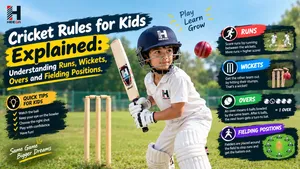 Cricket Rules for Kids Explained: Understanding Runs, Wickets, Overs and Fielding Positions.Learn cricket rules for kids, including runs, wickets, overs, fielding positions, batting, bowling, and basic match rules in a simple beginner's guide.
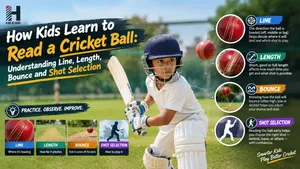 How Kids Learn to Read a Cricket Ball: Understanding Line, Length, Bounce and Shot SelectionLearn how kids can read a cricket ball by understanding line, length, bounce and shot selection to develop better batting skills and confidence.
 Cricket Batting Pads Explained: How Knee Protection, Shin Coverage and Strap Placement Affect Comfort and MobilityLearn how cricket batting pads, knee protection, shin coverage and strap placement affect comfort, mobility, impact protection and batting performance.