How Weather Conditions Affect Your Cricket Equipment (And How to Protect It)
Introduction: The Weather Can Be Tough on Cricket Equipment
Most players think about the weather before a match.
"Will it rain today?"
"Will the pitch be dry?"
"Will it be too hot to play?"
But very few think about something equally important:
How does the weather affect cricket equipment?
Your cricket gear is exposed to changing conditions throughout the year.
Extreme heat, heavy rain, humidity, cold weather, and even dust can slowly damage equipment if it isn't cared for properly.
Whether you're a beginner or an experienced player, protecting your gear means it will last longer, perform better, and save you money in the long run.
Across Nepal, Germany, the United States, Canada, the Netherlands, and the United Kingdom, players experience very different climates—but the principles of equipment care remain the same.
Let's explore how different weather conditions affect your cricket equipment and what you can do to protect it.
Why Weather Matters
Cricket equipment is made from different materials:
- Natural willow
- Leather
- Foam
- Rubber
- Fabric
- Synthetic materials
Each material reacts differently to weather.
Understanding these effects helps prevent unnecessary damage.
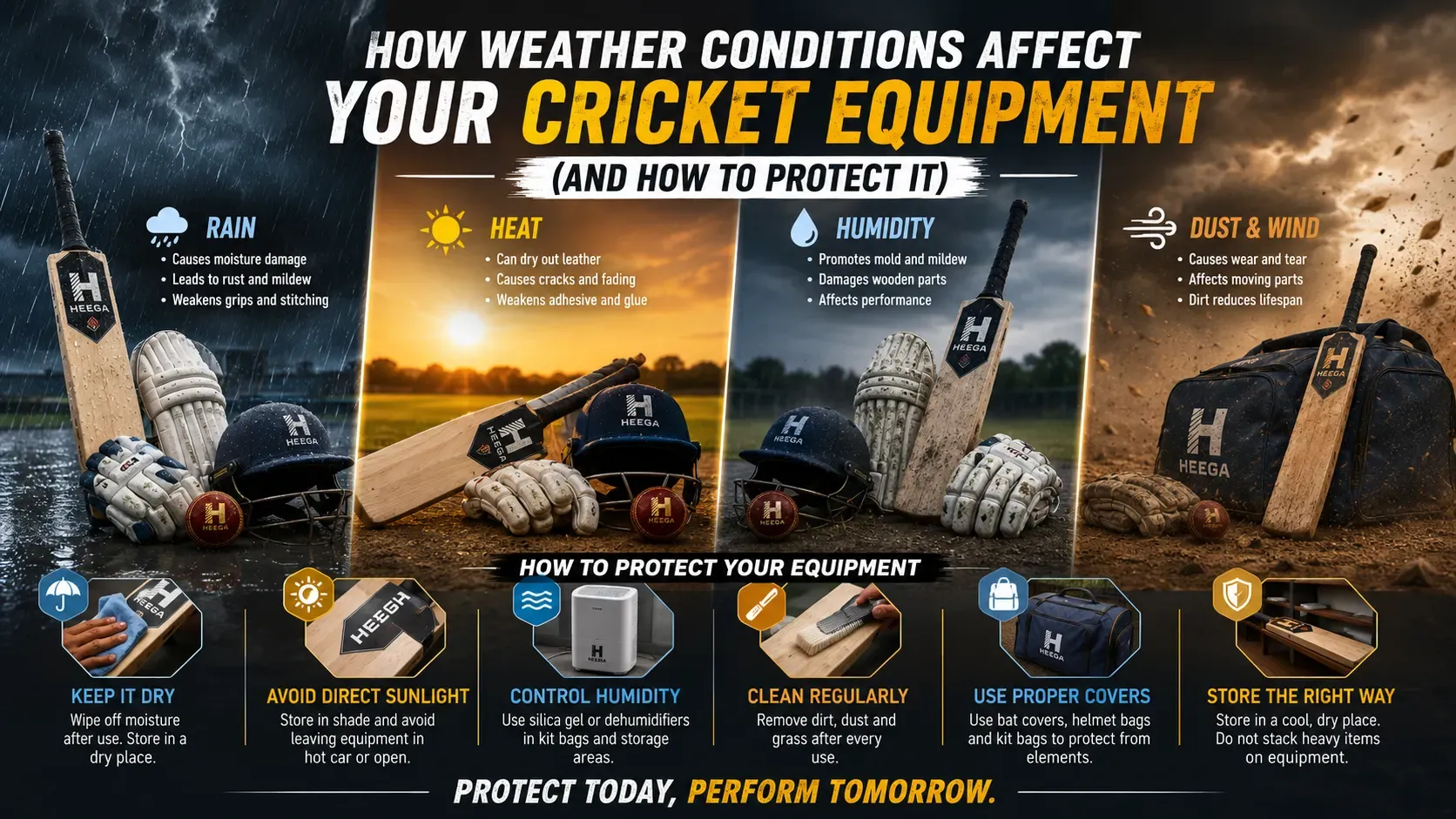
Hot Weather
Summer cricket is enjoyable—but extreme heat can harm equipment.
Cricket Bat
Leaving a wooden bat inside:
- A parked car
- Direct sunlight
- Near heaters
can dry out the willow.
Dry willow becomes more likely to crack.
What You Should Do
- Store the bat indoors.
- Keep it inside its bat cover.
- Avoid prolonged exposure to direct sunlight.
Cricket Helmet
High temperatures may affect:
- Inner padding
- Adhesives
- Comfort
Store helmets in cool, shaded places whenever possible.
Gloves and Pads
Sweat builds up quickly during summer.
Always:
- Open gloves after practice.
- Air-dry pads naturally.
- Never leave damp equipment inside a closed kit bag.
Rainy Weather
Rain is one of cricket equipment's biggest enemies.
Cricket Bat
Water and willow don't mix well.
A wet bat may:
- Absorb moisture.
- Lose strength.
- Develop surface damage.
Protection Tips
- Keep the bat inside its cover.
- Dry it naturally if it becomes damp.
- Never use direct heat to dry the bat.
Leather Cricket Balls
Leather absorbs moisture.
Wet balls may:
- Lose shine.
- Become heavier.
- Wear more quickly.
After rainy matches:
- Wipe the ball dry.
- Let it air dry before storing.
Gloves
Wet gloves often develop:
- Bad odor.
- Mold.
- Damaged padding.
Always dry them completely before packing.
Humid Conditions
Humidity is different from rain.
Even without visible water, excessive moisture affects equipment.
Bat Care
Humidity may soften willow over time.
Store bats in dry indoor spaces rather than damp garages or sheds.
Kit Bag
Never leave damp clothing inside your bag.
Moisture trapped inside encourages mold and unpleasant smells.
Empty the bag regularly.
Cold Weather
Cold temperatures don't usually damage equipment immediately, but they can affect performance.
Cricket Bat
Cold willow may feel harder and slightly less responsive.
Allow the bat to adjust to outdoor temperatures gradually.
Leather Ball
Leather becomes firmer in colder conditions.
Players should expect slightly different bounce and feel.
Shoes
Wet winter fields create muddy conditions.
Clean cricket shoes after every session to prevent long-term damage.
Dust and Dry Conditions
Dust can gradually affect:
- Bat grips
- Helmet padding
- Gloves
- Kit bags
Simple cleaning prevents long-term wear.
Use:
- Soft cloth
- Dry brush
Avoid harsh cleaning chemicals.
How to Store Equipment Properly
After every practice:
- Clean equipment.
- Air dry everything.
- Organize the kit bag.
- Store gear indoors.
Proper storage protects equipment throughout every season.
Travel Tips
When traveling for tournaments:
Avoid leaving equipment:
- Inside hot vehicles.
- On wet ground.
- Exposed to heavy rain.
Carry waterproof covers whenever possible.
Bat Maintenance Throughout the Year
Regularly inspect:
- Edges
- Toe
- Grip
- Surface
Small issues become larger problems if ignored.
Glove Maintenance
After every session:
- Open gloves.
- Air dry.
- Remove excess dirt.
Replace gloves once protection begins to wear down.
Shoe Maintenance
Keep shoes clean by:
- Removing mud.
- Drying naturally.
- Checking soles and spikes.
Proper footwear lasts much longer with regular care.
Helmet Safety Checks
Regardless of weather, inspect your helmet regularly.
Check:
- Grill
- Padding
- Straps
- Screws
Safety equipment should always remain in excellent condition.
Nepal: Protecting Equipment During Monsoon Cricket
Players across Nepal often experience heavy rainfall during the cricket season, making proper drying and storage especially important.
Germany: Seasonal Equipment Care
German players frequently experience changing weather conditions throughout the year, requiring flexible equipment maintenance routines.
The United States: Different Climates, Same Principles
From humid summers to dry conditions, American players benefit from regular equipment care regardless of location.
Canada: Winter Storage Matters
Canadian cricketers often store equipment during colder months, making clean, dry storage essential.
The Netherlands: Wet Conditions Require Extra Care
Dutch players frequently protect their bats and leather balls from damp playing conditions.
The United Kingdom: Rain-Ready Equipment Management
British cricketers have long understood the importance of protecting equipment from frequent rain and moisture.
How Heega Sports Helps Protect Your Investment
At Heega Sports, we believe quality equipment should deliver reliable performance for many seasons.
With proper care, every piece of cricket equipment can continue supporting your game longer.
Our collection includes:
- Junior cricket bats
- Premium Kashmir Willow bats
- Leather cricket balls
- Practice balls
- Cricket helmets
- Batting gloves
- Batting pads
- Cricket shoes
- Practice nets
- Cricket kit bags
- Training accessories
Quality equipment combined with proper maintenance creates long-term value.
Year-Round Equipment Care Checklist
Summer
- ✔ Keep bats away from direct sunlight.
- ✔ Air dry gloves.
- ✔ Stay hydrated.
Rain
- ✔ Dry bats immediately.
- ✔ Wipe leather balls.
- ✔ Empty damp kit bags.
Winter
- ✔ Store equipment indoors.
- ✔ Clean shoes.
- ✔ Check helmet condition.
Simple habits protect expensive equipment.
Final Thoughts
Cricket equipment faces different challenges throughout the year.
Heat can dry willow.
Rain can damage leather.
Humidity affects gloves.
Cold changes playing conditions.
Fortunately, protecting your equipment doesn't require expensive products or complicated routines.
Regular cleaning, proper storage, careful drying, and a little attention after every practice session are usually enough to keep your gear performing at its best.
Across Nepal, Germany, the United States, Canada, the Netherlands, and the United Kingdom, players who care for their equipment enjoy better performance, greater safety, and longer-lasting gear.
Respect your equipment—and it will continue supporting your cricket journey for years to come.
🏏 Protect Your Cricket Equipment with Heega Sports
Explore premium-quality junior cricket bats, Kashmir Willow bats, leather cricket balls, practice balls, cricket helmets, batting gloves, batting pads, cricket shoes, practice nets, cricket kit bags, and training accessories built for players who want lasting quality and dependable performance.
Shop Now
Heega Sports – Quality Cricket Equipment Built to Perform in Every Season.
Related posts
 Cricket Batting Pads Explained: How Knee Protection, Shin Coverage and Strap Placement Affect Comfort and MobilityLearn how cricket batting pads, knee protection, shin coverage and strap placement affect comfort, mobility, impact protection and batting performance.
 Batting Gloves Explained: How Padding Placement and Finger Protection Help Manage Ball ImpactLearn how batting glove padding placement, finger protection, and fit help manage ball impact. Find practical tips for choosing cricket batting gloves.
 Wicket Keeping Leg Guards Explained: Fit, Flexibility and Protection for Faster Movement Behind the StumpsDiscover how to choose wicketkeeping leg guards with the right fit, flexibility, and protection for quicker movement, comfortable crouching, and confident keeping.