How Young Cricketers Can Learn From Their Cricket Idols Without Copying Them

Introduction: Every Young Cricketer Has an Idol
Almost every young cricketer has a player they admire.
It could be a famous batter who seems to find the boundary whenever they want.
It could be a fast bowler whose run-up and delivery action look effortless.
It could be a wicketkeeper known for incredible reflexes.
Or perhaps it is simply a player whose attitude and personality inspire them.
Young cricketers naturally want to become like their heroes.
There is nothing wrong with that.
In fact, watching great players can be one of the most enjoyable ways to learn about cricket.
The problem begins when learning turns into copying.
A young player may try to copy a professional's stance, bat swing, bowling action, celebration, or even the way they walk onto the field.
But professional players have different bodies, different experiences, different strengths, and different natural abilities.
What works perfectly for one player may not work for another.
The smarter approach is to ask:
"What can I learn from this player?"
rather than:
"How can I become exactly like this player?"
That small change in thinking can help young cricketers develop their own identity while still learning valuable lessons from the best players in the game.
Why Young Players Look Up to Cricket Idols
Cricket idols can influence young players in many positive ways.
A great player can show children:
- What disciplined training looks like.
- How professionals prepare for matches.
- How they respond to failure.
- How they handle pressure.
- How they communicate with teammates.
- How they stay committed to improvement.
Watching these qualities can motivate young players to work harder.
Sometimes a child sees their favourite player practicing and thinks:
"I want to practice like that too."
That motivation can be valuable.
The important thing is to use the inspiration intelligently.
Watching Cricket Can Become a Learning Experience
Watching a match does not always have to be passive entertainment.
Young players can learn by observing carefully.
Instead of watching only the boundaries and wickets, they can pay attention to:
- Footwork.
- Balance.
- Shot selection.
- Field placement.
- Bowling plans.
- Body language.
- Communication.
- Decision-making.
There is a lot happening between the spectacular moments.
Those quieter details can teach valuable lessons.
Don't Focus Only on the Highlights
Highlight videos usually show the best moments.
A batter hitting sixes.
A bowler taking wickets.
A fielder making an incredible catch.
These moments are exciting.
But they do not tell the complete story.
Young cricketers should also watch what happens between those moments.
How does the batter build an innings?
How does the bowler respond after conceding a boundary?
How does the player react after making a mistake?
How does the captain communicate with teammates?
These details often reveal more about high-level cricket than a highlight reel.
Study the Player's Habits
One of the best things young cricketers can learn from professionals is their habits.
Look at what the player does:
- Before a match.
- During warm-up.
- Between overs.
- After making a mistake.
- During breaks.
- After the match.
A professional's success is usually supported by many small habits.
Young players can identify habits that are realistic for their own lives.
For example:
Arriving prepared.
Warming up properly.
Listening to the coach.
Looking after equipment.
These are useful habits regardless of playing style.
Learn the Mindset, Not Just the Technique
A young batter may admire a player's cover drive.
But the more valuable lesson may be the player's patience.
A young bowler may admire a fast bowler's pace.
But the more important lesson may be their discipline.
A young fielder may admire an incredible catch.
But the real lesson may be their concentration.
Technique is visible.
Mindset is often hidden.
Young cricketers should try to understand both.
Every Player Has a Different Body
This is one of the biggest reasons copying a professional player can become a problem.
Professional cricketers come in different shapes and sizes.
They have different:
- Heights.
- Strength levels.
- Flexibility.
- Coordination.
- Reaction speeds.
- Mobility.
- Natural movement patterns.
A batting stance that feels comfortable for one player may feel awkward for another.
A bowling action that works for one person's biomechanics may not be suitable for someone else.
Learning should therefore be adapted.
Your Cricket Batting Style Does Not Need to Look Identical
Young batters sometimes worry that their stance does not look like their favourite player's.
That is not necessarily a problem.
The important questions are:
- Can you stay balanced?
- Can you see the ball clearly?
- Can you move effectively?
- Can you control your cricket bat?
- Can you play shots comfortably?
If the answer is yes, there may be no reason to force your stance to look exactly like somebody else's.
Learn Principles Instead of Positions
Rather than copying a professional's exact stance, understand the principle behind it.
For example, perhaps the player maintains excellent balance.
That is worth learning.
Perhaps they keep their head still while watching the ball.
That is worth learning.
Perhaps they move their feet efficiently.
That is worth learning.
The exact position of their feet or hands does not necessarily need to be copied.
The principle can be adapted to the young player's own technique.
The Same Applies to Bowling
Young bowlers often try to imitate their favourite fast bowler or spinner.
They may copy:
- Run-up.
- Arm position.
- Jump.
- Delivery stride.
- Follow-through.
But bowling actions are highly individual.
Instead of copying every movement, young bowlers can study:
- Rhythm.
- Balance.
- Accuracy.
- Repeatability.
- Use of the crease.
- Bowling plans.
A coach can then help the player decide which elements are suitable for their own action.
Learn From a Player's Decision-Making
Some of the most valuable lessons from professional cricket have nothing to do with technique.
Watch what a batter does when:
- The field changes.
- The bowler changes pace.
- The ball starts swinging.
- The team loses a wicket.
- The required run rate increases.
Watch what a bowler does when:
- A batter attacks them.
- A boundary is conceded.
- The pitch changes.
- The batter moves across the crease.
Decision-making is a major part of cricket.
Young players can learn a lot simply by asking:
"Why did they make that decision?"
Ask "Why?" While Watching Matches
A useful habit is to question what you see.
If a batter leaves the ball, ask:
Why did they leave it?
If a bowler changes their line, ask:
Why did they change it?
If a captain moves a fielder, ask:
What problem are they trying to solve?
This turns watching cricket into an active learning exercise.
Learn How Professionals Handle Failure
Every cricket player fails.
Even the best players get out cheaply.
Even great bowlers concede runs.
Even outstanding fielders drop catches.
Young players can learn ayes write on it and don't ask me again and again for writing
\
You're gi powerful lesson by watching how professionals respond.
Do they argue?
Do they lose concentration?
Or do they reset and focus on the next moment?
The ability to recover from mistakes is one of the most useful lessons a young cricketer can take from their idols.
Don't Copy Celebrations Before Copying Discipline
Young players sometimes copy the visible parts of professional cricket first.
They imitate:
- Celebrations.
- Bat raises.
- Gestures.
- Catch celebrations.
- Walks.
- Expressions.
There is nothing inherently wrong with having fun.
But the most important things to copy are usually much less noticeable.
Preparation.
Discipline.
Practice.
Respect.
Patience.
Consistency.
The celebration lasts a few seconds.
The habits behind the performance last much longer.
Study Different Players
Young cricketers do not need only one idol.
Watching several players can actually be more useful.
A young batter might study:
- One player's footwork.
- Another player's patience.
- Another player's running between wickets.
- Another player's ability to handle pressure.
A bowler might study:
- One player's accuracy.
- Another player's variations.
- Another player's tactical thinking.
This helps young players build a broader understanding of cricket.
Don't Put Yourself Into One Player's Shadow
If a child constantly compares themselves to one professional, they may eventually become frustrated.
They might think:
"I don't bat like them."
"I don't bowl as fast as them."
"I'm not as strong as them."
That comparison misses the point.
The professional player is not supposed to be the child's measuring stick.
They are a source of inspiration.
The young player should ultimately compete against their own previous performance.
Compare Yourself With Your Previous Version
Instead of asking:
"Am I as good as my idol?"
ask:
"Am I better than I was last month?"
Maybe your:
- Footwork improved.
- Bat control improved.
- Bowling became more accurate.
- Fielding became quicker.
- Confidence increased.
Those are meaningful improvements.
Development is personal.
Create Your Own Strengths
Every young cricketer has different natural qualities.
One player may be naturally quick.
Another may have excellent hand-eye coordination.
Someone else may understand the game unusually well.
Another player may be very calm under pressure.
The goal should be to discover these strengths.
Your cricket idol can inspire you.
But your strengths should shape your own game.
Learn What Makes Your Idol Different
A professional player's greatest strength may not be the same as yours.
Perhaps your idol is famous for aggressive batting.
Maybe your natural strength is timing.
You do not need to turn yourself into a power hitter.
Instead, you can learn from their confidence while developing your own strengths.
This is how players gradually develop an individual playing style.
Use Practice to Test What You Learn
Watching a professional is only the beginning.
The next step is experimentation.
Suppose a young batter notices that their favourite player uses a particular movement against spin.
They can discuss it with their coach.
Then they can carefully test a similar principle during practice.
If it works, they can keep developing it.
If it does not feel comfortable, there is no reason to force it.
Practice is where ideas become personal skills.
Your Coach Should Help You Adapt Ideas
A good coach can help young players separate useful lessons from unnecessary imitation.
A child may say:
"I want to bowl exactly like this player."
The coach can help identify what the child actually likes.
Maybe it is the player's rhythm.
Maybe it is their accuracy.
Maybe it is their ability to swing the ball.
Once the real objective is understood, the coach can help develop an approach suited to the child.
Don't Change Technique Every Week
One danger of watching too many professional players is constantly changing technique.
One week a young batter copies one player.
The next week they copy another.
Then they see another player's backlift and change again.
This can create confusion.
Technical development needs consistency.
Young players should experiment carefully rather than constantly rebuilding their technique.
Give New Skills Time
A new movement may feel uncomfortable at first.
That does not automatically mean it is wrong.
At the same time, discomfort is not a reason to continue blindly.
Young players should work with coaches when changing technique.
The objective is controlled experimentation.
Not constant change.
Learn From Players Outside Your Role
A batter can learn from bowlers.
A bowler can learn from batters.
A fielder can learn from wicketkeepers.
Why?
Because understanding other roles can improve cricket intelligence.
A batter who understands what a bowler is trying to achieve may make better decisions.
A bowler who understands a batter's scoring options may develop better plans.
Cricket becomes easier to understand when players see the game from multiple perspectives.
Watch Fielders, Not Just Batters
Young cricketers often watch the batter whenever they watch a match.
But fielding contains valuable lessons too.
Observe:
- Starting positions.
- First steps.
- Body positioning.
- Throwing technique.
- Communication.
- Back-up positions.
A young fielder can learn a lot by watching how experienced players prepare before the ball is struck.
Watch Wicketkeepers Carefully
Wicketkeepers provide another excellent source of learning.
Young players can observe:
- Stance.
- Footwork.
- Glove positioning.
- Communication.
- Movement toward the ball.
- Reactions after deflections.
Even players who do not keep wicket can learn about anticipation and concentration.
Learn Professional Preparation
Professional cricket is often decided before the match begins.
Players prepare their:
- Equipment.
- Bodies.
- Minds.
- Game plans.
Young players can develop simple versions of these habits.
For example:
Before Practice
Check your cricket bat and equipment.
Before a Match
Think about your role.
During Warm-Up
Focus on movement and preparation.
Before the First Ball
Take a moment to settle yourself.
These habits can make a young player feel more prepared.
Equipment Can Become Part of Good Habits
Looking after cricket equipment is another lesson young players can learn from experienced cricketers.
A player should know:
- Where their cricket bat is.
- Whether their gloves are ready.
- Whether their pads fit properly.
- Whether their helmet is in good condition.
- Whether their shoes are suitable.
A well-maintained kit does not guarantee good performance.
But being prepared removes unnecessary distractions.
Choose a Cricket Bat That Suits You
Young players should not automatically buy the same type of cricket bat used by their favourite professional.
Instead, they should consider:
- Bat size.
- Weight.
- Balance.
- Pickup.
- Playing style.
- Physical strength.
- Comfort.
A cricket bat should help the player develop their own game.
The most expensive or famous model is not automatically the right choice.
Learn From Equipment Choices Too
When watching professional players, young cricketers may notice different bat profiles, gloves, shoes, and protective equipment.
This can create curiosity.
That is useful.
But equipment choices should be discussed with coaches and parents.
The objective is to understand why equipment is selected rather than buying something simply because a famous player uses it.
Social Media Can Create Unrealistic Expectations
Young players now see professional cricket constantly through social media.
They may watch:
- Training videos.
- Fitness routines.
- Batting tutorials.
- Equipment reviews.
- Highlight clips.
This can be helpful.
But social media usually shows selected moments.
A young player should remember that professional development took years.
One short video does not show the entire journey.
Don't Expect Instant Results
A young cricketer may watch a professional practicing a skill and immediately try it.
Then they may expect the same result.
That is unrealistic.
Professional players have spent thousands of hours developing their skills.
Young players should allow themselves time to learn.
Progress can be slow.
That does not mean it is not happening.
Learn From the Journey, Not Just the Destination
One of the most valuable things about cricket idols is their journey.
Look at where they started.
Look at their early struggles.
Look at how their game changed.
Look at how they responded to setbacks.
This can help young players understand that successful cricketers were not perfect from the beginning.
Improvement takes time.
Build a Personal Cricket Notebook
Young cricketers can keep a simple notebook.
After watching a match, they can write down:
One technique I noticed.
One tactical decision I liked.
One mindset lesson.
One thing I want to practice.
This turns inspiration into action.
Turn Inspiration Into One Small Goal
There is no need to copy ten things at once.
Choose one.
For example:
"I want to improve my footwork against spin."
Or:
"I want to stay calm after conceding a boundary."
Or:
"I want to communicate better while fielding."
One clear goal is easier to practice than a long list.
Learn From Mistakes Your Idol Makes
This is another powerful learning opportunity.
If a professional gets out attempting an aggressive shot, ask:
What happened?
Was the ball unsuitable?
Was the field positioned for that shot?
Was the batter under pressure?
Understanding mistakes can improve cricket intelligence.
Young players should not only copy successful actions.
They should understand unsuccessful ones too.
Respect Your Own Natural Style
Eventually, every young player needs to become comfortable with who they are as a cricketer.
Your stance may look different.
Your cricket bat may feel different.
Your run-up may be different.
Your strengths may be different.
That is completely normal.
A strong player is not a copy of another player.
They are someone who has learned from others and built those lessons into their own game.
Nepal, Germany, USA, Canada, the Netherlands, and the UK
Young cricketers are developing in many different cricketing environments.
In Nepal, children may discover cricket through schools, clubs, academies, and local competitions while looking up to national and international players.
In Germany, growing cricket participation is introducing more young players to professional cricket and international role models.
In the United States, young cricketers have access to an increasing range of international matches, leagues, academies, and online cricket content.
In Canada, young players can learn from both local cricket programs and international cricket played around the world.
In the Netherlands, developing players can draw inspiration from both Dutch cricket and international professionals.
The United Kingdom has a long-established cricket culture where young players can watch county, domestic, and international cricket.
The environment may change from country to country.
But young players everywhere face the same question:
How do I learn from great players without losing my own identity?
The answer is to study intelligently.
A Simple Way to Study Your Cricket Idol
Young players can use this five-step method.
Step 1: Watch
Choose a full match or a longer performance rather than only highlights.
Step 2: Observe
Pay attention to technique, decisions, preparation, and mindset.
Step 3: Ask Why
Try to understand why the player made certain decisions.
Step 4: Discuss
Talk about what you noticed with your coach.
Step 5: Practice
Choose one useful idea and test it during training.
This process turns admiration into genuine learning.
Five Things Worth Copying From a Cricket Idol
Young players can safely take inspiration from qualities such as:
1. Discipline
Show up and work consistently.
2. Preparation
Take training and match preparation seriously.
3. Resilience
Recover after mistakes.
4. Respect
Treat teammates, opponents, coaches, and officials properly.
5. Curiosity
Always look for ways to improve.
These qualities can benefit players regardless of their role.
Five Things You Don't Need to Copy
Young cricketers do not need to copy:
1. Exact Batting Stance
Your body may require a different setup.
2. Exact Bowling Action
Your biomechanics are individual.
3. Equipment Preferences
A professional's equipment may not suit you.
4. Playing Personality
You do not need to behave exactly like your idol.
5. Playing Style
You should develop your own strengths.
The Goal Is Inspiration, Not Imitation
There is a major difference between these two ideas.
Imitation says:
"I want to be exactly like them."
Inspiration says:
"I want to learn what makes them successful."
The second approach is much more useful.
A young player can admire a professional batter's confidence without copying their stance.
They can admire a bowler's accuracy without copying their run-up.
They can admire a captain's leadership without copying their personality.
That is how role models should work.
How Parents Can Help
Parents can play an important role in helping children learn from cricket idols.
Instead of asking:
"Why aren't you batting like your favourite player?"
they can ask:
"What did you notice about their batting?"
Instead of:
"Why can't you bowl as fast as them?"
ask:
"What do you like about their bowling?"
This changes comparison into curiosity.
Parents can also remind children that professional players developed over many years.
Coaches Can Encourage Smart Observation
Coaches can use professional cricket as a teaching resource.
For example, after watching a match, a coach can ask:
- What did the batter notice?
- Why did the bowler change the field?
- Why did the fielder move?
- What happened after the mistake?
- What would you have done?
These conversations can develop tactical understanding.
Your Idol Can Change Over Time
A young player's favourite player may change as they develop.
That is normal.
At first, they may admire power.
Later, they may appreciate technique.
Eventually, they may value leadership, consistency, or mental strength.
As the player grows, their understanding of cricket grows too.
Their role models may change with them.
Final Thoughts
Young cricketers can learn an enormous amount from the players they admire.
The key is knowing what to take from those examples.
Do not simply copy a stance because it looks impressive.
Do not change your cricket bat because a professional uses a similar one.
Do not force yourself to bowl exactly like your favourite bowler.
Instead, look deeper.
Study their preparation.
Watch their decision-making.
Notice their discipline.
Pay attention to how they handle pressure.
Observe how they respond after mistakes.
Understand why they make certain choices.
Then take the lessons that actually suit your own development.
The best cricket idols should not make young players feel like they need to become someone else.
They should make young players excited to become the best version of themselves.
A professional cricketer can provide the inspiration.
A coach can provide the guidance.
Practice can develop the skill.
Experience can shape the playing style.
And the young player ultimately decides what kind of cricketer they want to become.
From Nepal, Germany, the United States, Canada, and the Netherlands to the established cricket environment of the United Kingdom, young players are growing up with more opportunities than ever to watch and learn from cricket's best.
Use those opportunities.
Watch carefully.
Ask questions.
Experiment responsibly.
Learn from mistakes.
And most importantly, keep your own identity.
Because the objective of following a cricket idol is not to become their copy.
It is to discover the lessons that can help you build your own game, your own strengths, and your own cricket story.
🏏 Learn From the Best. Build Your Own Game With Heega Sports
Explore junior cricket bats, Kashmir Willow cricket bats, leather balls, practice balls, batting gloves, pads, helmets, cricket shoes, kit bags, practice nets, and training accessories designed to support young cricketers as they learn, practice, and develop their own style.
Shop Now
**👉 **https://heegasports.com
Heega Sports – Helping Young Cricketers Learn, Improve, and Build Their Own Game.
Related posts
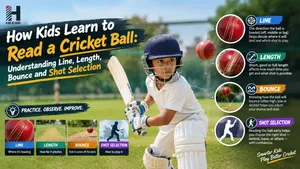 How Kids Learn to Read a Cricket Ball: Understanding Line, Length, Bounce and Shot SelectionLearn how kids can read a cricket ball by understanding line, length, bounce and shot selection to develop better batting skills and confidence.
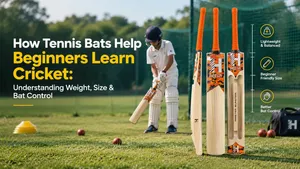 How Tennis Bats Help Beginners Learn Cricket: Understanding Weight, Size & Bat ControlLearn how tennis bats help beginners learn cricket by improving bat control, timing, balance, grip, confidence, and basic batting technique through simple practice.
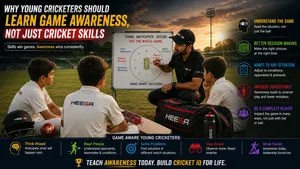 Why Young Cricketers Should Learn Game Awareness, Not Just Cricket SkillsLearn why young cricketers need game awareness alongside cricket skills, including decision-making, field placement, match situations, communication, and strategy.