Kashmir Willow Cricket Bats Explained: How Wood Characteristics Influence Bat Feel and Performance
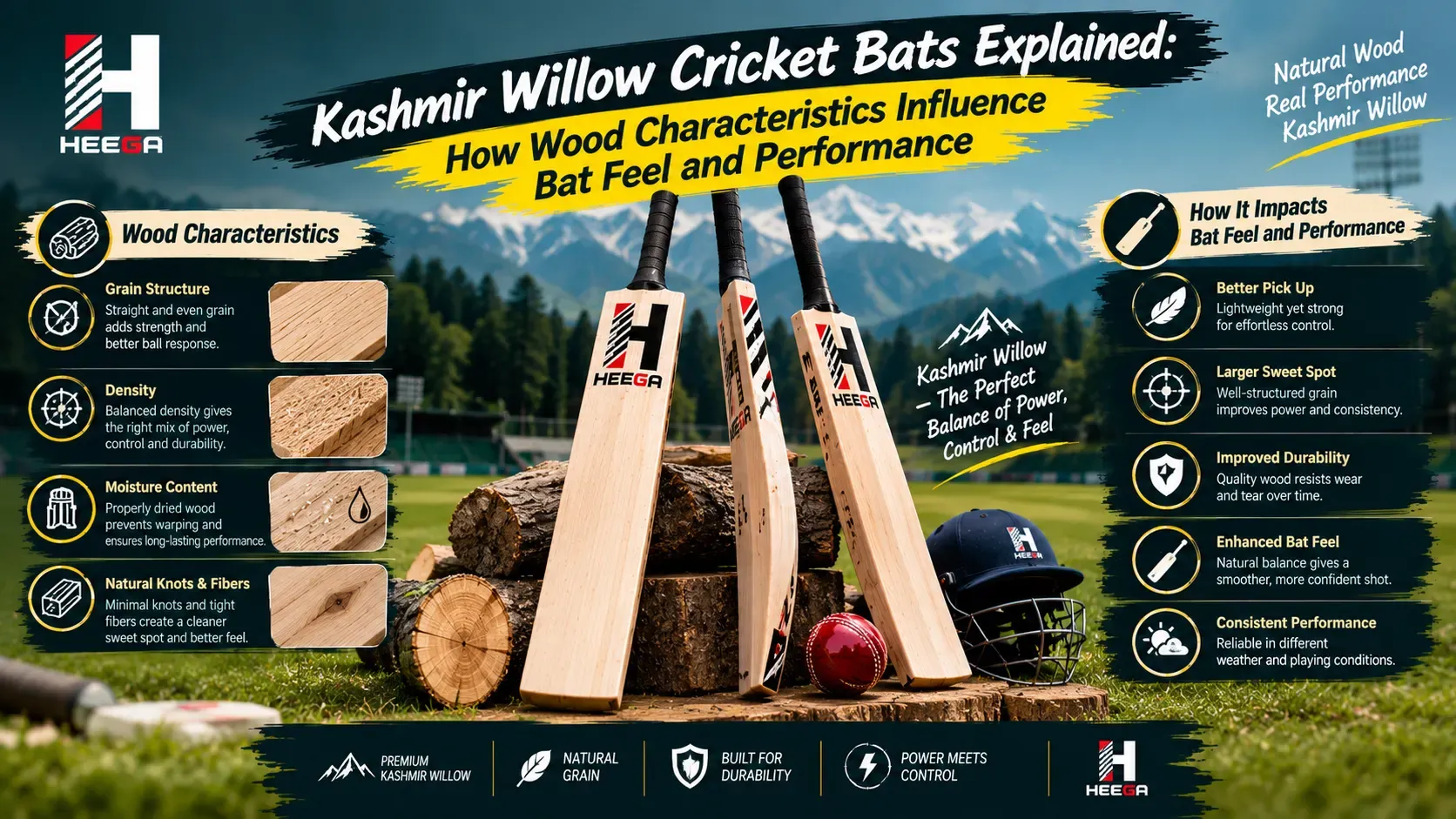
Introduction: What Makes a Kashmir Willow Cricket Bat Feel Different?
Choosing a cricket bat is not just about its size, weight, or appearance. Two bats made from Kashmir willow can look similar on the shelf but feel noticeably different when picked up, swung, or used to play a shot.
One bat may feel solid and stable, while another of a similar weight may feel heavier in the hands. Some bats offer a comfortable pickup for controlled stroke play, while others feel more suited to players who prefer a substantial blade.
These differences are influenced by several factors, including the characteristics of the willow, the distribution of wood throughout the blade, the bat's profile, pressing, handle construction, and overall manufacturing quality.
Kashmir willow cricket bats are popular among beginners, developing players, and many club cricketers because they can offer practical performance at a range of price points. However, understanding the wood itself can help you make a better buying decision.
In this guide, we will explore how Kashmir willow characteristics influence bat feel and performance, what grain patterns can tell you, how density relates to pickup and durability, and which features matter most when selecting a bat for your playing style.
What Is Kashmir Willow?
Kashmir willow is a type of willow commonly used to manufacture cricket bats. It is associated with the Kashmir region of the Indian subcontinent and is widely used in bats aimed at recreational, developing, and club-level players.
The wood is often described as denser or heavier-feeling than many English willow bat options. However, this is a general comparison rather than a rule for every individual bat. The properties of a finished bat depend on the particular piece of wood, how it has been prepared, and how the bat has been shaped.
Kashmir willow bats are available in different sizes, weights, profiles, and price ranges. Some are designed for beginners, while others are made for regular club cricket.
The key is to judge the complete bat rather than relying on the willow name alone.
Why Kashmir Willow Is Used for Cricket Bats
Kashmir willow is used because it can be shaped into a cricket bat with the blade structure and playing characteristics needed for the game.
Its appeal often includes:
- Practical value for developing players
- Availability in a range of bat profiles
- Suitable options for training and club cricket
- Different weight and pickup preferences
- A choice of models for different budgets
The performance of any particular bat still depends on the quality of the cleft, manufacturing, pressing, shaping, handle, and preparation.
1. Willow Density: How the Wood Influences Bat Feel
Density describes how much mass is contained within a given volume of wood. In practical terms, density can influence how heavy a bat feels for its size, but it does not determine the entire playing experience.
A bat made from denser wood may feel more substantial than a bat of similar dimensions made from less dense wood. Yet the bat's actual weight and balance also depend on its shape and how the wood is distributed.
For Kashmir willow bats, density is one characteristic worth considering when comparing different models.
Does Denser Willow Always Mean More Power?
No. A denser bat is not automatically more powerful.
Shot performance depends on several factors:
- Bat speed at impact
- Contact quality
- Sweet spot location
- Bat profile and blade shape
- Weight distribution
- Ball type and playing conditions
- The player's timing and technique
A heavier-feeling bat may suit a player who is comfortable swinging it with control. Another player may generate better results with a lighter-feeling bat because it allows faster movement and better timing.
The most useful question is not whether a bat has the highest density, but whether its characteristics suit your technique and strength.
How to Judge Density When Buying
You usually cannot accurately assess wood density by looking at a bat alone. Grain patterns and overall appearance may offer clues about the wood, but they do not provide a complete measurement of its physical properties.
Instead, compare bats of similar size and try to assess:
- Actual weight
- Pickup and swing comfort
- Blade dimensions
- Balance
- Overall construction
If possible, pick up several bats before deciding.
2. Grain Structure: What the Lines on a Bat Can Tell You
The visible lines running along the face of a cricket bat are commonly called grains. They reflect aspects of the wood's growth structure.
Players often consider grain count when comparing bats, but grain count should not be treated as a direct measurement of performance.
A bat with fewer visible grains is not necessarily more durable, and a bat with more grains is not automatically better.
Understanding Grain Count
When examining a bat, you may notice that the grains vary in spacing, straightness, and visibility.
These differences can be influenced by the growth characteristics of the tree and the way the cleft has been selected and shaped.
Grain patterns can help buyers compare the appearance of two bats, but they cannot reveal every important characteristic of the wood.
When inspecting a Kashmir willow bat, look at the overall blade rather than judging it by one feature alone.
Are Straight Grains Better?
Straight, reasonably consistent grains are often preferred aesthetically by many buyers. However, appearance alone cannot establish how a bat will perform.
The quality of the wood, its structural integrity, pressing, profile, and manufacturing all contribute to the finished product.
A visually attractive bat may not have the best pickup for your needs. Likewise, a bat with a less uniform appearance may still offer a comfortable feel.
Use grain patterns as one part of your assessment, not as the final buying decision.
3. Bat Weight and Pickup: Two Different Things
Weight and pickup are closely related, but they are not the same.
Weight is the actual mass of the bat.
Pickup is how heavy or light the bat feels when you hold it and move it through a batting action.
This distinction is important when selecting a Kashmir willow cricket bat.
Two bats may weigh the same but feel different because their wood is distributed differently.
How Weight Distribution Changes Pickup
Consider two bats with the same overall weight.
One may have more of its mass concentrated toward the toe or lower blade. The other may have more mass higher up the blade.
Depending on their profiles and construction, these bats can feel different during the backswing and downswing.
A bat that feels easy to lift may allow a player to move quickly between shots. A bat that feels more substantial may suit someone who prefers a solid sensation through the stroke.
Neither feel is automatically better.
How to Test Pickup Properly
When comparing bats:
- Choose bats of a similar size.
- Check their actual weights where possible.
- Hold each bat using your normal grip.
- Raise it into your usual batting position.
- Practise a few controlled shadow shots.
- Notice whether the bat feels comfortable through the full movement.
Do not rely only on lifting the bat vertically. Its feel during a batting movement is more useful than a brief static lift.
4. Blade Profile: How Shape Influences Performance
The blade profile is the shape and distribution of material across the bat. It includes the back profile, spine, edges, toe, and overall thickness.
Kashmir willow bats are available in many profiles, and these shapes can influence the way a bat feels in the hands.
Thick Edges and a Pronounced Spine
Some bats have substantial edges and a pronounced spine. These features can add wood to selected areas of the blade.
However, a thick edge does not automatically mean that the bat has a larger or more effective sweet spot. The actual hitting area depends on the complete blade design.
A bat with a substantial profile may also feel heavier if more material is used, though careful shaping can influence how that weight is distributed.
Low, Mid, and High Sweet Spots
Bat manufacturers often describe bats as having low, mid, or high sweet spots.
These terms generally refer to the area of the blade intended to provide the most useful response on contact.
- Low sweet spot: Often considered by players who regularly play on slower surfaces or favour shots through the front of the bat.
- Mid sweet spot: A versatile option for players who use a variety of strokes.
- High sweet spot: May suit players who prefer a blade profile designed around a higher contact area.
These are broad guidelines, not guarantees. Pitch conditions, ball type, technique, and the individual bat's construction all affect how it performs.
5. Pressing and Manufacturing: Why the Wood Is Only Part of the Story
Raw willow does not become a finished cricket bat simply by being shaped into a blade.
Manufacturing involves selecting the cleft, shaping the profile, pressing the face, fitting the handle, and finishing the bat.
The way these steps are carried out can affect the bat's response, feel, and service life.
What Is Willow Pressing?
Pressing is a manufacturing process used to prepare the bat face and influence how the wood responds to impact.
The process needs to be appropriate for the particular cleft. Too little or too much pressing can affect the bat's playing characteristics, so quality control matters.
A buyer generally cannot determine the exact pressing process simply by looking at the finished bat.
That is why the manufacturer's quality, consistency, and preparation guidance are worth considering alongside the wood type.
Does Good Pressing Make Every Bat Perform the Same?
No. Pressing is only one factor.
Even bats made from similar clefts can feel different because of their weight, profile, handle, and wood distribution.
Good manufacturing helps a bat perform as intended, but it does not remove natural variation between pieces of willow.
6. Sweet Spot and Ball Response
The sweet spot is the part of the blade where a well-timed contact can produce a particularly satisfying response.
Its position and size depend on the bat's design and construction.
When a ball meets the blade cleanly, the bat may feel stable and the shot can travel effectively. Contact away from the most responsive area may feel less comfortable or produce a different result.
What Affects the Sweet Spot?
Several characteristics work together:
- Blade profile
- Distribution of wood
- Pressing and preparation
- Overall bat construction
- Contact point
- Ball type
It is a mistake to assume that every Kashmir willow bat has the same sweet spot simply because it is made from the same type of wood.
If possible, compare bats using an appropriate ball and safe testing conditions. Avoid striking a new bat forcefully before completing any preparation required by the manufacturer.
7. Kashmir Willow and Shot Power
Many players want a bat that helps them hit the ball hard. However, power is not determined by willow type alone.
A well-timed shot depends on the speed of the bat, the quality of contact, the direction of the swing, and how effectively the player transfers energy into the ball.
A bat that is too heavy for a player can reduce swing speed and make it harder to adjust to different deliveries.
A bat that feels comfortable and can be moved with control may help the player time shots more consistently.
Power vs Control
There is a practical difference between choosing a bat for maximum hitting sensation and choosing one that supports consistent batting.
For example:
- A player who likes aggressive front-foot strokes may prefer a profile that feels stable through the hitting zone.
- A player who relies on quick adjustments may prefer a more manageable pickup.
- A developing batter may benefit from a bat that allows a repeatable, balanced swing.
The best choice is the one that helps you make good contact repeatedly, not simply the one that feels heaviest.
8. Durability: What Makes a Kashmir Willow Bat Last?
Durability depends on more than the name of the willow.
The cleft's quality, manufacturing, bat preparation, ball type, impact frequency, and maintenance all play a role.
A Kashmir willow bat used regularly against a hard cricket ball experiences different stresses from a bat used mainly for soft-ball practice.
Factors That Affect Bat Durability
Wood Quality
Natural wood varies. Knots, cracks, imperfections, and other structural features can influence the condition of the finished bat.
Manufacturing Quality
The quality of shaping, pressing, handle fitting, and finishing contributes to the bat's overall construction.
Preparation
Some bats require knocking-in or other preparation before match use. Follow the specific manufacturer's guidance rather than assuming every bat is ready to use immediately.
Ball Type
A bat used against hard leather balls may experience different levels of impact and wear compared with one used for soft-ball cricket.
Storage and Moisture
Extreme dampness, poor storage, and unsuitable drying conditions can damage wood or affect its condition.
Regular Inspection
Checking the face, edges, toe, and handle can help identify developing damage before it becomes more serious.
No willow type or price point guarantees that a bat will never crack or suffer damage.
9. Kashmir Willow for Beginners and Club Players
Kashmir willow can be a practical option for players who want a cricket bat for learning, regular practice, or club cricket.
The best choice depends on how often the player bats, the ball used, and their comfort with the bat's weight and profile.
For Beginners
Beginners should focus on:
- Correct bat size
- Manageable weight
- Comfortable pickup
- Secure handle
- Suitable blade profile
- Appropriate preparation
A bat that is too heavy can make learning the correct batting movement more difficult.
For Academy Players
Players attending regular coaching sessions need a bat that can handle their training routine and suit the type of bowling they face.
Consistency of feel, suitable weight, and appropriate care become more important as training volume increases.
For Club Cricketers
Club players may need a bat that balances cost, durability, pickup, and performance across regular matches.
Compare the actual bats available rather than assuming every Kashmir willow model will feel the same.
10. Kashmir Willow in Different Playing Conditions
Playing conditions can influence how a bat feels and how it is used.
The pitch, ball, weather, and playing format all affect the demands placed on a bat.
Slower or Lower-Bouncing Pitches
Some players on slower surfaces prefer a bat profile with a lower sweet spot, depending on their stance and shot selection.
However, technique and the specific pitch matter more than a simple rule about willow type.
Firmer Surfaces
On firmer surfaces, the ball may arrive differently and players may face a different range of bounce and pace.
A bat with comfortable pickup and a suitable profile can help the player adjust to changing deliveries.
Hot and Humid Conditions
Players should avoid leaving bats in excessive heat or damp environments. After play, store the bat in suitable conditions and follow the manufacturer's care recommendations.
The goal is to protect the wood and keep the bat in a condition appropriate for continued use.
11. How to Choose the Right Kashmir Willow Cricket Bat
The most reliable way to select a bat is to assess the complete product.
Use the following checklist before buying.
Check the Size
Make sure the bat is appropriate for your height, reach, and playing level.
Assess the Weight
Choose a weight you can control throughout a full batting movement.
Test the Pickup
A bat should feel manageable when lifted into your stance and moved through a shot.
Examine the Blade
Look for obvious cracks, damage, or concerning structural defects.
Consider the Profile
Choose a shape that complements your preferred style and the type of cricket you play.
Check the Handle
The handle should feel secure and comfortable in your grip.
Ask About Preparation
Find out whether the bat requires knocking-in or any other preparation before use.
Consider Your Budget
Compare construction, fit, and usability rather than paying more simply for a particular appearance.
Buy for Your Actual Game
A bat for occasional soft-ball practice may not be suitable for regular hard-ball cricket. Check the manufacturer's intended use and recommendations.
12. Common Myths About Kashmir Willow Cricket Bats
Several assumptions can make bat selection more confusing than it needs to be.
Myth 1: A Heavier Bat Always Hits Harder
A heavier bat may feel substantial, but power also depends on bat speed, timing, and contact quality.
Myth 2: More Grains Always Mean Better Quality
Grain count alone cannot establish the quality or durability of a bat.
Myth 3: All Kashmir Willow Bats Feel the Same
Natural wood variation, blade profile, weight distribution, and manufacturing can produce noticeable differences.
Myth 4: A Thick Edge Guarantees a Bigger Sweet Spot
Edge thickness is only one part of the bat's design. The actual response depends on the full profile and construction.
Myth 5: An Expensive Bat Is Always Better
Price does not guarantee that a bat will suit your strength, technique, or preferred pickup.
Myth 6: Willow Type Is the Only Factor That Matters
The bat's construction, handle, pressing, preparation, profile, and maintenance are all important.
13. Kashmir Willow vs English Willow: What Should You Consider?
Kashmir willow and English willow are both used to make cricket bats, but bats made from these materials can differ in feel, weight, price, and intended use.
FactorKashmir WillowEnglish Willow
Common appeal
Practical value and accessible options
Often chosen for feel and performance preferences
Feel
Can feel more substantial, depending on the bat
Can offer a different feel, depending on the cleft and profile
Weight
Varies by model and wood characteristics
Also varies by model and wood characteristics
Price
Often available at lower price points
Often priced higher, depending on grade and construction
Suitable players
Beginners, developing players, and club cricketers
Developing, club, and advanced players
Performance
Depends on construction and suitability
Depends on construction and suitability
Durability
Depends on wood quality, preparation, use, and care
Depends on wood quality, preparation, use, and care
This comparison is a general guide. Neither type automatically guarantees better performance or longer life. Compare the individual bats and choose one that suits your needs.
14. Kashmir Willow Bat Care and Maintenance
Even a well-made bat needs proper care.
A few simple habits can help protect your bat and make it easier to spot problems early.
Follow the Preparation Guidance
Check the manufacturer's recommendations for knocking-in and any other preparation required before use.
Inspect the Bat Regularly
Look at the face, edges, toe, and handle for signs of damage.
Keep It in Suitable Conditions
Avoid leaving the bat in very hot vehicles, damp spaces, or places where temperature and moisture change dramatically.
Clean It Carefully
Remove surface dirt gently. Avoid soaking the bat or using unsuitable cleaning products.
Address Damage Early
Small surface marks can be normal, but significant cracks, loose handles, or structural damage should be assessed before continued use.
Store It Properly
Keep the bat in a dry, suitable location and avoid placing heavy items on top of it.
Good maintenance cannot prevent every form of wear, but it can help you care for the bat more effectively.
Heega Sports: Choose a Kashmir Willow Bat That Suits Your Game
At Heega Sports, choosing cricket equipment should begin with understanding the player's needs.
If you are considering a Kashmir willow cricket bat, look beyond the material name. Pay attention to its weight, pickup, blade profile, handle, construction, and intended use.
A beginner may need a manageable bat that supports learning. A regular club player may prioritize a reliable balance of feel, durability, and value. An experienced player may have more specific preferences for pickup and profile.
There is no single bat that suits everyone. The right choice is the one that feels comfortable in your hands and matches the cricket you play.
Explore the cricket equipment available at Heega Sports and choose your next bat with confidence.
Frequently Asked Questions About Kashmir Willow Cricket Bats
1. What makes Kashmir willow cricket bats different?
Kashmir willow is a commonly used bat-making wood. Bats made from it may differ in feel, weight, and response depending on the cleft, profile, pressing, and manufacturing quality.
2. Are Kashmir willow bats good for beginners?
They can be a practical choice for beginners, especially when the bat is correctly sized, manageable in weight, and suitable for the type of cricket being played.
3. Does Kashmir willow produce more powerful shots?
Willow type alone does not determine shot power. Bat speed, timing, contact quality, weight distribution, and the bat's construction all influence the result.
4. Are Kashmir willow bats heavier than English willow bats?
Kashmir willow bats are often described as having a more substantial feel, but actual weight varies from bat to bat. Compare the individual bats rather than relying only on the material name.
5. Do more grains mean a better Kashmir willow bat?
No. Grain count is not a complete measure of performance or durability. Examine the overall construction, profile, pickup, and condition.
6. How can I check the pickup of a Kashmir willow bat?
Hold the bat in your normal stance and practise controlled shadow shots. Notice how easily you can lift, move, and control it through the swing.
7. Does Kashmir willow need knocking-in?
Preparation requirements depend on the particular bat and the manufacturer's instructions. Check the guidance provided with your bat before using it against a hard ball.
8. How long does a Kashmir willow bat last?
Its lifespan depends on construction, wood quality, ball type, playing frequency, preparation, and maintenance. No specific lifespan can be guaranteed.
9. Can club players use Kashmir willow bats?
Yes. Many club players consider Kashmir willow bats, but the right choice depends on the individual bat, the level of cricket, and the player's preferences.
10. What should I check before buying a Kashmir willow bat?
Check its size, weight, pickup, handle, blade profile, overall condition, intended use, and preparation requirements. Choose the bat that suits your game rather than relying on appearance alone.
Final Thoughts
Kashmir willow cricket bats are worth evaluating as complete pieces of cricket equipment rather than judging them only by the wood name.
Density can influence the bat's feel. Grain structure can offer clues about the wood's appearance. Blade profile and weight distribution affect pickup, while pressing, construction, and preparation influence how the bat responds over time.
But no single characteristic tells the whole story.
When choosing your next bat, focus on its actual weight, pickup, profile, construction, and suitability for your playing conditions. A bat that feels comfortable and allows you to control your shots is often a more sensible choice than one selected purely for appearance or price.
Understand the wood, test the bat where possible, maintain it properly, and choose equipment that supports your style of cricket.
Shop Cricket Equipment at Heega Sports
Looking for a cricket bat that suits your playing style and budget?
Explore the cricket equipment available at Heega Sports and prepare for your next practice session or match.
Shop Now: www.Heegasports.com
Related posts
 English Willow Cricket Bats Explained: How Bat Pressing, Grain Structure and Blade Compression Influence PerformanceLearn how English willow bat pressing, grain structure, and blade compression influence performance, durability, shot response, and bat selection.
 Kashmir Willow Cricket Bats for Power Hitting: How Blade Shape, Sweet Spot and Edge Thickness Work TogetherLearn how Kashmir willow cricket bat blade shape, sweet spot position, and edge thickness work together to support powerful shots, control, and balance.
 Kashmir Willow Cricket Bats: How Wood Density, Grain Patterns and Moisture Affect PerformanceDiscover how Kashmir Willow cricket bat density, grain patterns and moisture affect bat weight, balance, durability, and batting performance.