Mistakes Parents Make When Buying Cricket Equipment for Beginners

Introduction: The Right Equipment Can Make a Big Difference
When a child shows interest in cricket, parents are naturally excited to support their new passion.
One of the first steps is buying cricket equipment.
However, for families new to the sport, choosing the right gear can be confusing.
There are different bat sizes, types of balls, gloves, pads, helmets, and training accessories available, making it easy to purchase equipment that may not be suitable for a beginner.
While these mistakes are common, they can affect a child's comfort, confidence, technique, and overall enjoyment of the game.
The good news is that most equipment mistakes are easy to avoid with the right guidance.
Across Nepal, Germany, the United States, Canada, the Netherlands, and the United Kingdom, youth coaches encourage parents to focus on properly fitted, age-appropriate equipment that supports learning rather than simply buying the most expensive products.
This guide highlights the most common mistakes parents make when buying cricket equipment and explains how to make better choices for young cricketers.
Mistake 1: Buying a Bat That Is Too Large
One of the biggest mistakes parents make is choosing an oversized cricket bat.
Many believe a larger bat will last longer as the child grows.
In reality, a bat that is too big can:
- Slow bat speed
- Affect balance
- Encourage poor technique
- Reduce confidence
Always choose a bat based on your child's height rather than buying one "for the future."
Mistake 2: Choosing Equipment Based Only on Price
Expensive equipment does not automatically make a child a better cricketer.
For beginners, comfort, correct size, and quality are far more important than premium-level products.
The goal is to support learning, not to own professional-grade gear.
Mistake 3: Ignoring Protective Equipment
Some parents focus mainly on buying a bat while overlooking safety equipment.
Beginners should gradually learn with proper protection, including:
- Batting gloves
- Batting pads
- Helmet (when appropriate)
- Abdominal guard
Good protection helps children feel more confident while practicing.
Mistake 4: Buying Adult Equipment for Young Players
Junior players should never use adult-sized equipment.
Oversized gear limits movement and makes learning more difficult.
Every item should match the child's size and stage of development.
Mistake 5: Buying Everything at Once
Parents sometimes purchase a full professional kit immediately.
For beginners, it is often better to start with essential equipment and gradually add more items as the child's interest and training increase.
Mistake 6: Forgetting About Practice Equipment
Match equipment alone is not enough.
Young players also benefit from:
- Practice balls
- Training cones
- Practice nets
- Throw-down balls
Practice equipment encourages skill development at home.
Mistake 7: Not Asking the Coach for Advice
Cricket coaches understand what beginners actually need.
Before purchasing equipment, ask your child's coach about:
- Bat size
- Ball type
- Safety gear
- Training accessories
Professional advice often prevents unnecessary purchases.
Mistake 8: Ignoring Comfort
Children should feel comfortable using every piece of equipment.
If gloves, pads, or helmets feel uncomfortable, players may lose confidence or avoid wearing them properly.
Comfort improves performance.
Mistake 9: Choosing Heavy Equipment
Many parents assume heavier bats produce more powerful shots.
For beginners, lighter equipment usually allows:
- Better control
- Faster swings
- Improved timing
- Easier learning
Proper technique should always come before power.
Mistake 10: Replacing Equipment Too Late
Children grow quickly.
Equipment that once fit perfectly may eventually become:
- Too short
- Too heavy
- Too tight
- Uncomfortable
Regularly checking equipment fit helps support continued development.
The Importance of Choosing the Right Cricket Bat Size
Bat size should always be based on the child's height.
General Bat Size Guide
Child HeightRecommended Bat Size
Up to 4'3" (130 cm) - Size 3
4'3"–4'6" (130–137 cm) - Size 4
4'6"–4'9" (137–145 cm) - Size 5
4'9"–5'2" (145–157 cm) - Size 6
5'2"–5'5" (157–165 cm) - Harrow
Above 5'5" (165 cm+) - Short Handle (SH)
Choosing the correct bat size helps children develop proper batting technique from the beginning.
Nepal: Supporting Young Beginners
As cricket continues growing across Nepal, coaches increasingly encourage parents to invest in correctly sized beginner equipment.
Germany: Introducing Cricket the Right Way
German clubs focus on making cricket enjoyable by ensuring beginners use safe, appropriate equipment.
The United States: Helping New Cricket Families
As more American families discover cricket, education about beginner equipment is becoming increasingly important.
Canada: Building Strong Foundations
Canadian youth programs encourage parents to prioritize comfort, safety, and correct sizing over expensive equipment.
The Netherlands: Developing Young Players
Dutch academies emphasize proper equipment selection as part of long-term player development.
The United Kingdom: Proven Youth Development
British cricket has long recognized that well-fitted equipment supports better learning and player confidence.
What Every Beginner Really Needs
A beginner usually requires:
- Correctly sized cricket bat
- Practice ball
- Batting gloves
- Batting pads
- Helmet (when required)
- Cricket kit bag
- Practice accessories
Starting simple often works best.
How Heega Sports Helps Parents Choose Wisely
At Heega Sports, we understand that buying cricket equipment for the first time can feel overwhelming.
Our products are designed to help beginners enjoy the game with confidence.
Our range includes:
- Junior cricket bats (Size 3, 4, 5, 6, Harrow, SH)
- Premium Kashmir Willow bats
- Leather cricket balls
- Practice balls
- Batting gloves
- Batting pads
- Practice nets
- Cricket kit bags
- Training accessories
By offering equipment designed specifically for developing players, Heega Sports helps families make informed choices that support long-term improvement.
Expert Tips for Parents
Before buying cricket equipment:
- Measure your child's height before selecting a bat.
- Prioritize comfort over appearance.
- Ask coaches for recommendations.
- Buy beginner-friendly equipment.
- Replace equipment as your child grows.
- Encourage regular practice rather than expensive purchases.
Good equipment supports learning—but consistent practice creates better players.
Final Thoughts
Buying cricket equipment for beginners does not have to be complicated.
The most important goal is to choose equipment that matches the child's size, ability, and stage of development.
Avoiding common mistakes—such as buying oversized bats, ignoring protective gear, or focusing only on price—helps children learn safely, develop proper techniques, and enjoy every practice session.
Across Nepal, Germany, the United States, Canada, the Netherlands, and the United Kingdom, coaches continue reminding parents that the right equipment builds confidence, while the wrong equipment can slow progress.
Supporting young players starts with making smart choices from day one.
🏏 Give Your Young Cricketer the Right Start with Heega Sports
Explore premium-quality junior cricket bats, leather balls, practice balls, batting gloves, pads, practice nets, cricket kit bags, and training accessories designed to help beginners learn safely and confidently.
Shop Now
Heega Sports – Helping Every Beginner Start Their Cricket Journey the Right Way.
Related posts
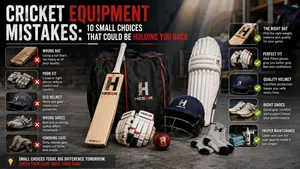 Cricket Equipment Mistakes: 10 Small Choices That Could Be Holding You BackDiscover 10 common cricket equipment mistakes that can affect comfort, movement, safety, confidence, and consistency—and learn how to choose smarter bats, gloves, helmets, pads, shoes, and accessories.
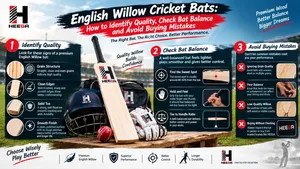 English Willow Cricket Bats: How to Identify Quality, Check Bat Balance and Avoid Buying MistakesLearn how to identify a quality English willow cricket bat, check its balance and pickup, understand grain patterns, and avoid common buying mistakes.
 Ordering Cricket Equipment for a Club or Academy: An Overseas Buyer's ChecklistOrdering cricket equipment for your club or academy from overseas? Use this checklist for bats, protective gear, quantities, samples, shipping and quotations.