More Than Protection: How the Right Batting Gloves Improve Control

Why batting gloves aren't just protective gear—and how the right fit, grip, flexibility, and design can influence your confidence and control at the crease
When cricketers choose batting gloves, protection is usually the first thing they think about.
That makes sense.
Your hands are among the most exposed parts of your body when facing a hard cricket ball.
But batting gloves do much more than protect your fingers.
The right pair can also influence grip, comfort, bat control, confidence, flexibility, and shot execution.
A glove that feels secure can help you focus on the ball instead of constantly adjusting your hands.
A poor-fitting glove can do the opposite.
That's why choosing batting gloves should be about more than simply finding the thickest or most expensive pair.
At Heega Sports, we believe cricket equipment should support the way you actually play. Whether you're training regularly or competing seriously, the right batting gloves should combine protection, comfort, fit, and control.
Here's what to look for.
1. Protection Is Only the Beginning
The primary purpose of batting gloves is protection.
The fingers and hands can be vulnerable to fast deliveries, especially when facing pace at close range.
Modern batting gloves commonly use protective elements around areas such as:
- Fingers
- Knuckles
- The back of the hand
- Thumb
- Wrist
But maximum protection doesn't automatically mean maximum performance.
If a glove is too bulky, stiff, loose, or uncomfortable, it can affect how naturally you hold the bat.
The goal is balanced protection and freedom of movement.
2. Grip Can Influence Bat Control
Your hands are the connection between you and the bat.
If your gloves provide a secure grip, you can maintain better control through different shots.
This becomes especially important when:
- Driving
- Pulling
- Cutting
- Playing against spin
- Playing late
- Hitting aggressively
A glove that slips or moves unnecessarily can create distractions.
A secure glove allows your attention to stay where it belongs:
On the ball.
3. Fit Matters More Than Many Players Realize
A batting glove shouldn't simply be the same size as your previous pair.
Your hand shape matters.
A good fit should feel:
- Secure
- Comfortable
- Flexible
- Stable
- Natural
If the glove is too loose, excessive movement can occur inside it.
If it's too tight, flexibility and comfort may suffer.
The ideal fit should feel like part of your hand rather than something you're constantly aware of.
4. Finger Protection Needs Careful Attention
Finger injuries can interrupt training and competition.
That's why protective sections around the fingers are important.
But players should also consider how those protective elements affect movement.
You want protection without unnecessarily restricting your ability to:
- Grip the handle
- Rotate your wrists
- Change pressure
- Control the bat
Good design balances both needs.
5. The Thumb Deserves Special Attention
The thumb plays an important role in bat control.
It helps maintain grip and stability during different strokes.
When choosing gloves, pay attention to:
- Thumb protection
- Thumb mobility
- Glove construction
- Comfort around the joint
A glove can feel comfortable across the fingers but still feel restrictive around the thumb.
Always test the complete hand movement.
6. Flexibility Can Improve Feel
Batting requires constant changes in hand position.
You may tighten your grip for one shot and relax it for another.
You may use softer hands against a moving ball.
You may change pressure during attacking strokes.
Flexible gloves can allow these movements to feel more natural.
The glove shouldn't fight against your hands.
7. Palm Material Matters Too
The palm is where your glove meets the bat handle.
Materials and construction can affect:
- Grip
- Comfort
- Durability
- Moisture management
- Feel
Players who practice frequently should consider how well the palm material handles repeated use.
A glove can look excellent when new but still need to withstand long training sessions.
8. Sweat Can Affect Control
Long innings and hot conditions can create sweaty hands.
Excess moisture can make gripping the bat less comfortable.
That's why ventilation and moisture management can be valuable.
Look for designs that help your hands remain comfortable during extended periods of play.
A dry, comfortable hand can help you maintain consistent grip pressure.
9. Wrist Support Can Add Stability
Some batting gloves include wrist straps or additional support features.
These can help create a secure connection between the glove and hand.
The wrist closure should feel:
Secure—but not restrictive.
You don't want the glove moving around.
But you also don't want excessive pressure that becomes uncomfortable during a long innings.
10. Comfort Becomes More Important During Long Innings
Imagine batting for 30, 50, or 100 overs.
Small discomforts become bigger problems over time.
A glove that feels fine for 10 minutes may become irritating after extended use.
Look for:
- Comfortable padding
- Good ventilation
- Flexible construction
- Secure fit
- Smooth internal materials
Comfort isn't a luxury.
It can help you maintain concentration.
11. Different Players Need Different Gloves
There isn't one perfect batting glove for everyone.
A young player may prioritize lightweight construction.
A power hitter may prefer additional protection.
A player who bats for long periods may prioritize comfort and ventilation.
A player who frequently trains may prioritize durability.
Your choice should reflect:
Your role + your playing style + your conditions + your frequency of use.
12. Batting Gloves Can Affect Confidence
This is an underrated factor.
When you know your gloves fit properly and provide appropriate protection, you may feel more comfortable facing pace.
That confidence can influence how freely you play.
You aren't thinking:
"What if I get hit?"
You're more focused on:
"What is the bowler trying to do?"
Equipment doesn't replace courage.
But reliable protection can remove unnecessary hesitation.
13. Don't Choose Gloves Only by Appearance
Cricket gloves come in different colors, styles, and designs.
Looks can matter.
But they shouldn't be the main deciding factor.
Before choosing a pair, think about:
- Fit
- Protection
- Flexibility
- Grip
- Comfort
- Durability
- Intended use
A great-looking glove that doesn't fit properly isn't a great glove for you.
14. Consider Your Level of Cricket
Your requirements may change as you progress.
Beginner
Prioritize comfort, fit, protection, and value.
Club Player
Consider durability, performance, and protection for regular competition.
Competitive Player
Look closely at fit, construction, flexibility, protection, grip, and long-term comfort.
The more frequently you play, the more important these details become.
15. Training Gloves and Match Gloves Don't Always Need to Be Identical
Some players prefer different gloves for training and matches.
Training gloves may experience significantly more wear.
Using a suitable training pair can preserve your preferred match gloves for competition.
The important thing is to make sure both pairs provide appropriate protection and fit.
16. Replace Worn Gloves Before They Become a Problem
Batting gloves don't last forever.
Repeated use can cause:
- Palm wear
- Loose stitching
- Flattened padding
- Reduced grip
- Damaged straps
- Cracked protective sections
Don't wait until the glove becomes unusable.
Inspect your gloves regularly.
If protection or structural integrity is compromised, it's time to consider replacement.
17. Keep Your Gloves in Good Condition
Even high-quality gloves need care.
After playing:
- Let them air out
- Avoid leaving them damp inside your bag
- Keep them away from excessive heat
- Store them properly
- Check for damage regularly
Good maintenance can help extend their usable life.
18. Your Bat and Gloves Should Work Together
Bat control isn't determined by the gloves alone.
Your gloves and bat form a system.
Consider how the glove feels around the bat handle.
Does your grip feel secure?
Can you change pressure comfortably?
Can you rotate the bat naturally?
Can you play soft-handed shots?
Your equipment should complement your technique.
19. Don't Assume More Padding Means Better Performance
More protection can be useful.
But additional bulk may affect movement for some players.
The right question isn't:
"Which glove has the most protection?"
Ask:
"Which glove gives me the right level of protection without compromising control?"
That's a much better way to choose.
20. Try Before You Commit When Possible
If you have access to a physical cricket store, try different gloves.
Move your fingers.
Close your hand.
Grip a bat.
Check the thumb.
Test wrist movement.
Make sure nothing feels restrictive.
If you're purchasing online, carefully check the manufacturer's sizing guidance and product specifications before ordering.
A Simple Batting Glove Checklist
Before buying, check:
☑ Correct size
☑ Secure fit
☑ Finger protection
☑ Thumb protection
☑ Comfortable wrist closure
☑ Flexible construction
☑ Suitable palm material
☑ Adequate ventilation
☑ Good grip
☑ Appropriate durability
☑ Suitable for your level of cricket
☑ Comfortable when holding a bat
This checklist can prevent many common buying mistakes.
Common Batting Glove Mistakes
Avoid:
❌ Choosing a size that's too large.
❌ Buying purely because of appearance.
❌ Ignoring thumb movement.
❌ Choosing maximum padding without considering flexibility.
❌ Keeping damaged gloves for too long.
❌ Storing wet gloves inside a closed bag.
❌ Forgetting to test the glove with a bat.
❌ Assuming an expensive glove automatically suits your hands.
The best glove is the one that works for you.
How the Right Gloves Can Improve Control
Think of the process like this:
Better Fit → Better Stability → Better Grip → Better Feel → Better Control
This doesn't mean gloves magically improve technique.
Instead, suitable gloves can create better conditions for your existing technique to work consistently.
That distinction matters.
A Quick Test Before Every Match
Before walking onto the field, spend a few seconds checking:
Can I grip the bat comfortably?
Can I move my fingers freely?
Does the glove feel secure?
Is the wrist strap comfortable?
Is anything damaged?
If everything feels right, forget about the gloves and focus on batting.
That's exactly what good equipment should allow you to do.
Final Thoughts
Batting gloves are easy to underestimate.
They may look like simple protective equipment, but they sit at one of the most important points of contact in cricket:
Your hands and your bat.
The right gloves can provide appropriate protection while also supporting grip, comfort, flexibility, stability, and confidence.
But there is no universally perfect pair.
Your ideal batting gloves should match your hands, playing style, level, conditions, and frequency of use.
At Heega Sports, we help cricketers find cricket equipment suited to serious training and competitive play, including batting gloves alongside cricket bats, helmets, pads, shoes, bags, accessories, and sportswear.
Don't choose batting gloves simply because they look professional.
Choose them because they fit your game.
The best batting gloves aren't the ones you notice during an innings. They're the ones that let you forget about your hands and focus completely on the next ball.
Why batting gloves aren't just protective gear—and how the right fit, grip, flexibility, and design can influence your confidence and control at the crease
When cricketers choose batting gloves, protection is usually the first thing they think about.
That makes sense.
Your hands are among the most exposed parts of your body when facing a hard cricket ball.
But batting gloves do much more than protect your fingers.
The right pair can also influence grip, comfort, bat control, confidence, flexibility, and shot execution.
A glove that feels secure can help you focus on the ball instead of constantly adjusting your hands.
A poor-fitting glove can do the opposite.
That's why choosing batting gloves should be about more than simply finding the thickest or most expensive pair.
At Heega Sports, we believe cricket equipment should support the way you actually play. Whether you're training regularly or competing seriously, the right batting gloves should combine protection, comfort, fit, and control.
Here's what to look for.
1. Protection Is Only the Beginning
The primary purpose of batting gloves is protection.
The fingers and hands can be vulnerable to fast deliveries, especially when facing pace at close range.
Modern batting gloves commonly use protective elements around areas such as:
- Fingers
- Knuckles
- The back of the hand
- Thumb
- Wrist
But maximum protection doesn't automatically mean maximum performance.
If a glove is too bulky, stiff, loose, or uncomfortable, it can affect how naturally you hold the bat.
The goal is balanced protection and freedom of movement.
2. Grip Can Influence Bat Control
Your hands are the connection between you and the bat.
If your gloves provide a secure grip, you can maintain better control through different shots.
This becomes especially important when:
- Driving
- Pulling
- Cutting
- Playing against spin
- Playing late
- Hitting aggressively
A glove that slips or moves unnecessarily can create distractions.
A secure glove allows your attention to stay where it belongs:
On the ball.
3. Fit Matters More Than Many Players Realize
A batting glove shouldn't simply be the same size as your previous pair.
Your hand shape matters.
A good fit should feel:
- Secure
- Comfortable
- Flexible
- Stable
- Natural
If the glove is too loose, excessive movement can occur inside it.
If it's too tight, flexibility and comfort may suffer.
The ideal fit should feel like part of your hand rather than something you're constantly aware of.
4. Finger Protection Needs Careful Attention
Finger injuries can interrupt training and competition.
That's why protective sections around the fingers are important.
But players should also consider how those protective elements affect movement.
You want protection without unnecessarily restricting your ability to:
- Grip the handle
- Rotate your wrists
- Change pressure
- Control the bat
Good design balances both needs.
5. The Thumb Deserves Special Attention
The thumb plays an important role in bat control.
It helps maintain grip and stability during different strokes.
When choosing gloves, pay attention to:
- Thumb protection
- Thumb mobility
- Glove construction
- Comfort around the joint
A glove can feel comfortable across the fingers but still feel restrictive around the thumb.
Always test the complete hand movement.
6. Flexibility Can Improve Feel
Batting requires constant changes in hand position.
You may tighten your grip for one shot and relax it for another.
You may use softer hands against a moving ball.
You may change pressure during attacking strokes.
Flexible gloves can allow these movements to feel more natural.
The glove shouldn't fight against your hands.
7. Palm Material Matters Too
The palm is where your glove meets the bat handle.
Materials and construction can affect:
- Grip
- Comfort
- Durability
- Moisture management
- Feel
Players who practice frequently should consider how well the palm material handles repeated use.
A glove can look excellent when new but still need to withstand long training sessions.
8. Sweat Can Affect Control
Long innings and hot conditions can create sweaty hands.
Excess moisture can make gripping the bat less comfortable.
That's why ventilation and moisture management can be valuable.
Look for designs that help your hands remain comfortable during extended periods of play.
A dry, comfortable hand can help you maintain consistent grip pressure.
9. Wrist Support Can Add Stability
Some batting gloves include wrist straps or additional support features.
These can help create a secure connection between the glove and hand.
The wrist closure should feel:
Secure—but not restrictive.
You don't want the glove moving around.
But you also don't want excessive pressure that becomes uncomfortable during a long innings.
10. Comfort Becomes More Important During Long Innings
Imagine batting for 30, 50, or 100 overs.
Small discomforts become bigger problems over time.
A glove that feels fine for 10 minutes may become irritating after extended use.
Look for:
- Comfortable padding
- Good ventilation
- Flexible construction
- Secure fit
- Smooth internal materials
Comfort isn't a luxury.
It can help you maintain concentration.
11. Different Players Need Different Gloves
There isn't one perfect batting glove for everyone.
A young player may prioritize lightweight construction.
A power hitter may prefer additional protection.
A player who bats for long periods may prioritize comfort and ventilation.
A player who frequently trains may prioritize durability.
Your choice should reflect:
Your role + your playing style + your conditions + your frequency of use.
12. Batting Gloves Can Affect Confidence
This is an underrated factor.
When you know your gloves fit properly and provide appropriate protection, you may feel more comfortable facing pace.
That confidence can influence how freely you play.
You aren't thinking:
"What if I get hit?"
You're more focused on:
"What is the bowler trying to do?"
Equipment doesn't replace courage.
But reliable protection can remove unnecessary hesitation.
13. Don't Choose Gloves Only by Appearance
Cricket gloves come in different colors, styles, and designs.
Looks can matter.
But they shouldn't be the main deciding factor.
Before choosing a pair, think about:
- Fit
- Protection
- Flexibility
- Grip
- Comfort
- Durability
- Intended use
A great-looking glove that doesn't fit properly isn't a great glove for you.
14. Consider Your Level of Cricket
Your requirements may change as you progress.
Beginner
Prioritize comfort, fit, protection, and value.
Club Player
Consider durability, performance, and protection for regular competition.
Competitive Player
Look closely at fit, construction, flexibility, protection, grip, and long-term comfort.
The more frequently you play, the more important these details become.
15. Training Gloves and Match Gloves Don't Always Need to Be Identical
Some players prefer different gloves for training and matches.
Training gloves may experience significantly more wear.
Using a suitable training pair can preserve your preferred match gloves for competition.
The important thing is to make sure both pairs provide appropriate protection and fit.
16. Replace Worn Gloves Before They Become a Problem
Batting gloves don't last forever.
Repeated use can cause:
- Palm wear
- Loose stitching
- Flattened padding
- Reduced grip
- Damaged straps
- Cracked protective sections
Don't wait until the glove becomes unusable.
Inspect your gloves regularly.
If protection or structural integrity is compromised, it's time to consider replacement.
17. Keep Your Gloves in Good Condition
Even high-quality gloves need care.
After playing:
- Let them air out
- Avoid leaving them damp inside your bag
- Keep them away from excessive heat
- Store them properly
- Check for damage regularly
Good maintenance can help extend their usable life.
18. Your Bat and Gloves Should Work Together
Bat control isn't determined by the gloves alone.
Your gloves and bat form a system.
Consider how the glove feels around the bat handle.
Does your grip feel secure?
Can you change pressure comfortably?
Can you rotate the bat naturally?
Can you play soft-handed shots?
Your equipment should complement your technique.
19. Don't Assume More Padding Means Better Performance
More protection can be useful.
But additional bulk may affect movement for some players.
The right question isn't:
"Which glove has the most protection?"
Ask:
"Which glove gives me the right level of protection without compromising control?"
That's a much better way to choose.
20. Try Before You Commit When Possible
If you have access to a physical cricket store, try different gloves.
Move your fingers.
Close your hand.
Grip a bat.
Check the thumb.
Test wrist movement.
Make sure nothing feels restrictive.
If you're purchasing online, carefully check the manufacturer's sizing guidance and product specifications before ordering.
A Simple Batting Glove Checklist
Before buying, check:
☑ Correct size
☑ Secure fit
☑ Finger protection
☑ Thumb protection
☑ Comfortable wrist closure
☑ Flexible construction
☑ Suitable palm material
☑ Adequate ventilation
☑ Good grip
☑ Appropriate durability
☑ Suitable for your level of cricket
☑ Comfortable when holding a bat
This checklist can prevent many common buying mistakes.
Common Batting Glove Mistakes
Avoid:
❌ Choosing a size that's too large.
❌ Buying purely because of appearance.
❌ Ignoring thumb movement.
❌ Choosing maximum padding without considering flexibility.
❌ Keeping damaged gloves for too long.
❌ Storing wet gloves inside a closed bag.
❌ Forgetting to test the glove with a bat.
❌ Assuming an expensive glove automatically suits your hands.
The best glove is the one that works for you.
How the Right Gloves Can Improve Control
Think of the process like this:
Better Fit → Better Stability → Better Grip → Better Feel → Better Control
This doesn't mean gloves magically improve technique.
Instead, suitable gloves can create better conditions for your existing technique to work consistently.
That distinction matters.
A Quick Test Before Every Match
Before walking onto the field, spend a few seconds checking:
Can I grip the bat comfortably?
Can I move my fingers freely?
Does the glove feel secure?
Is the wrist strap comfortable?
Is anything damaged?
If everything feels right, forget about the gloves and focus on batting.
That's exactly what good equipment should allow you to do.
Final Thoughts
Batting gloves are easy to underestimate.
They may look like simple protective equipment, but they sit at one of the most important points of contact in cricket:
Your hands and your bat.
The right gloves can provide appropriate protection while also supporting grip, comfort, flexibility, stability, and confidence.
But there is no universally perfect pair.
Your ideal batting gloves should match your hands, playing style, level, conditions, and frequency of use.
At Heega Sports, we help cricketers find cricket equipment suited to serious training and competitive play, including batting gloves alongside cricket bats, helmets, pads, shoes, bags, accessories, and sportswear.
Don't choose batting gloves simply because they look professional.
Choose them because they fit your game.
The best batting gloves aren't the ones you notice during an innings. They're the ones that let you forget about your hands and focus completely on the next ball.
Shop Now
Heega Sports – Helping Players Stay Ready From Daylight to Floodlights.
Related posts
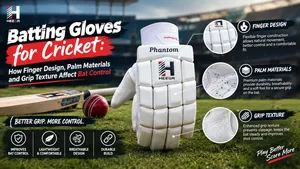 Batting Gloves for Cricket: How Finger Design, Palm Materials and Grip Texture Affect Bat ControlDiscover how cricket batting gloves, finger design, palm materials and grip texture influence bat control, comfort, protection and batting performance.
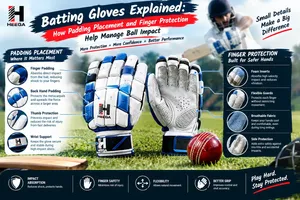 Batting Gloves Explained: How Padding Placement and Finger Protection Help Manage Ball ImpactLearn how batting glove padding placement, finger protection, and fit help manage ball impact. Find practical tips for choosing cricket batting gloves.
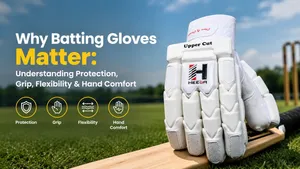 Why Batting Gloves Matter: Understanding Protection, Grip, Flexibility & Hand ComfortLearn why batting gloves matter for protection, grip, flexibility and comfort, plus how to choose the right cricket batting gloves for your playing level.