Perfect Throw, Perfect Practice — The Science Behind Ball Throwers
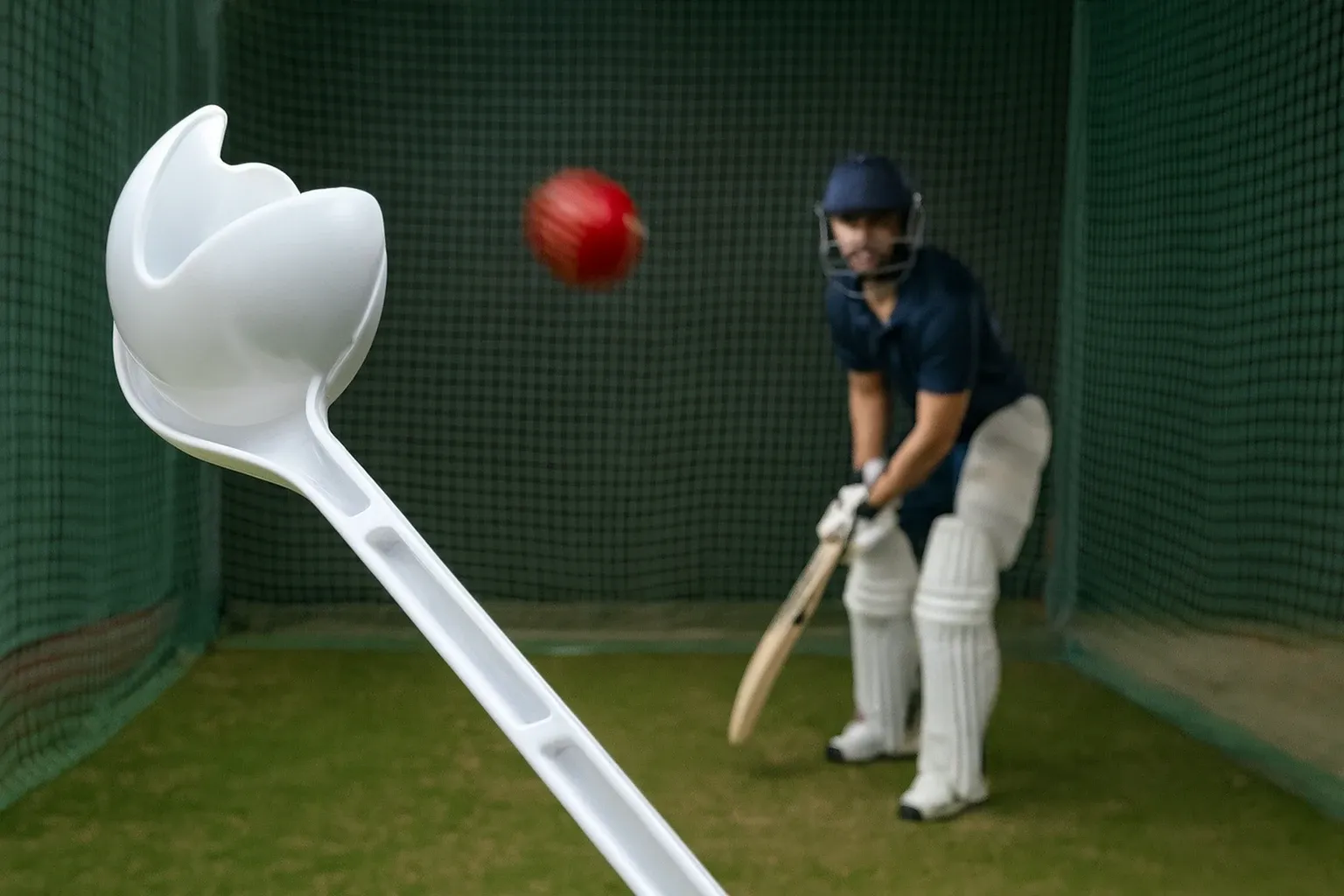
Consistency is the heartbeat of cricket training. Whether you’re a professional athlete or a rising youngster, your progress depends on the quality of practice you get. And nothing has revolutionized cricket drills in recent years like the ball thrower—a simple yet scientifically brilliant tool that mimics the bowler’s hand, provides repeatable deliveries, and offers a controlled environment for batters to sharpen their skills.
Today’s ball throwers are more than plastic arms. They’re biomechanically engineered devices designed to replicate bowling angles, improve reaction timing, and allow coaches to deliver fast, spinning, swinging, and dipping balls again and again—without fatigue.
In this detailed guide, we break down the science behind ball throwers, why they work so effectively, and how players at all levels can benefit from them.
1. The Biomechanics Behind a Cricket Ball Thrower
The design of a ball thrower is rooted in physics and human body mechanics. Here’s how:
1.1 The Lever Principle
A thrower works like a lever.
The longer arm and flexible material amplify the force applied by the coach or player.
- More leverage = more speed
- Less effort = more repetitions
- Controlled arm path = accurate line & length
This gives you consistent balls at 80–140 km/h without tiring the arm.
1.2 Seam & Grip Replication
The ball sits in a cup-shaped cradle with edges that match the natural seam curvature.
This design ensures:
- Proper seam release
- Correct ball rotation
- Stable flight similar to a real bowler’s delivery
It’s this “seam integrity” that makes thrower deliveries feel realistic.
1.3 Wrist-Like Flex Motion
Modern throwers bend like a human wrist snapping at release.
This produces:
- Late swing
- Sharp bounce
- Deceptive dip
- Better spin (for off-spin or leg-spin practice)
The science: stored elastic energy + timed wrist-like snap.
2. Why Ball Throwers Provide Superior Practice
Ball throwers solve the biggest challenge in cricket training — repeatability.
2.1 Perfect Line & Length, Ball After Ball
Coaches can target:
- Off-stump channel
- Yorkers
- Bouncers
- Good-length balls
- Swinging deliveries
Consistency leads to predictable improvement.
2.2 Fatigue-Free Training Sessions
A human arm tires. A ball thrower does not.
A coach can deliver hundreds of balls in a session without losing speed or accuracy.
2.3 Faster Reflex Training
Since ball throwers achieve higher speeds with ease, they help batters:
- Improve reaction time
- Play quick bowlers with confidence
- Develop back-foot and front-foot balance
- Sharpen pull, hook, and cut shots
For young players, this is game-changing.
3. The Physics of Speed & Swing
To understand why players love ball throwers, look at the physics:
3.1 Speed Generation
Speed comes from:
- Arm length = larger arc
- Whip-like release = more velocity
- Reduced drag due to curved channel
These factors allow throwers to consistently achieve speeds equivalent to top pacers.
3.2 Seam Position & Rotation
Swing happens when:
- Seam is upright
- Rotation is stable
- Airflow differs on each side
Throwers help maintain identical seam release every time — making it easier to practice against outswing, inswing, or no-swing balls.
3.3 Bounce Variation
Ball throwers can control bounce by adjusting:
- Release angle
- Arm position
- Ball cradle orientation
This helps batters practice difficult deliveries without needing multiple bowlers.
4. Types of Ball Throwers & Their Scientific Differences
4.1 Standard Ball Throwers
- Lightweight
- Suitable for juniors & beginners
- Good for straight deliveries
4.2 Advanced High-Flex Throwers
- Higher bend
- Generate more speed
- Perfect for elite training
4.3 Spin-Specialized Throwers
- Designed for wrist-snap simulation
- Help replicate off-spin and leg-spin drift
- Improve reading-flight skills
4.4 Hardball vs. Softball Throwers
Each is optimized for different ball weights and bounce characteristics.
5. Benefits for Players at Every Level
5.1 For Beginners
- Helps build timing
- Boosts confidence
- Increases hand-eye coordination
5.2 For Intermediate Players
- Practice shot selection
- Learn swing & bounce variations
- Improve footwork
5.3 For Advanced Players
- High-speed practice
- Perfect technique refinement
- Precise scenario-based drills
6. The Training Drills Made Better by Ball Throwers
6.1 Power-Hitting Drills
Coaches can deliver fuller balls for lofted shots with accuracy.
6.2 Swing Reading Drills
Players train eyes to judge late movement.
6.3 Short-Ball Reflex Drills
Bouncers at controlled pace improve pull & hook shots.
6.4 Front-Foot Balance Drills
Perfect for cover drives & straight drives.
6.5 Edge & Slip Practice
Consistent outswingers help catchers prepare better.
6.6 Spin & Flight Judgement
Slow, loopy balls help in developing precise footwork.
7. Why Coaches Prefer Ball Throwers Over Bowling Machines
7.1 Affordable & Portable
Ball throwers cost a fraction of a bowling machine and fit inside any kitbag.
7.2 More Natural Release
Machines shoot balls — throwers release them like bowlers.
7.3 Zero Setup Time
Grab and use instantly.
7.4 More Delivery Variations
Angle, height, speed, and spin — everything is customizable.
8. How to Choose the Right Ball Thrower
When buying a ball thrower, consider:
Material Flexibility
More flex = more speed.
Grip Comfort
Ensures stable hold for consistent throws.
Ball Compatibility
For leather, tennis, or synthetic balls.
Durability
High-quality polymers last longer and offer better rebound.
Experience Level
Juniors need lighter models; pros need high-flex ones.
9. Maintenance Tips to Extend Its Life
- Keep it away from extreme heat
- Store in your kitbag, not under pressure
- Avoid using damaged or overly hard balls
- Clean sweat and dirt regularly
- Don’t bend it beyond natural flex
Proper care ensures smooth release for years.
10. Final Thoughts — Why Every Cricketer Needs a Ball Thrower
A ball thrower isn’t just a training tool — it’s a performance amplifier.
It gives:
- Faster practice
- Realistic movement
- Endless repetition
- Improved reflexes
- More confidence at the crease
If you want to train like a professional—even without a full coaching team—a ball thrower is one of the smartest investments you can make.
Shop Now
Upgrade your cricket training with a premium, high-performance Ball Thrower — Built for power, precision, and perfect practice.
Related posts
 Why Cricket Players Practice the Same Shot Hundreds of Times: The Science of Muscle MemoryDiscover why cricket players repeat the same shots hundreds of times and how muscle memory, repetition, coordination, and deliberate practice improve batting technique and consistency.
 Cricket Kit Essentials Explained: What Every Player Needs for Practice and Match DayDiscover essential cricket kit items for practice and match day, including bats, protective gear, clothing, footwear, and accessories for every player.
 The Science of Willow Pressing: How Cleft Density Shapes Bat Power and LongevityLearn how willow pressing and cleft density affect cricket bat power, rebound, durability, pickup, and longevity, and understand what to look for when buying a bat.