The Captain’s Eye: How Great Players Learn to Read a Match Before It Turns

The tactical habits that help cricketers recognize danger, spot opportunities, and make better decisions before the scoreboard tells the full story
Great cricket is not always about reacting faster.
Sometimes, it's about seeing the next problem before it arrives.
A captain notices a batter becoming uncomfortable.
A bowler realizes a field needs changing before the boundary comes.
A batter recognizes that a bowler is setting a trap.
A fielder sees where the next shot is likely to go.
These players have something in common:
They read the match.
You don't need to be the captain to develop a captain's eye.
Match awareness can be learned through observation, experience, communication, and deliberate practice.
At Heega Sports, we believe complete cricket development goes beyond technical skills. Tactical awareness, preparation, fitness, mindset, teamwork, recovery, and reliable equipment all contribute to becoming a smarter and more dependable player.
Here's how to develop the ability to read a match before it turns.
1. Stop Watching Only the Ball
The ball is important.
But the ball isn't the whole match.
While watching a delivery, also notice:
- Field positions
- Batter movement
- Bowler patterns
- Score
- Required run rate
- Partnerships
- Match phase
- Pitch behavior
A great player is constantly collecting information.
The more information you notice, the more accurately you can interpret what is happening.
2. Ask "Why?" After Every Important Event
A boundary happens.
Don't just think:
"Four runs."
Ask:
Why did it happen?
Was the ball too full?
Was the field too defensive?
Did the batter identify a gap?
Was the bowler predictable?
Did the batter move across the crease?
This habit turns watching cricket into learning cricket.
3. Learn to Recognize Momentum Shifts
Momentum rarely changes without warning.
It may begin with:
- Three consecutive boundaries
- Several dot balls
- A wicket
- A dropped catch
- A long partnership
- A bowling change
- A fielding error
The scoreboard may show the result of the shift.
The captain's eye tries to identify the shift while it is happening.
4. Watch the Batter's Body Language
Body language can reveal confidence, frustration, hesitation, or discomfort.
Look for:
- Movement across the crease
- Changes in stance
- Delayed shots
- Frequent leaves
- Defensive movements
- Attempts to manufacture runs
A batter repeatedly struggling against one type of delivery may be giving you useful information.
Good players notice.
5. Watch What the Bowler Is Repeating
Bowlers also create patterns.
Ask:
What line are they using?
What length?
How often are they changing pace?
What happens after a boundary?
Are they attacking a particular weakness?
Once you identify the pattern, you can anticipate the next tactical decision.
6. Read the Field Like a Map
A field isn't random.
Every position represents a tactical idea.
A deep square leg may suggest protection against a particular shot.
A slip may indicate an attacking plan.
A long-off fielder may reveal where the bowler expects the batter to hit.
Ask:
"What is the field inviting me to do?"
Then ask:
"What does the opposition want me to do?"
That second question can reveal traps.
7. Understand the Match Phase
A decision that makes sense in the first few overs may be completely wrong near the end.
Consider:
Early Overs
Wickets and new-ball movement may be important.
Middle Overs
Strike rotation, partnerships, pressure, and matchups become increasingly important.
Closing Overs
Run rate, wickets in hand, boundary options, and specialist skills can dominate decision-making.
Great players understand the phase before choosing the action.
8. Don't Let the Scoreboard Tell You Everything
The score can sometimes hide the real situation.
A team may be scoring quickly but losing wickets.
Another team may be scoring slowly while keeping complete control.
Look beyond:
Runs
and consider:
Wickets + Overs + Conditions + Resources + Momentum
That's a more complete picture.
9. Think One Over Ahead
One of the simplest ways to improve tactical awareness is to think ahead.
Ask:
What might happen in the next over?
A batter might anticipate:
- A slower ball
- A change of bowler
- A defensive field
A bowler might anticipate:
- A batter targeting one boundary
- A change in strike
- A new batter's preferred scoring area
Thinking ahead helps you prepare rather than react.
10. Think One Wicket Ahead
When a batter gets out, the game changes.
A new batter may have different strengths.
The field may change.
The bowling plan may change.
The run rate may change.
Before the wicket falls, smart players already consider:
"Who is likely to come next, and how should we attack them?"
Preparation creates speed of thought.
11. Use Partnerships as Tactical Information
A partnership can reveal the opposition's strategy.
Two batters may be rotating strike comfortably.
One may be dominating a particular bowler.
Another may be struggling.
If you identify this, your team can respond.
Sometimes breaking a partnership is more important than taking a random wicket.
12. Recognize When a Batter Is Setting a Bowler Up
Cricket contains traps in both directions.
A batter may repeatedly leave a delivery.
Then suddenly attack the same area.
A bowler may repeatedly bowl one line.
Then change it when the batter expects repetition.
Don't only think about the current ball.
Think about the sequence.
Sequences create tactics.
13. Understand the Value of a Dot Ball
A dot ball can be a tactical success.
Several dots can increase pressure.
Pressure can create:
- Risky shots
- Poor running
- Communication mistakes
- Forced boundaries
A bowler doesn't always need a wicket immediately.
Sometimes the best strategy is to make the batter create the mistake.
14. Know When a Team Is Under Pressure
Pressure has visible signs.
A batting side may:
- Stop rotating strike
- Attempt unnecessary boundaries
- Miscommunicate
- Take risky singles
A bowling side may:
- Change plans too frequently
- Become defensive
- Lose fielding intensity
- Overattack
Recognizing pressure early allows you to increase it—or relieve it.
15. Learn to Spot the "Danger Over"
Some overs carry more tactical importance than others.
It might be:
- The over after a wicket
- An over from the opposition's best bowler
- The first over after a long partnership
- The final over before a strategic break
- An over against a new batter
Ask:
"What could change if we win this over?"
That question can sharpen your focus.
16. Develop Matchup Awareness
Different players have different strengths and weaknesses.
A batter may prefer pace but struggle against spin.
A bowler may be effective against left-handers.
A particular fielder may have an exceptional throwing arm.
Good captains use these differences.
You can learn to notice them too.
17. Communicate Before Problems Become Obvious
Communication is one of the simplest tactical advantages.
Tell teammates what you're seeing.
For example:
"He's struggling when the ball is wider."
"He is looking to hit over midwicket."
"The ball is stopping on the pitch."
"Let's keep the pressure on."
A team that shares information can respond faster.
18. Develop the Ability to Adapt
The original plan won't always work.
That's normal.
The best players don't become emotionally attached to a plan.
They ask:
"What is the match telling us now?"
Then they adjust.
That's tactical maturity.
19. Learn From the Opposition's Captain
When you're batting, watch the captain.
Where are fielders moving?
Which bowler is being trusted?
When are changes happening?
What is the captain protecting?
You can learn a great deal simply by studying how the opposition manages pressure.
20. Watch Cricket Like a Student
Next time you watch professional cricket, don't just follow your favorite player.
Pick one tactical element.
For example:
Watch only field changes.
Or:
Watch how batters respond to spin.
Or:
Watch how captains react after boundaries.
This makes watching cricket an active learning exercise.
The Captain's Eye Formula
Use this simple cycle:
Observe → Question → Predict → Act → Review
Observe
What is happening?
Question
Why is it happening?
Predict
What might happen next?
Act
What should I do?
Review
Did it work?
Repeat this throughout the match.
How Batters Can Develop a Captain's Eye
Before every over, ask:
- Who is bowling?
- What is the field?
- What does the bowler want?
- Where are the scoring gaps?
- What does the team need?
- What level of risk makes sense?
This can improve decision-making without changing your technique.
How Bowlers Can Develop a Captain's Eye
Before every over:
- Study the batter
- Study the field
- Identify the target
- Choose the safest attacking option
- Watch the previous deliveries
- Adjust based on the response
Don't bowl six separate deliveries.
Bowl an over with a plan.
How Fielders Can Develop a Captain's Eye
Before every delivery, know:
Where is the likely shot?
What is my responsibility?
Where is the best throwing option?
What happens if the ball comes to me?
Prepared fielders react faster because they have already imagined the situation.
Fitness Helps Tactical Awareness Too
Tactical thinking becomes harder when fatigue takes over.
Late in matches, tired players may:
- Lose concentration
- Miss field changes
- React slowly
- Make poor decisions
Role-specific fitness can help players maintain awareness throughout the game.
For serious cricketers, conditioning should support:
- Speed
- Endurance
- Agility
- Strength
- Mobility
- Recovery
The objective isn't simply to become fitter.
It's to stay effective when the match becomes difficult.
Prepare Your Equipment Before Tactical Pressure Begins
A distracted player has less attention available for the game.
Before the match, make sure your equipment is ready:
- Bat
- Helmet
- Gloves
- Pads
- Cricket shoes
- Bag
- Accessories
At Heega Sports, players can find cricket bats, helmets, gloves, pads, cricket shoes, bags, accessories, and sportswear for training and competitive cricket.
The right equipment doesn't create tactical intelligence.
But comfortable, properly fitted, reliable equipment can remove unnecessary distractions.
A 30-Day Captain's Eye Challenge
Week 1 — Observe
During matches, focus on field changes and bowling patterns.
Week 2 — Predict
Before each over, predict what the bowler or batter may try.
Week 3 — Apply
Use your observations during your own matches.
Week 4 — Review
Write down your best predictions and biggest tactical mistakes.
Over time, you'll start recognizing patterns faster.
Common Mistakes That Limit Match Awareness
Avoid:
❌ Watching only your own performance.
❌ Ignoring the scoreboard context.
❌ Failing to notice field changes.
❌ Repeating a plan that isn't working.
❌ Thinking only one ball ahead.
❌ Ignoring body language.
❌ Switching off when you're not directly involved.
❌ Keeping observations to yourself.
The goal is to become mentally involved in every phase of the match.
Signs You're Developing a Captain's Eye
You may notice:
✅ You predict bowling changes.
✅ You notice field adjustments faster.
✅ You recognize struggling batters.
✅ You anticipate pressure moments.
✅ You make better risk decisions.
✅ You communicate more.
✅ You adapt without panic.
✅ You understand why matches change momentum.
These are signs that your cricket IQ is developing.
The Biggest Tactical Advantage
The biggest advantage isn't always knowing exactly what will happen.
It's recognizing what's happening early enough to respond.
You won't predict every boundary.
You won't anticipate every wicket.
You won't always make the correct decision.
But if you consistently notice important changes before they become obvious, you'll give yourself and your team more options.
Final Thoughts
Great cricketers don't simply play the ball in front of them.
They play the situation.
They understand the score.
They read the pitch.
They watch the opposition.
They study field placements.
They recognize patterns.
They anticipate pressure.
They communicate.
And they adapt.
That's the captain's eye.
And you don't need to wear the captain's armband to develop it.
Start with one simple habit:
Before every important moment, ask yourself what might happen next.
Then look for the evidence.
The more you practice this, the faster you'll begin to see the game—not just as a series of deliveries, but as a constantly changing tactical battle.
At Heega Sports, we're proud to support cricketers who want to develop every part of their game with cricket bats, helmets, gloves, pads, shoes, bags, accessories, and sportswear for serious training and competitive cricket.
The scoreboard tells you where the match is. The captain's eye helps you understand where it's going.
Shop Now
Heega Sports – Supporting Every Step From Training Ground to Match Day.
Related posts
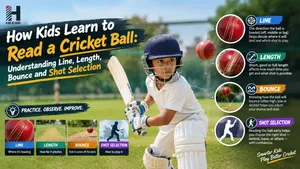 How Kids Learn to Read a Cricket Ball: Understanding Line, Length, Bounce and Shot SelectionLearn how kids can read a cricket ball by understanding line, length, bounce and shot selection to develop better batting skills and confidence.
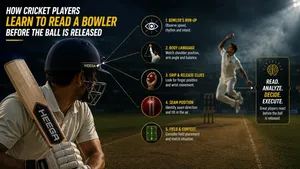 How Cricket Players Learn to Read a Bowler Before the Ball Is ReleasedLearn how cricket players read bowlers before release. Discover how run-up, wrist position, bowling action, release point, body language, and experience help batters make faster decisions.
 How Tennis Bats Help Beginners Learn Cricket: Understanding Weight, Size & Bat ControlLearn how tennis bats help beginners learn cricket by improving bat control, timing, balance, grip, confidence, and basic batting technique through simple practice.