The Hidden Art of Cricket Footwork: How Small Movements Create Better Batting and Bowling.

Introduction: The Movement Most Players Notice Too Late
When people watch a cricketer perform, they usually focus on the most obvious action.
They watch the bat meet the ball.
They watch a bowler release the delivery.
They notice a spectacular drive, a powerful pull, or a fast delivery.
But underneath all of these actions is something much simpler:
Footwork.
The feet are responsible for positioning the body before many important cricket movements happen.
A batter cannot always play an effective shot if their body is poorly positioned.
A bowler cannot consistently generate rhythm and control if their run-up and delivery movements are unbalanced.
Fielders also depend on quick footwork to reach the ball, change direction, and get into throwing positions.
This is why footwork can be described as one of cricket's hidden foundations.
It may not always look impressive.
But small movements can create major differences in performance.
What Is Cricket Footwork?
Footwork refers to how a player moves and positions their feet while performing cricket skills.
For a batter, this can include:
- Initial stance.
- Trigger movement.
- Front-foot movement.
- Back-foot movement.
- Movement across the crease.
- Recovery after a shot.
For a bowler, it can involve:
- Run-up rhythm.
- Gathering steps.
- Delivery stride.
- Front-foot landing.
- Follow-through.
For fielders, footwork includes:
- Initial movement.
- Acceleration.
- Deceleration.
- Direction changes.
- Positioning for throws.
Good footwork does not mean moving constantly.
It means moving purposefully.
Why Footwork Matters So Much
The feet create the foundation for the rest of the body.
When the feet are well positioned, a player can often:
- Maintain balance.
- Reach the ball more efficiently.
- Generate force.
- Recover quickly.
- Adjust to changing situations.
- Control movements more consistently.
Poor footwork can create problems further up the body.
The hands may have to compensate.
The head may move unnecessarily.
The player may lose balance.
Timing can suffer.
Footwork Begins Before the Ball Arrives
One of the biggest misconceptions among beginners is that footwork starts after the ball is delivered.
In reality, preparation begins before the ball reaches the batter.
A batter may make a small movement as the bowler approaches.
This movement can help them stay ready to move in different directions.
The objective is not to predict the exact delivery.
It is to prepare the body to react.
Small Movements Can Create Big Advantages
Footwork does not always involve dramatic steps.
Sometimes the difference is only a few inches.
A tiny adjustment can place the batter in a much better position to play the ball.
Similarly, a small movement by a fielder can reduce the distance they need to cover.
Cricket is often decided by these small margins.
The Relationship Between Feet and Balance
Balance is one of the most important outcomes of good footwork.
A balanced player can control their body while moving.
An unbalanced player may reach the correct position but still struggle to execute the skill.
For batting, balance helps the player control the bat through contact.
For bowling, it helps maintain rhythm and direction.
For fielding, it allows quicker reactions after changing direction.
Batting Footwork: Moving Toward the Ball
One of the most important batting skills is knowing when to move toward the ball.
A batter may need to use the front foot against certain deliveries.
This movement can help them get closer to the ball and create a stable base for the shot.
The movement does not need to be enormous.
The objective is controlled positioning.
Front-Foot Movement Requires Commitment
Hesitation can cause problems.
If a batter begins moving forward but stops halfway, they may end up in an uncomfortable position.
The feet, body, and bat may no longer work together.
Good footwork requires the player to commit appropriately once they identify the type of movement needed.
Back-Foot Footwork Creates Different Options
Not every delivery should be attacked from the front foot.
Shorter deliveries may require the batter to move backward or create space.
Back-foot movement can help players:
- Access cuts.
- Play pulls.
- Defend short bowling.
- Create room.
- Control bounce.
The ability to move backward comfortably is therefore essential.
Using the Crease
Experienced batters often use the entire width and depth of the crease.
They may move:
- Forward.
- Backward.
- Across.
- Deeper into the crease.
This can change the bowler's angle and disrupt their preferred length.
Using the crease is a tactical form of footwork.
Footwork Against Spin
Spin bowling creates a different movement challenge.
A batter may need to decide whether to:
- Move forward.
- Stay back.
- Use the crease.
- Move across.
- Attack with their feet.
Coming down the pitch can reduce the spinner's ability to generate sharp turn and flight.
But the movement must be well timed.
The Danger of Moving Too Early
Footwork is not simply about moving quickly.
Moving too early can be dangerous.
A batter who commits before understanding the delivery may leave themselves vulnerable.
Good footwork combines:
Observation + Timing + Movement
All three are important.
Footwork Against Fast Bowling
Fast bowling demands rapid reactions.
The batter may have very little time to adjust after the ball leaves the bowler's hand.
That makes the initial setup particularly important.
A balanced stance gives the batter more options.
The Head and Feet Must Work Together
A batter's head position is closely connected to footwork.
If the feet move excessively without control, the head may become unstable.
If the head remains balanced while the feet adjust, the batter can often track the ball more effectively.
This is why coaches frequently talk about staying balanced over the ball.
Why Some Batters Look Effortless
Certain players seem to move very little.
Their batting can look almost effortless.
This does not necessarily mean they have poor footwork.
In many cases, their small movements are highly efficient.
They may position themselves so well that they do not need exaggerated movement.
Efficiency is often more valuable than dramatic movement.
Footwork and Timing Are Connected
Timing is not just a hand skill.
The feet help place the body in the correct position.
If the batter reaches the ball at the right moment with good balance, the bat can meet it more naturally.
Poor positioning often forces the batter to reach or adjust at the last second.
Footwork Can Improve Shot Selection
Movement influences which shots are available.
If a batter gets forward properly, they may have more control over a drive.
If they move back effectively, they may have better access to a cut or pull.
Footwork therefore affects not only execution but also the range of available shots.
Bowling Footwork Starts With the Run-Up
For bowlers, footwork begins long before the ball is released.
The run-up creates rhythm.
A consistent run-up can help the bowler reach the crease in a repeatable position.
The objective is not simply to run quickly.
It is to create controlled momentum.
Run-Up Rhythm Matters More Than Raw Speed
A bowler who sprints uncontrollably may struggle to maintain balance at the crease.
A controlled run-up can provide:
- Rhythm.
- Momentum.
- Stability.
- Repeatability.
The ideal speed varies from bowler to bowler.
The Gathering Phase
As the bowler approaches the crease, the final steps prepare the body for delivery.
This is often called the gathering phase.
The bowler transitions from running toward the crease to organizing the body for release.
If these steps are inconsistent, the delivery can become inconsistent too.
The Delivery Stride
The delivery stride is one of the most important moments in bowling footwork.
The bowler needs to coordinate:
- Feet.
- Hips.
- Shoulders.
- Arms.
- Head.
The exact movement differs between bowlers.
But balance and repeatability remain important.
Front-Foot Landing
The front foot provides an important base during delivery.
A stable landing can help the bowler control direction and transfer energy efficiently.
However, bowlers should develop their technique under qualified coaching because individual biomechanics differ.
Follow-Through Is Part of Footwork Too
A bowler's movement does not stop at release.
The follow-through helps dissipate momentum and prepare the body for recovery.
A controlled follow-through can also help the bowler stay balanced and ready for the next phase of play.
Footwork Can Influence Bowling Accuracy
If a bowler's approach and delivery movements change significantly from ball to ball, their release point may also change.
That can make line and length harder to control.
Repeatable footwork helps create a more repeatable delivery pattern.
Fast Bowlers Need Efficient Movement
Fast bowling places significant physical demands on the body.
The run-up, gathering phase, delivery stride, and follow-through all need to work together.
Trying to copy another fast bowler's movement without understanding individual biomechanics can be counterproductive.
Spin Bowlers Have Their Own Footwork
Spin bowling may involve a shorter or more controlled approach.
But that does not mean footwork is unimportant.
Spin bowlers still need:
- Rhythm.
- Balance.
- Consistent release position.
- Controlled momentum.
Fielding Footwork Can Save Runs
Fielding is another area where footwork can make a major difference.
A fielder rarely starts directly beside the ball.
They need to move into position quickly.
Good footwork allows them to reach the ball efficiently.
The First Step Is Often the Most Important
When a batter hits the ball, a fielder's first movement can determine how quickly they reach it.
A sharp first step can create a significant advantage.
A delayed first step can turn a routine stop into a difficult chase.
Sideways Movement Matters
Fielders frequently need to move laterally.
This requires:
- Quick feet.
- Good body control.
- Awareness.
- Ability to change direction.
Lateral movement is especially important in close-catching and inner-ring fielding positions.
Deceleration Is a Skill
Running quickly is only part of fielding.
Players also need to stop safely.
A fielder charging toward the ball must control their momentum before collecting or throwing.
Poor deceleration can affect balance and increase the risk of awkward movement.
Footwork and Throwing Accuracy
A fielder's feet help create the position from which they throw.
If the player is off balance, throwing accuracy can suffer.
Good footwork allows the fielder to:
- Reach the ball.
- Gather it cleanly.
- Position the body.
- Transfer weight.
- Throw accurately.
Wicketkeepers Depend on Footwork
Wicketkeeping is often associated with glove work.
But the feet are equally important.
Wicketkeepers constantly make small adjustments.
They need to:
- Move laterally.
- Get into position.
- Stand up to the stumps.
- Move back quickly.
- React to deflections.
Footwork Against Spin Is Especially Important for Keepers
When keeping to spin, the ball can change direction after pitching.
The wicketkeeper needs fast reactions and efficient movement.
Small adjustments can determine whether a ball is collected cleanly or reaches the boundary.
Why Beginners Often Struggle With Footwork
Young players may focus heavily on the bat.
They want to hit the ball hard.
As a result, they may forget to move their feet.
Common signs include:
- Reaching for the ball.
- Falling backward.
- Playing with only the hands.
- Losing balance.
- Getting stuck on the crease.
Playing With Only the Hands
A batter who does not move their feet may still hit some good shots.
But they can struggle when the ball is outside their preferred hitting zone.
Developing movement gives them more options.
Footwork Should Be Trained Progressively
Young players should not be overloaded with complicated movements.
Training can begin with simple exercises.
For example:
Stage 1: Balance
Stand comfortably and move between stable positions.
Stage 2: Direction
Practice moving forward, backward, and sideways.
Stage 3: Reaction
Respond to a coach's visual or verbal signal.
Stage 4: Cricket Movement
Combine footwork with batting, bowling, or fielding.
Stage 5: Match Simulation
Use realistic cricket situations.
Simple Batting Footwork Drills
Players can practice:
- Front-foot shadow movements.
- Back-foot shadow movements.
- Side-to-side movement.
- Cone drills.
- Reaction-ball exercises.
- Controlled net sessions.
The goal is quality movement rather than maximum speed.
Mirror Drills Can Improve Awareness
A player can stand opposite a partner.
The partner moves in different directions.
The player attempts to copy the movement.
This can develop:
- Reaction.
- Coordination.
- Balance.
- Direction changes.
Cone Drills Are Useful for Young Players
Cones can create simple movement patterns.
Players can practice:
- Forward movement.
- Lateral movement.
- Diagonal movement.
- Direction changes.
These drills can make footwork training more engaging.
Shadow Batting Is Underrated
A batter does not always need a ball to practice movement.
Shadow batting allows players to rehearse:
- Stance.
- Trigger movement.
- Front-foot movement.
- Back-foot movement.
- Recovery.
It can be especially useful for developing movement awareness.
Footwork Should Not Become Mechanical
There is a danger in over-coaching movement.
If a player becomes obsessed with every step, they may lose natural reactions.
Good footwork should eventually become automatic.
The player should focus on the ball rather than consciously thinking about every foot movement.
Coaches Should Look for Efficiency
A useful question is not:
"How much does this player move?"
It is:
"Does this movement help the player?"
Extra movement is not automatically good movement.
Efficient movement creates useful positioning without unnecessary effort.
Footwork Changes With Player Development
A young player's movement will naturally change as they grow.
Their:
- Height.
- Strength.
- Coordination.
- Speed.
- Confidence.
will all develop.
Therefore, footwork should be reviewed regularly.
Parents Should Avoid Comparing Movement Styles
Two children may have completely different footwork.
One may move aggressively.
Another may be more compact.
Parents should focus on whether the child is developing control, balance, and confidence rather than trying to make them look like another player.
Equipment Can Support Better Movement
Equipment should allow players to move comfortably.
For young cricketers, appropriately sized bats, pads, gloves, shoes, and protective equipment can make training easier.
Poorly fitted equipment may restrict movement or create unnecessary discomfort.
Cricket Shoes and Footwork
Footwear is particularly relevant to movement.
Players need cricket shoes that provide appropriate traction and comfort for their playing environment.
The correct footwear can help players move confidently without unnecessary slipping or discomfort.
The Connection Between Footwork and Confidence
A player who moves well often feels more prepared.
They know they can reach the ball.
They trust their movement.
That confidence can influence decision-making.
Confidence and footwork can therefore reinforce one another.
Footwork Can Help Players Adapt
A batter cannot control where every ball will land.
A bowler cannot control every bounce.
A fielder cannot predict every deflection.
Good movement helps players adapt when reality differs from expectation.
This is one of its greatest advantages.
Why Footwork Matters More as Competition Increases
At beginner level, players may succeed through natural ability.
As competition becomes stronger, small weaknesses become easier to expose.
A player who does not move efficiently may struggle against:
- Faster bowling.
- Better spin.
- More accurate fielding.
- Higher match pressure.
Footwork becomes increasingly important as the standard rises.
Nepal, Germany, USA, Canada, Netherlands, and UK
Cricket is developing across a wide range of playing environments.
Young cricketers in Nepal, Germany, the United States, Canada, and the Netherlands are entering structured coaching systems with different facilities and competitive pathways.
The United Kingdom has an established cricket culture with extensive junior, club, and academy opportunities.
Despite these differences, movement remains a universal part of cricket.
A player does not need expensive technology to begin developing better footwork.
They need awareness, coaching, repetition, and opportunities to move.
The Hidden Advantage of Efficient Movement
The best footwork is often the footwork nobody notices.
When a player arrives in the correct position naturally, the movement can appear effortless.
That is the result of practice.
The goal is not to create dramatic movement.
The goal is to make useful movement automatic.
A Simple Footwork Checklist
Players can ask themselves:
- Am I balanced?
- Am I moving early enough?
- Am I moving unnecessarily?
- Can I reach the ball comfortably?
- Can I recover quickly?
- Am I watching the ball?
- Does my movement help my shot or delivery?
These questions can help identify areas for improvement.
How Heega Sports Supports Player Movement
At Heega Sports, we understand that cricket equipment should support the player rather than interfere with movement.
Our cricket range includes:
- Cricket bats.
- Kashmir Willow bats.
- Junior cricket bats.
- Leather cricket balls.
- Practice balls.
- Batting gloves.
- Batting pads.
- Cricket helmets.
- Cricket shoes.
- Cricket kit bags.
- Practice nets.
- Training accessories.
Whether a player is learning their first batting movements or preparing for competitive cricket, suitable equipment can contribute to a more comfortable training experience.
Final Thoughts
Footwork is one of the most overlooked parts of cricket.
People notice the bat swing.
They notice the bowling action.
They notice the spectacular catch.
But many successful cricket movements begin with the feet.
A small step can place a batter into the perfect position.
A controlled run-up can help a bowler repeat their action.
A quick first step can save a boundary.
A sharp lateral movement can create a wicketkeeping opportunity.
These actions may look simple.
They are not.
Good footwork requires balance, timing, coordination, awareness, and repetition.
For young cricketers, learning these skills early can create a strong foundation for future development.
The most important lesson is that footwork should not be about moving as much as possible.
It should be about moving at the right time, in the right direction, with the right amount of control.
That is the hidden art of cricket footwork.
And sometimes, the smallest step can make the biggest difference.
🏏 Move Better. Train Better. Play Better With Heega Sports
Explore cricket bats, Kashmir Willow bats, junior cricket bats, leather balls, practice balls, batting gloves, pads, cricket shoes, helmets, kit bags, practice nets, and training accessories designed to support players at every stage.
Shop Now
Heega Sports – Supporting Better Movement, Better Training, and Better Cricket.
Related posts
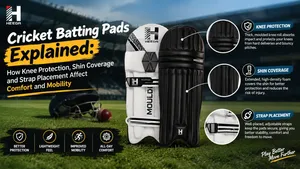 Cricket Batting Pads Explained: How Knee Protection, Shin Coverage and Strap Placement Affect Comfort and MobilityLearn how cricket batting pads, knee protection, shin coverage and strap placement affect comfort, mobility, impact protection and batting performance.
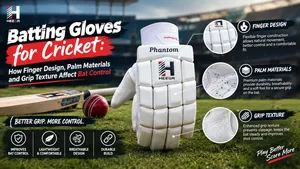 Batting Gloves for Cricket: How Finger Design, Palm Materials and Grip Texture Affect Bat ControlDiscover how cricket batting gloves, finger design, palm materials and grip texture influence bat control, comfort, protection and batting performance.
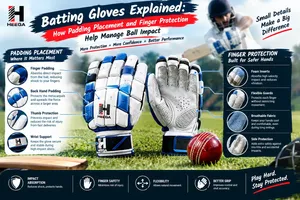 Batting Gloves Explained: How Padding Placement and Finger Protection Help Manage Ball ImpactLearn how batting glove padding placement, finger protection, and fit help manage ball impact. Find practical tips for choosing cricket batting gloves.