The Hidden World of Cricket Umpires: What They Watch During Every Delivery.

Introduction: Cricket Umpires See More Than Most Fans Realize
When a cricket match is being played, most spectators naturally focus on the batter and bowler.
The batter is trying to score.
The bowler is trying to take a wicket.
Fielders are looking for opportunities.
But standing nearby is another person watching almost everything that happens.
The umpire.
An umpire's job may appear simple from a distance.
They raise a finger for a wicket.
They signal a boundary.
They call a wide or no-ball.
However, every decision requires concentration, positioning, knowledge of the laws, and the ability to process events almost instantly.
An umpire must follow the ball while also observing players, the crease, the wicket, fielding positions, and possible infringements.
There is very little room for distraction.
From local cricket clubs to international matches across Nepal, Germany, the United States, Canada, the Netherlands, and the United Kingdom, umpires play a fundamental role in making the game fair and organized.
What Does a Cricket Umpire Actually Do?
An umpire is responsible for applying the laws of cricket during a match.
Their responsibilities include:
- Making decisions on dismissals.
- Calling wides and no-balls.
- Confirming boundaries.
- Monitoring fair play.
- Managing match procedures.
- Communicating with players and other officials.
Their work continues throughout the match.
The Umpire's Position Is Carefully Chosen
The main umpire usually stands behind the bowler's end.
This position gives them a useful view of:
- The bowler's delivery.
- The popping crease.
- The striker.
- The wickets.
- Possible run-out situations.
Positioning is essential because the umpire needs the clearest possible view of important events.
Why Does the Umpire Stand Behind the Bowler?
From this position, the umpire can judge whether the bowler has completed a legal delivery.
They can also observe the batter and the wicket during the delivery.
The position provides a strong overall view of the action.
The Square-Leg Umpire Has a Different View
The second on-field umpire normally works from the square-leg area.
Their position allows them to observe situations that may be difficult for the bowler's-end umpire to see.
These can include:
- Run-outs.
- Stumpings.
- Short runs.
- Catching situations.
- Movement around the crease.
The two umpires therefore work as a team.
What Does an Umpire Watch Before the Ball Is Bowled?
The job starts before the delivery.
The umpire must be aware of:
- The fielding setup.
- The bowler's position.
- The batter's position.
- The number of fielders in relevant areas.
- The state of the match.
This preparation allows the umpire to focus on the delivery itself.
Watching the Bowler's Front Foot
One of the most important responsibilities is determining whether the bowler has delivered a legal ball.
The umpire watches the bowler's front foot in relation to the popping crease.
If the delivery is illegal because of a front-foot infringement, it can result in a no-ball under the applicable laws and playing conditions.
This decision often requires extremely quick visual judgment.
Why No-Ball Decisions Can Be Difficult
Fast bowlers can reach the crease quickly.
Their feet may be close to the line.
The umpire must determine the position accurately at the moment of delivery.
In professional cricket, technology may assist with certain decisions, but the on-field umpire remains central to match officiating.
What Does the Umpire Watch During the Delivery?
Once the bowler releases the ball, the umpire's attention becomes extremely focused.
They may watch:
- The ball's path.
- The batter.
- The wicket.
- Possible contact.
- The legality of the delivery.
At the same time, they must be prepared to respond immediately.
How Does an Umpire Judge a Wide?
A wide is not simply a ball that looks far away from the batter.
The decision depends on the applicable laws and playing conditions.
The umpire considers whether the ball is sufficiently out of the batter's reach and whether the batter has made movement that affects the judgment.
This is why wide decisions can sometimes require careful interpretation.
What Happens When the Ball Hits the Batter?
The umpire must determine what happened.
The ball may:
- Hit the bat.
- Hit the body.
- Hit the pads.
- Miss the batter completely.
These details can become important for dismissal decisions and other calls.
LBW Decisions Require Multiple Judgments
Leg before wicket is one of the most complex decisions in cricket.
The umpire must consider several factors, including:
- Where the ball pitched.
- Whether the ball struck the batter's person.
- Where the impact occurred.
- Whether the ball would have hit the stumps.
- Whether the batter made a valid shot attempt, where relevant under the laws.
All of this must be assessed very quickly.
Why LBW Decisions Attract So Much Attention
An LBW decision can change a match instantly.
A batter may believe the ball was missing the stumps.
The fielding team may strongly believe otherwise.
The umpire must remain focused on the evidence rather than the reactions of either side.
Catches Require Extreme Concentration
When a batter edges the ball, the umpire must determine whether a legitimate catch has occurred.
They may need to consider:
- Whether the ball touched the bat.
- Whether the fielder completed the catch.
- Whether the ball touched the ground.
- Whether the fielder was in a legal position.
Close catches can become extremely difficult to judge in real time.
Run-Outs Happen in Fractions of a Second
Run-outs require the umpire to track:
- The ball.
- The batter.
- The crease.
- The wicket.
- The fielder.
The timing can be incredibly close.
This is one reason the square-leg umpire's position is so important.
Stumpings Need a Different Perspective
A wicketkeeper can remove the bails extremely quickly when the batter is outside their ground.
The umpire must determine whether:
- The wicket was fairly put down.
- The batter was outside the crease.
- The batter had not regained their ground.
In close situations, the third umpire may be asked to review the footage where the playing conditions permit it.
What Happens When the Ball Reaches the Boundary?
Umpires must determine whether the ball has crossed the boundary and how it reached there.
A boundary can result from:
- A ball reaching the rope after touching the ground.
- A ball being hit over the boundary without first touching the ground.
The appropriate signal communicates the outcome to players, scorers, and spectators.
Umpire Signals Are a Language of Their Own
Cricket umpires use standardized signals to communicate decisions.
Signals can indicate:
- Four runs.
- Six runs.
- Wide.
- No-ball.
- Bye.
- Leg bye.
- Out.
- Six.
- Dead ball.
These signals help everyone understand what has happened.
Why Signals Matter
A stadium can be noisy.
Spectators may not hear the umpire's verbal call.
Players may be positioned far away.
The scoring team also needs clear information.
Visual signals provide a consistent method of communication.
Umpires Must Communicate with Scorers
Scorers record what happens during the innings.
Umpires therefore need to communicate clearly when:
- Runs are awarded.
- A wicket falls.
- An extra is called.
- A boundary occurs.
Accurate communication helps maintain a correct score.
The Third Umpire Adds Another Layer
Modern cricket can include a third umpire who reviews selected incidents using video technology.
Depending on the playing conditions, reviews may involve:
- Catches.
- Run-outs.
- Stumpings.
- Boundary decisions.
- No-ball situations.
- Other reviewable incidents.
The third umpire does not replace the on-field officials.
Instead, technology provides additional evidence when a decision is difficult to determine in real time.
Technology Has Changed Umpiring
Modern cricket uses several technologies to support decision-making.
These may include:
- Slow-motion video.
- Multiple camera angles.
- Ball-tracking systems.
- Edge-detection technology.
- High-speed replays.
Technology can provide information that is impossible to see clearly with the naked eye.
Does Technology Make Umpires Less Important?
No.
Technology may assist with particular decisions, but umpires remain responsible for controlling the match.
They interpret laws.
They manage players.
They communicate with scorers.
They monitor match conditions.
They make numerous decisions that technology does not replace.
Umpires Need Exceptional Concentration
Cricket can last for several hours or, in longer formats, multiple days.
An umpire must maintain concentration throughout.
They cannot simply focus on the most exciting moments.
Even an ordinary-looking delivery can contain an important decision.
Weather Can Affect Umpiring
Umpires must also monitor environmental conditions.
They may need to consider:
- Rain.
- Lightning.
- Poor visibility.
- Wet conditions.
- Extreme heat.
- Ground safety.
Player safety and match integrity remain important responsibilities.
Umpires Monitor the Ball and Playing Surface
The condition of the ball can change throughout the match.
The pitch can also deteriorate.
Umpires monitor the playing environment to ensure the match can continue safely and according to the laws and playing conditions.
Player Behaviour Is Also Part of the Job
Umpiring is not only about the ball.
Officials must monitor conduct.
They may intervene when players:
- Disagree excessively with decisions.
- Behave inappropriately.
- Breach conduct regulations.
- Create unnecessary confrontation.
Strong communication can prevent situations from becoming worse.
Umpires Must Remain Neutral
One of the most important qualities of an umpire is neutrality.
Players from both teams will naturally want decisions to go in their favour.
The umpire cannot respond to pressure from:
- Players.
- Captains.
- Coaches.
- Spectators.
Their responsibility is to apply the laws consistently.
Why Experience Matters
Umpiring improves through experience.
Experienced officials become better at:
- Reading situations.
- Positioning themselves.
- Anticipating possible events.
- Communicating decisions.
- Remaining calm under pressure.
Practical experience adds an important dimension to knowledge of the laws.
Learning the Laws Is Only the Beginning
Knowing the rules is essential.
But an umpire must also learn how to apply them in real situations.
A training session can teach a law.
A match can reveal how complicated that law may become when several events happen simultaneously.
Umpires Work as a Team
Good officiating depends on communication between officials.
The on-field umpires may communicate with:
- Each other.
- The third umpire.
- Scorers.
- Match referees.
- Ground staff.
Teamwork helps maintain consistency.
Nepal: Developing the Next Generation of Officials
As cricket continues growing in Nepal, the development of qualified umpires is becoming increasingly important.
Strong officiating helps domestic competitions operate fairly and gives young players confidence in the structure of the game.
Germany: Building Cricket Through Better Officiating
As cricket expands in Germany, trained officials help clubs and competitions establish consistent standards.
Umpiring can also provide another pathway for people who want to remain involved in cricket beyond playing.
United States: A Growing Need for Cricket Officials
The expansion of cricket in the USA is creating demand for players, coaches, scorers, and officials.
Developing knowledgeable umpires is an important part of building sustainable competitions.
Canada: Officiating Supports Competitive Cricket
Canadian cricket includes leagues and competitions requiring officials who understand both the laws and the practical demands of match management.
The Netherlands: Discipline Extends Beyond Players
The Netherlands has a strong cricket tradition where disciplined officiating plays an important role in maintaining competitive standards.
United Kingdom: A Deep Tradition of Umpiring
The UK's long cricket history has produced generations of experienced umpires and officiating pathways.
Umpiring remains an important part of club and professional cricket.
Why Young Cricketers Should Understand Umpiring
Players often focus entirely on batting and bowling.
However, understanding umpiring can make them better cricketers.
Knowing how officials interpret situations can help players:
- Avoid unnecessary mistakes.
- Understand decisions.
- Communicate respectfully.
- Learn the laws.
- Play more intelligently.
Respect for officials is also an important part of sporting culture.
Equipment Helps Umpires Too
While players carry the majority of visible cricket equipment, officials also need suitable clothing and accessories for long periods on the field.
Comfortable footwear and weather-appropriate clothing can help officials remain focused throughout a match.
How Heega Sports Supports the Cricket Community
At Heega Sports, we understand that cricket requires more than players alone.
The sport depends on:
- Players.
- Coaches.
- Umpires.
- Scorers.
- Ground staff.
- Clubs.
- Academies.
- Supporters.
Our cricket equipment range includes:
- Kashmir Willow cricket bats.
- Leather cricket balls.
- Practice balls.
- Batting gloves.
- Batting pads.
- Cricket helmets.
- Cricket shoes.
- Practice nets.
- Cricket kit bags.
- Training accessories.
Supporting the cricket community means helping every part of the game develop.
Final Thoughts
A cricket umpire may appear to stand quietly at the side of the action.
In reality, they are constantly watching, evaluating, communicating, and making decisions.
They track the bowler's feet.
They judge wides and no-balls.
They assess catches and dismissals.
They monitor the playing conditions.
They communicate with other officials.
They manage player conduct.
And they must perform all of this while remaining neutral and focused.
Modern technology has made some decisions easier to review, but it has not removed the importance of human judgment.
Across Nepal, Germany, the United States, Canada, the Netherlands, and the United Kingdom, good umpiring remains one of the foundations of fair cricket.
The next time you watch a match, look beyond the bat and ball.
Notice the umpire.
They are watching far more than most spectators realize.
🏏 Support the Game with Heega Sports
Explore Kashmir Willow cricket bats, leather cricket balls, practice balls, batting gloves, batting pads, cricket helmets, cricket shoes, practice nets, cricket kit bags, and training accessories for players, academies, clubs, and cricket communities.
Shop Now
Heega Sports – Supporting the Players, Officials, and Passion Behind Every Cricket Match.
Related posts
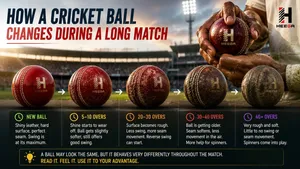 How a Cricket Ball Changes During a Long Match.Learn how a cricket ball changes during a long cricket match. Discover how wear, shine, moisture, rough surfaces, repeated impact, and ball condition influence its behavior.
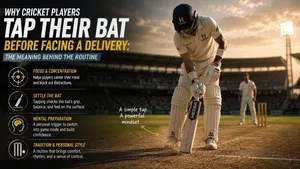 Why Cricket Players Tap Their Bat Before Facing a Delivery: The Meaning Behind the RoutineWhy do cricket players tap their bat before facing a delivery? Discover the meaning behind bat tapping, marking guard, routines, focus, confidence, and batting preparation.
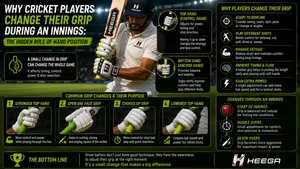 Why Cricket Players Change Their Grip During an Innings: The Hidden Role of Hand PositionDiscover why cricket players change their grip during an innings and how hand position influences bat control, timing, power, wrist movement, and different batting shots.