The Must-Have Sunglasses for Every Cricketer’s Kit: Why UV Protection Matters
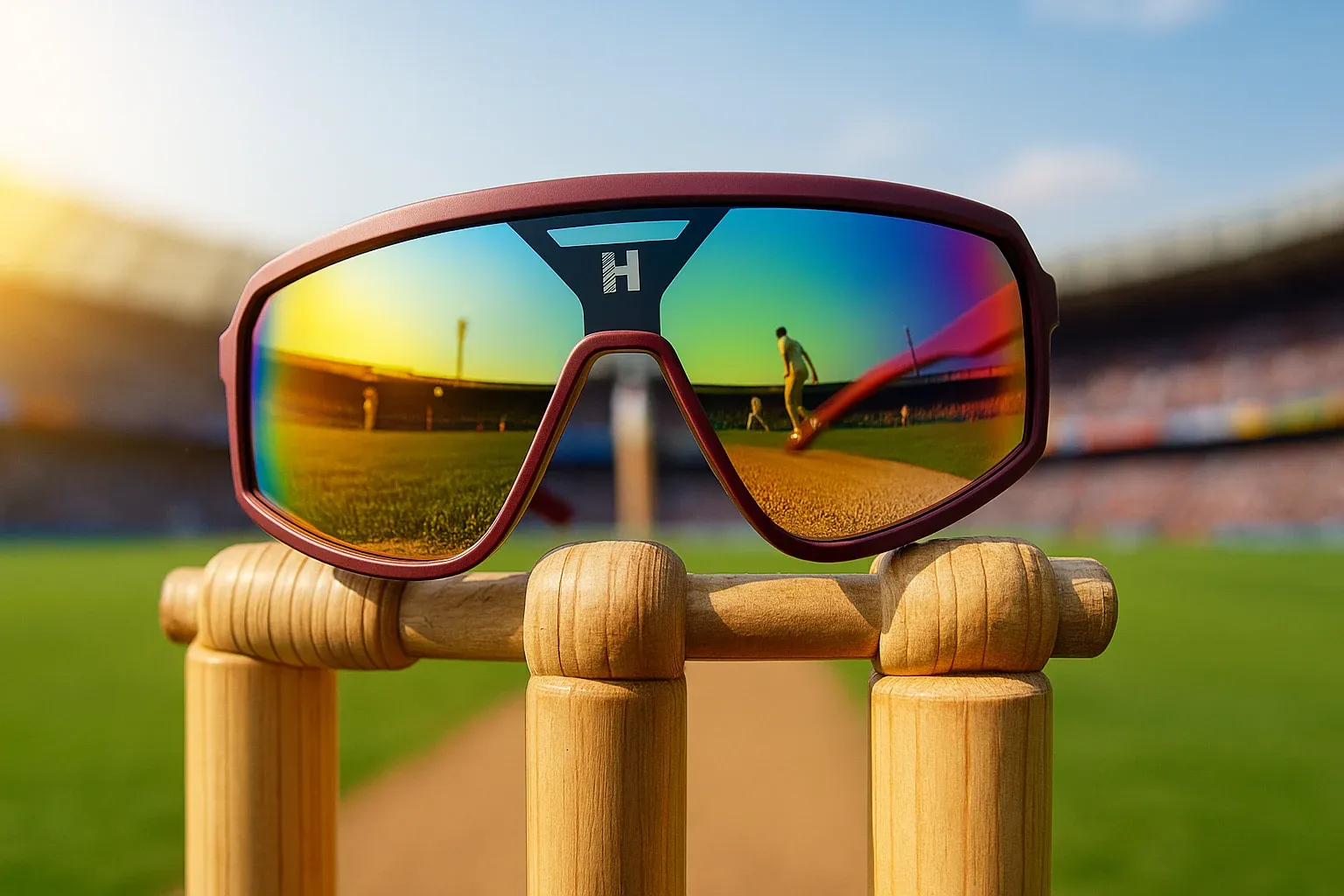
Introduction: Why Sunglasses Belong in Every Cricketer’s Kit
Cricket is an outdoor sport, and players often spend several hours under bright sunlight.
Whether you are batting, bowling, fielding, or standing behind the stumps, your eyes are constantly working to track the ball.
Bright sunlight can make that difficult.
Glare from the pitch can affect visibility.
Strong sunlight can make it harder to follow a high catch.
Long hours outdoors can also expose your eyes to ultraviolet radiation.
This is why a good pair of cricket sunglasses is more than a fashion accessory.
The right sunglasses can provide:
- Better visual comfort
- Reduced glare
- Improved visibility
- Protection from harmful UV rays
- Comfortable vision during long matches
- Protection from wind and dust
Among these benefits, UV protection is one of the most important features to look for when choosing sunglasses for cricket.
What Makes Cricket Sunglasses Different?
Cricket sunglasses need to work in a demanding outdoor environment.
Players move continuously and need to keep their eyes focused on the ball.
A suitable pair should therefore provide a combination of:
- Clear vision
- Secure fit
- Lightweight construction
- Comfortable lenses
- Good UV protection
- Resistance to movement
- Suitable coverage
Regular lifestyle sunglasses may look good, but they may not always be designed for the movement and requirements of sport.
Why UV Protection Matters in Cricket
Ultraviolet radiation comes primarily from sunlight.
Outdoor cricket players can spend long periods exposed to sunlight during training and matches.
Quality sunglasses with appropriate UV protection help reduce the amount of harmful ultraviolet radiation reaching the eyes.
When selecting cricket sunglasses, players should look for lenses that clearly state their UV protection level.
A good pair should ideally provide protection against both UVA and UVB radiation.
UVA and UVB: What Do They Mean?
Ultraviolet radiation includes different types of rays.
Two types that are particularly relevant when discussing everyday outdoor exposure are:
UVA
UVA rays can penetrate deeper into the skin and are also associated with long-term eye exposure.
UVB
UVB rays are more strongly associated with sunburn and can also contribute to eye damage.
Because cricket players spend significant time outdoors, sunglasses that offer broad-spectrum UV protection are an important consideration.
UV Protection Is Important Even on Cloudy Days
Many players assume that sunglasses are only necessary when the sun is extremely bright.
That is not always the case.
Ultraviolet radiation can still reach the ground when the sky is cloudy.
Cricket players may therefore benefit from using properly rated sunglasses whenever they are spending extended periods outdoors.
The goal is not simply to make the game look darker.
It is to combine visual comfort with appropriate protection.
How Bright Sunlight Affects Cricket Players
Strong sunlight can create several challenges.
A batter may struggle to pick up the ball against a bright background.
A fielder may have difficulty tracking a high shot.
A wicketkeeper may experience glare while watching deliveries.
A bowler may find it uncomfortable to look toward the batter in certain lighting conditions.
Sunglasses can help reduce some of these visual challenges.
Glare Reduction Can Improve Comfort
Glare occurs when excessive light enters the eyes.
On a cricket ground, glare can come from:
- The pitch
- Grass
- White clothing
- Boundary areas
- Bright sky
- Reflective surfaces
A suitable lens can reduce the discomfort caused by excessive brightness.
This can make it easier for players to remain focused during extended periods of play.
Why Lens Color Matters
Cricket sunglasses are available with different lens colors and tints.
Different tints can change how the environment appears.
Common options include:
- Grey
- Brown
- Green
- Yellow
- Clear
- Specialized sports tints
The best option depends on lighting conditions and personal preference.
Players should choose a lens that allows them to see the ball clearly without making the environment unnecessarily dark.
Grey Lenses for Bright Conditions
Grey lenses are popular for bright outdoor conditions.
They generally reduce overall brightness while maintaining relatively natural color perception.
This can make them suitable for sunny cricket matches.
Brown and Amber Lenses
Brown or amber lenses can increase contrast in certain conditions.
Some players may find them useful when they want to distinguish the ball more clearly against the background.
However, visual preference varies from player to player.
Clear Lenses for Low-Light Conditions
Clear lenses provide protection from wind and dust without significantly reducing visible light.
They can be useful in certain low-light environments.
However, players should always ensure that their sunglasses are suitable for the actual conditions in which they are playing.
Polarized Lenses and Cricket
Polarized lenses are designed to reduce certain types of glare.
They can be particularly useful around highly reflective surfaces.
However, polarized lenses are not automatically better for every cricket player.
Players should consider:
- Their visual needs
- Lighting conditions
- Personal comfort
- Ball visibility
- Compatibility with other equipment
UV protection and overall optical quality remain important regardless of whether the lens is polarized.
Sunglasses and Ball Tracking
Cricket requires excellent visual tracking.
The ball can travel rapidly toward a batter or fielder.
Players need to follow:
- The bowler's release
- The ball's flight
- Its movement through the air
- Its bounce
- The resulting shot
Sunglasses should therefore provide comfortable vision without creating distracting distortion.
Why Comfort Matters During Long Matches
Cricket matches can last for several hours.
Test matches can continue over multiple days.
Players may wear sunglasses for extended periods while fielding.
If the frame becomes uncomfortable, slips down the nose, or creates pressure around the ears, it can become distracting.
A good sports frame should feel secure without creating unnecessary pressure.
Lightweight Frames Are Better for Active Players
Cricket players move frequently.
A heavy pair of sunglasses can become uncomfortable during:
- Running
- Diving
- Fielding
- Batting
- Training
Lightweight frames can help players remain comfortable throughout the session.
A Secure Fit Prevents Distractions
Sunglasses should stay in position when players move.
A secure fit is particularly important for:
- Fast fielders
- Wicketkeepers
- Batters
- All-rounders
Players should avoid frames that slide easily during movement.
Wraparound Designs and Side Coverage
Some sports sunglasses use wraparound designs.
These can provide additional coverage around the sides of the eyes.
This may help reduce exposure to bright light entering from different angles.
The design should still allow comfortable peripheral vision.
Peripheral Vision Matters in Cricket
Cricket players need to remain aware of their surroundings.
A fielder may need to track the ball while also judging:
- Teammate positions
- Boundary distance
- Batter movement
- Running opportunities
Sunglasses should not unnecessarily restrict peripheral vision.
Sunglasses Can Help Protect Against Wind and Dust
Cricket grounds can become dusty, particularly in dry conditions.
Wind can also cause particles to enter the eyes.
Sports sunglasses can provide an additional physical barrier against:
- Dust
- Small particles
- Wind
- Grass debris
This can be especially useful during fielding and training.
Sunglasses for Batters
Batters face unique visual challenges.
They need to see the ball immediately after release.
Bright sunlight can sometimes make the ball harder to track.
A comfortable pair of sunglasses can help reduce visual discomfort while allowing the batter to focus on the delivery.
However, the lenses must not distort the ball or make it difficult to judge its movement.
Sunglasses for Fielders
Fielders spend long periods exposed to sunlight.
They may also need to look upward when tracking catches.
This makes sunglasses particularly useful for fielding.
Good lenses can help reduce glare and provide UV protection while keeping the player's vision comfortable.
Sunglasses for Wicketkeepers
Wicketkeepers remain involved in almost every delivery.
They need to maintain visual focus throughout the innings.
Sunlight, glare, and dust can make this more challenging.
A secure and comfortable pair of sports sunglasses can help during appropriate daytime conditions.
Sunglasses for Bowlers
Bowlers need to maintain concentration during their run-up and delivery.
Depending on the position of the sun, bright light may affect their view toward the batter.
Sunglasses can help reduce brightness and glare while providing eye protection during outdoor play.
Cricket Sunglasses During Training
Sunglasses are not only useful during matches.
Players may spend several hours training outdoors.
Repeated exposure to sunlight during:
- Net sessions
- Fielding drills
- Fitness training
- Bowling practice
- Batting practice
makes appropriate eye protection worth considering.
Choosing Sunglasses for Different Weather Conditions
The ideal sunglasses can depend on the weather.
Bright Sunny Conditions
Look for:
- Good UV protection
- Comfortable tint
- Glare reduction
- Secure fit
Partly Cloudy Conditions
Consider:
- Moderate tint
- Good contrast
- UV protection
Low-Light Conditions
Consider:
- Lighter lenses
- Clear lenses
- Good visibility
Players should never choose a lens so dark that it makes it difficult to see the ball or surroundings.
Why UV Protection Should Be a Priority Over Style
Sunglasses come in many shapes and designs.
It is easy to focus on appearance.
But cricket players should first consider performance and protection.
A good pair should offer:
- Appropriate UV protection
- Comfortable vision
- Secure fit
- Suitable lens quality
- Lightweight construction
Style can come afterward.
How to Check the Quality of UV Protection
When purchasing sunglasses, look for clear information from the manufacturer about UV protection.
Terms such as 100% UV protection or UV400 are commonly used to indicate protection against ultraviolet wavelengths up to 400 nanometers.
Players should purchase from reliable sources and check the product specifications rather than assuming every dark lens automatically provides sufficient UV protection.
Darkness and UV protection are not the same thing.
A dark lens without adequate UV protection is not necessarily a safer choice.
Why Darker Lenses Do Not Always Mean Better Protection
This is an important misconception.
A very dark lens can make the environment appear less bright, but lens darkness itself does not guarantee protection from ultraviolet radiation.
The UV filtering properties of the lens are what matter.
Therefore, players should prioritize verified UV protection rather than simply choosing the darkest sunglasses available.
Anti-Scratch Coatings and Sports Use
Cricket sunglasses can be exposed to dust, accidental drops, and regular handling.
An anti-scratch coating may help maintain lens clarity.
Players should still store sunglasses properly and avoid placing the lenses directly on rough surfaces.
How to Care for Cricket Sunglasses
Proper maintenance can extend the useful life of your sunglasses.
Clean the Lenses Carefully
Use a suitable microfiber cloth.
Avoid Harsh Chemicals
Follow the manufacturer's cleaning recommendations.
Store Them Safely
Use a protective case when the sunglasses are not being used.
Keep Them Away From Excessive Heat
Extreme temperatures can damage some frame and lens materials.
Inspect Them Regularly
Check for:
- Cracks
- Loose hinges
- Scratches
- Damaged lenses
Damaged sunglasses may affect visibility and should be replaced when necessary.
Common Mistakes When Buying Cricket Sunglasses
Players often make several mistakes.
Choosing Only Based on Appearance
Good-looking sunglasses are not automatically suitable for cricket.
Ignoring UV Protection
This removes one of the most important reasons for wearing outdoor sunglasses.
Choosing Extremely Dark Lenses
Very dark lenses can make ball tracking difficult in changing conditions.
Buying an Unstable Frame
Sunglasses that constantly move can become distracting.
Ignoring Peripheral Vision
A frame should not unnecessarily block the player's field of view.
Selecting the Wrong Size
An uncomfortable frame can become difficult to wear during long sessions.
Do Cricket Players Really Need Sunglasses?
Not every player must wear sunglasses.
Some players are comfortable playing without them.
However, for players who regularly compete outdoors in bright conditions, properly designed sports sunglasses can offer useful benefits.
They can combine:
UV protection + glare reduction + visual comfort + physical coverage
The decision ultimately depends on the player's needs and the conditions.
Are Cricket Sunglasses Useful for Young Players?
Young players also spend time outdoors during school cricket, academy sessions, and club training.
If sunglasses are used, they should:
- Fit securely
- Be comfortable
- Provide appropriate UV protection
- Allow clear vision
- Be suitable for active movement
Parents and coaches should ensure that sunglasses do not interfere with safe ball tracking.
Sunglasses and Cricket Safety
Eye protection should never compromise visibility.
Players should be able to:
- See the ball clearly
- Judge its speed
- Track its movement
- See teammates
- React quickly
If sunglasses interfere with any of these abilities, the player should reconsider the lens or frame.
Why Good Vision Is Essential in Cricket
Cricket is a visually demanding sport.
Players must constantly process moving objects.
A batter has only a short amount of time to react to a delivery.
A fielder may have to judge a ball traveling through the air.
A wicketkeeper must follow the ball from release to collection.
Clear and comfortable vision is therefore an important part of performance.
Sunglasses as Part of a Complete Cricket Kit
A complete cricket kit can include:
- Cricket bat
- Cricket balls
- Batting gloves
- Batting pads
- Helmet
- Abdominal protection
- Cricket shoes
- Kit bag
- Practice equipment
- Sunglasses
Each item serves a different purpose.
Sunglasses are particularly useful for outdoor visibility and eye protection.
How Heega Sports Supports Cricket Players
At Heega Sports, we understand that cricket players need equipment that supports them from training sessions to match day.
Our cricket range includes products such as:
- Cricket bats
- Kashmir Willow bats
- English Willow bats
- Leather cricket balls
- Practice balls
- Batting gloves
- Batting pads
- Cricket helmets
- Cricket shoes
- Cricket kit bags
- Practice nets
- Cricket stumps
- Sunglasses
- Training accessories
Whether you are a beginner, academy player, club cricketer, or serious competitor, having suitable equipment can make training more comfortable and organized.
How to Choose the Right Cricket Sunglasses
Before buying, consider these factors:
1. UV Protection
Make sure the product specifications clearly state the level of UV protection.
2. Lens Quality
Choose lenses that provide clear and comfortable vision.
3. Fit
The sunglasses should stay secure during movement.
4. Weight
Lightweight frames can be more comfortable during long sessions.
5. Coverage
Consider whether the design provides suitable protection from sunlight, wind, and dust.
6. Visibility
Make sure the lens does not make it difficult to track the cricket ball.
7. Playing Conditions
Choose a lens tint suitable for the brightness and environment in which you normally play.
When Should You Wear Cricket Sunglasses?
Sunglasses can be particularly useful during:
- Bright daytime matches
- Outdoor practice sessions
- Fielding drills
- Long training sessions
- Sunny cricket tournaments
- Outdoor fitness sessions
They may be less useful in low-light conditions or when artificial lighting is dominant.
Players should always prioritize clear vision.
The Importance of Reliable Cricket Equipment
Performance does not come from one piece of equipment.
A player needs a combination of:
- Good technique
- Regular practice
- Fitness
- Concentration
- Proper recovery
- Suitable equipment
Sunglasses are one small part of this larger system.
But small details can matter when players spend long hours outdoors.
Final Thoughts: Why Every Outdoor Cricketer Should Consider Sunglasses
Cricket demands excellent vision.
Players need to follow the ball, judge movement, react quickly, and remain focused for long periods.
Bright sunlight can make those tasks more difficult.
A properly selected pair of cricket sunglasses can help reduce glare, improve visual comfort, and provide an important layer of UV protection during outdoor play.
The most important factors are not simply appearance or lens darkness.
Players should look for:
- Reliable UV protection
- Clear vision
- Comfortable lenses
- Secure fit
- Lightweight construction
- Suitable coverage
- Appropriate lens tint
Whether you are a batter waiting for the next delivery, a bowler preparing for your run-up, or a fielder tracking a high catch, comfortable vision can help you stay focused on the game.
Good sunglasses will not improve your batting technique or make you bowl faster.
But they can help create a more comfortable visual environment in which you can perform.
For players who regularly train and compete outdoors, that makes a quality pair of cricket sunglasses a useful addition to the cricket kit.
🏏 Build Your Complete Cricket Kit With Heega Sports
Looking for cricket equipment for training or match day?
Explore cricket bats, leather cricket balls, practice balls, batting gloves, pads, helmets, cricket shoes, sunglasses, practice nets, cricket kit bags, stumps, and training accessories at Heega Sports.
Shop Now
Heega Sports – Helping Cricket Players Train Better, Play Smarter, and Stay Ready for Every Match.
Related posts
 Cricket Batting Pads Explained: How Knee Protection, Shin Coverage and Strap Placement Affect Comfort and MobilityLearn how cricket batting pads, knee protection, shin coverage and strap placement affect comfort, mobility, impact protection and batting performance.
 Batting Gloves Explained: How Padding Placement and Finger Protection Help Manage Ball ImpactLearn how batting glove padding placement, finger protection, and fit help manage ball impact. Find practical tips for choosing cricket batting gloves.
 Wicket Keeping Leg Guards Explained: Fit, Flexibility and Protection for Faster Movement Behind the StumpsDiscover how to choose wicketkeeping leg guards with the right fit, flexibility, and protection for quicker movement, comfortable crouching, and confident keeping.