The Smart Cricketer’s Gear Guide: What to Choose and Why It Matters

A practical guide to choosing cricket bats, gloves, helmets, pads, shoes, bags, and accessories based on your playing style, comfort, safety, and conditions
Cricket equipment can be confusing.
Walk into a cricket store or browse an online catalogue and you'll find dozens of bats, multiple glove designs, different types of helmets, various batting pads, specialized shoes, bags, accessories, and training products.
Every product seems to promise something different.
But here's the truth:
The best cricket gear isn't necessarily the most expensive gear.
It's the gear that suits you.
Your playing role.
Your technique.
Your body.
Your playing conditions.
Your experience level.
And your goals.
A smart cricketer doesn't simply ask, "What should I buy?"
They ask:
"Why do I need it, and how will it support my game?"
That's the idea behind this guide.
1. Start With Your Playing Role
Before buying anything, identify what your cricket demands.
A batter has different priorities from a fast bowler.
A wicketkeeper has different requirements from an all-rounder.
Your equipment should reflect your role.
Batters may prioritize:
- Bat balance
- Bat pickup
- Batting gloves
- Helmet
- Pads
- Footwear
Fast bowlers may focus on:
- Cricket shoes
- Traction
- Stability
- Comfort
- Training equipment
Spin bowlers may prioritize:
- Mobility
- Footwear
- Comfort
- Training gear
Wicketkeepers need:
- Wicketkeeping gloves
- Pads
- Helmet
- Protective equipment
- Suitable footwear
Understanding your role is the first step toward avoiding unnecessary purchases.
2. Choose a Cricket Bat You Can Control
Your bat is one of the most personal pieces of equipment in your kit.
Don't choose one simply because it has:
- Huge edges
- A massive profile
- A famous brand name
- A professional-looking design
Instead, pay attention to how it feels.
Consider:
- Weight
- Pickup
- Balance
- Sweet-spot position
- Handle
- Grip
- Profile
- Willow type
A bat that feels comfortable in your hands can help you maintain control and confidence.
Why Pickup Matters
Two bats can weigh exactly the same but feel completely different.
One may feel easy to maneuver.
Another may feel heavy.
That's because the distribution of weight affects how the bat feels when you lift and swing it.
So don't ask only:
"How much does it weigh?"
Ask:
"Can I control it comfortably throughout an innings?"
3. Understand Your Bat's Sweet Spot
The sweet spot is the area of the blade designed to provide an efficient response when the ball is struck cleanly.
Its position can vary between bats.
You may find:
- Higher sweet spots
- Mid-position sweet spots
- Lower sweet spots
Different positions can suit different playing conditions and styles.
For example, a player who regularly plays on particular pitches may prefer a sweet-spot position that complements those conditions.
There isn't one universal "best" sweet spot.
The right one is the one that suits your cricket.
4. Choose Batting Gloves for Grip and Protection
Batting gloves protect your hands, but they're also an important part of bat control.
A good pair should provide an appropriate combination of:
- Protection
- Grip
- Flexibility
- Comfort
- Finger movement
- Wrist support
The fit matters.
Gloves that are too loose can move around.
Gloves that are too tight can restrict movement.
Your fingers should have room to move naturally while the glove remains secure.
5. Choose Your Helmet With Fit First
A cricket helmet should never be selected purely because it looks good.
Fit and safety information should come first.
Look for:
- Appropriate sizing
- Secure positioning
- Clear vision
- Comfortable chin strap
- Suitable grille placement
- Adequate ventilation
- Appropriate safety standards
When trying a helmet, move your head naturally.
Look around.
Take your batting stance.
Check whether the helmet remains stable.
A helmet should provide appropriate protection without becoming a distraction.
6. Choose Batting Pads That Balance Protection and Mobility
Batting pads need to protect your legs without unnecessarily restricting movement.
This becomes particularly important when:
- Moving forward
- Playing back-foot shots
- Running between wickets
- Changing direction
Consider:
- Weight
- Fit
- Knee alignment
- Protection
- Straps
- Mobility
- Comfort
Lightweight pads can be attractive for players who want greater mobility, but don't sacrifice appropriate protection simply to reduce weight.
7. Choose Cricket Shoes for Your Surface
Your cricket shoes connect you directly to the playing surface.
That's why the sole matters.
Before choosing footwear, consider where you play.
Natural Grass
Some players may benefit from appropriate spiked footwear depending on ground conditions.
Artificial Turf
Rubber-soled footwear may be more appropriate for many artificial surfaces.
Training Grounds
Choose footwear based on the actual training surface and manufacturer's guidance.
The key principle is:
Match your footwear to the surface.
A shoe designed for one environment isn't automatically ideal for another.
8. Think About Your Bowling Shoes Differently
Fast bowling creates repeated demands on the feet.
A bowler's shoes need to work during:
- Run-up
- Acceleration
- Delivery stride
- Braking
- Repeated training
Comfort and appropriate traction are important.
If your shoes feel unstable or uncomfortable during repeated bowling, they may be worth reassessing.
Equipment won't fix your bowling technique.
But unsuitable footwear can become an unnecessary distraction.
9. Don't Forget Your Cricket Bag
A cricket bag may not directly affect your technique, but it can make equipment management much easier.
A useful bag should provide enough space for your kit.
Consider:
- Bat compartments
- Helmet storage
- Shoe storage
- Clothing sections
- Accessory pockets
- Ventilation
- Carrying comfort
- Durability
A well-organized kit can make preparation easier before training and matches.
10. Choose Clothing That Lets You Move
Cricket clothing needs to handle long periods of movement and activity.
Look for:
- Comfortable fit
- Breathable materials
- Flexibility
- Moisture management
- Durability
Your clothing shouldn't restrict:
- Batting movement
- Bowling action
- Sprinting
- Fielding
- Stretching
Comfort becomes increasingly important during long matches and training sessions.
11. Protective Accessories Depend on Your Role
Not every cricketer needs exactly the same protective equipment.
Depending on your role and level, you may consider:
- Abdominal protection
- Thigh protection
- Arm protection
- Chest protection
- Inner gloves
- Wicketkeeping protection
Your goal should be to understand the risks associated with your role and select appropriate protective equipment accordingly.
12. Training Equipment Should Have a Purpose
Don't buy training equipment simply because it looks professional.
Ask:
"What skill will this help me practice?"
Useful training equipment can include:
- Training balls
- Cones
- Stumps
- Batting targets
- Throw-down equipment
- Agility equipment
- Practice nets
The best training product is one that helps you practice deliberately.
13. Choose Equipment Based on Your Level
Your equipment needs can change as you progress.
Beginner
Focus on:
- Correct sizing
- Basic protection
- Comfort
- Durability
- Value
Junior Player
Pay particular attention to:
- Correct sizing
- Protection
- Weight
- Adjustability
- Growth
Club Cricketer
Consider:
- Durability
- Comfort
- Performance features
- Playing conditions
- Training frequency
Competitive Player
Pay closer attention to:
- Precise fit
- Equipment specifications
- Weight distribution
- Construction
- Surface compatibility
- Long-session comfort
Your equipment should evolve with your cricket.
14. Don't Automatically Copy Professional Players
Professional cricket equipment can be inspiring.
But copying a professional player's exact setup isn't always smart.
Their equipment may be:
- Customized
- Professionally fitted
- Built around their technique
- Selected for specific conditions
- Designed around their physical capabilities
Instead, copy their approach.
Professional players pay attention to detail.
You should too.
15. Don't Assume the Most Expensive Product Is Best
Price is only one factor.
A premium bat may not suit your technique.
An expensive helmet may not fit your head correctly.
A high-end shoe may not suit your playing surface.
The smartest purchase is the one that delivers the features you actually need.
Think:
Value = Useful Features + Correct Fit + Suitable Performance
Not simply:
Value = High Price
16. Fit Should Come Before Appearance
This applies to almost every piece of cricket equipment.
Bat
Can you control it?
Gloves
Do they fit securely?
Helmet
Does it remain stable?
Pads
Do they align correctly?
Shoes
Does your heel stay secure?
Clothing
Can you move naturally?
A product can look excellent and still be completely wrong for you.
17. Comfort Is a Performance Factor
Comfort isn't just about feeling good.
It can influence concentration.
Imagine playing a long innings while:
- Your gloves feel tight
- Your helmet shifts
- Your pads move
- Your shoes cause pressure
- Your clothing restricts movement
You're constantly thinking about equipment.
Now imagine the opposite.
Everything feels secure.
Everything moves naturally.
You barely notice your gear.
That's the ideal.
Good equipment should become almost invisible once the match begins.
18. Consider Your Playing Conditions
Your equipment should match where you actually play.
Think about:
- Pitch type
- Ground conditions
- Weather
- Temperature
- Match duration
- Training environment
A player who regularly plays on hard artificial surfaces may need different footwear considerations from someone playing primarily on natural grass.
Conditions should influence your choices.
19. Think About Long-Term Durability
If you train several times a week, your equipment gets used heavily.
Durability matters.
Inspect:
- Bat condition
- Glove stitching
- Pad straps
- Helmet components
- Shoe soles
- Bag zippers
Don't judge durability solely by price.
Look at the construction and follow manufacturer care instructions.
20. Maintenance Is Part of Smart Gear Selection
Buying good equipment is only the beginning.
Look after it.
After Matches
Air out wet equipment.
After Training
Clean products according to manufacturer guidance.
Before Matches
Inspect protective equipment.
Regularly
Check for wear and damage.
Good maintenance can help preserve equipment and identify problems early.
How to Build a Smart Cricket Kit
If you're starting from scratch, don't feel pressured to buy everything at once.
A basic batting setup may include:
- Cricket bat
- Batting gloves
- Helmet
- Batting pads
- Cricket shoes
- Protective accessory appropriate to your role
- Cricket bag
- Suitable cricket clothing
Then add specialized equipment according to your role and training needs.
A Smart Cricket Gear Buying Checklist
Before purchasing anything, ask these questions:
1. Does it fit me?
2. Does it suit my role?
3. Is it appropriate for my level?
4. Does it match my playing conditions?
5. Is it comfortable?
6. Does it support natural movement?
7. Does it provide appropriate protection?
8. Is it durable enough for my usage?
9. Do I actually need this feature?
10. Have I checked the manufacturer's specifications?
If the answer to these questions is yes, you're making a much more informed purchase.
Common Cricket Gear Buying Mistakes
Buying the Wrong Bat Weight
A heavier bat isn't automatically more powerful.
Ignoring Pickup
Listed weight doesn't tell the entire story.
Buying an Incorrect Helmet Size
A helmet should be secure and appropriately fitted.
Choosing Shoes Without Considering the Surface
Footwear needs to match the playing environment.
Buying Pads Based Only on Weight
Protection and fit remain essential.
Ignoring Glove Fit
Poorly fitted gloves can affect comfort and control.
Buying Too Much Equipment
More equipment doesn't automatically mean better cricket.
Neglecting Maintenance
Even quality equipment needs care.
The Smart Cricketer's Gear Formula
Choosing equipment can be simplified:
Playing Role + Skill Level + Playing Conditions + Fit + Comfort = Smarter Gear Choice
Then consider:
Protection + Performance + Durability + Value
The result isn't necessarily the most expensive kit.
It's the kit that makes sense for your cricket.
Equipment Can't Replace Skill
This point deserves repeating.
The best cricket gear in the world won't replace:
- Practice
- Fitness
- Technique
- Game awareness
- Tactical thinking
- Mental strength
- Match experience
Your equipment should support your development—not become a substitute for it.
Use your gear to remove unnecessary obstacles.
Then put your energy into improving your cricket.
Final Thoughts
Being a smart cricketer isn't just about understanding batting averages, bowling variations, or field placements.
It also means understanding your equipment.
The right bat can provide better control.
The right gloves can improve comfort and grip.
The right helmet can provide appropriate protection without distraction.
The right pads can protect while allowing movement.
The right shoes can provide suitable traction.
The right bag can keep your equipment organized.
And the right clothing can help you remain comfortable throughout a long day.
At Heega Sports, we help cricketers build practical kits with cricket bats, helmets, batting gloves, pads, cricket shoes, bags, accessories, and sportswear for training and competitive cricket.
The smartest approach isn't to buy everything that looks impressive.
It's to understand what your game needs and choose accordingly.
Before your next purchase, remember:
Choose for your game, not someone else's.
Because the best cricket equipment isn't the gear that gets the most attention.
It's the gear that quietly helps you perform at your best.
Shop Now
Heega Sports – Helping Players Turn Practice Skills Into Match-Day Performance.
Related posts
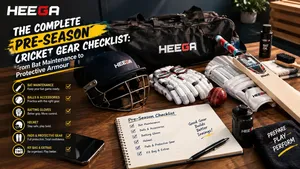 The Complete Pre-Season Cricket Gear Checklist: From Bat Maintenance to Protective Armour.Get match-ready with the ultimate pre-season cricket gear checklist. Learn how to inspect, restore, and maintain your bats, protective armour, spikes, and kit bag.
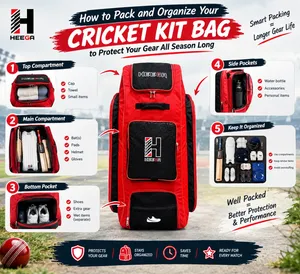 How to Pack and Organize Your Cricket Kit Bag to Protect Your Gear All Season LongLearn how to pack and organize your cricket kit bag properly to protect your bat, gloves, pads, helmet, shoes, and other gear throughout the cricket season.
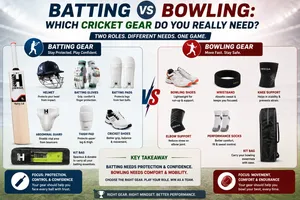 Batting vs Bowling: Which Cricket Gear Do You Really Need?Learn the essential cricket gear needed for batting and bowling. Compare bats, gloves, pads, helmets, shoes, protective equipment, and training gear.